

Antique Mirrored Wardrobes
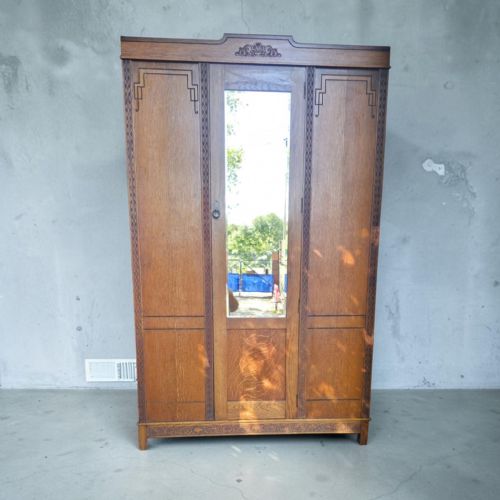
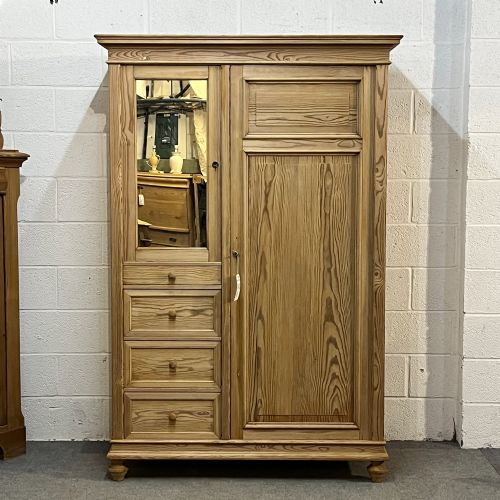
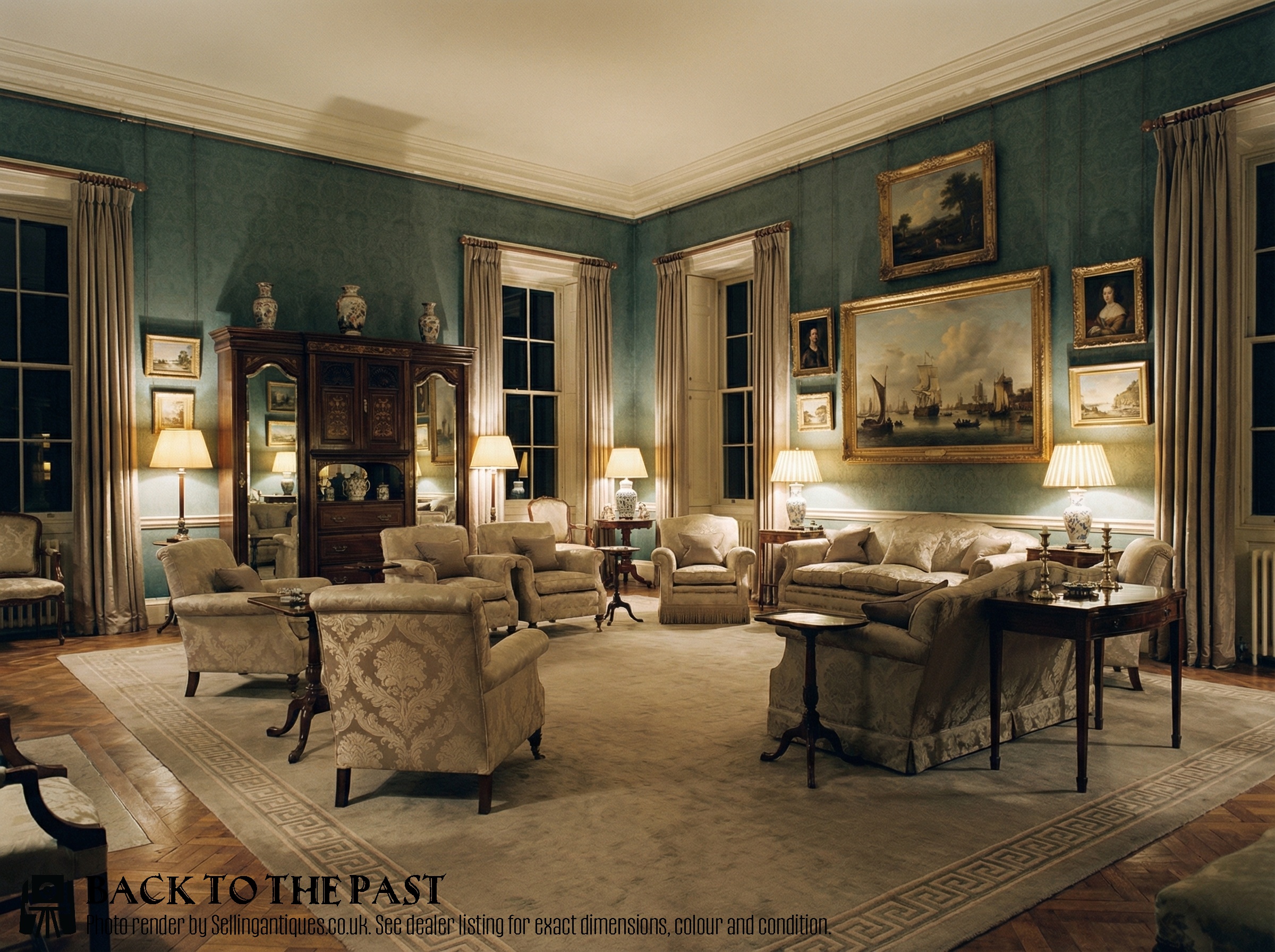
A large free-standing bedroom wardrobe of roughly 1860 to 1930 with looking-glass panels set into its doors, built to hold hanging clothes and let you dress in front of it.
Antique Mirrored Wardrobes
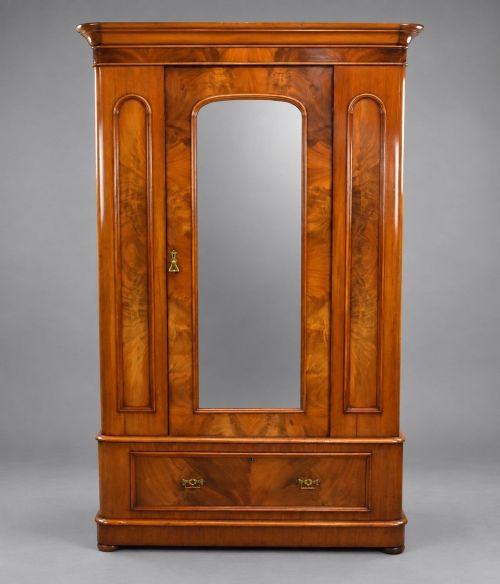
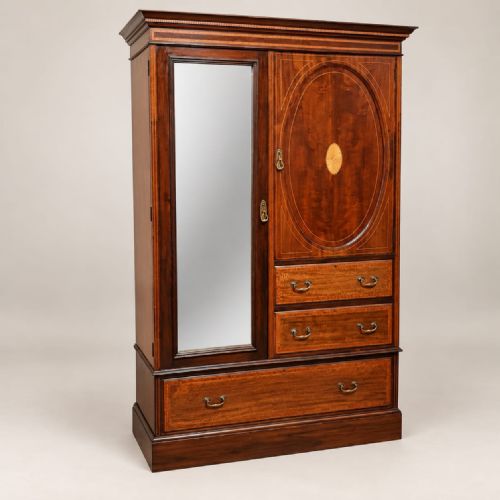
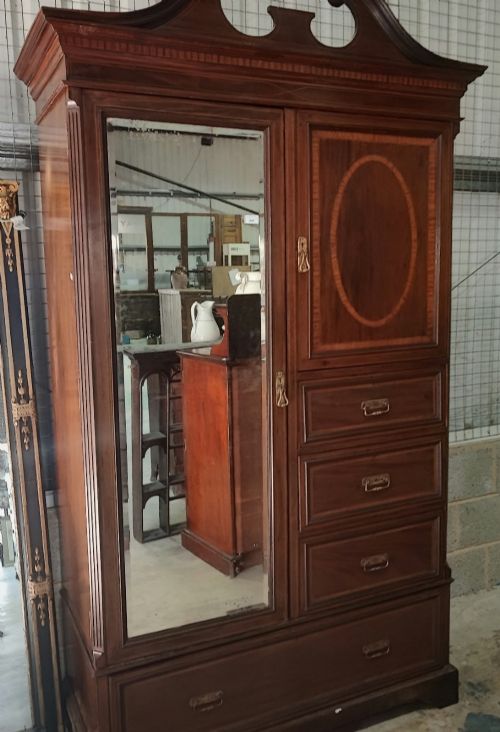
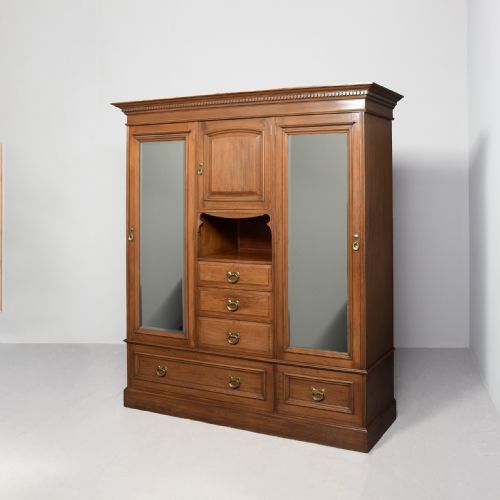
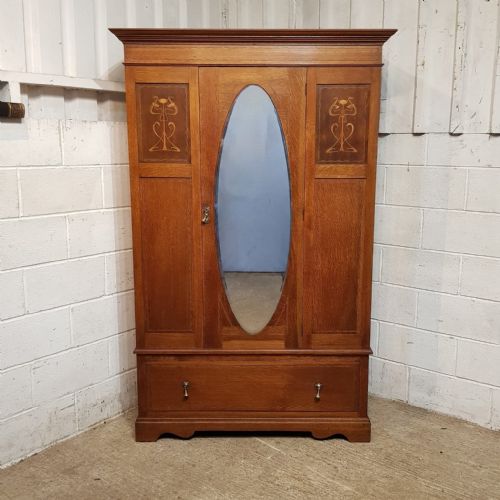
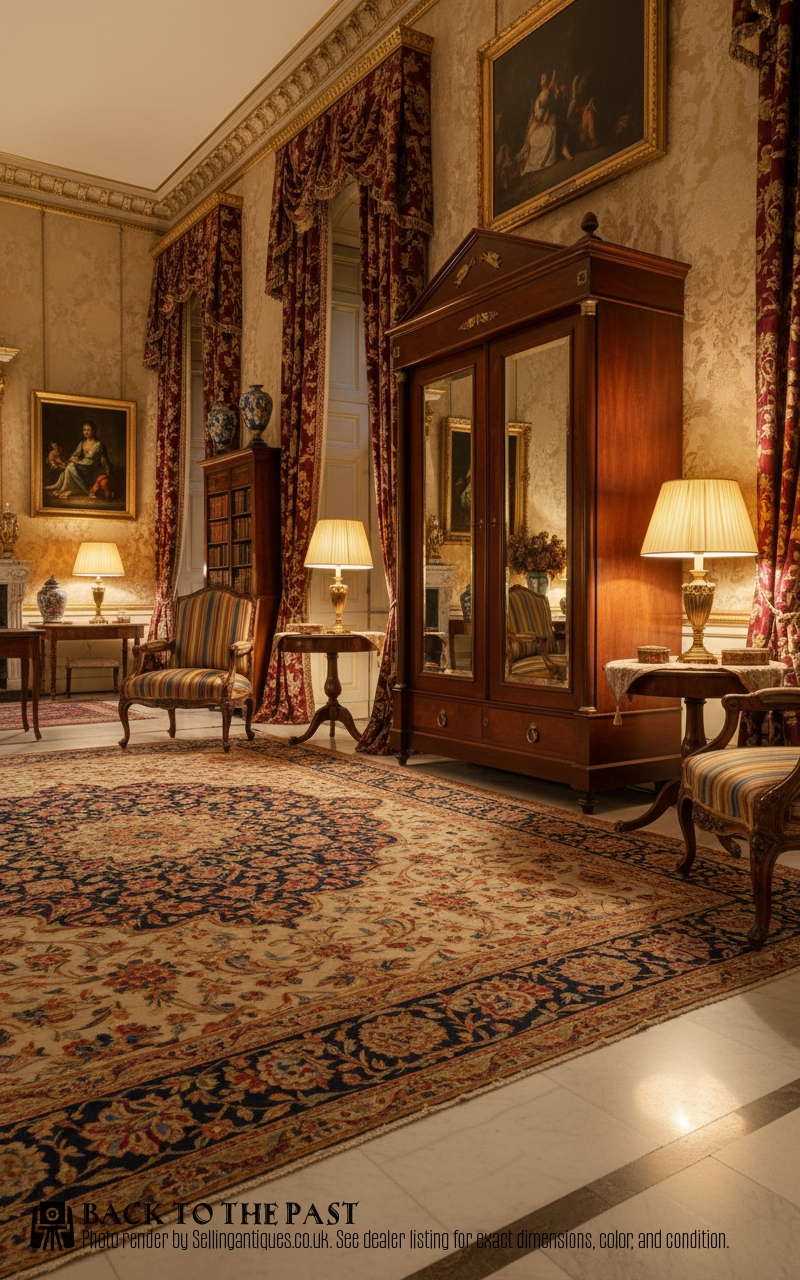
The piece you'll meet most often is a late Victorian or Edwardian mahogany wardrobe with a full-length mirror door. Victorian is the leading period word in the titles on Sellingantiques, Edwardian next, and mahogany the leading timber, with oak, walnut and pine behind it. "Door" and "mirror" run through the titles more than any other descriptive words.
Big free-standing wardrobes took over from the press and the clothes chest in the bedroom from the late eighteenth century, and cheap plate glass after the mid-nineteenth made a full-length looking glass on a door affordable. Storage and dressing in one carcase. The compactum arrangement, hanging one side and drawers with sliding trays the other, came out of the same period.
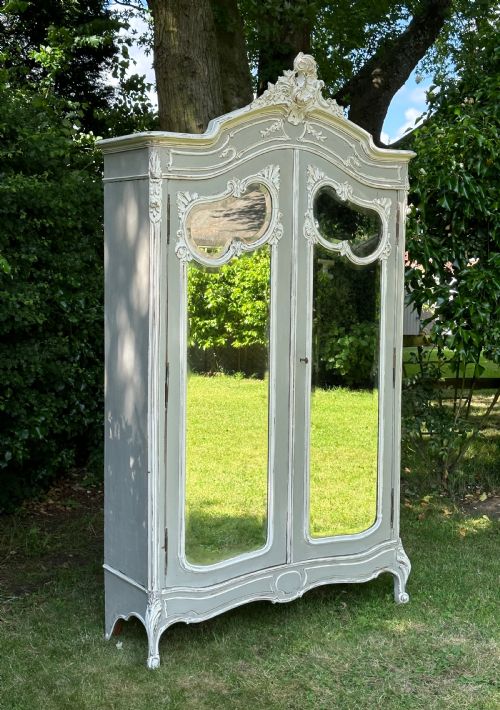
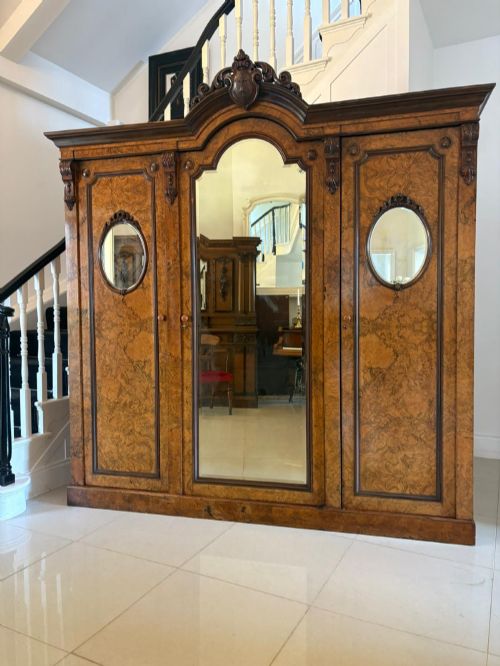
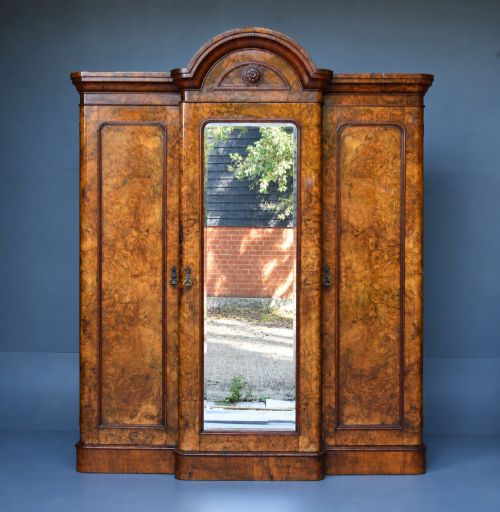
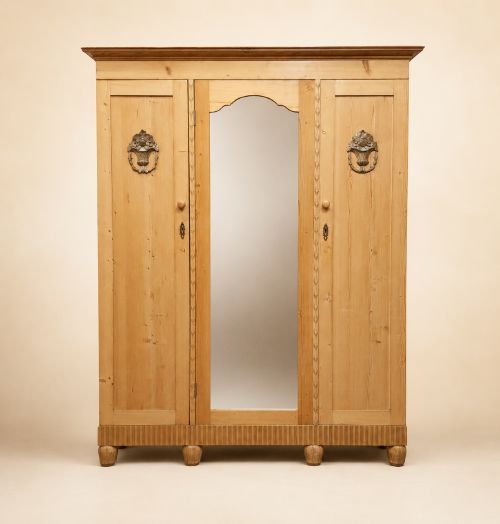
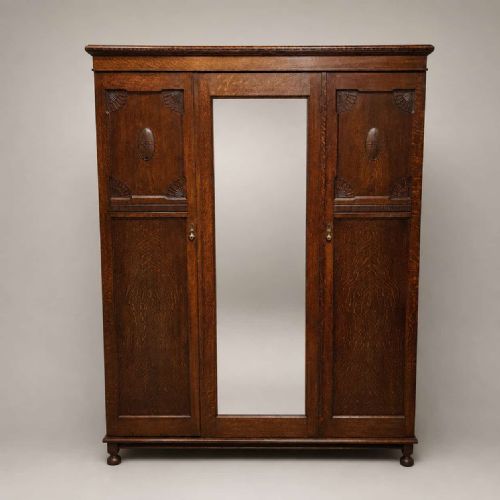
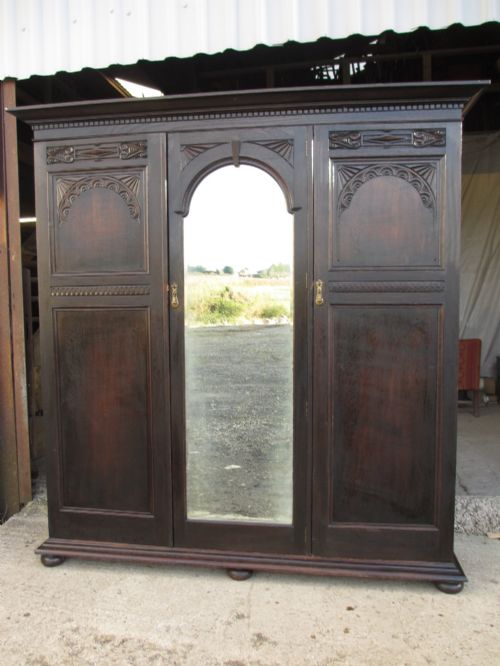
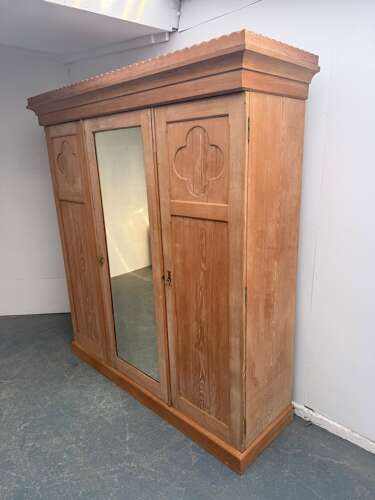
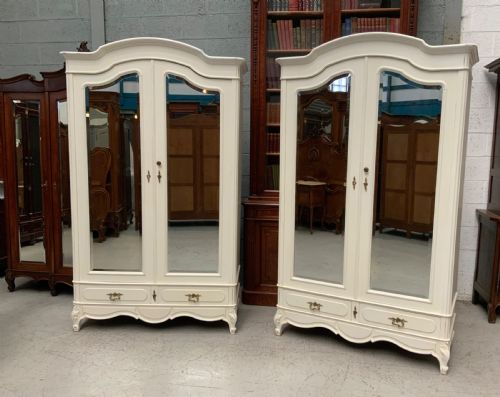
Alongside the single and double mirror-door wardrobes sit triple forms, usually a mirrored centre with a cupboard each side, and compactum or combination pieces fitted inside with drawers and trays. French armoires and other Continental wardrobes turn up regularly, France being the only foreign origin appearing in quantity. A run of pine and painted country wardrobes fills out the lower end, several advertised as knocking down or dismantling for moving.
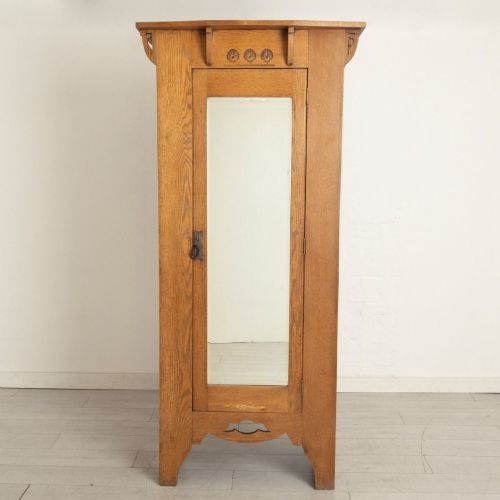
The heading is broader than it sounds: plain triple wardrobes without mirrors, armoires and linen presses are listed here too. Roughly one in ten is sold on its design movement rather than its timber, with Arts and Crafts, Art Nouveau, Aesthetic Movement and Glasgow School all named in titles. About fifteen come to market on Sellingantiques in a year, listed by some sixty different dealers.
The Range
Timber sets the floor and the ceiling. Burr walnut, rosewood, satinwood and satin birch sit high in the sampled range; plain and painted softwood sits low. Figure does the work: burr walnut is named in a dozen titles and never on its own, always as the reason for the veneer choice.
After timber comes how much wardrobe you're getting. Triple-door and compactum pieces, with a fitted side of drawers and sliding trays against a hanging side, run through the upper half of the range, while single mirror-door wardrobes cluster at the lower end. Scale pushes the same way, and the four-door and grand-proportion pieces sit at the very top with the pairs, which are the rarity of the category.
Decorative work is the third lever. Marquetry, boxwood and satinwood inlay, crossbanding, carved cartouches and gilt bronze mounts appear at the top of the range. A named movement does the same job in a different idiom: Arts and Crafts, Art Nouveau and Glasgow School pieces are priced well above plain wardrobes in the same timbers.
Antique Mirrored Wardrobes Retail Price Guide 2026
Typical UK retail prices for mirrored wardrobes, calculated from the Sellingantiques database of over a million retail prices indexed since 2003. This retail price guide relies exclusively on Sellingantiques data; no external sources or auction records are used, so the figures do not describe the wider market.
The most expensive antique mirrored wardrobe ever sold on Sellingantiques was a Victorian mirrored cupboard of about 1880, sold in August 2017.
The Antique Mirrored Wardrobes Glossary
- Compactum
- A wardrobe fitted internally with drawers, sliding trays and hanging space rather than a plain hanging box. Named in eighteen titles.
- Triple
- A three-door wardrobe, commonly a mirrored centre door with a cupboard to each side. The main alternative to the single or double mirror-door form.
- Armoire
- The French equivalent, generally a two-door cupboard, often with mirror panels. Appears in around twenty titles, alongside the word French itself.
- Knockdown or dismantles
- Built to come apart into carcase, doors and cornice for moving. Flagged in several pine titles and almost never on the mahogany and walnut pieces.
- Breakfront
- A centre section standing forward of the flanking ones. Turns up as breakfront, break front and bow front.
- Bevel
- The angled border ground on the edge of a mirror plate, named in listing titles as bevel or bevelled.
Antique Mirrored Wardrobes: Frequently Asked Questions
What period do these wardrobes come from?
The dated listings run from 1860 to 1930, with sixty-nine carrying a clean year. Victorian and Edwardian tags account for eighty between them.
The decade tags cluster in the 1900s, 1920s and 1890s. The earliest end is thin: only three listings fall in the 1860s, and a single Regency-dated piece sits outside the span altogether.
Which timbers turn up most?
Mahogany leads, with oak, walnut and pine following. Those four cover the great bulk of what gets listed.
Figured and decorative timbers appear in smaller numbers: burr walnut, satinwood, satin walnut, satin birch, pollard oak and rosewood. They sit toward the top of the range.
How many mirror doors do they usually have?
Most often a single full-length mirror door, sometimes two or three. The phrase "mirror door" recurs through the titles.
Triple-door wardrobes are the main alternative form. On those the mirror is commonly in the centre door, with a solid cupboard each side.
Can a large wardrobe be moved through a house?
A good number are built to knock down, coming apart into carcase, doors and cornice. Titles flag this as "dismantles" or "knockdown".
The feature is advertised mostly on pine and painted country wardrobes. It is rarely mentioned on the mahogany and walnut pieces.
Are French wardrobes common in this category?
France is the only foreign origin that appears in quantity, named in around twenty-two titles, with armoire appearing about as often.
The samples include one piece marked Paris and one Breton armoire. Other Continental wardrobes are listed simply as Continental, without a country.
What is a compactum wardrobe?
A wardrobe fitted inside with drawers and sliding trays as well as hanging space, rather than being one open box. Combination and 3-section are other names for much the same thing.
Compactum appears in eighteen titles, and these pieces recur through the upper half of the range. Odd one-off forms in the samples include a miniature compactum and a corner compactum.