




Art Deco Wardrobes
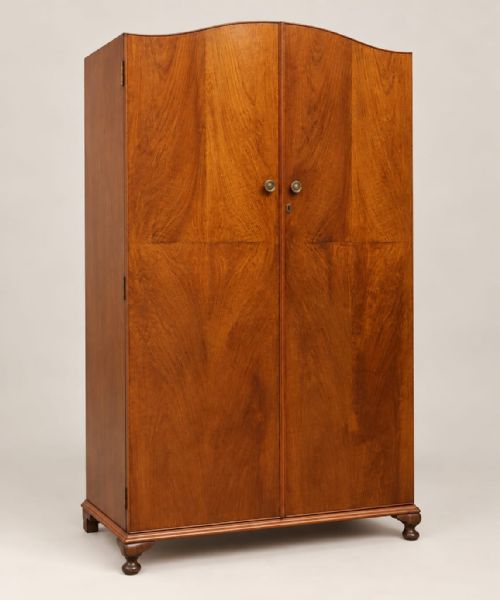
A free-standing bedroom wardrobe of the 1920s and 1930s, usually veneered in figured walnut, built to hang and store clothes as part of a matched bedroom suite.

Art Deco Wardrobes
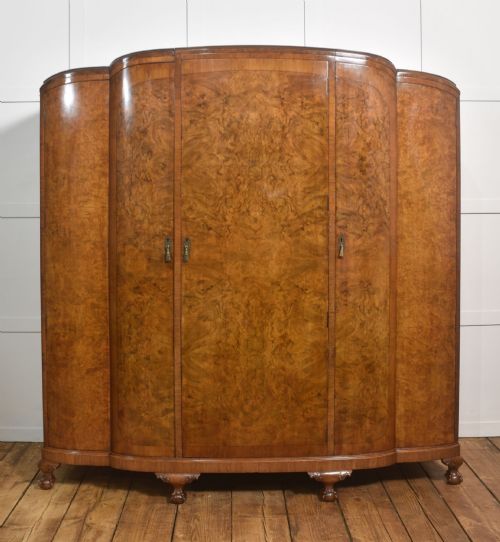
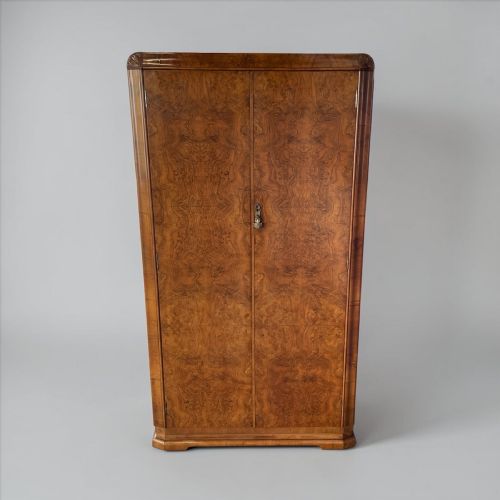
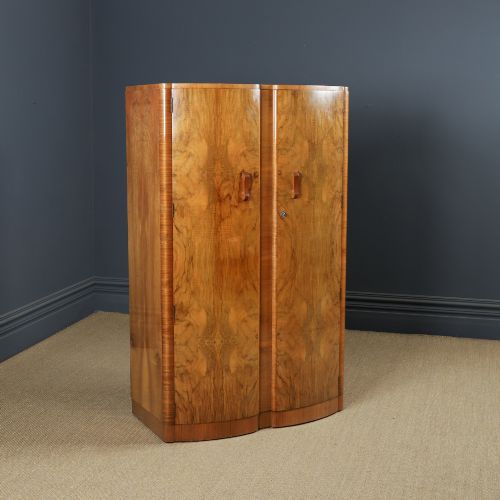
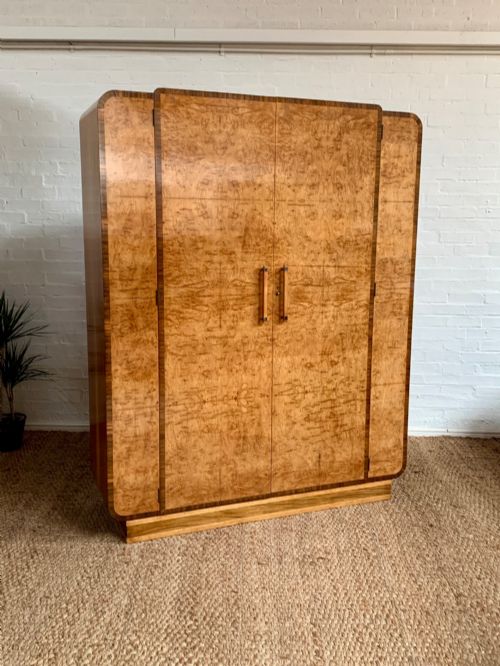
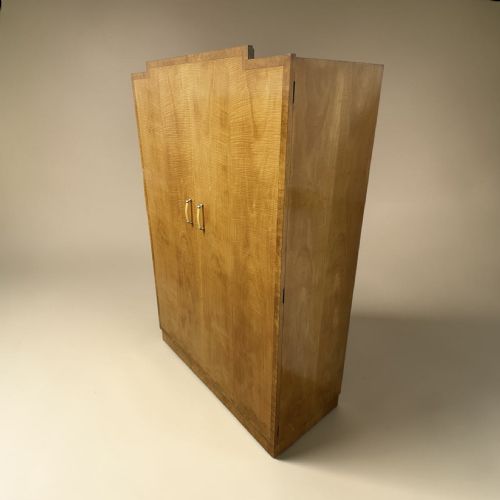
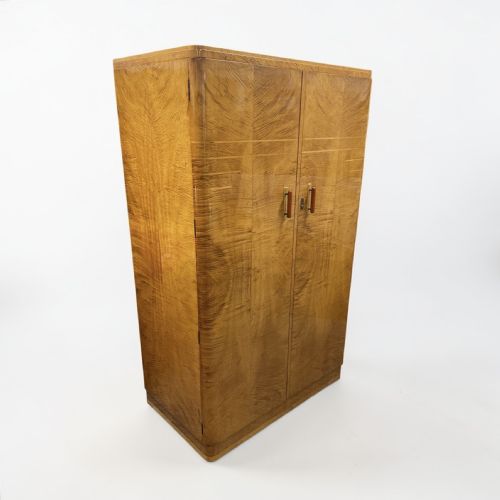
Walnut runs through this category more than any other timber: it is named in 115 of the 240 listings on Sellingantiques, with burr walnut in a fifth of titles and figured walnut in a further batch. The likeliest piece you will meet is a two-door double wardrobe of about 1930, veneered over a carcase, with stepped or curved outlines applied to what is still a plain hanging-and-shelving box.
Widths run from single door up to four, and the two commonest stated sizes are close together: double appears 36 times, triple 31. Dating clusters hard on the 1930s, with 172 listings there and 60 in the 1920s, so the decade marker matters more than the year given.
About one in seven is a compactum, the fitted gentleman's wardrobe with hanging space alongside trays, drawers and slides. Two spellings survive in the titles, compactum and compactom, the second usually where the trade name itself is being quoted.
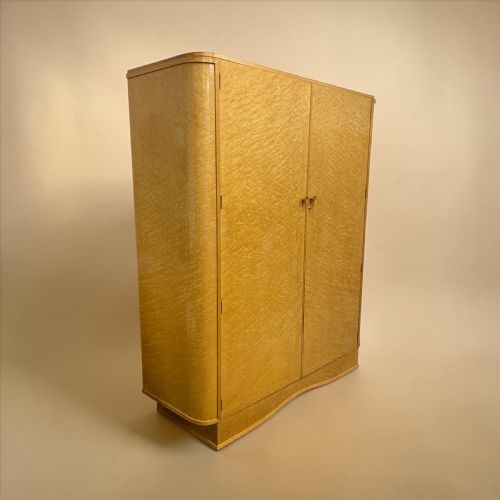
Away from walnut sit the blonde and pale-timber pieces: birds eye maple, tiger grain birch, blonde sycamore, satinwood and limed oak, roughly one in ten. Continental entries are scarce, with armoire used in only 13 titles. Small, single-door, half-sized and child's wardrobes make up under a tenth.
Where The Range Splits
Veneer does most of the work. Titles at the top of the range specify the figure: burr, burl, highly or heavily figured, cloud-fronted, starburst, sunray, tiger-grain birch. A bare "Art Deco Wardrobe", or one in oak or pine, sits at the bottom. Pale and exotic timbers hold their own above the middle, ahead of standard walnut and oak.
Size pulls in the same direction. Four-door and tall triple wardrobes cluster high, while half-sized, single-door and child's pieces cluster low, so the extremes of scale sit at opposite ends of the range.
Interior fitting and a name in the title lift a piece too. Compactum and deep-door gents wardrobes recur through the middle and upper range against plain hanging space, and titles naming a designer or firm sit in the upper half. Epstein appears in 12 of them.
Art Deco Wardrobes Retail Price Guide 2026
Typical UK retail prices for art deco wardrobes, calculated from the Sellingantiques database of over a million retail prices indexed since 2003. This retail price guide relies exclusively on Sellingantiques data; no external sources or auction records are used, so the figures do not describe the wider market.
Sizes on Sellingantiques run from child's and single-door wardrobes at one end to four-door and "skyscraper" triples at the other.
The Art Deco Wardrobes Glossary
- Compactum
- A wardrobe fitted internally with trays, drawers, slides and hanging space, commonly described as a gentleman's wardrobe. Also spelled compactom in these titles.
- Double
- Two-door width, the commonest stated size in this archive, with 36 titles using the word.
- Triple
- Three-door or three-bay width, the largest size to appear often, in 31 titles.
- Burr walnut
- Veneer cut from a burr growth, with a swirling knotted figure. Named in 47 titles.
- Blonde
- Trade term in these titles for pale timbers and veneers, covering maple, birch, sycamore and bleached walnut.
- Breakfront
- Centre section standing forward of the bays either side of it. Bow front, in nine titles, means a curved door or carcase instead.
Art Deco Wardrobes: Frequently Asked Questions
What wood are they usually made from?
Walnut veneer over a carcase, more often than anything else. It is named in 115 of the 240 titles on Sellingantiques, with burr walnut specified in 47 and figured walnut in 26.
The rest spread thinly across oak, pine, maple, birch, sycamore, satinwood and lacquer. Birds eye maple turns up in about a dozen titles.
What is a compactum wardrobe?
A wardrobe fitted out inside with trays, drawers and slides alongside the hanging space, usually sold as a gentleman's wardrobe. Deep-door gents wardrobes belong to the same group.
Compactums account for about one in seven of the category. Two spellings run side by side, compactum in 24 titles and compactom in 8.
How old are Art Deco wardrobes?
The dealers' dated fields run 1900 to 1930, but the weight sits late: 172 listings fall in the 1930s and 60 in the 1920s, with only four before 1920.
Titles echo that, with c1930 in 37 and c1920 in 20. Several listings simply say circa 1930 or 1930's rather than a single year.
Are French Art Deco wardrobes common?
No. Continental pieces are scarce in this archive. Only 13 titles use the word armoire at all, and some of those use it as a plain synonym for wardrobe.
A signed French wardrobe and two French oak armoires are the only clearly Continental entries in the sample.
Which sizes come up for sale?
Single, double, triple and occasional four-door widths. Double is the commonest stated size at 36 titles, with triple just behind on 31.
At the small end sit half-sized, single-door, child's and hall wardrobes, together under a tenth of the category.
How often do these come to market?
About 30 a year on Sellingantiques, and 39 different dealers have listed one, so the category is spread thinly rather than held by a few specialists.
Pairs are the scarcest thing in it. A pair of two-door wardrobes, a near pair in walnut and a pair of painted wardrobes each appear once across the whole archive.