

A 2026 Guide by Sellingantiques
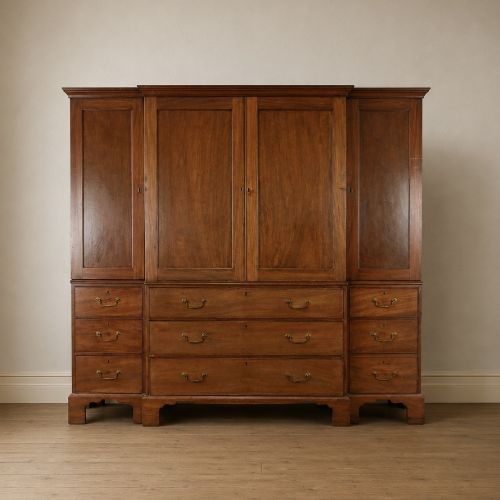
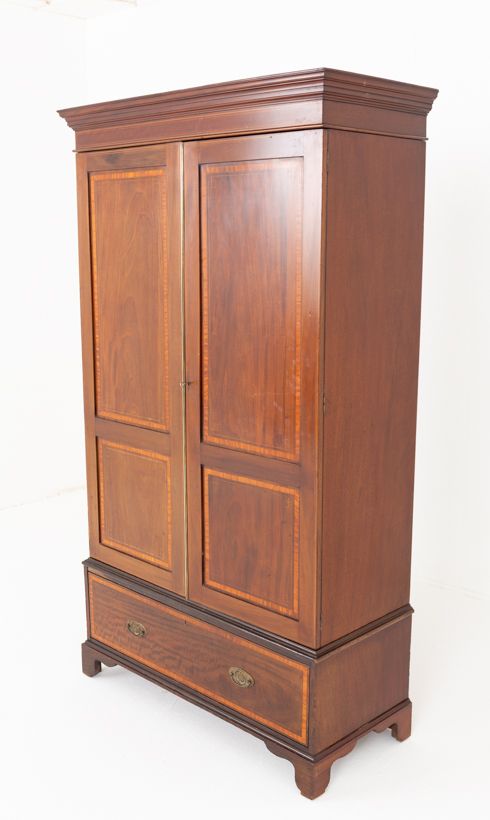
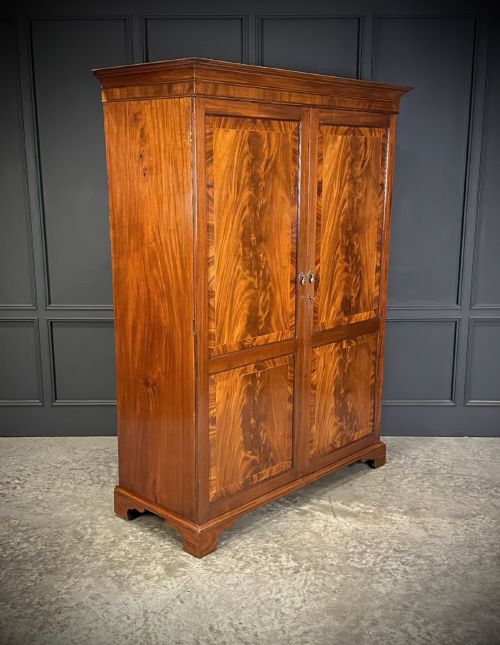
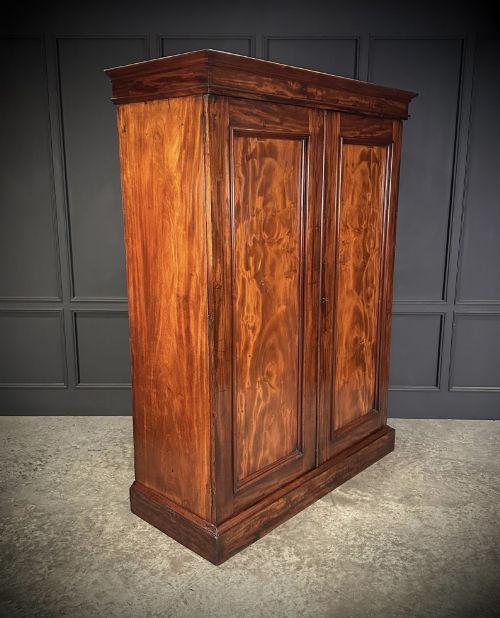
Georgian Mahogany Breakfront Wardrobe, Georgian
Priced at £1,350 from F E Anderson Antiques
Antique Georgian wardrobes replaced the earlier chests and coffers when people couldn't fit their clothes inside.
Look for changes in proportion across the century. Early ones sit heavy and square. Later pieces often stand taller on bracket feet.
Built for wealthy households initially. The middle classes demanded them by the end of the period.
Most started life in the principal bedchamber rather than dressing rooms.
Gillows of Lancaster produced hundreds of these from the late eighteenth century. Their stamped pieces feature neat drawer linings and dense mahogany.
Thomas Chippendale supplied large clothes presses to grand country houses. Some surviving examples retain their original painted finishes.
Provincial cabinetmakers constructed the vast majority. They followed printed pattern books but didn't leave trade labels.
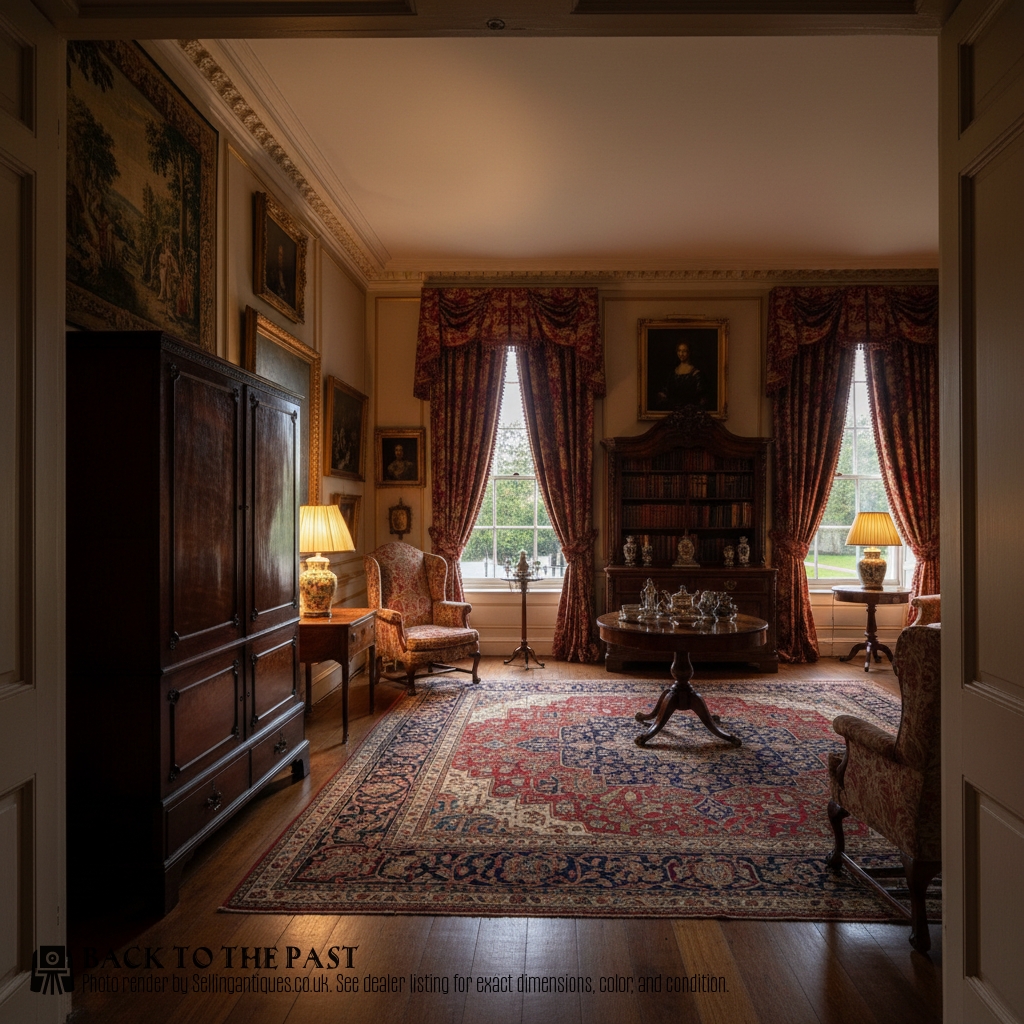
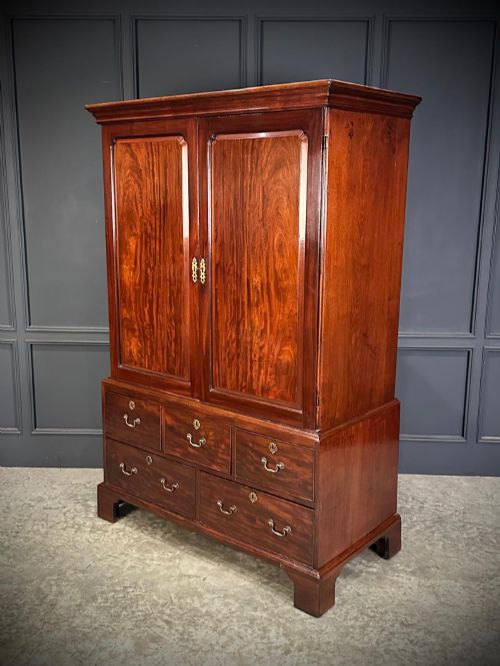
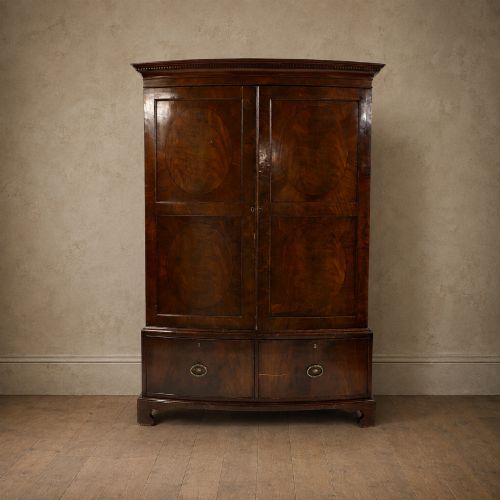
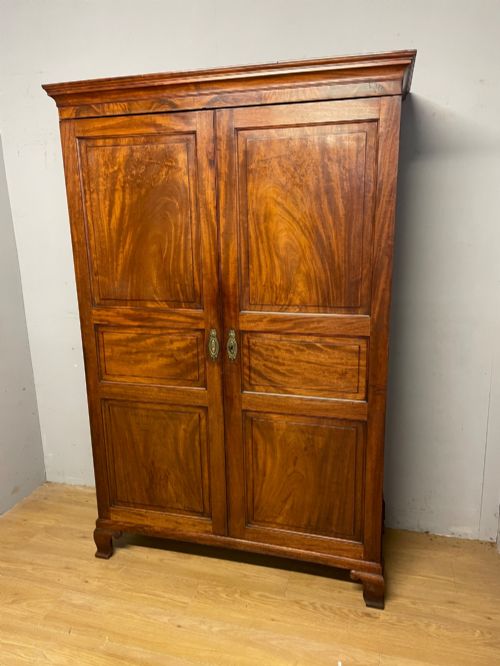
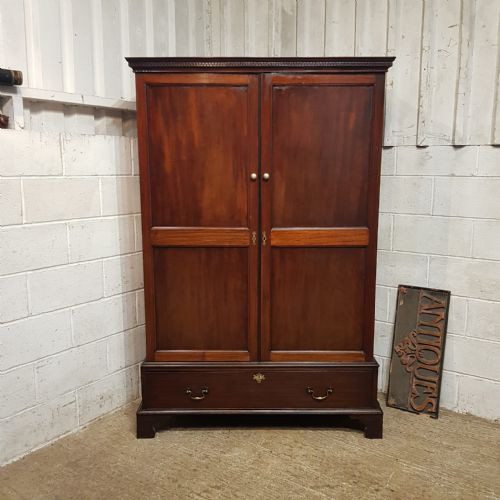
Antique 18th Century Mahogany Double Wardrobe C1780, Georgian
Priced at £725 from Castleforge Antiques Ltd
The 2026 retail price guide for Antique Georgian Wardrobes is drawn from a proprietary archive of over 1.1 million retail prices indexed by Sellingantiques since 2003. This guide relies exclusively on their own internal data; no external sources or auction records are used.
Analysing nearly 25 years of UK antique market history alongside current retail values, the data indicates that typical UK retail prices for Antique Georgian Wardrobes range between £1,000 and £3,800. Entry-level prices generally fall under £1,000 and premium examples upwards of £3,800.
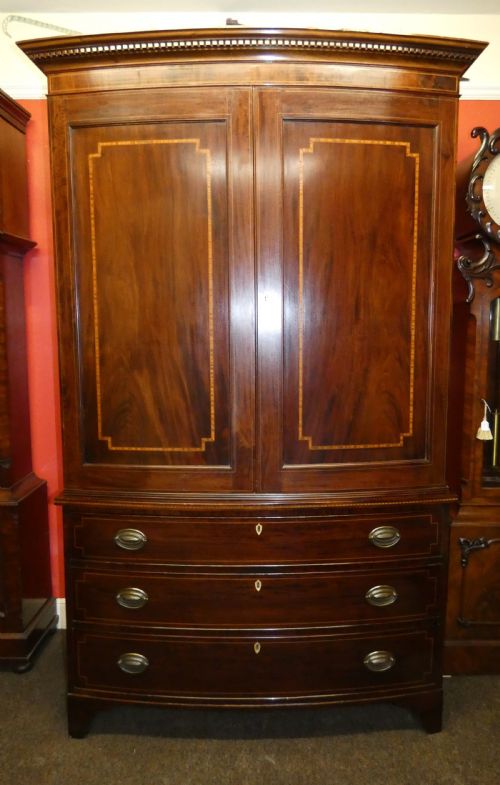
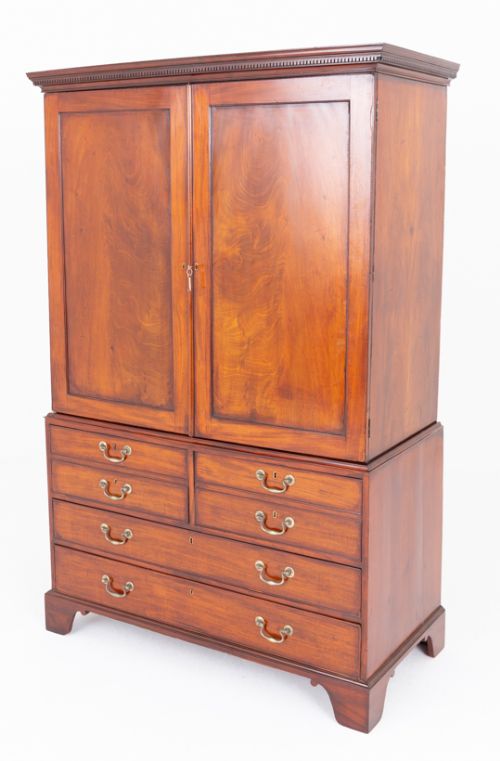
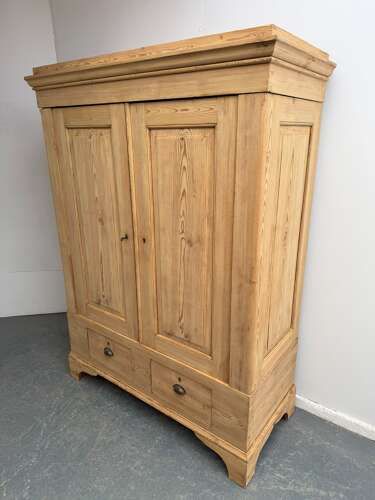
Two tall panelled doors sitting above a base of deep drawers.
A heavy, projecting cornice caps the top. It often lifts off to help get the piece up tight staircases.
Inside, you'll find sliding linen trays rather than a hanging rail. Hanging clothes came later.
Early construction relied on thick solid timber held by large hand-cut dovetails.
Master cabinetmakers adopted sophisticated veneering techniques as the period progressed. They matched complex grain patterns across both doors.
Turn a drawer over. Look for the transition from thick heavy runners to refined thinner drawer linings.
"The proportions divide neatly to match classical architecture rules. Makers based the dimensions on Greek columns."
"Backboards often carry faint chalk marks. Journeymen used the rough timber to calculate their piece-rate wages."
"They dismantle into three manageable sections. The top cornice, the main cupboard, and the drawer base all separate."
Based on almost 25 years of Sellingantiques UK antique market data, Antique Georgian Wardrobes appeared 804 times (out of 1,100,000 antiques) which gives it a rarity score of 85/100.
This score measures scarcity within the Sellingantiques archive only and is not a survey of the entire antiques market, so these statistics may not be indicative of the general availability of Antique Georgian Wardrobes elsewhere.
Most original Georgian pieces lack the depth for modern hangers. Men's coats and women's gowns lay flat on the internal slides.
Some deeper examples take a modern rail front-to-back rather than side-to-side. You slide the hangers in one behind the other.
Old floors and old furniture share the same problem. Neither sits flat. A heavy mahogany press settles into the dips over time.
You slip small wooden wedges under the feet until the doors close properly. If the carcase twists, the locks won't meet their keepers.
Solid mahogany doors sometimes bow if kept near a hot radiator. Veneered doors on a pine core resist warping much better.
Keep them away from direct heat sources.
Cabinetmakers understood narrow townhouses. They built these pieces to break down into sections.
The heavy cornice lifts off the top. The upper cupboard lifts away from the drawer base. You move it in three parts.
Remove the drawers and the internal slides before lifting. It strips away half the weight.
Please note: This Antique Georgian Wardrobes guide and its associated pricing data are provided for general informational purposes only. It does not constitute formal financial, investment, or appraisal advice and should not be relied upon as the sole basis for any commercial activity, purchasing, or sales decisions. Sellingantiques.co.uk accepts no liability for any actions taken in reliance on this information. Always consult with a qualified professional or independent appraiser.
