



Antique Bar Stools
A tall backless stool made for sitting at standing-height work: a counter, a bench, a high desk or a public bar.
Antique Bar Stools
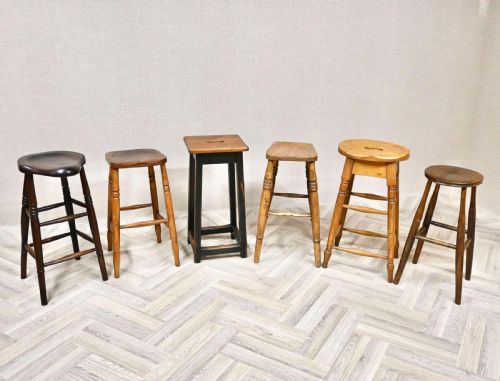
The heading works as a use-category rather than a single form. Tavern, clerk's, machinist, laboratory, workshop and artist's stools are all catalogued under it on Sellingantiques, sitting alongside pieces sold plainly as bar stools. What unites them is height, announced in the titles far more often than it's given as a figure.
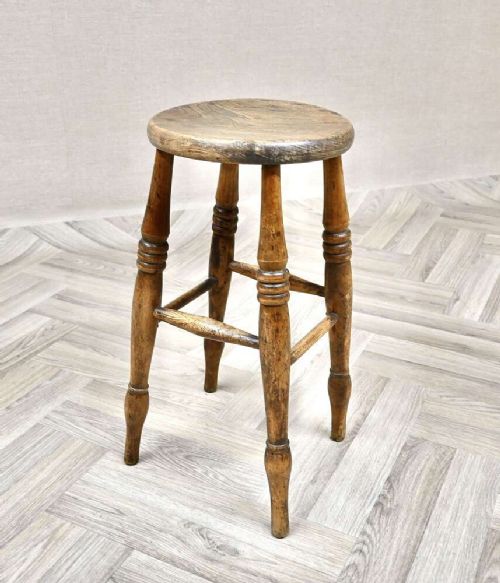
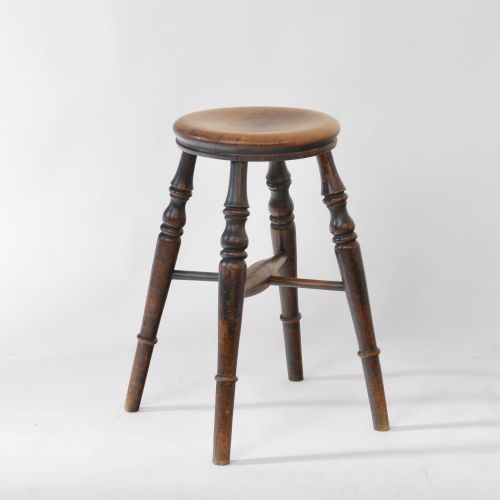
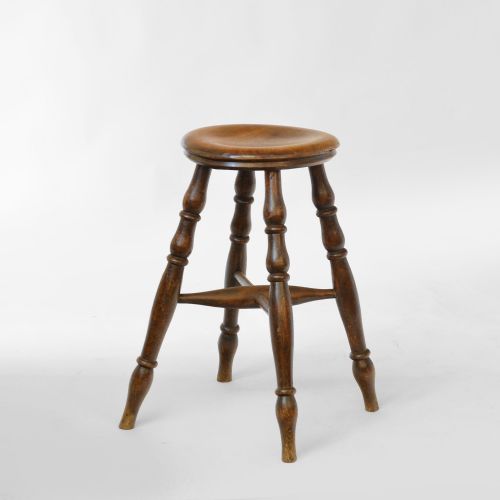
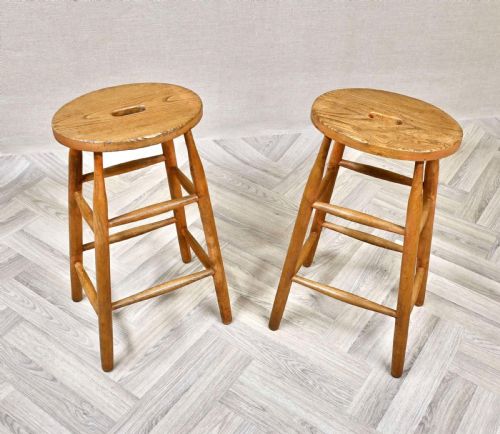
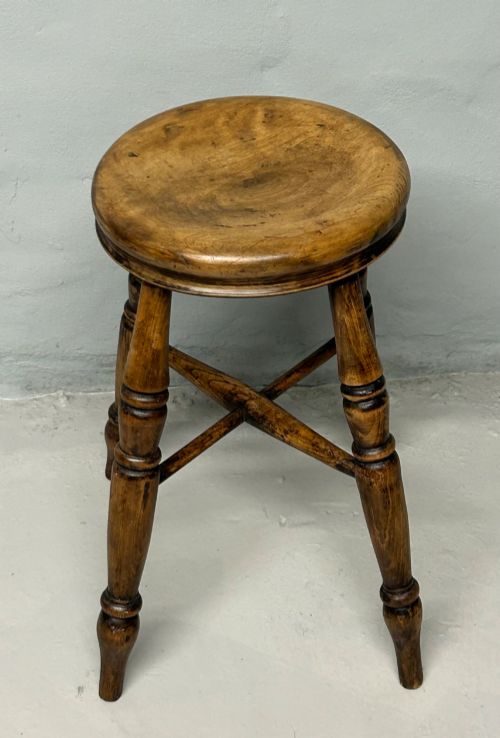
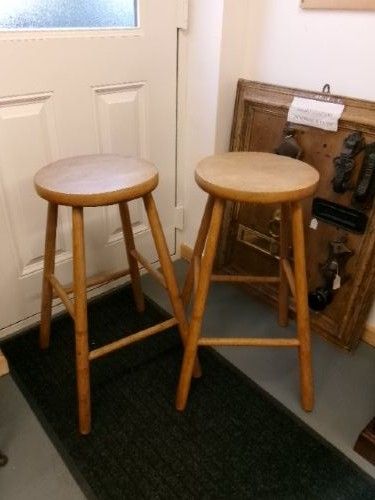
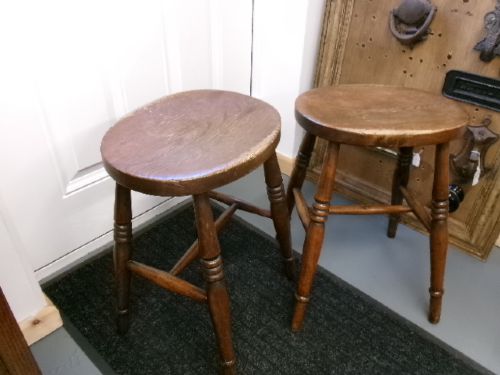
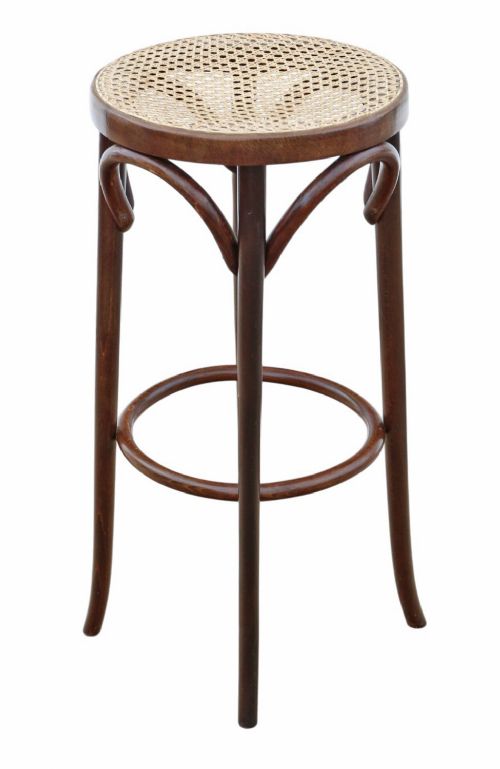
The form you'll meet most often is a country tall stool in elm and beech, turned legs beneath a solid seat. Elm is the timber named most often, usually as the top with beech legs under it. Seats are described as saddle, dished or rush, and Windsor construction is named in a handful of titles.
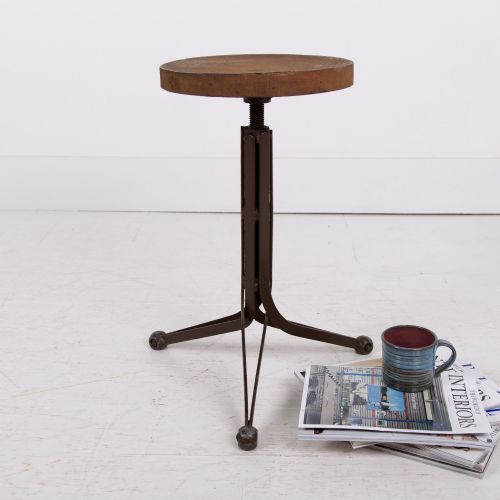
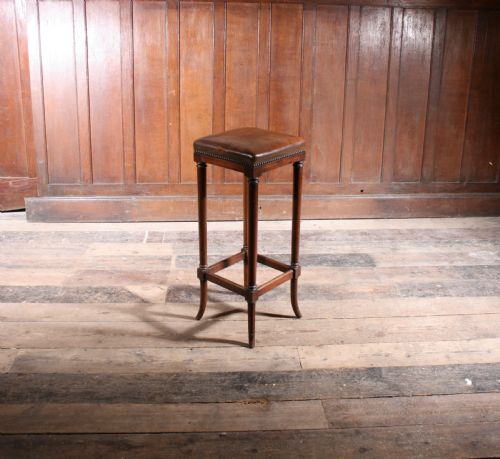
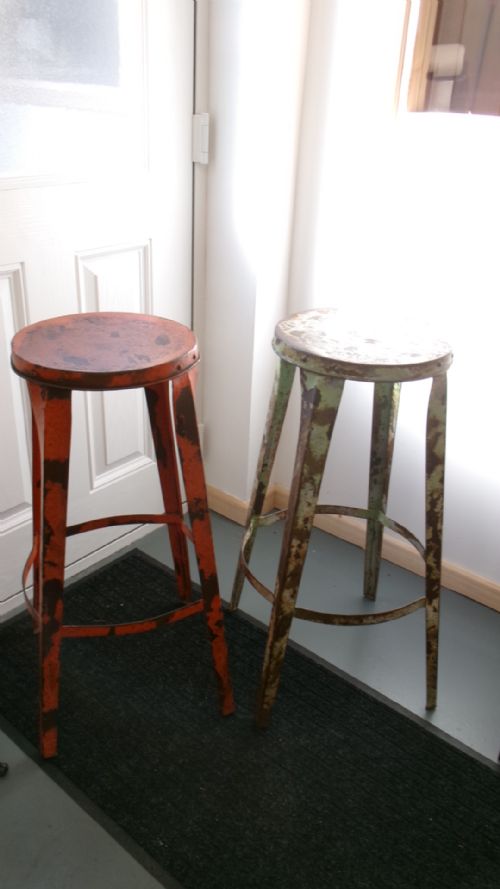
Behind that sit two smaller runs. One is industrial and workshop seating, metal or metal with timber, including machinist and lab stools on cast iron bases. The other is upholstered cocktail seating in leather with brass, bronze or walnut, which holds the top of the range.
Tall stools were made for benches, counters and high desks long before the fitted domestic bar existed. Dating in the listings leans on the century-wide label 19th Century, used in 41 of 107 titles. Where a clean year is given, those forty run from 1890 to 1940, with the 1920s the busiest decade.
What Sets Them Apart
Number in the lot moves a listing further than anything else. Singles are the norm and fill the lower half of the range. Pairs are the next step up, and sets of three, four, five, six and one collection of ten climb from there.
Material separates the two ends cleanly. Elm-and-beech singles sit at the bottom; brass, bronze, cast iron and riveted steel turn up in only a handful of listings and hold the top, as do leather-and-timber cocktail stools. French brass cocktail stools are the rarest origin recorded.
After that it's shaping, tradition and mechanism. A plain seat sits low, while saddle and dished tops sit noticeably higher. Arts and Crafts, Cotswold school, Art Deco and Windsor attributions all appear above the middle, and the three revolving and two height-adjustable examples recur toward the upper end.
Antique Bar Stools Retail Price Guide 2026
Typical UK retail prices for bar stools, calculated from the Sellingantiques database of over a million retail prices indexed since 2003. This retail price guide relies exclusively on Sellingantiques data; no external sources or auction records are used, so the figures do not describe the wider market.
The largest group offered in one lot on Sellingantiques was ten stools. Sets of six, five, four and three turn up, but singles are the norm.
The Antique Bar Stools Glossary
- Tall or high stool
- The category's own shorthand for counter-height seating, and the commonest word in the titles after stool itself. Height as a figure appears in only two, at 24 and 26 inches.
- Saddle seat
- A solid seat hollowed into two scoops with a raised ridge between them, shaped to the sitter. Named in four titles, and once as Bum Shaped.
- Dished top
- A solid seat scooped into a shallow saucer, as in Oval Dished Top.
- Windsor
- Stick construction, with legs socketed straight into a solid seat. Named in four titles.
- Machinist or lab stool
- Industrial bench seating, often on a metal base or fitted with an adjustable screw.
- Revolving
- A seat that turns on a central screw or swivel. Three examples across the whole archive.
Antique Bar Stools: Frequently Asked Questions
How many come up for sale each year?
About eleven antique bar stools reach the market on Sellingantiques in a year, spread across 30 different dealers.
No single dealer defines the category, so what's listed at any one time is a mixed field rather than one house style.
What wood are they usually made from?
Elm is the timber named most often, in 13 of 107 titles, generally as the solid seat with beech legs beneath it. The two appear together in title after title, in both orders.
Birch turns up for a clerk's stool, pitch pine on cast iron machinist frames, and walnut and golden oak in the upholstered group.
Are pairs and sets available?
Singles are the norm. Pairs appear in a minority of titles, and sets of three, four, five and six each turn up once or twice.
The largest lot recorded is a collection of ten stools.
How old are antique bar stools?
Dealers' own dating is dominated by 19th Century, used in 41 titles, which is a century-wide bracket rather than a date. Victorian adds eight more in the same register.
Forty listings carry a clean year, and those run from 1890 to 1940, clustering in the 1920s and 1930s. Edwardian is used as a label ten times, Regency twice.
Do industrial and workshop stools sell here?
Yes, they make up around a tenth of the listings. Machinist, laboratory and workshop stools appear, some on cast iron bases with pitch pine seats, some in riveted metal.
Adjustable-height examples belong mostly to this group, though only two are described that way across the archive.
What are the highest-priced types?
Metal and upholstery hold the top. French brass cocktail stools, bronze and leather ships stools, cast iron tractor stools and walnut with tan leather in the Art Deco taste all sit above the wooden country stools.
Named traditions lift a listing too: Arts and Crafts appears three times, with Cotswold school and Windsor attributions also above the middle of the range.