





A 2026 Guide by Sellingantiques
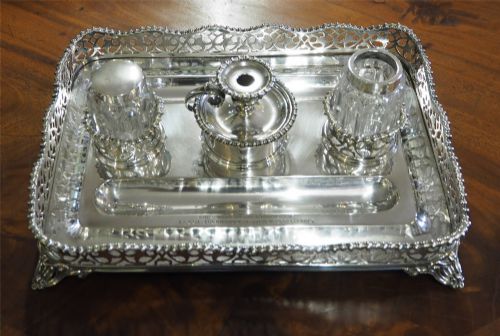
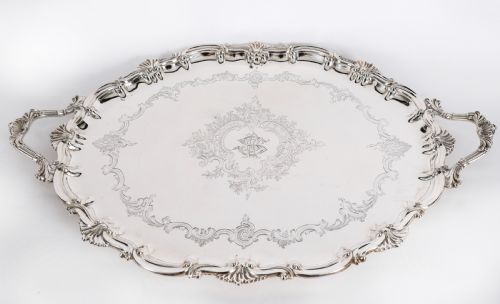
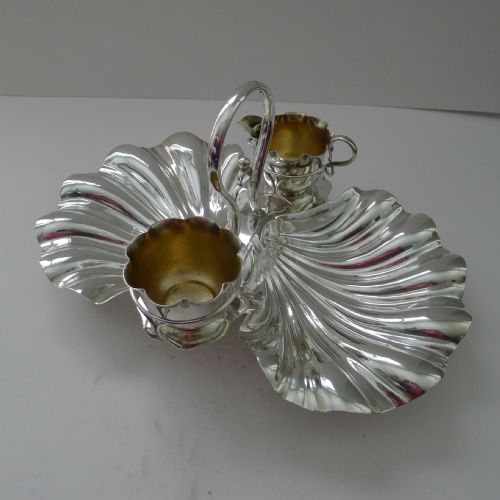
Outstanding Quality Small Antique Edwardian Silver Plated Tea Tray, 1900
Priced at £645 from London City Antiques
Originally developed to serve the tea-drinking habits of the eighteenth century.
Look for the shift from small salvers to heavy trays as tea sets grew to include matching coffee pots.
Silversmiths in Georgian London produced them in large numbers to supply wealthy households.
Victorian examples often feature elaborate presentation engravings marking retirements or marriages.
Paul Storr operated in London during the early nineteenth century and produced heavy silver trays with cast borders.
Hester Bateman and her family workshop made lighter, plainer examples during the late eighteenth century.
Matthew Boulton led the Birmingham trade, stamping out finely bordered trays in solid silver and Sheffield plate.
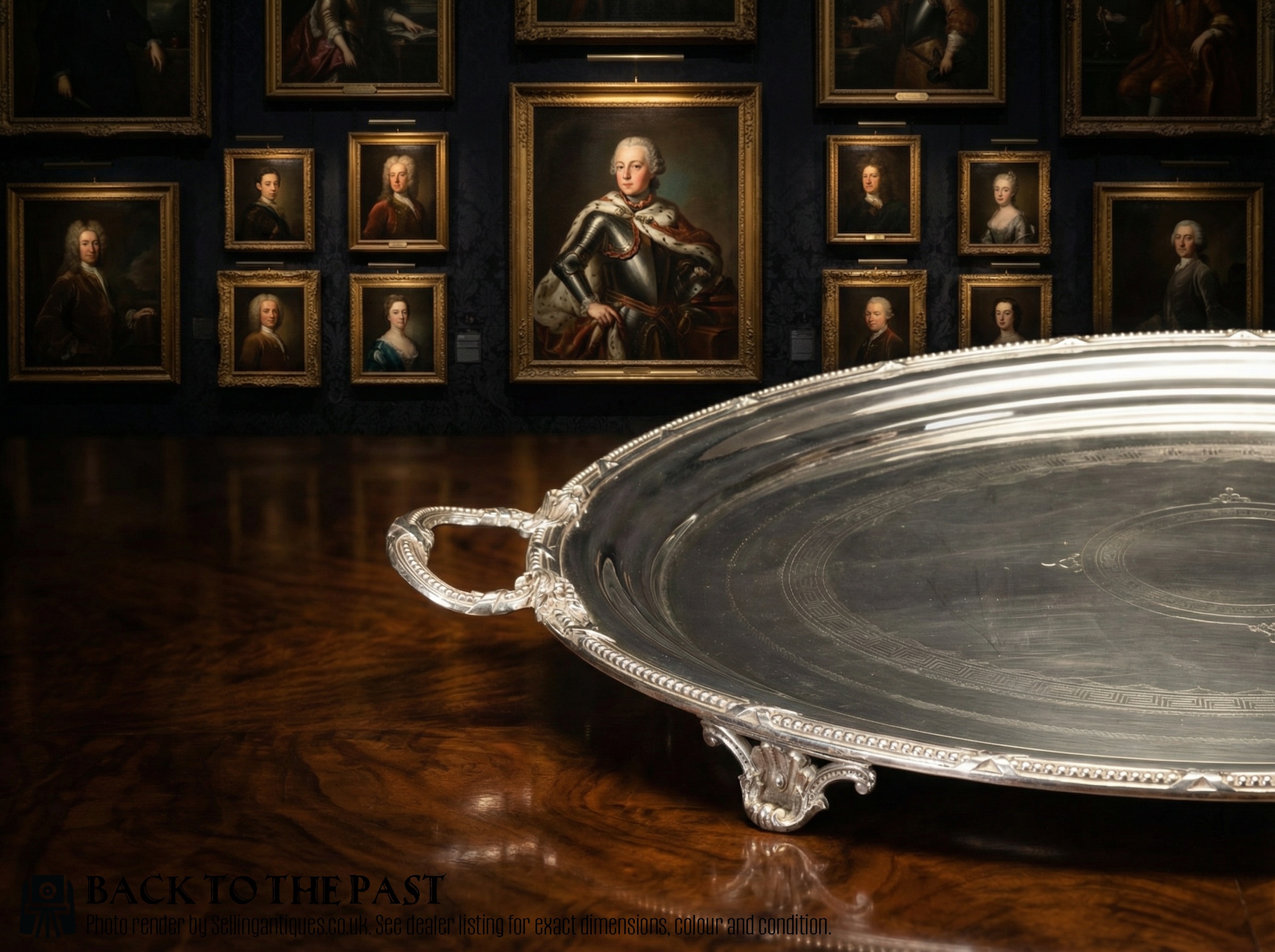
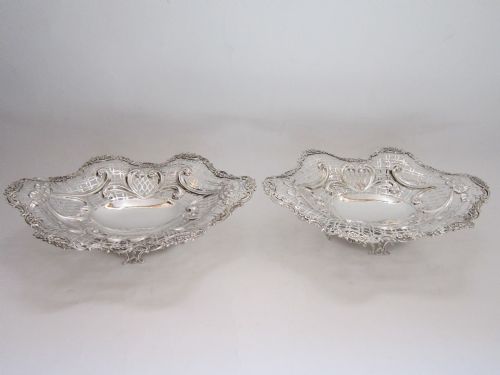
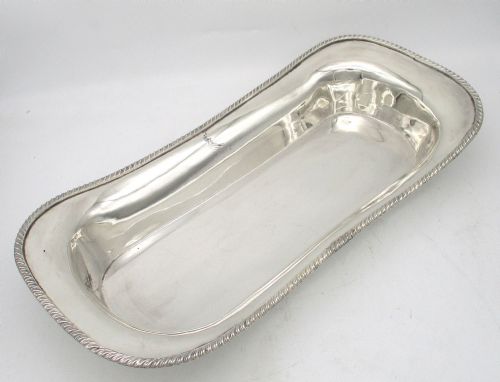
Antique Large German Oval Silver Plated Tray Peters Hamburg 19th C, 1850
Priced at £850 from Regent Antiques
The 2026 retail price guide for Antique Silver Trays is drawn from a proprietary archive of over 1.1 million retail prices indexed by Sellingantiques since 2003. This guide relies exclusively on their own internal data; no external sources or auction records are used.
Analysing nearly 25 years of UK antique market history alongside current retail values, the data indicates that typical UK retail prices for Antique Silver Trays range between £200 and £2,400. Entry-level prices generally fall under £200 and premium examples upwards of £2,400.
Twin handles cast in heavy gauge metal ensure the waiter can bear the weight of a tea service.
Raised rims stop teacups from sliding off the edge during transit.
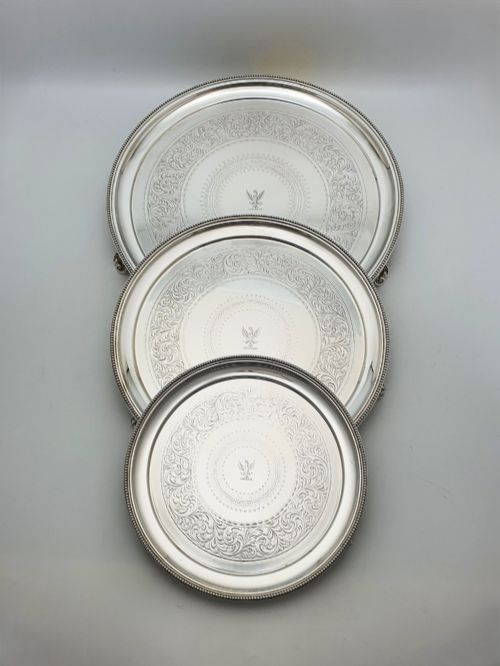
Flat central reserves are frequently chased or engraved with coats of arms.
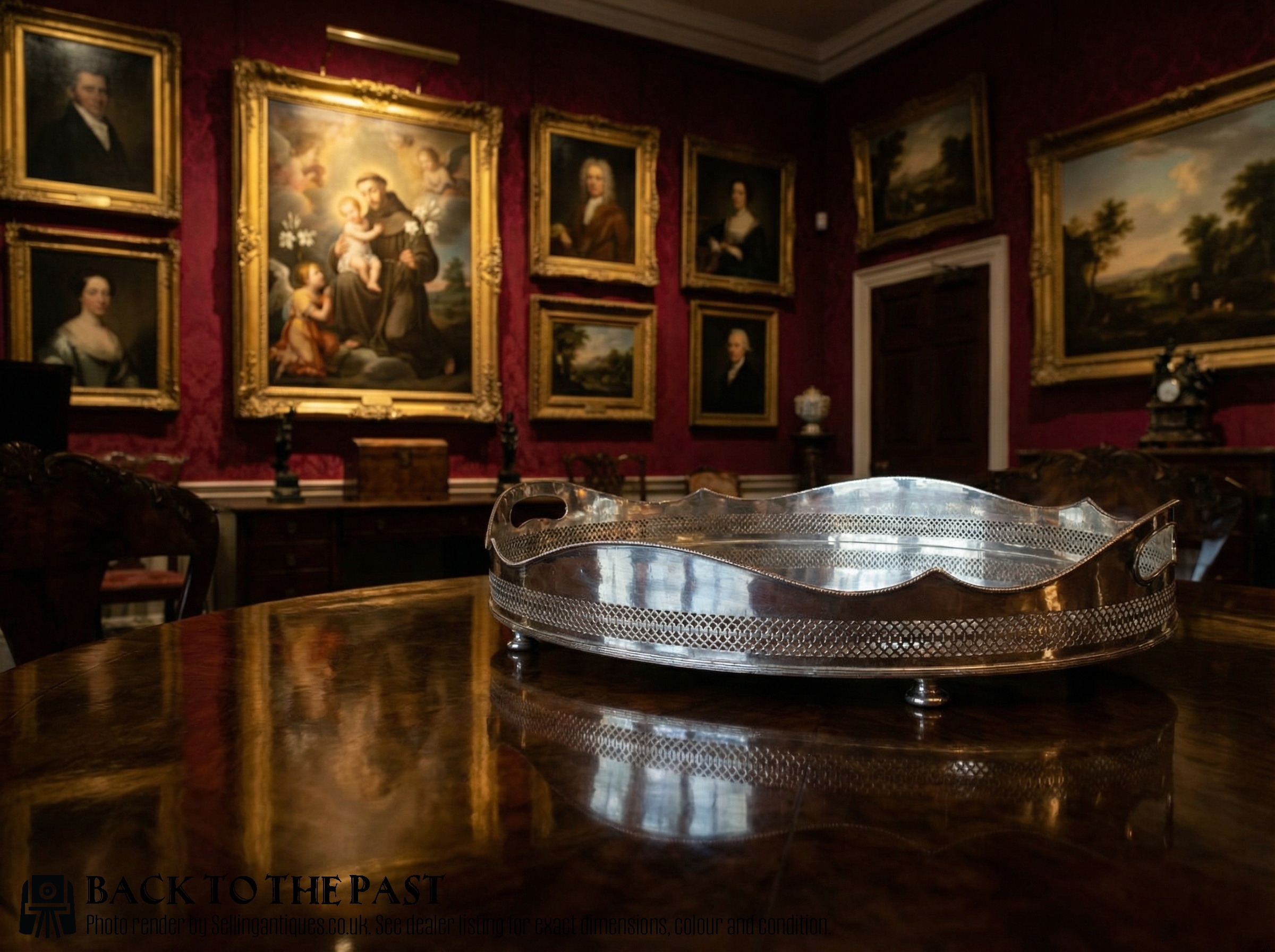
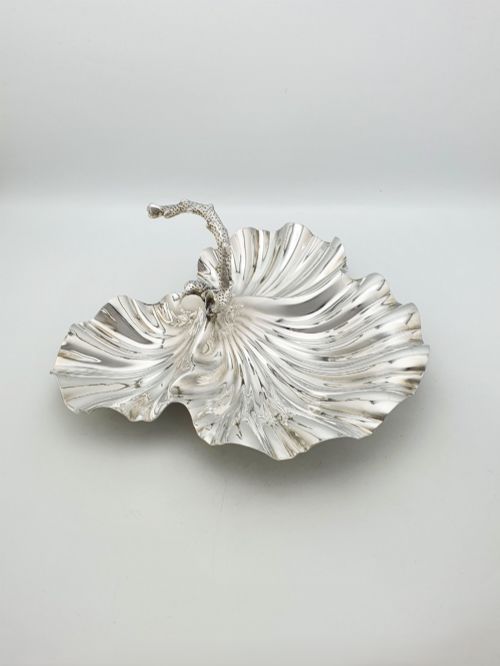
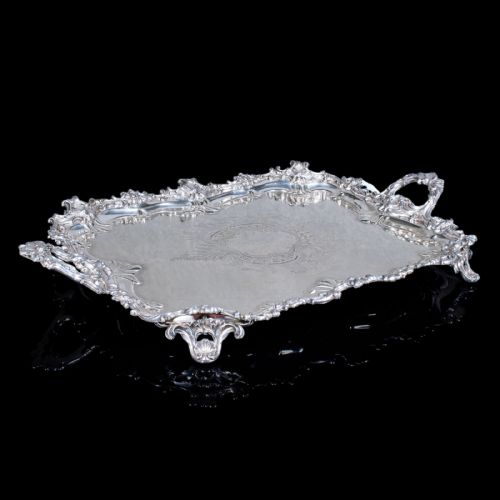
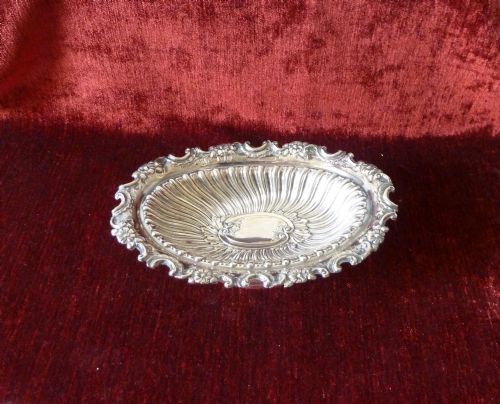
Antique Presentation Serving Tray, English, Silver Plated, Cocktail, Edwardian, Edwardian
Priced at £795 from London Fine Antiques
Early Georgian trays started as flat sheets beaten from a single silver ingot.
Rolling mills later allowed workshops to buy uniform silver sheets, saving hours of manual hammering.
Borders evolved from simple applied wire to complex cast sections soldered around the perimeter.
"Hallmarks are often hidden on the reverse or stamped discreetly into the border pattern."
"Some heavy Victorian trays weigh over a hundred troy ounces."
"Engraved centres actually helped disguise the daily scratches from serving pots."
Based on almost 25 years of Sellingantiques UK antique market data, Antique Silver Trays appeared 3541 times (out of 1,100,000 antiques) which gives it a rarity score of 49/100.
This score measures scarcity within the Sellingantiques archive only and is not a survey of the entire antiques market, so these statistics may not be indicative of the general availability of Antique Silver Trays elsewhere.
Use a gentle silver foam or liquid polish on a soft cotton cloth. Rub lengthwise rather than in circles to avoid highlighting fine scratches.
Wash the metal in warm soapy water afterwards to remove the polish residue. Dry it immediately with a clean towel so water spots do not form on the flat surface.
Serving dry foods directly on the silver is safe. Dry snacks like biscuits or cakes will not harm the metal or the engraving.
Avoid acidic foods like lemon slices or vinegars. The acid reacts with the silver and leaves dark stains on the flat reserve.
Silver tarnishes when it reacts with sulphur in the air. This chemical reaction forms a dark layer on the surface.
Keep it in a tarnish-resistant cloth bag. This slows the reaction down.
Trays sit flat and have handles for carrying heavy loads. They spread the weight of a full tea service across a large surface area.
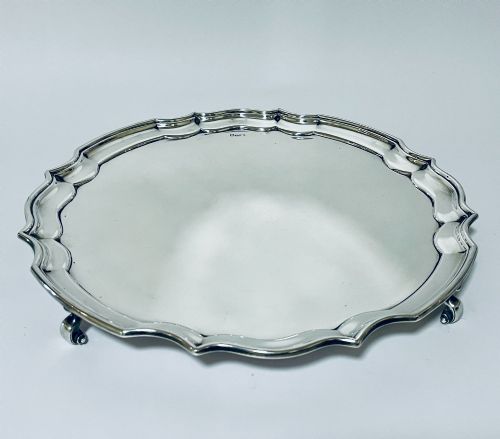
Salvers are the ones with feet. They usually lack handles and act as stationary resting places for letters or glasses.
Both forms existed side by side in the eighteenth and nineteenth centuries. The choice depends on what the original owner needed to carry.
Please note: This Antique Silver Trays guide and its associated pricing data are provided for general informational purposes only. It does not constitute formal financial, investment, or appraisal advice and should not be relied upon as the sole basis for any commercial activity, purchasing, or sales decisions. Sellingantiques.co.uk accepts no liability for any actions taken in reliance on this information. Always consult with a qualified professional or independent appraiser.
