
A 2026 Guide by Sellingantiques
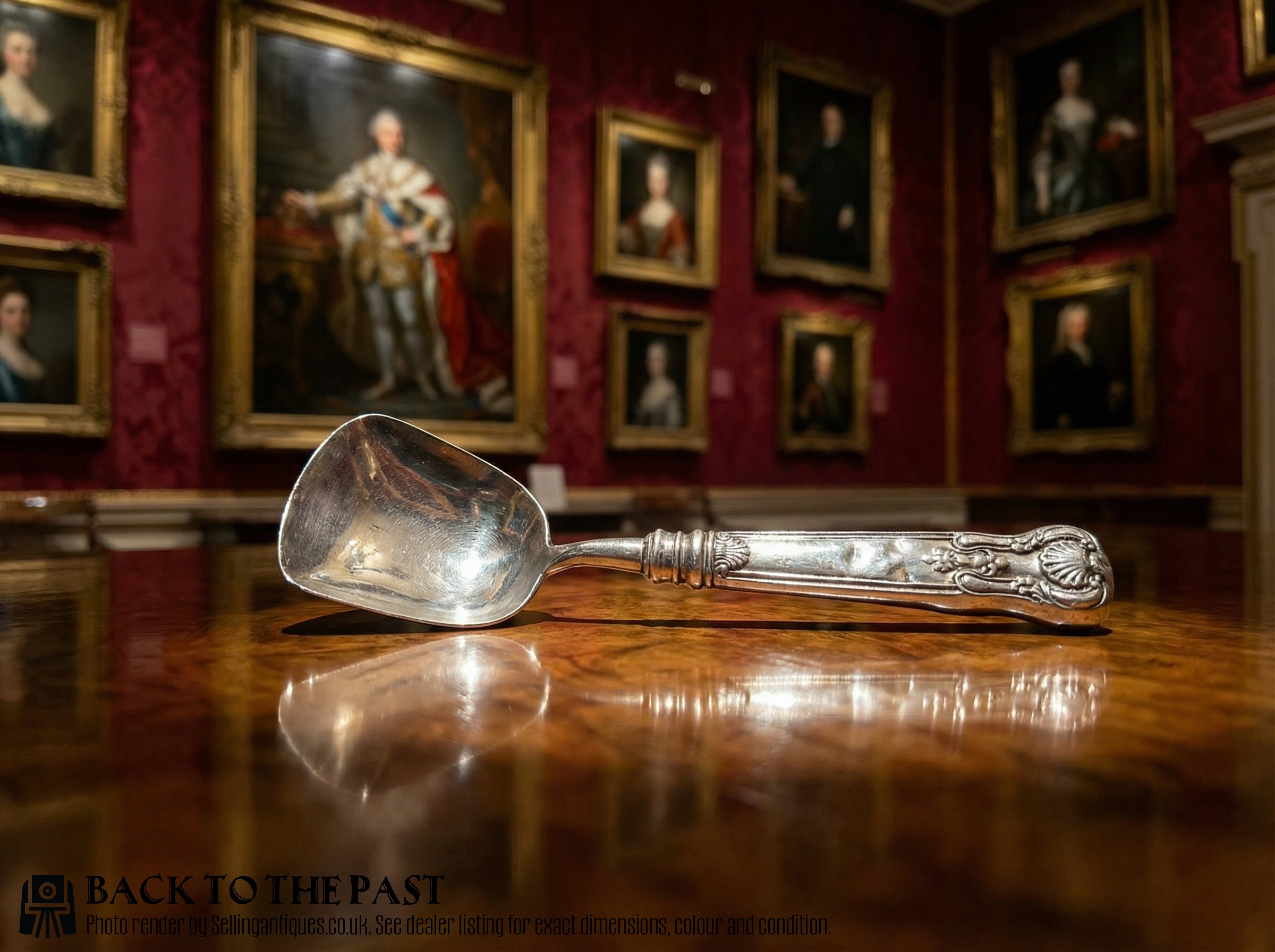
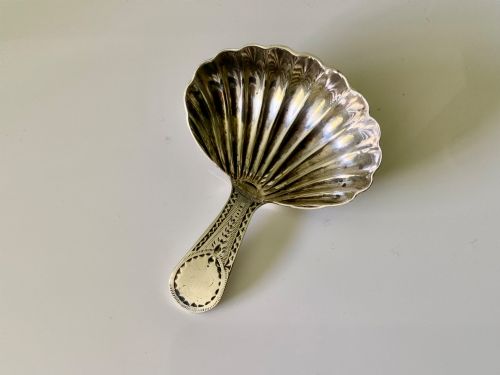
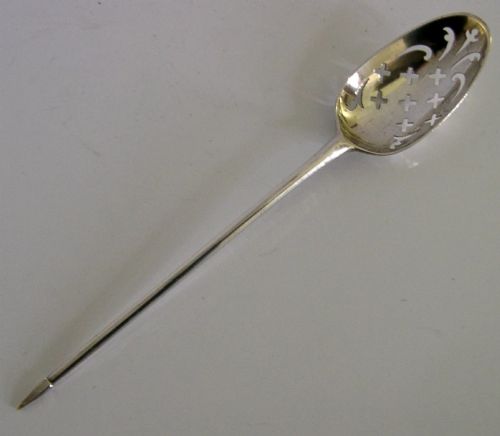
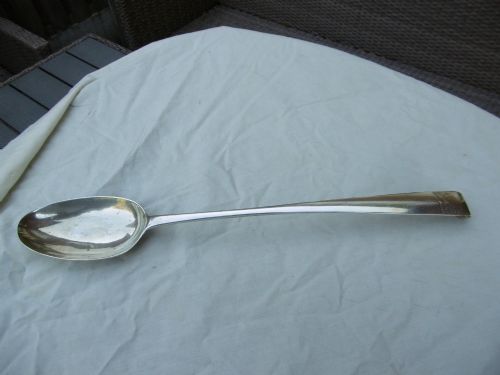
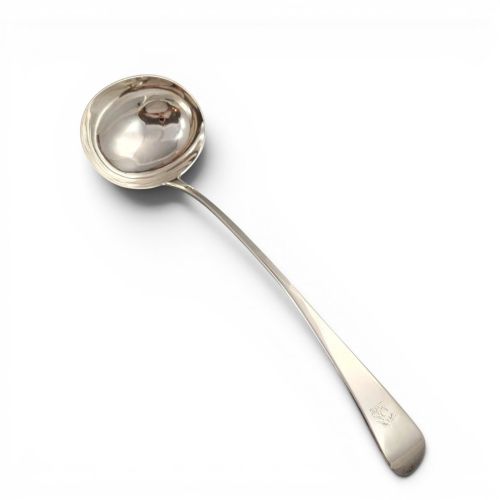
Antique Sugar Spoon, English, Sterling Silver, Hallmark, Georgian, Dated 1780, Georgian
Priced at £695 from London Fine Antiques
Small personal items carried on the person during the sixteenth century.
Look at the evolution of the bowl shape. Earlier examples tend to feature fig-shaped bowls, while later eighteenth-century pieces shift to an oval form.
Standard matched sets only became common when dining rooms developed as distinct architectural spaces.
Most antique silver spoons surviving from before the English Civil War are singular items rather than sets.
Hester Bateman ran a highly productive London workshop in the late eighteenth century, producing flatware with distinct bright-cut engraving.
Paul de Lamerie registered his mark in 1712 and supplied elaborate Rococo spoons to wealthy patrons.
Provincial makers operated in cities like Exeter or York. They stamped local town marks alongside their personal initials.
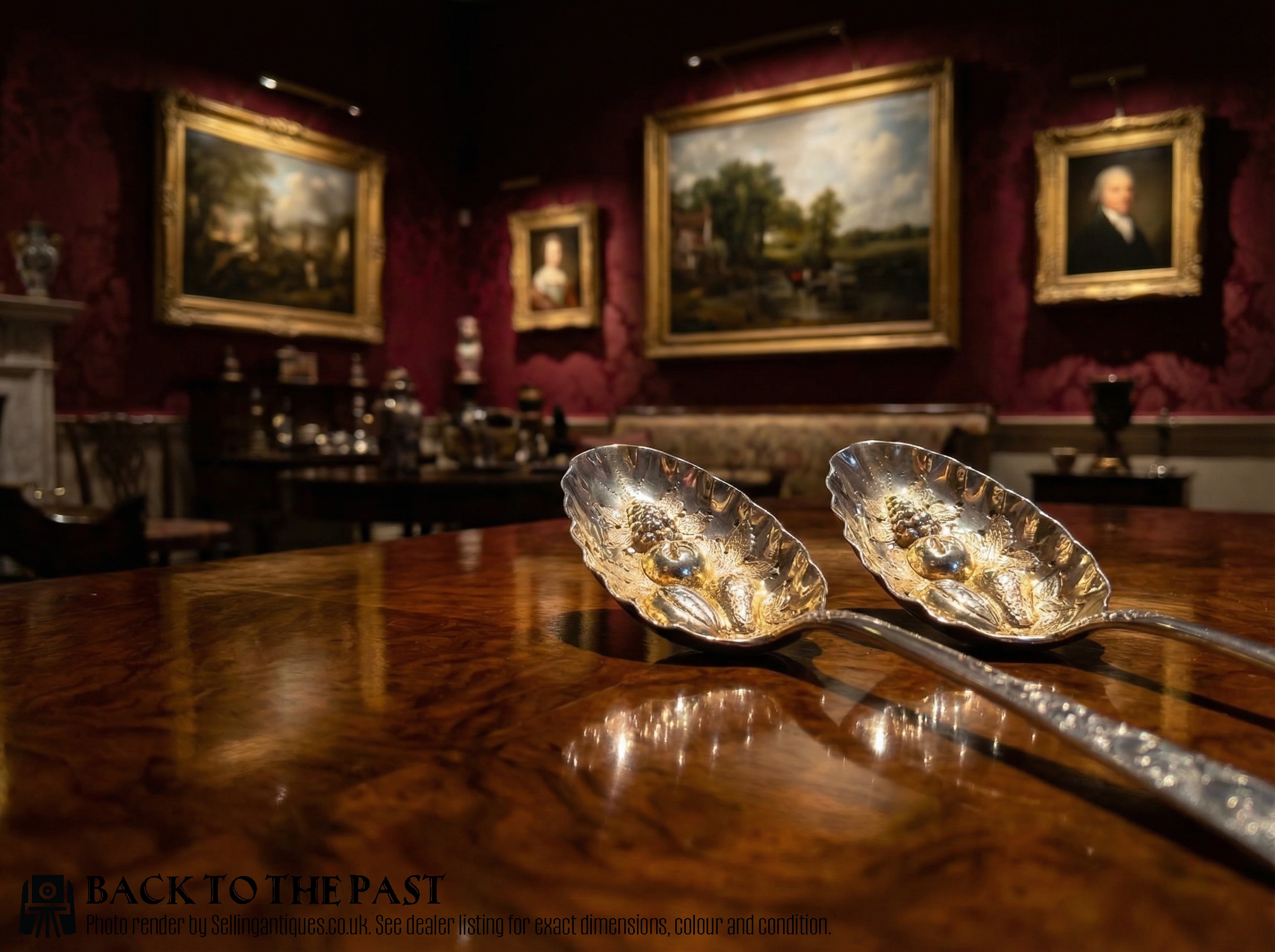
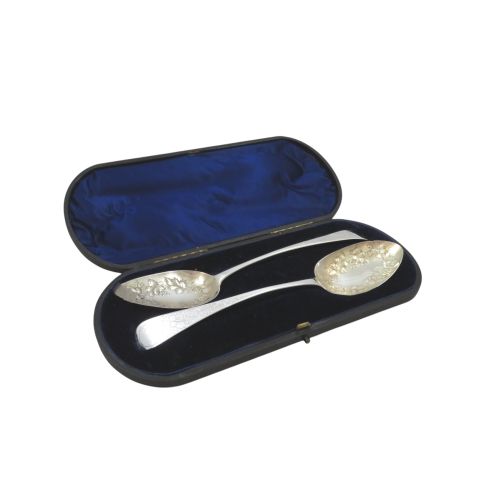
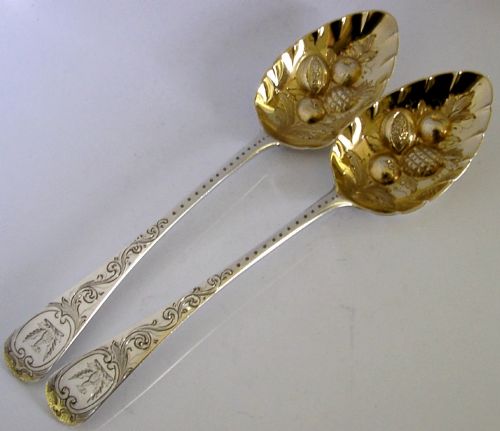
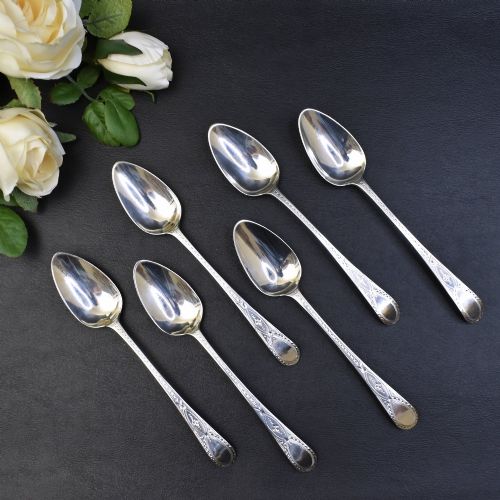
A Rare Pair of 18th Century Hallmarked Silver Berry Spoons (London, 1784), 18th Century
Priced at £295 from Quiet Street Antiques of Bath
The 2026 retail price guide for Antique Silver Spoons is drawn from a proprietary archive of over 1.1 million retail prices indexed by Sellingantiques since 2003. This guide relies exclusively on their own internal data; no external sources or auction records are used.
Analysing nearly 25 years of UK antique market history alongside current retail values, the data indicates that typical UK retail prices for Antique Silver Spoons range between £100 and £500. Entry-level prices generally fall under £100 and premium examples upwards of £500.
Examine the terminal at the top of the handle. Finials range from simple seals to intricate trefid ends.
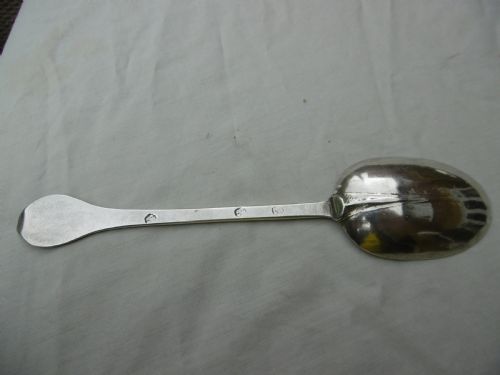
Hallmarks struck into the stem provide a reliable record of the maker and the assay year.
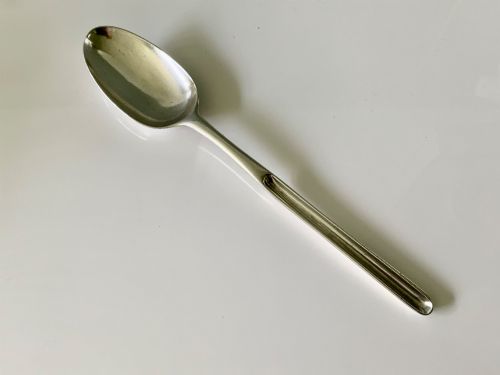
The drop on the back of antique silver spoons connects the bowl to the handle and adds structural strength.

Antique Imperial Russian Solid Silver Pair of Spoons with Cloisonne Enamel - Vasily Agafonov C.1882-1899, 19th Century
Priced at £1,500 from Artisan Antiques
Early spoons were forged from a single silver ingot. Silversmiths hammered the metal out flat to form both the bowl and stem.
Cast your eye over detailed finials. Apostle figures were made in separate moulds and soldered onto the forged handle later.
Die-stamping techniques gained ground in the late eighteenth century. This allowed antique silver spoons to be produced faster and with uniform patterns.
"Regional assay marks add a fascinating layer of local geography to collecting these pieces."
"Bright-cut engraving. This technique catches the candlelight in dining rooms to make the silver sparkle without needing heavy casting."
"Notice the way older spoons balance in the hand. The hand-forged taper creates a comfortable weight distribution for daily use."
Based on almost 25 years of Sellingantiques UK antique market data, Antique Silver Spoons appeared 7662 times (out of 1,100,000 antiques) which gives it a rarity score of 22/100.
This score measures scarcity within the Sellingantiques archive only and is not a survey of the entire antiques market, so these statistics may not be indicative of the general availability of Antique Silver Spoons elsewhere.
Use a good quality silver polish applied with a soft cotton cloth. Rub gently in straight lines rather than circles to avoid scratching the surface.
Wash the spoon in warm soapy water afterwards to remove any polish residue. Dry it immediately with a clean towel to prevent water spots forming.
Those letters form part of the hallmark system. The maker's mark usually consists of their initials, telling you exactly whose workshop produced the piece.
Another letter in a shaped shield indicates the year the metal was tested. The font and background shape change annually, allowing you to date the spoon to a specific year.
The rat-tail provides structural support where the handle meets the bowl. This area takes most of the stress during use.
It also served as a decorative feature.
That wear pattern tells you the spoon saw heavy daily use. The flatter side usually indicates whether the original owner was right or left-handed, as they repeatedly scraped that edge against their bowl.
Filing was sometimes done later to smooth out deep nicks or dents. It removes original material but makes the piece usable again for dining.
Please note: This Antique Silver Spoons guide and its associated pricing data are provided for general informational purposes only. It does not constitute formal financial, investment, or appraisal advice and should not be relied upon as the sole basis for any commercial activity, purchasing, or sales decisions. Sellingantiques.co.uk accepts no liability for any actions taken in reliance on this information. Always consult with a qualified professional or independent appraiser.
