






A 2026 Guide by Sellingantiques
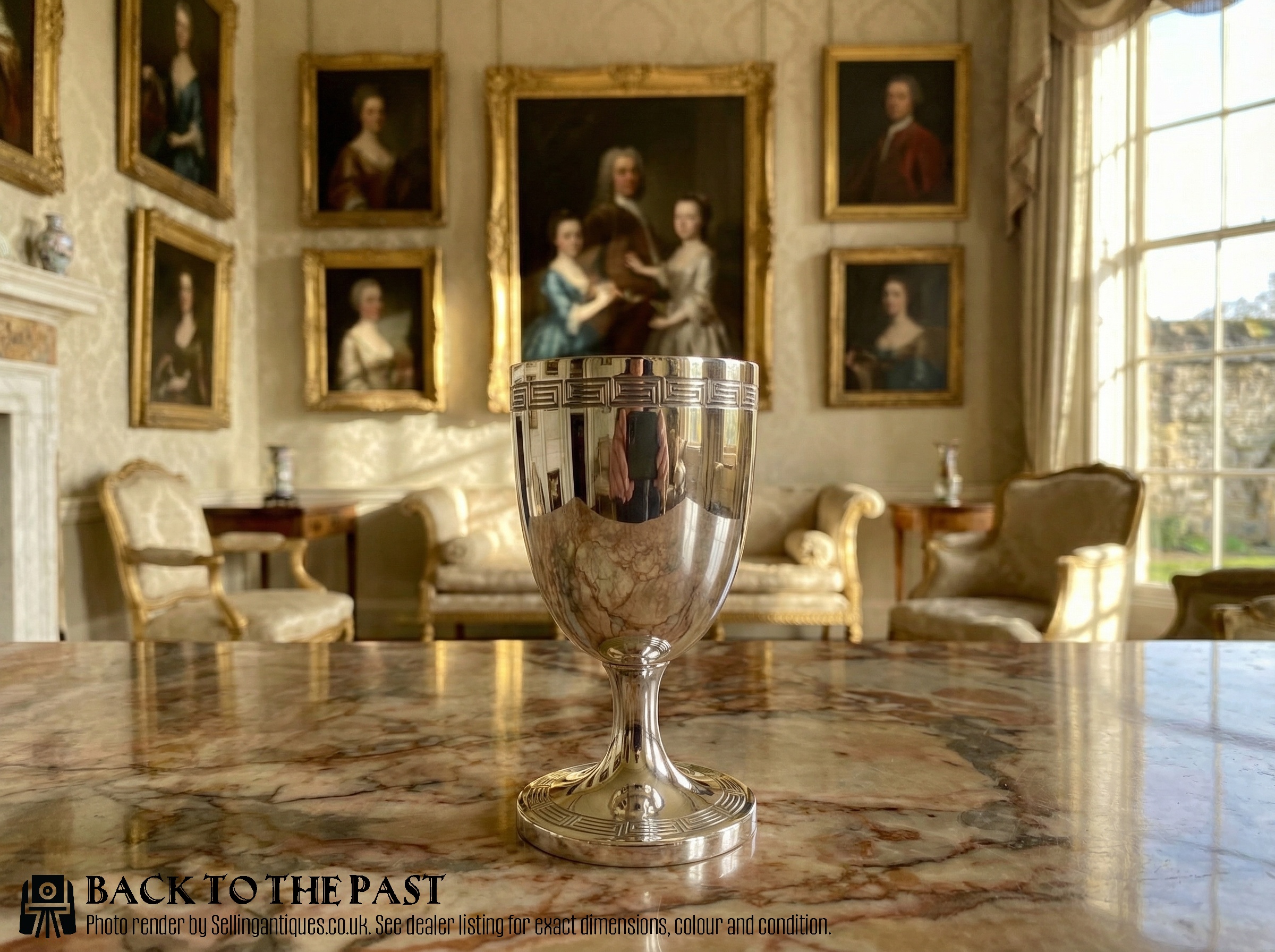
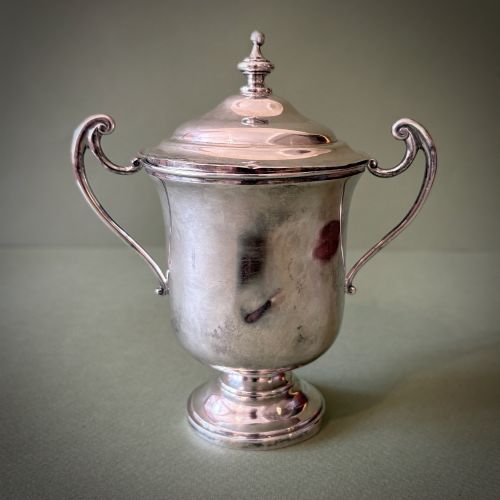
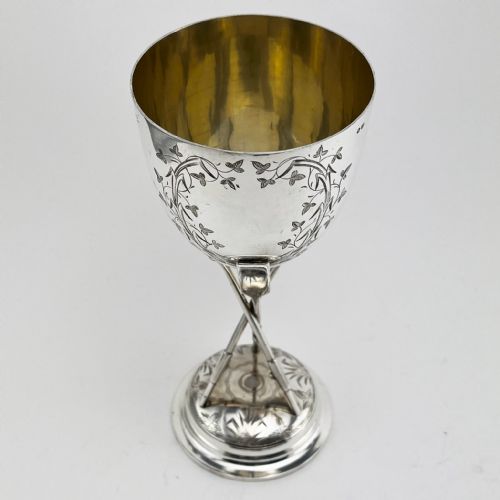
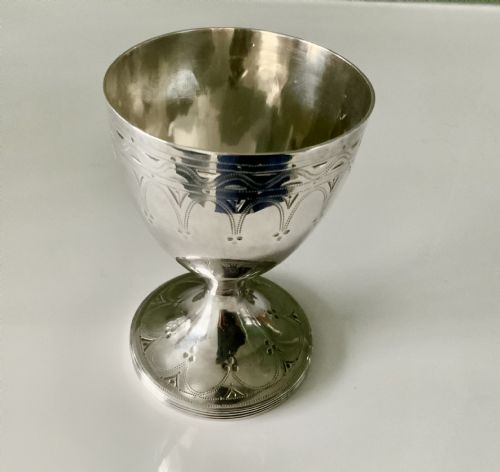
Silver Goblet by John Hunt and Robert Roskell, Victorian
Priced at £625 from Walton House Antiques
English production of antique silver goblets shifted through the centuries. Look at the transition from heavy Elizabethan standing cups to lighter domestic forms.
Georgian society demanded matching table services. Sets of these drinking vessels became standard equipment in grand dining rooms across the country.
Presentation pieces often appear. Societies and agricultural shows frequently awarded them as prizes during the nineteenth century.
Secular use dropped off during the Victorian era. Wine glasses took over the dining table.
Hester Bateman produced elegant plain forms during her working period from 1761 to 1790. Her workshops supplied many straightforward domestic examples.
Paul Storr created heavy, ornamented vessels. He ran his London workshops between 1792 and 1838.
Regional silversmiths also took a share of the trade. Makers in York and Exeter turned out provincial antique silver goblets for local clients.
The 2026 retail price guide for Antique Silver Goblets is drawn from a proprietary archive of over 1.1 million retail prices indexed by Sellingantiques since 2003. This guide relies exclusively on their own internal data; no external sources or auction records are used.
Analysing nearly 25 years of UK antique market history alongside current retail values, the data indicates that typical UK retail prices for Antique Silver Goblets range between £300 and £1,600. Entry-level prices generally fall under £300 and premium examples upwards of £1,600.
A knop midway down the stem provides a grip. This swelling stops wet fingers sliding down to the base.
Hallmarks usually sit near the rim. Sometimes you find them struck underneath the foot instead.
Engraved crests or initials frequently decorate the main bowl. Some have vacant cartouches where earlier engraving was polished out.
Early examples were raised from a single flat sheet of metal. Silversmiths hammered the shape over steel anvils using repeated blows.
Cast stems became common in the eighteenth century. Makers soldered these solid supports to the bowl and the foot.
Spin-forming sped up production later on. A lathe pushes the metal over a shaped wooden block to form the deep bowl.
"Many family crests survive crisply detailed on the bowls. These engravings act as an enduring record of local heraldry and social history."
"The warm patina on Georgian silver comes from tiny surface scratches blending over time. This soft grey finish gives old metal its distinct character."
"Surviving pairs or sets stay together across generations. Families pass them down carefully as a ready-made collection."
Based on almost 25 years of Sellingantiques UK antique market data, Antique Silver Goblets appeared 864 times (out of 1,100,000 antiques) which gives it a rarity score of 84/100.
This score measures scarcity within the Sellingantiques archive only and is not a survey of the entire antiques market, so these statistics may not be indicative of the general availability of Antique Silver Goblets elsewhere.
Yes, you can use them for wine. Most have a gilded interior designed to stop the liquid reacting with the metal.
Wash them in warm soapy water afterwards.
A soft cloth and a reputable silver polish will lift the tarnish. Go gently on any engraved areas to avoid wearing down the details.
Take care around the gilded interior. Heavy rubbing can strip the thin layer of gold off the base metal.
Try to polish them as rarely as possible.
Britannia standard is a higher purity alloy than sterling. It contains a greater proportion of fine silver, introduced by law in 1697 to stop people melting down coinage.
The mark shows a seated figure holding a trident. Silversmiths still use it today, though sterling became the normal standard again after 1720.
Fashions changed across the decades. Georgian taste often leaned towards plain forms with delicate bright-cut engraving or a simple family crest on the side.
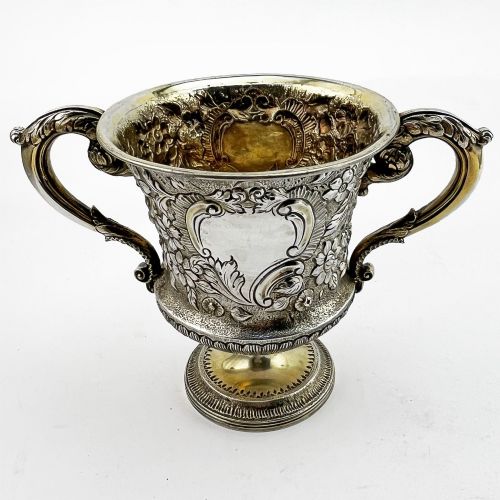
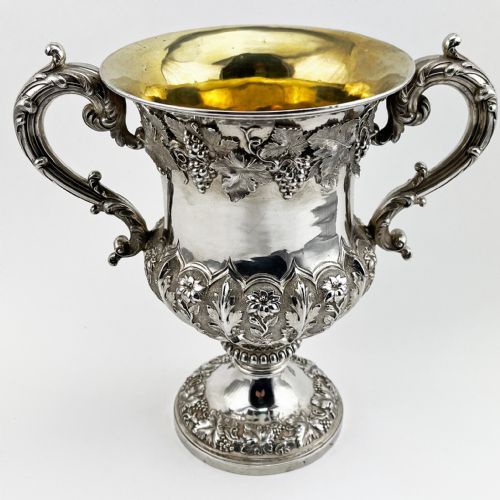
Victorian makers embraced complex decoration. They chased deep floral patterns into the metal to suit the heavier dining room aesthetics of the time.
Please note: This Antique Silver Goblets guide and its associated pricing data are provided for general informational purposes only. It does not constitute formal financial, investment, or appraisal advice and should not be relied upon as the sole basis for any commercial activity, purchasing, or sales decisions. Sellingantiques.co.uk accepts no liability for any actions taken in reliance on this information. Always consult with a qualified professional or independent appraiser.
