
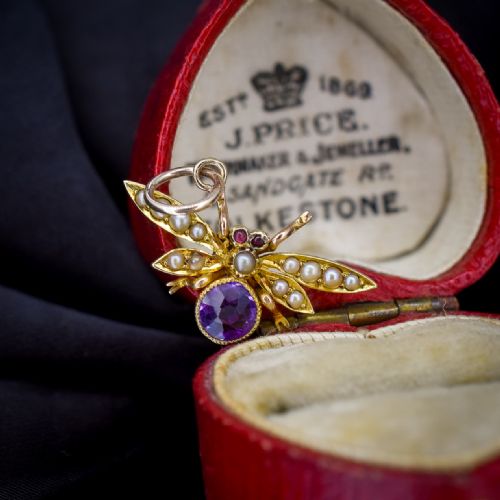
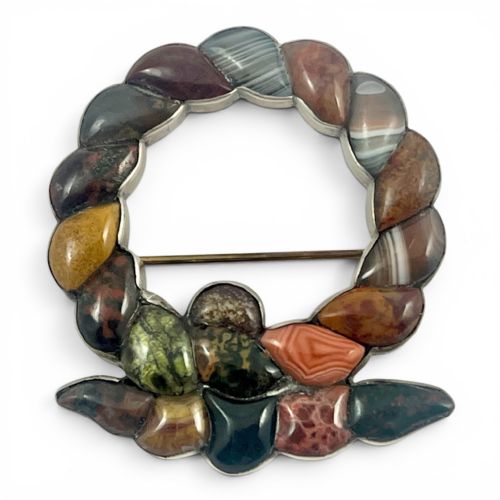
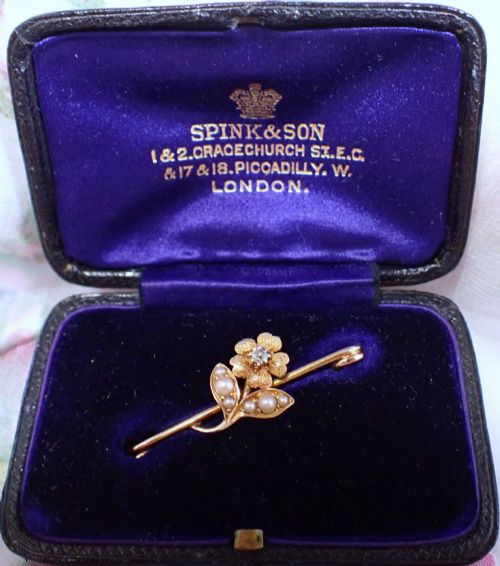


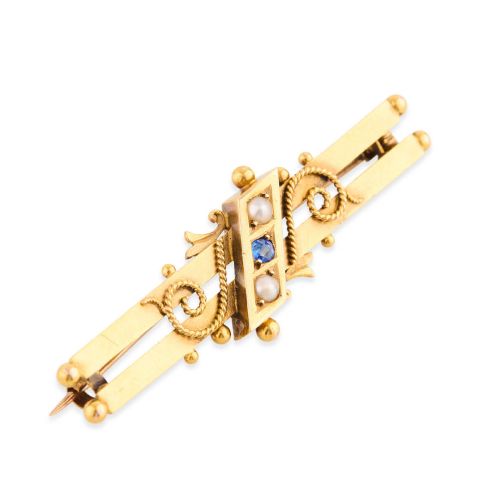
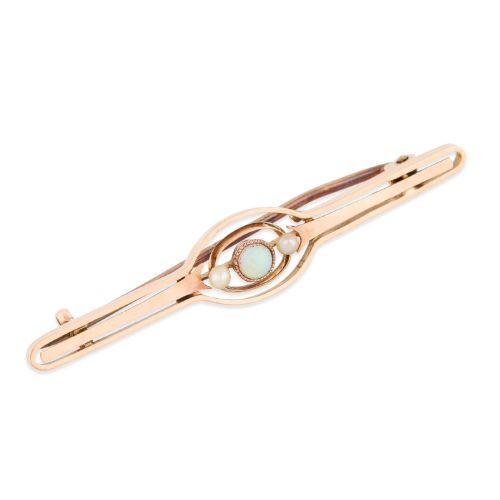
A 2026 Guide by Sellingantiques
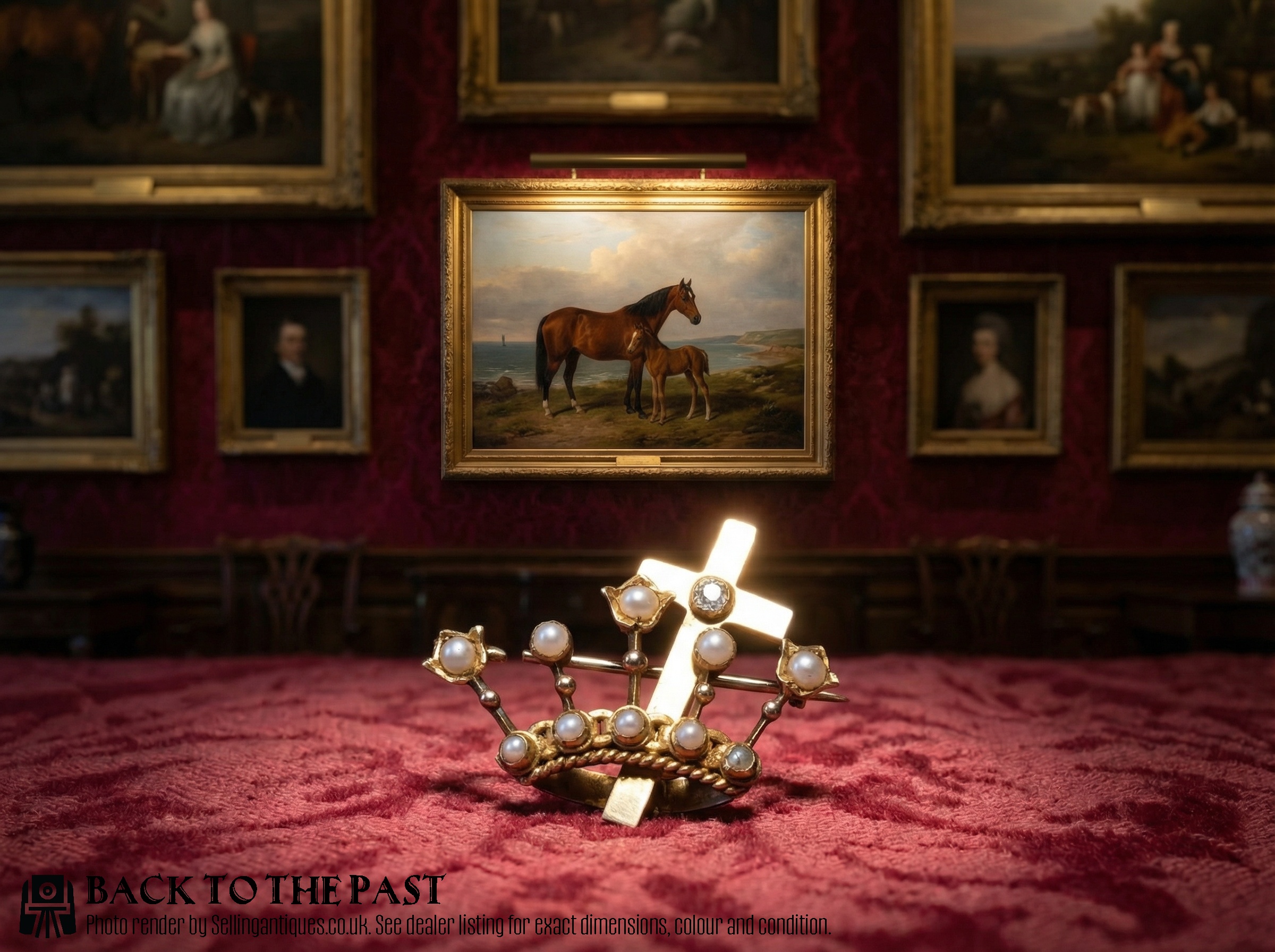
Antique Crown/coronet Brooch Diamond & Pearls with Cross 15k Gold - C.1890, Victorian
Priced at £850 from Artisan Antiques
Originating as functional cloak fasteners in antiquity, they slowly evolved into the highly decorative items we see today.
Look at Victorian pieces for mourning themes, often featuring woven hair or black enamel.
Antique brooches shifted from purely functional garment fasteners to status symbols by the eighteenth century, as dress fabrics became lighter and required less heavy pinning.
Edwardian designs embraced lighter aesthetics with platinum mounts replacing heavy silver settings.
Castellani led the archaeological revival style in Rome during the mid-nineteenth century, specialising in intricate gold granulation work.
Look for René Lalique when dealing with Art Nouveau antique brooches, as his workshop mastered plique-à-jour enamel and unconventional materials like horn.
The House of Fabergé produced fine small-scale pins and clips in pre-revolutionary Russia, frequently incorporating brightly coloured guilloché enamel alongside locally sourced stones like Siberian amethysts.
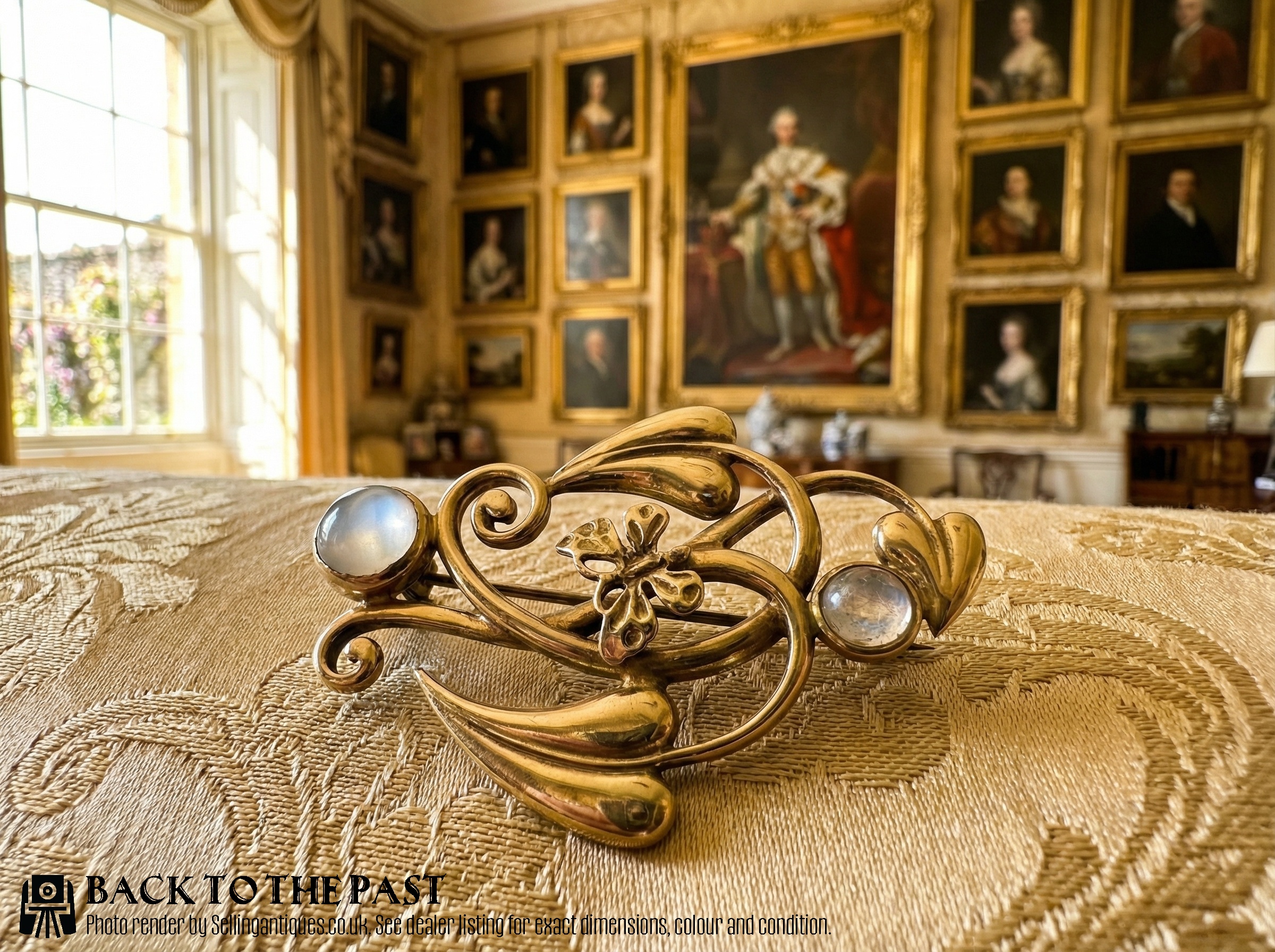
9ct Gold Art Nouveau Butterfly Motif Moonstone Brooch, 1890
Priced at £395 from AgAu Jewellery
The 2026 retail price guide for Antique Brooches is drawn from a proprietary archive of over 1.1 million retail prices indexed by Sellingantiques since 2003. This guide relies exclusively on their own internal data; no external sources or auction records are used.
Analysing nearly 25 years of UK antique market history alongside current retail values, the data indicates that typical UK retail prices for Antique Brooches range between £200 and £3,000. Entry-level prices generally fall under £200 and premium examples upwards of £3,000.
Examine the fastening mechanism closely, as the style of the pin and clasp often points directly to the period it was made.
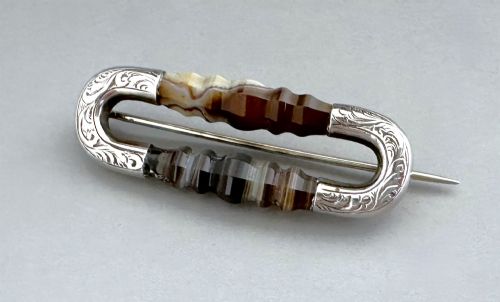
Simple C-clasps lacking any safety mechanism are standard on most nineteenth-century examples, meaning the long pin rests directly inside a basic curved metal hook.
Extended pins that protrude well beyond the main body are a classic sign of early to mid-Victorian design.

Victorian Lava Cameo Brooch of Demeter, Silver Mount, C.1860, Victorian
Priced at £285 from Touch of Time Antiques
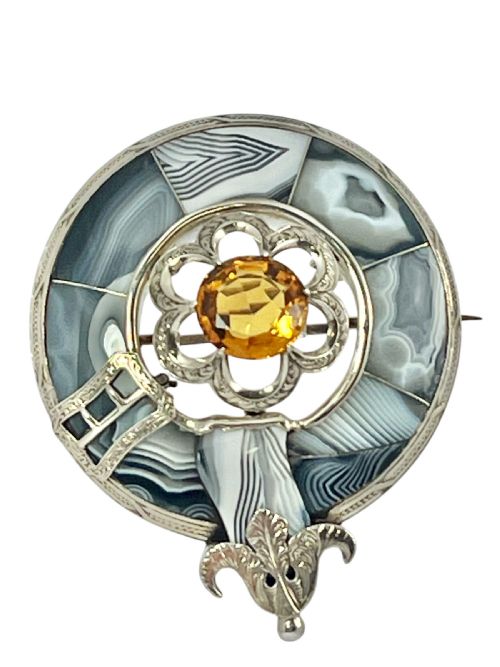
Georgian jewellers set stones in closed silver mounts backed with foil.
Notice the transition to platinum in the early twentieth century, as the metal's strength allowed craftsmen to create highly delicate, lace-like pierced mounts for diamonds.
Late Victorian mass production introduced machine-stamped gallery components, replacing the laborious process of hand-sawing every intricate design out of a solid sheet of gold.
"Many larger Victorian examples feature a hidden glass compartment on the reverse side, originally designed to securely hold a woven lock of a loved one's hair."
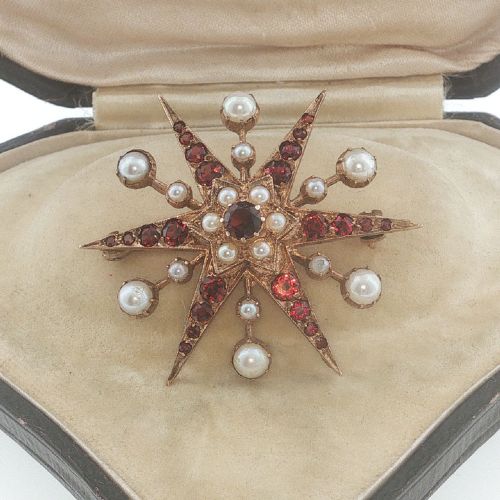
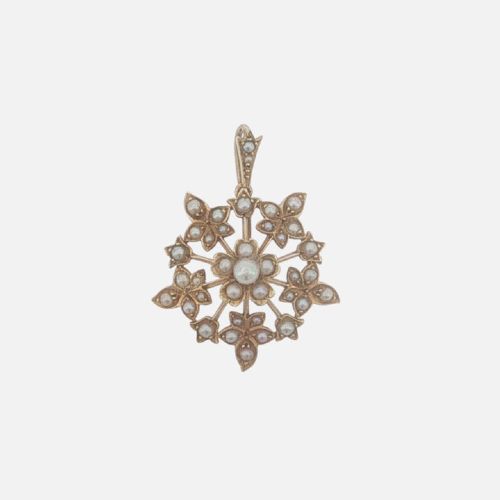
"Some Edwardian sunburst designs pull double duty. They often include a removable pin fitting on the back, allowing the piece to also be worn as a pendant."
"Jewellers specifically engineered spring-loaded trembler fittings to catch the flicker of candlelight, adding movement during evening events."
Based on almost 25 years of Sellingantiques UK antique market data, Antique Brooches appeared 7085 times (out of 1,100,000 antiques) which gives it a rarity score of 24/100.
This score measures scarcity within the Sellingantiques archive only and is not a survey of the entire antiques market, so these statistics may not be indicative of the general availability of Antique Brooches elsewhere.
Keep paste jewellery well away from water. The stones sit over coloured metal foil that ruins if moisture seeps behind the glass.
Use a dry bristle brush to clear dust from the gallery.
Leave the dark areas exactly as they are. That surface oxidisation is known as patina, and it takes decades to build up naturally within the recessed areas of the metalwork.
Patina provides visual depth and highlights the engraved details on a piece. Aggressively polishing a textured antique brooch flat and bright often strips away its character.
This stamp turns up frequently on late Victorian and Edwardian lockets and brooches. It indicates that the main front and back panels are made of solid nine-carat gold.
The internal strengthening cores are made from a base metal to provide rigidity. This method gave the piece the durability required for daily wear while keeping the outward appearance of solid gold.
Extended pins are entirely standard for nineteenth-century pieces. Before the invention of modern safety catches, a longer pin resting in a deep C-clasp was the primary way to stop heavy jewellery from falling off.
The pin had to gather up a thick bunch of dense Victorian fabric to hold the weight of the metal. If you find an early antique brooch with a short pin, it usually means a later repair.
Please note: This Antique Brooches guide and its associated pricing data are provided for general informational purposes only. It does not constitute formal financial, investment, or appraisal advice and should not be relied upon as the sole basis for any commercial activity, purchasing, or sales decisions. Sellingantiques.co.uk accepts no liability for any actions taken in reliance on this information. Always consult with a qualified professional or independent appraiser.
