


A 2026 Guide by Sellingantiques
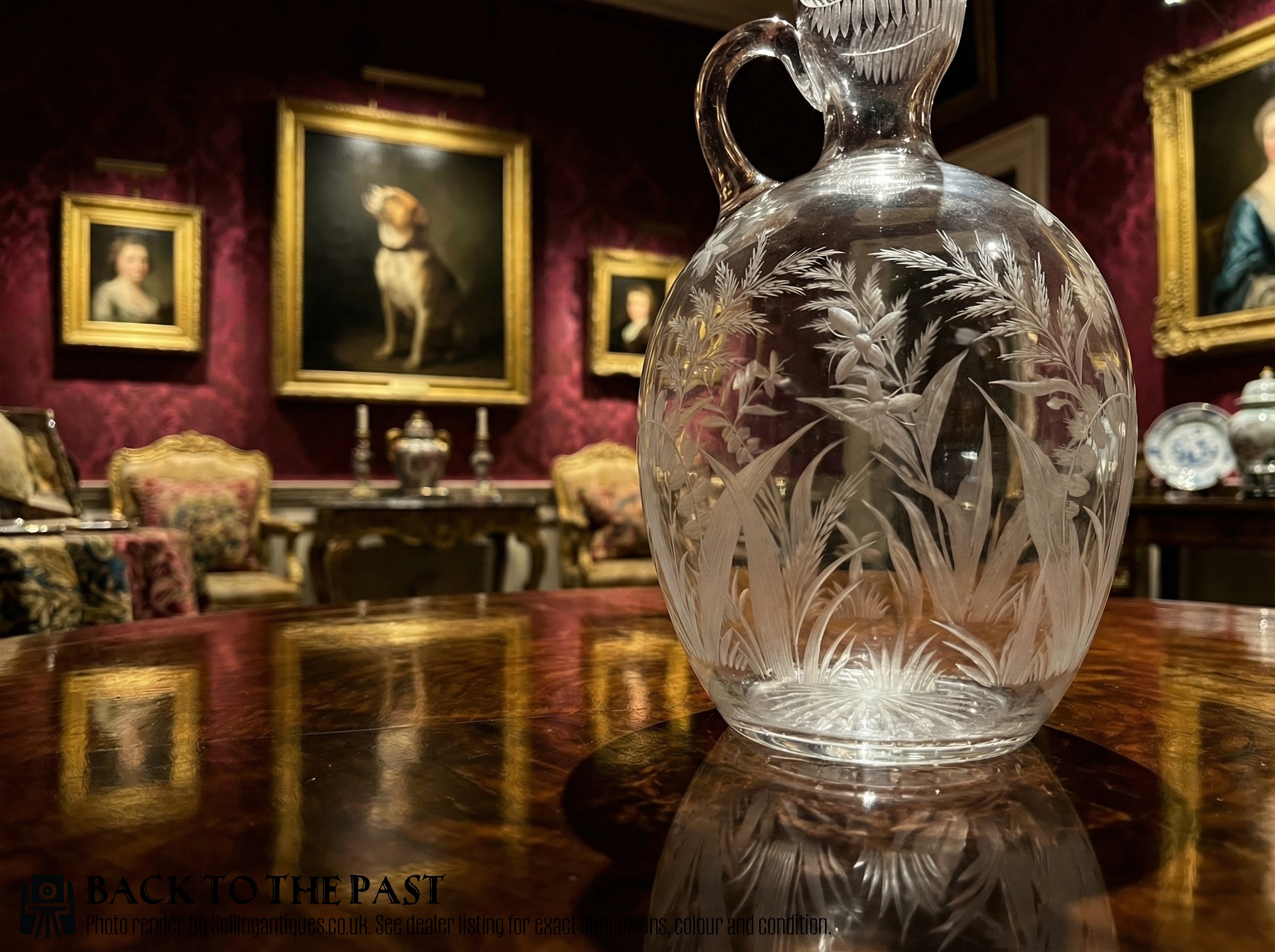
Antique 19th Century Engraved Jug, 19th Century
Priced at £245 from Rebecca Sarah Antiques
Production of antique glass jugs surged during the Georgian period when dining habits changed.
Mid-Victorian households needed specific vessels for claret, water and ale.
Look at the evolution of table settings. Jugs moved from the sideboard to the centre of the dining table.
Press-moulding technology transformed the regional glass trade across the 1830s.
Apsley Pellatt operated in London during the early nineteenth century. His factory produced high-quality cut vessels.
Waterford stands out in Ireland. Their late eighteenth-century output includes heavy jugs with deep, sharp cutting.
Regional glasshouses across Stourbridge supplied a massive portion of the domestic market through the Victorian era.

19th C Glass Jug, 1850
Priced at £150 from Mytton Antiques - Jerrard Nares
The 2026 retail price guide for Antique Glass Jugs is drawn from a proprietary archive of over 1.1 million retail prices indexed by Sellingantiques since 2003. This guide relies exclusively on their own internal data; no external sources or auction records are used.
Analysing nearly 25 years of UK antique market history alongside current retail values, the data indicates that typical UK retail prices for Antique Glass Jugs range between £200 and £1,300. Entry-level prices generally fall under £200 and premium examples upwards of £1,300.
Applied handles often feature a folded lower terminal. This ribbed or crimped detail strengthens the joint against daily use.
Look for the pinched spout. Craftsmen formed this simple pouring lip while the rim remained hot and pliable.
Wheel-engraved motifs frequently decorate the bellies of antique glass jugs. Barley and hops point to an ale jug.
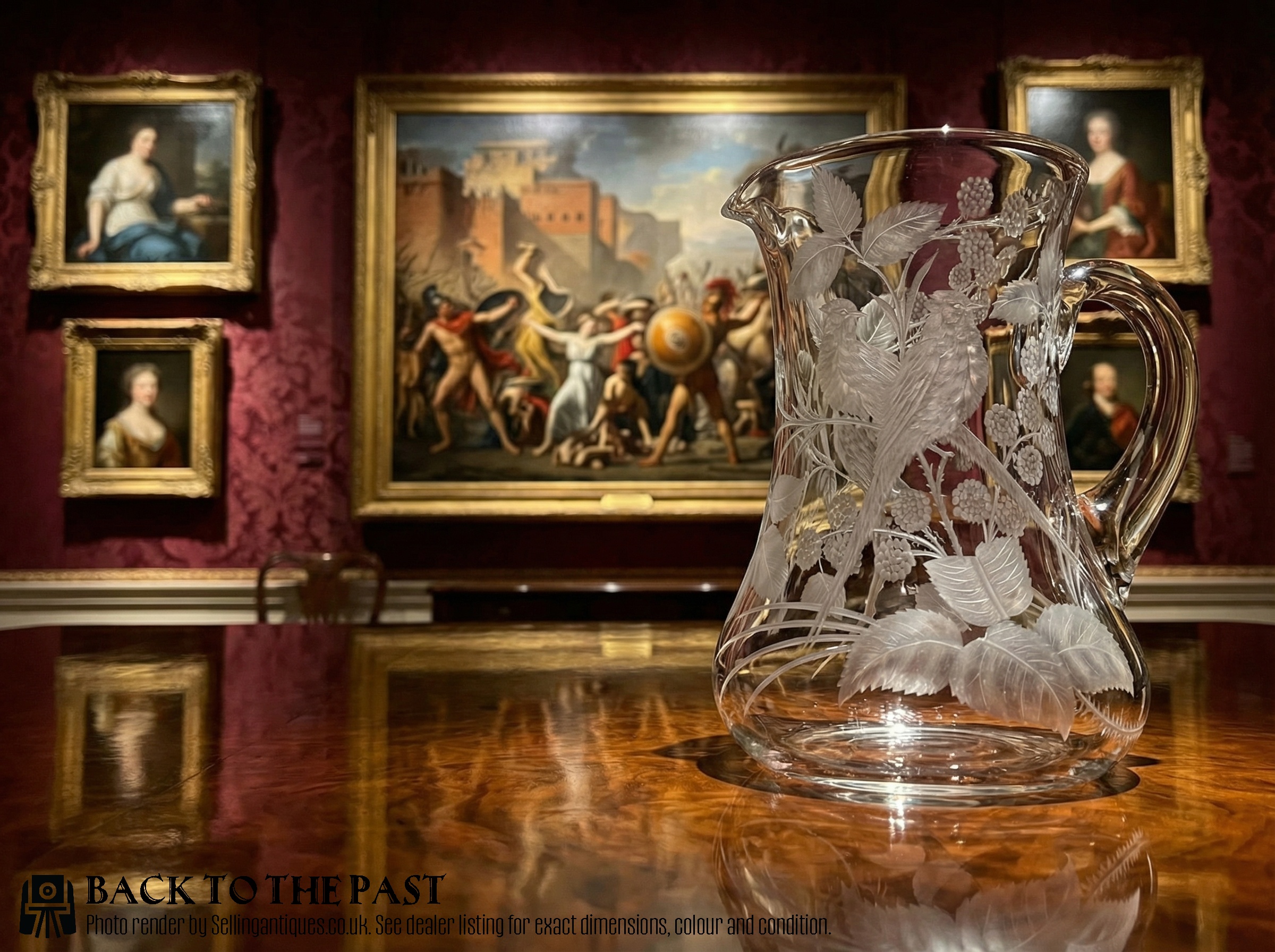
A Very Fine Stourbridge Hand Wheel Engraved Glass Vase, English Circa 1890
, 1890
Priced at £795 from Robert Belcher Antiques
Free-blowing requires the maker to shape the molten gather entirely by hand and lung power.
Mould-blown pieces rely on a carved wooden or metal casing. This imparts a uniform shape and surface pattern to the vessel.
Cutting is done after the piece cools. The glass is held against a rotating stone or copper wheel to create facets.
"Many heavy Victorian examples balance well in the hand when full. The handle placement was calculated to offset the weight of the liquid."
"Engravers worked from memory. They held the blank vessel against a spinning copper wheel to cut complex fern motifs without guidelines."
"The addition of lead oxide made English crystal highly refractive. It catches candlelight better than standard glass."
Based on almost 25 years of Sellingantiques UK antique market data, Antique Glass Jugs appeared 1768 times (out of 1,100,000 antiques) which gives it a rarity score of 70/100.
This score measures scarcity within the Sellingantiques archive only and is not a survey of the entire antiques market, so these statistics may not be indicative of the general availability of Antique Glass Jugs elsewhere.
Warm water and a mild detergent work best for routine cleaning. Avoid putting old glass in a dishwasher, as the heat and harsh chemicals cause permanent clouding.
For stubborn calcium deposits, a soak in white vinegar often lifts the haze. Swill it around for a few hours before rinsing well.
Heavy jugs from the nineteenth century were often intended for water or ale. The thick walls helped keep the contents cool during meals.
Look at the shape and any engraving. Narrow necks often suit wine or claret, while wide-mouthed, barrel-shaped pieces point towards ale.
The weight usually comes from a high lead oxide content. English glassmakers added lead to the mix from the late seventeenth century onwards.
This gave the finished piece a noticeable heft.
That rough patch is the pontil mark. It happens when the glassblower breaks the finished vessel off the solid iron rod used to hold it during shaping.
Early makers left these scars exactly as they broke. By the nineteenth century, most workshops ground the marks down and polished them smooth. Leaving it rough was normal practice for earlier, everyday domestic wares.
Please note: This Antique Glass Jugs guide and its associated pricing data are provided for general informational purposes only. It does not constitute formal financial, investment, or appraisal advice and should not be relied upon as the sole basis for any commercial activity, purchasing, or sales decisions. Sellingantiques.co.uk accepts no liability for any actions taken in reliance on this information. Always consult with a qualified professional or independent appraiser.
