
A 2026 Guide by Sellingantiques

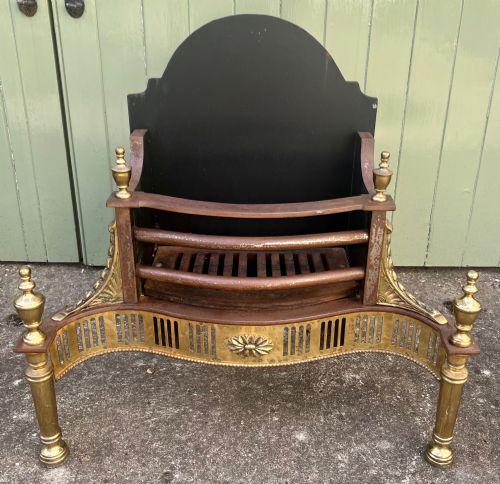
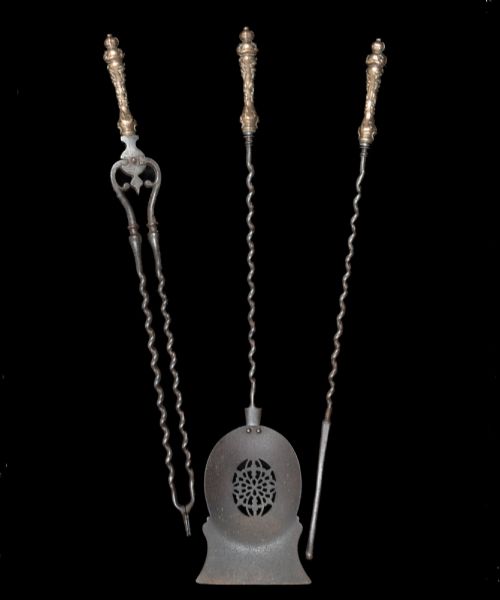
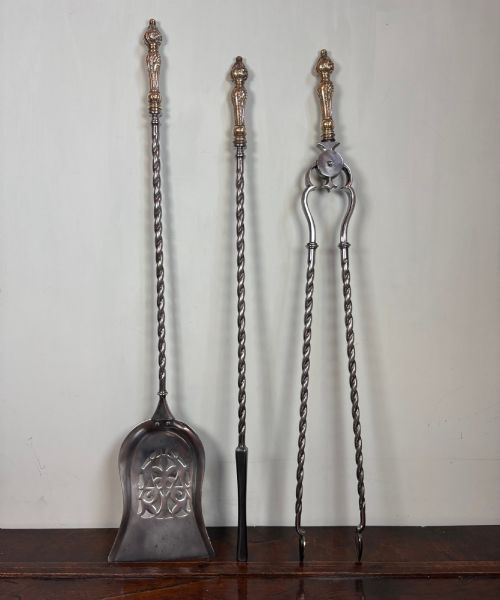
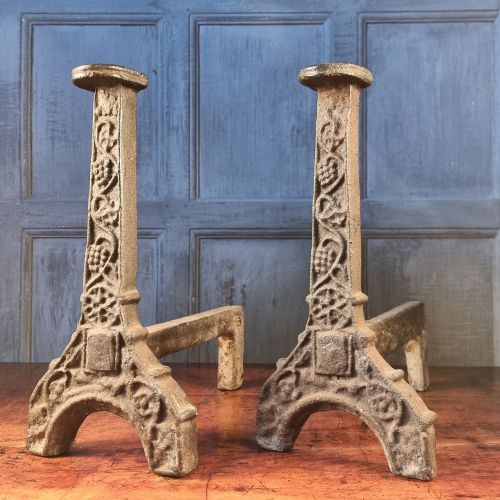
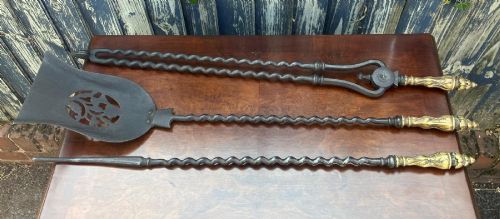
Antique Victorian Quality Brass Fire Irons and Fire Dogs, 1860
Priced at £495 from Unique Antiques by Emma Jade
Chinese tailors used metal pans filled with hot coals long before European examples appear. Some brass pan irons date back to the Ming dynasty.
Blacksmiths forged early flat irons by hand in one solid piece. These needed heating directly on an open fire or stove top.
The arrival of the cast iron industry changed domestic laundry work. Foundries started turning out matched pairs of antique irons for continuous use.
Look at the evolution of box irons. Hollow bodies held a pre-heated metal slug, keeping ash and soot away from clean damp fabrics.
Liquid fuel models arrived much later. Spirit irons ran on methylated spirits or paraffin, making the chore independent from the kitchen range.
Kenrick & Sons of West Bromwich dominated British production for decades. Their catalogues show dozens of numbered flat iron patterns throughout the nineteenth century.
Salter stamped their name on many domestic cast iron laundry items. You frequently spot their trade marks on spring-loaded handles and box irons.
American foundries like Enterprise Manufacturing produced patented detachable handles. Mrs Potts designed an 1871 patent where a cool wooden grip snaps onto multiple bases.

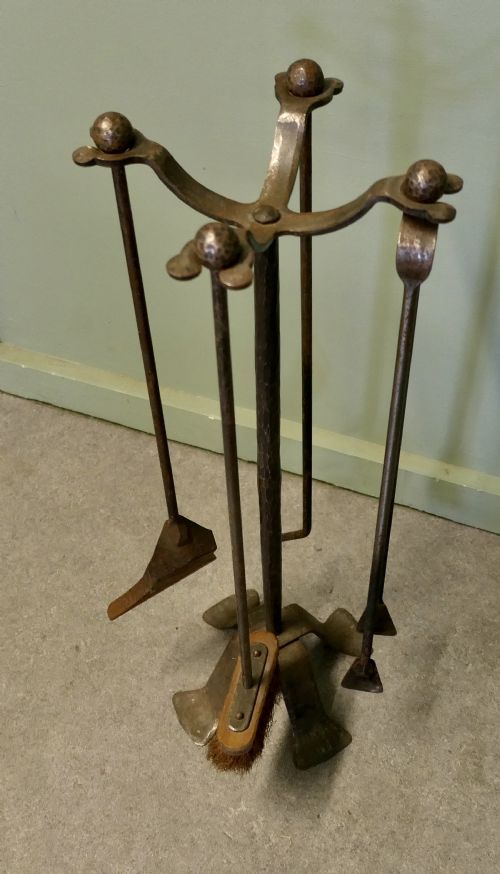
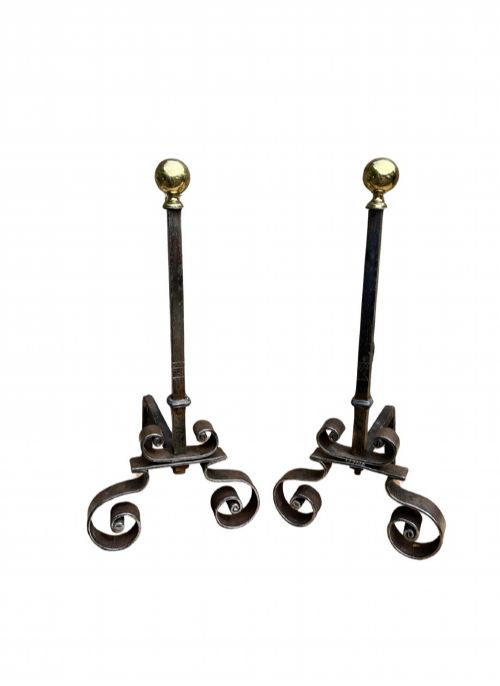
Pair of Hand-forged Antique Fire Dogs (Andirons), Circa 1900, 1900
Priced at £420 from Surrey Antiques by Gary J Hall
The 2026 retail price guide for Antique Irons is drawn from a proprietary archive of over 1.1 million retail prices indexed by Sellingantiques since 2003. This guide relies exclusively on their own internal data; no external sources or auction records are used.
Analysing nearly 25 years of UK antique market history alongside current retail values, the data indicates that typical UK retail prices for Antique Irons range between £400 and £1,900. Entry-level prices generally fall under £400 and premium examples upwards of £1,900.
Sad irons possess a solid metal body. The word 'sad' simply meant heavy or solid in older English dialects.
Charcoal models feature small chimneys and ventilation holes. A hinged lid allows hot embers inside, while the draught keeps them glowing.
Check the slug inside a box iron. Many retain their original shaped heating core, which drops neatly into the rear cavity.
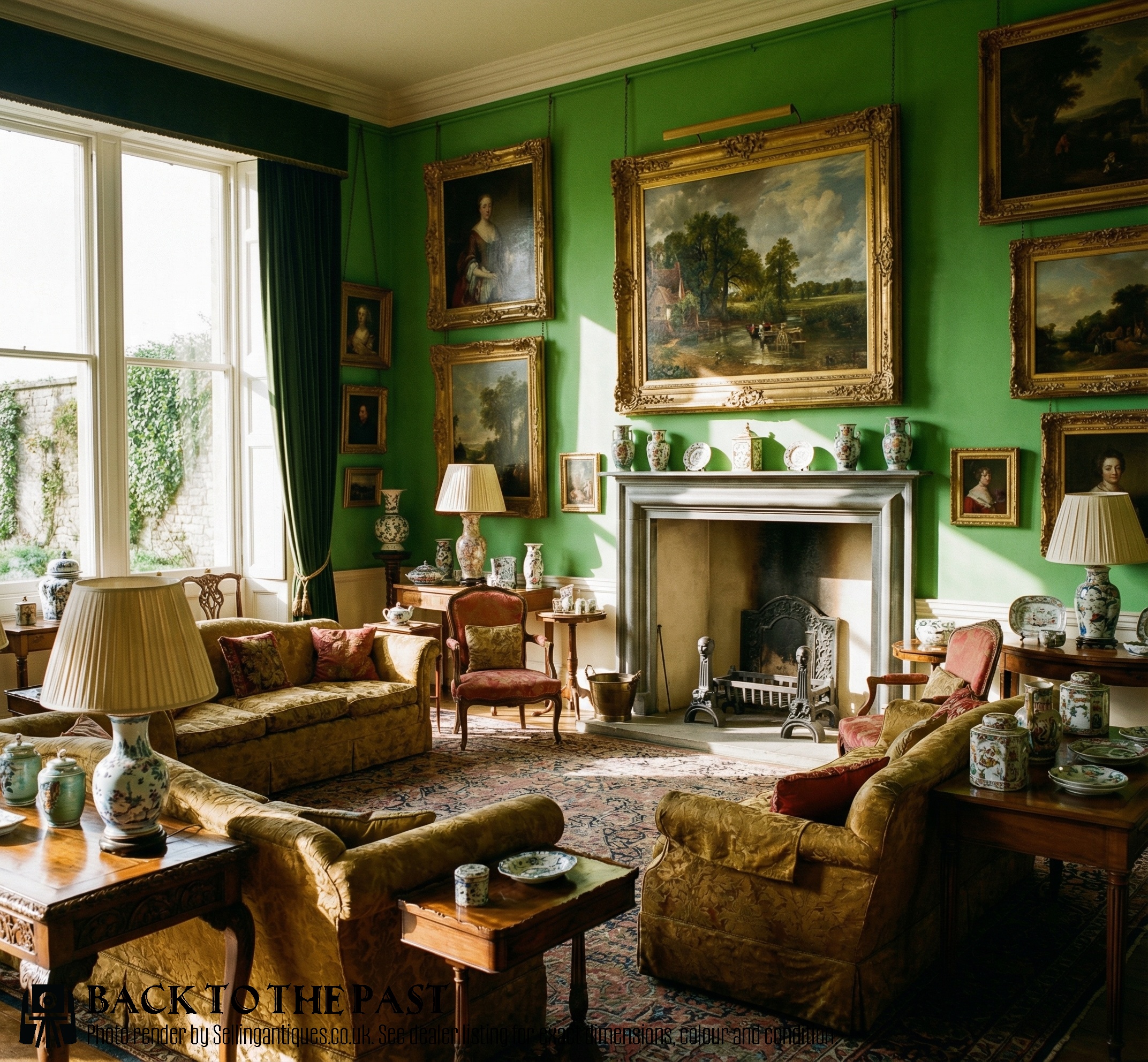
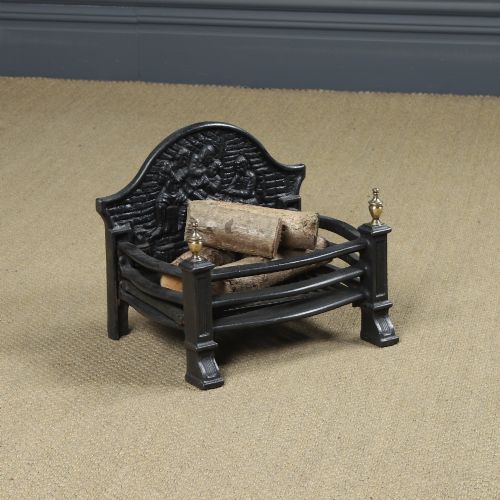
Very Heavy 19th Century Inglenook Fire Grate on Andirons, 1880
Priced at £1,250 from Elmgarden
Early forged examples show distinct hammer marks. Blacksmiths shaped the handle and base from raw iron before filing the sole smooth.
Sand casting allowed mass production of complex shapes. Foundries created two-part wooden patterns, leaving faint seam lines visible along the edges of the iron.
Notice the mechanical latches on box iron doors. Fitters filed and pinned these catches by hand to ensure the hot inner core held fast during use.
"Tailor's geese often weigh upwards of twenty pounds. These massive irons hold heat for hours, making them ideal for pressing heavy woollen suits and coats."
"Some brass charcoal irons feature tiny carved wooden details. You find small turned toggles on the latch mechanisms to protect fingers from the hot metal."
"Small toy irons taught children domestic chores. Many function like the full-size versions, complete with miniature trivets and removable wooden handles."
Based on almost 25 years of Sellingantiques UK antique market data, Antique Irons appeared 13248 times (out of 1,100,000 antiques) which gives it a rarity score of 7/100.
This score measures scarcity within the Sellingantiques archive only and is not a survey of the entire antiques market, so these statistics may not be indicative of the general availability of Antique Irons elsewhere.
Start with fine wire wool and a light oil. Work gently in small circles over the rusted areas, wiping away the loose brown dust as you go.
Heavy pitting on the sole plate rarely polishes out. You can seal the cleaned metal with a thin coat of microcrystalline wax to stop the rust returning.
Those are charcoal irons. Laundresses placed glowing embers taken directly from the kitchen fire into the main body of the tool.
The small chimney directed the exhaust smoke away from the operator's face. Meanwhile, the side vents drew in fresh air as the iron swung back and forth, keeping the coals burning hot.
Sometimes you find a small metal grate resting inside. This kept the charcoal elevated, preventing ash from clumping at the bottom and ruining the air draught.
A tailor's goose is an oversized flat iron used in the clothing trade. The curved handle resembles a goose's neck, which gave the tool its traditional name.
They weigh significantly more than standard domestic irons. Tailors needed the massive weight to press sharp creases into heavy woollen cloths.
Cast iron loses heat rapidly once pressed against damp laundry. Using a single flat iron meant stopping work to wait for it to reheat on the stove.
A set of three kept the work flowing smoothly. One iron was in active use, a second sat heating on the stove, and the third was cooling down ready to join the back of the queue.
Foundries sold them in matched sets for this reason. The system allowed domestic laundresses to work continuously through a large basket of damp linens.
Please note: This Antique Irons guide and its associated pricing data are provided for general informational purposes only. It does not constitute formal financial, investment, or appraisal advice and should not be relied upon as the sole basis for any commercial activity, purchasing, or sales decisions. Sellingantiques.co.uk accepts no liability for any actions taken in reliance on this information. Always consult with a qualified professional or independent appraiser.
