


A 2026 Guide by Sellingantiques

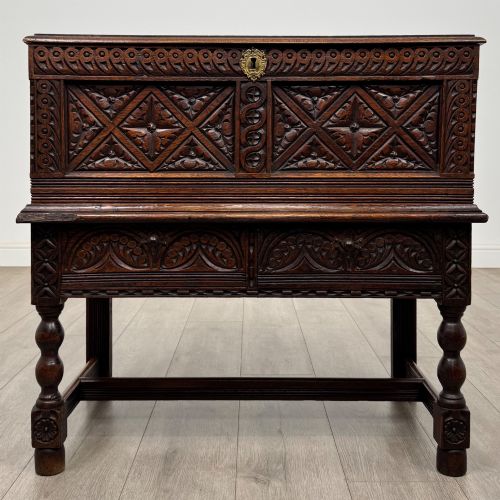
C17th Oak Mule Chest Coffer, 17th Century
Priced at £895 from Fernyhough Antiques Ltd
Sixteenth-century households relied on these heavy forms for moving and storing goods.
Earlier examples just use six thick boards pinned together.
Joiners eventually developed panelled construction to solve structural issues, allowing the timber to shrink and expand freely without splitting as it aged.
Look at seventeenth-century household inventories to see how common antique oak chests were across different social classes.
By the late eighteenth century, tall chests of drawers mostly replaced them in towns.
Identifying specific makers of antique oak chests isn't usually possible.
Provincial joiners made most of them without signing their work, passing skills down through families.
Regional carving styles help pinpoint origins. Yorkshire chests often feature distinct inlaid motifs and specific geometric patterns on the front panels.

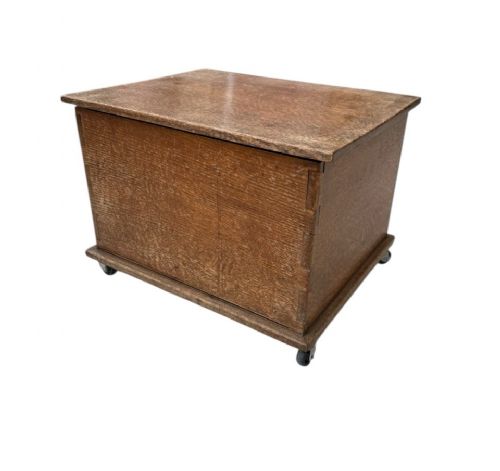
Nineteenth Century Oak Silver Chest, 1860
Priced at £265 from Ropeworks Antiques
The 2026 retail price guide for Antique Oak Chests is drawn from a proprietary archive of over 1.1 million retail prices indexed by Sellingantiques since 2003. This guide relies exclusively on their own internal data; no external sources or auction records are used.
Analysing nearly 25 years of UK antique market history alongside current retail values, the data indicates that typical UK retail prices for Antique Oak Chests range between £500 and £1,900. Entry-level prices generally fall under £500 and premium examples upwards of £1,900.
Carved friezes frequently run along the top rail on many seventeenth-century examples.
Inside, you sometimes find a small lidded till. This held spices or candles safely away from the heavy goods stored below.
Pegged mortise and tenon joints lock the oak frame together without needing modern glue.

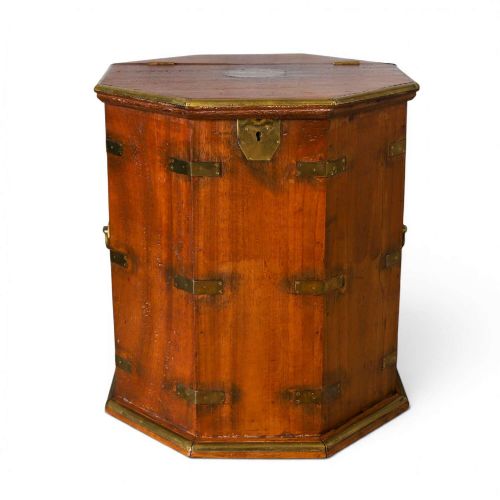
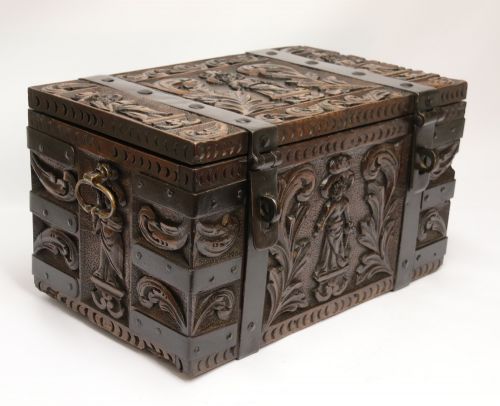
19th Century Oak and Metal Bound Silver Chest, 19th Century
Priced at £895 from Shackladys Antiques
Early plank chests relied on iron nails or heavy wooden pegs.
Panel construction changed the trade. Floating panels sit loose in grooves to allow seasonal wood movement.
Cleated ends stop the broad top boards from warping over time.
"Candle wax drippings inside the till tell you how they were used in low light."
"Blacksmiths hammered out iron locks individually so each key was distinct."
"Many carved fronts retain traces of early red and black pigment under the wax."
Based on almost 25 years of Sellingantiques UK antique market data, Antique Oak Chests appeared 12611 times (out of 1,100,000 antiques) which gives it a rarity score of 8/100.
This score measures scarcity within the Sellingantiques archive only and is not a survey of the entire antiques market, so these statistics may not be indicative of the general availability of Antique Oak Chests elsewhere.
Vacuum out the dust first using a soft brush attachment. Pay attention to the corners where debris collects. Wipe the boards down with a barely damp cloth.
Leave the lid open to let the interior air dry. Never use harsh chemical cleaners or soak the timber.
Joiners saved their effort for the parts people saw.
Rough-hewn boards were standard for the rear since it sat against a wall.
Antique oak chests work well for storing textiles if the wood is dry and free of active woodworm. The timber breathes better than modern plastic boxes, which helps prevent condensation.
Line the bottom with clean cotton sheets first. Bare oak contains tannins that can stain fabrics over time, especially if the air gets damp.
Throwing in some cedar blocks will deter moths. Just make sure the cedar oils do not touch your blankets directly.
Leave the rust alone if the hinges are structurally sound. A light surface oxidation is part of the patina. Heavy scrubbing ruins the historic surface.
Apply a tiny drop of light machine oil directly to the pivot point. Work the lid up and down a few times to draw the oil into the joint. Wipe away any excess so it does not stain the surrounding wood.
Please note: This Antique Oak Chests guide and its associated pricing data are provided for general informational purposes only. It does not constitute formal financial, investment, or appraisal advice and should not be relied upon as the sole basis for any commercial activity, purchasing, or sales decisions. Sellingantiques.co.uk accepts no liability for any actions taken in reliance on this information. Always consult with a qualified professional or independent appraiser.
