


A 2026 Guide by Sellingantiques
Heavy timber boxes for safeguarding church plate and manor valuables during turbulent centuries.
Look at the timeline. Most authentic Antique Gothic Chests date between the thirteenth and early sixteenth centuries.
Travelling households relied on these stout cases to transport textiles between different estates.
Seating was scarce in early halls, so a sturdy lid often doubled as a bench.
Regional styles vary widely. Local craft traditions dictated the carving and construction methods.
Documented individual makers aren't known for this period. Monastic workshops and local guilds turned out these pieces without signing them.
Carpenters built the earlier boarded examples. Joiners took over as framed panelling became the standard method in the fifteenth century.
Study the carving to identify regional trade groups rather than specific names.
The 2026 retail price guide for Antique Gothic Chests is drawn from a proprietary archive of over 1.1 million retail prices indexed by Sellingantiques since 2003. This guide relies exclusively on their own internal data; no external sources or auction records are used.
Analysing nearly 25 years of UK antique market history alongside current retail values, the data indicates that typical UK retail prices for Antique Gothic Chests range between £600 and £4,600. Entry-level prices generally fall under £600 and premium examples upwards of £4,600.
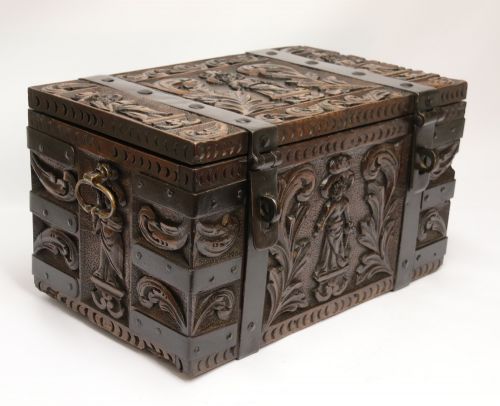
Tracery carving mimics church windows. You often see blind arches, linenfold panels or roundels carved straight into the front face of Antique Gothic Chests.
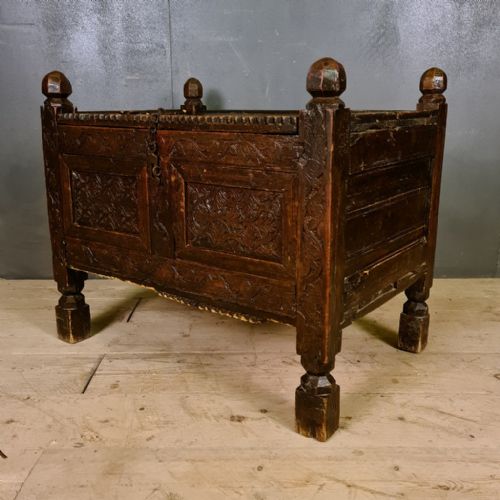
Stiles extending past the floorboards to create feet in clamped construction.
Massive iron lock plates dominate the front. Some retain original hasps and interior till compartments.
Early thirteenth-century chests use thick boards held by iron straps or wooden pegs.
Frame and panel construction arrived in the fifteenth century. This allowed the oak to shrink and swell without splitting.
Notice the carving techniques. Shallow chip carving eventually gave way to deep, complex architectural tracery as tools improved.
"Traces of bright paint surviving in the deep recesses of the carving."
"Some lids feature pin hinges cut directly into the back stiles. It isn't a complex joint, but it needs no metal parts."
"Secret compartments hide beneath false bottoms in the interior till. They provided a secure spot for important documents."
Based on almost 25 years of Sellingantiques UK antique market data, Antique Gothic Chests appeared 228 times (out of 1,100,000 antiques) which gives it a rarity score of 96/100.
This score measures scarcity within the Sellingantiques archive only and is not a survey of the entire antiques market, so these statistics may not be indicative of the general availability of Antique Gothic Chests elsewhere.
They're heavy enough to need two people to move them safely. A solid oak clamped chest can weigh upwards of eighty kilograms.
The thick timber and heavy iron ironwork add up. Moving them alone risks damaging the joints or hurting your back.
That's the till. It held small valuables, coins or herbs to keep moths away from stored textiles.
Sometimes you find a secret drawer hidden underneath it.
Large chests held bulky household textiles. Bed hangings, tapestries and winter clothing lived in them during the summer months.
Church examples often held vestments or parish records. The complex iron locks show that whatever they kept inside was highly valued.
Regional carving styles point to origins. Elaborate tracery often signals French or Flemish workshops, while English carving leans towards simpler blind arches or roundels.
Trade routes complicate things. Baltic oak chests carved in Flanders were exported heavily into eastern England during the medieval period.
Look at the secondary construction. Local variations in the way joints were pinned help narrow down a geographic area.
Please note: This Antique Gothic Chests guide and its associated pricing data are provided for general informational purposes only. It does not constitute formal financial, investment, or appraisal advice and should not be relied upon as the sole basis for any commercial activity, purchasing, or sales decisions. Sellingantiques.co.uk accepts no liability for any actions taken in reliance on this information. Always consult with a qualified professional or independent appraiser.
