



A 2026 Guide by Sellingantiques

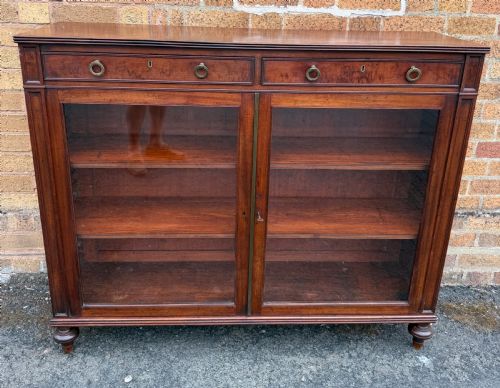
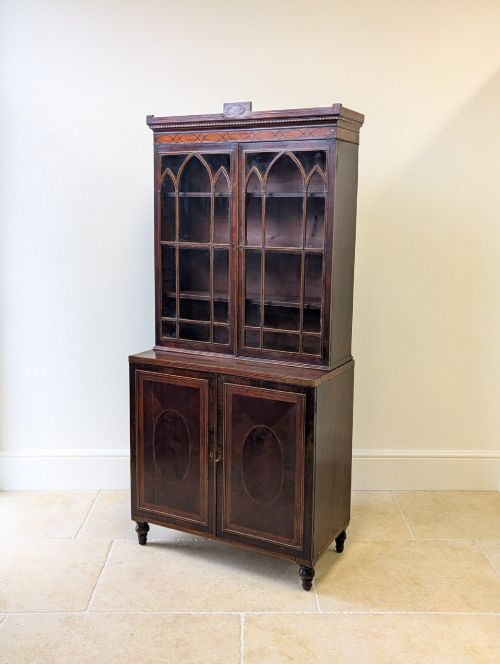
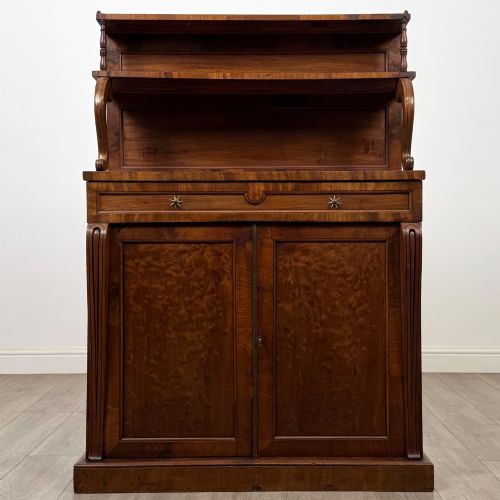
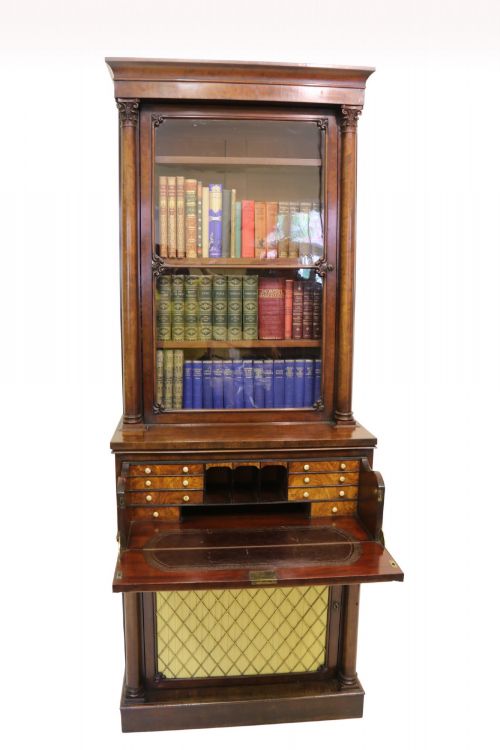
Small Georgian Mahogany Breakfront Library Bookcase, Georgian
Priced at £12,800 from S and S Timms Antiques Ltd
Private libraries expanded rapidly during the eighteenth century. Books became cheaper to print and easier to buy.
Georgian bookcases usually stood in the study or the drawing room. They held volumes flat or upright depending on the shelf clearance.
Look at the scale of the larger examples. Wealthy families needed substantial storage for their growing collections.
Built-in shelving often replaced freestanding pieces in grand country houses.
The introduction of circulating libraries slightly altered how families stored literature later in the period.
Thomas Chippendale supplied grand mahogany examples to clients like the Earl of Dumfries in the mid-eighteenth century.
Gillows of Lancaster produced standard and custom designs. Their stamp occasionally appears on the top edges of late-period drawer linings.
Many provincial makers built solid, unlabelled pieces. Regional trade relied on pattern books rather than famous names.
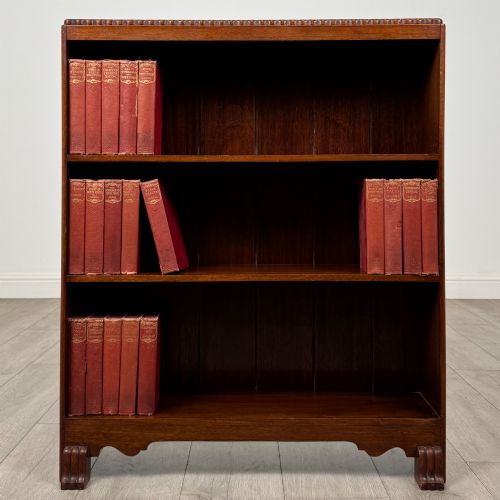
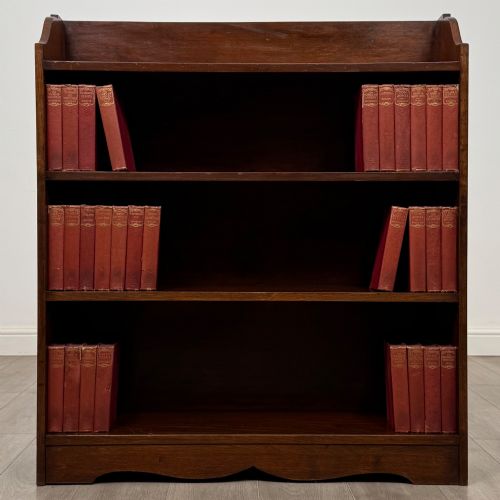
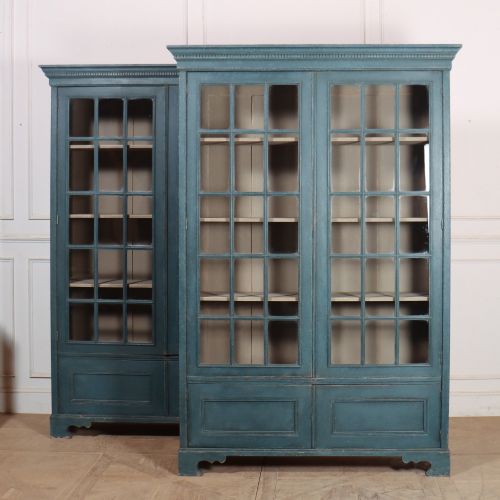
Georgian Revival Mahogany Bookcase, 1920
Priced at £1,395 from Philip Hunt Antiques
The 2026 retail price guide for Georgian Bookcases is drawn from a proprietary archive of over 1.1 million retail prices indexed by Sellingantiques since 2003. This guide relies exclusively on their own internal data; no external sources or auction records are used.
Analysing nearly 25 years of UK antique market history alongside current retail values, the data indicates that typical UK retail prices for Georgian Bookcases range between £1,000 and £8,300. Entry-level prices generally fall under £1,000 and premium examples upwards of £8,300.
Breakfront designs step forward in the centre section. This breaks up the flat plane of a broad piece.
Adjustable shelves sit on wooden ratchets or rest on loose pegs slotted into the side panels.
Notice the cornice at the top. Some have dentil moulding while others feature a swan-neck pediment.
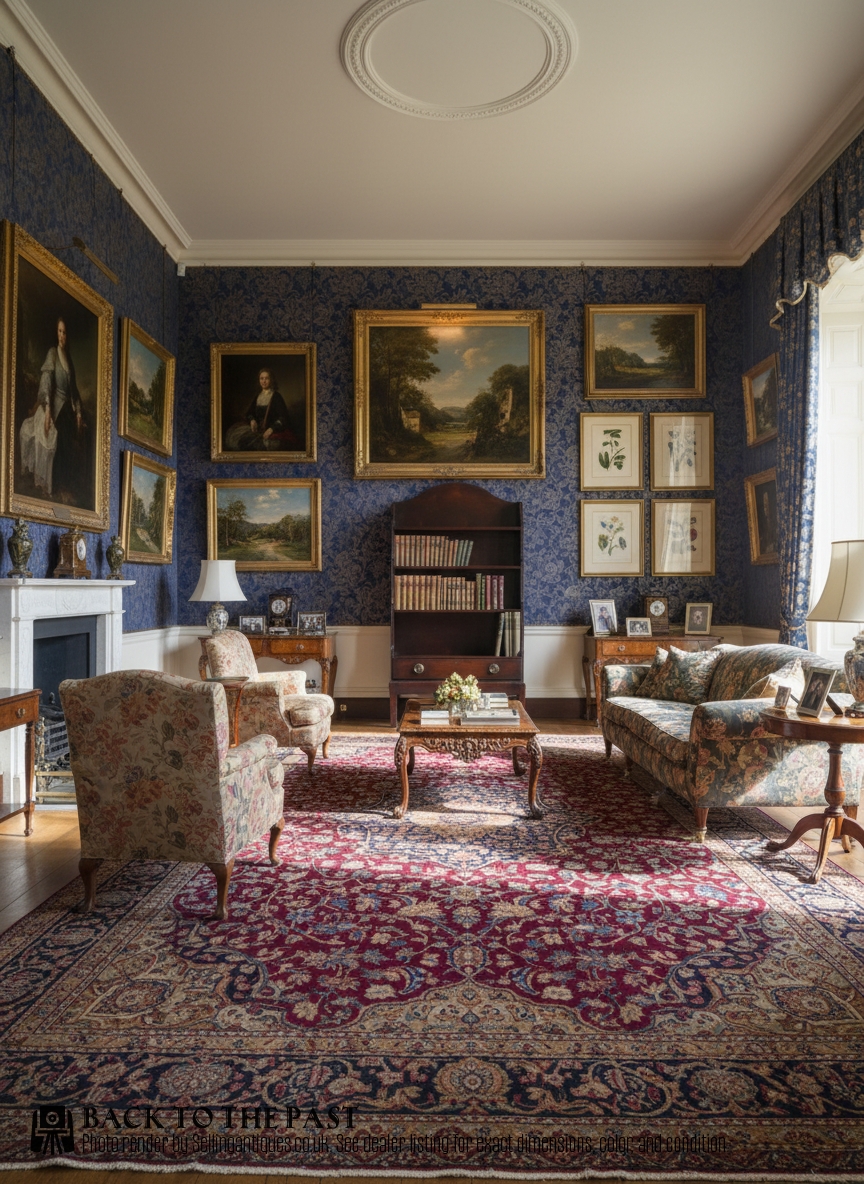
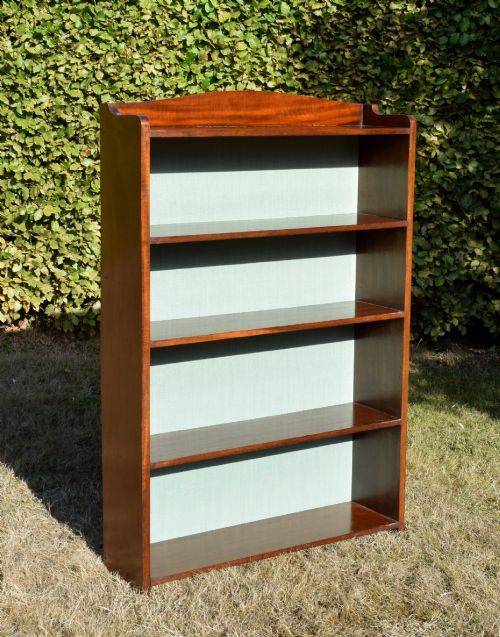
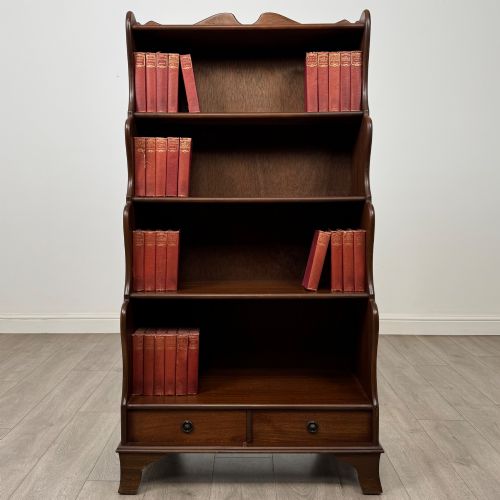
Georgian Waterfall Bookcase, Georgian
Priced at £1,200 from Millers Antiques
Cabinet makers joined the main carcase with hand-cut dovetails. A tight fit kept the heavy frame rigid over centuries.
Veneering allowed workshops to match flame mahogany patterns across the lower doors. They applied thin slices of expensive timber over cheaper pine.
Pull out a drawer and inspect the back. Early pieces have thicker drawer sides, while later Georgian work becomes finer.
"Secret compartments sometimes hide behind the small inner drawers of a secretaire section."
"Modular designs exist. Some large breakfronts dismantle into many smaller boxes, allowing delivery up tight staircases."
"The lower cupboards were often built specifically to hold oversized folios horizontally."
Based on almost 25 years of Sellingantiques UK antique market data, Georgian Bookcases appeared 2038 times (out of 1,100,000 antiques) which gives it a rarity score of 67/100.
This score measures scarcity within the Sellingantiques archive only and is not a survey of the entire antiques market, so these statistics may not be indicative of the general availability of Georgian Bookcases elsewhere.
Most large Georgian breakfronts break down into smaller sections. The cornice lifts off, then the upper glazed units separate.
The lower cupboards usually split into pieces too. Two strong people can move the boxes.
Depth varies widely depending on the piece. Upper sections were usually built for standard octavo volumes, which means they easily handle modern paperbacks and standard hardbacks. You'll find plenty of room for normal reading material.
Oversized art books might struggle in the top half. If you have large books, they are better stored in the lower cupboards where the carcase is much deeper.
Yes, a good restorer can fix damaged astragal bars and replace the glass. They carefully carve new wooden sections to match the existing profile before fitting the panes.
Finding period crown glass to match the old ripples takes a bit more effort. Many people use salvaged glass from ruined mirrors or damaged picture frames to get the right look.
Sticking doors usually happen because the wood swells in damp weather. Central heating then shrinks the timber during winter, causing a constant cycle of movement over the year.
First, check the hinges aren't loose. Tightening the screws often lifts a drooping door just enough to clear the frame. You don't always need to plane the wood down.
If the wood has genuinely swollen, rubbing a little candle wax along the binding edge provides temporary relief. Try to keep the humidity in the room stable.
Please note: This Georgian Bookcases guide and its associated pricing data are provided for general informational purposes only. It does not constitute formal financial, investment, or appraisal advice and should not be relied upon as the sole basis for any commercial activity, purchasing, or sales decisions. Sellingantiques.co.uk accepts no liability for any actions taken in reliance on this information. Always consult with a qualified professional or independent appraiser.
