






A 2026 Guide by Sellingantiques
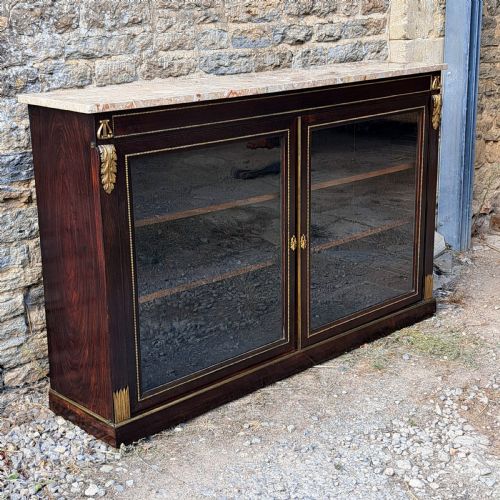
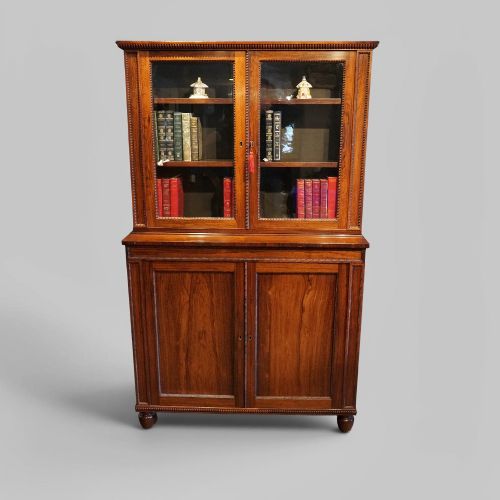
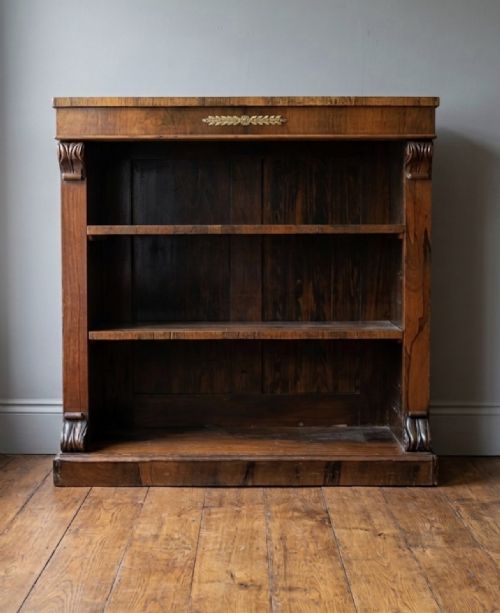
19th Century Rosewood Open Bookcase, 19th Century
Priced at £3,450 from Shackladys Antiques
The Regency period saw an explosion of domestic reading. Wealthy households suddenly needed elegant storage for their growing libraries.
Look at the shift from mahogany. Rosewood became the dominant luxury timber for drawing room furniture after the Napoleonic Wars ended.
Open shelves often sat in the main living spaces. Guests could view the family volumes easily.
Antique rosewood bookcases remained popular until the mid-nineteenth century, when changing tastes brought darker, heavier oak back into fashion.
Trade routes dictated the supply. The timber arrived on ships from Brazil and India, landing at major ports like London and Liverpool.
Gillows of Lancaster produced complex rosewood examples. Their late Georgian and Regency sketchbooks show several commissioned bookcase designs.
George Smith published influential patterns. His 1808 guide includes drawing room bookcases specified for rosewood with brass inlay.
John McLean worked extensively with this timber. His London workshop specialised in brass-mounted rosewood furniture during the first quarter of the nineteenth century.
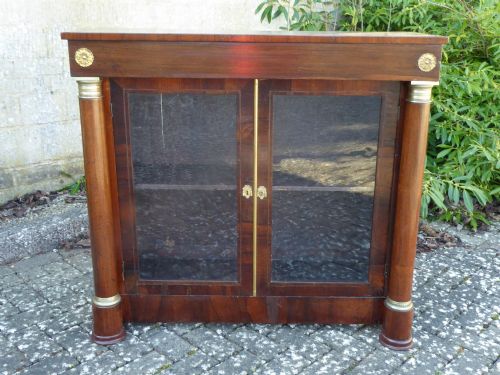
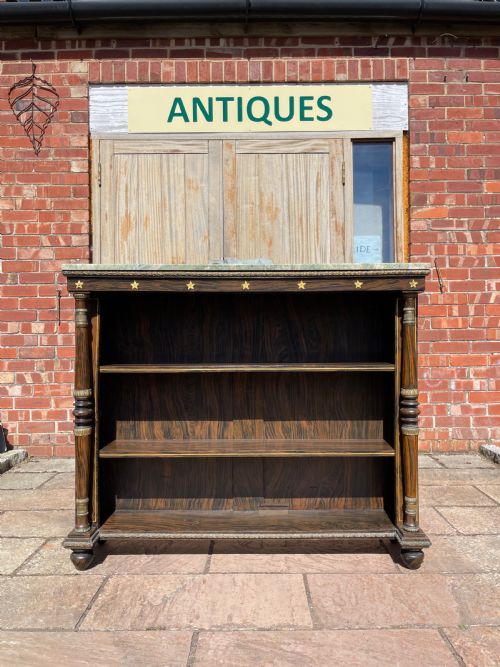
Stunning William IV Rosewood Bookcase
, 19th Century
Priced at £2,695 from Philip Hunt Antiques
The 2026 retail price guide for Antique Rosewood Bookcases is drawn from a proprietary archive of over 1.1 million retail prices indexed by Sellingantiques since 2003. This guide relies exclusively on their own internal data; no external sources or auction records are used.
Analysing nearly 25 years of UK antique market history alongside current retail values, the data indicates that typical UK retail prices for Antique Rosewood Bookcases range between £1,000 and £4,800. Entry-level prices generally fall under £1,000 and premium examples upwards of £4,800.
Adjustable shelving is standard. You will usually find wooden pegs slotting into a series of holes drilled down the inner uprights.
Plinth bases sit flat on the floor. Legs are rare on the larger architectural forms.
Look out for mirrored or fabric-lined doors. The lower sections often have solid panels or brass grilles covering pleated silk.
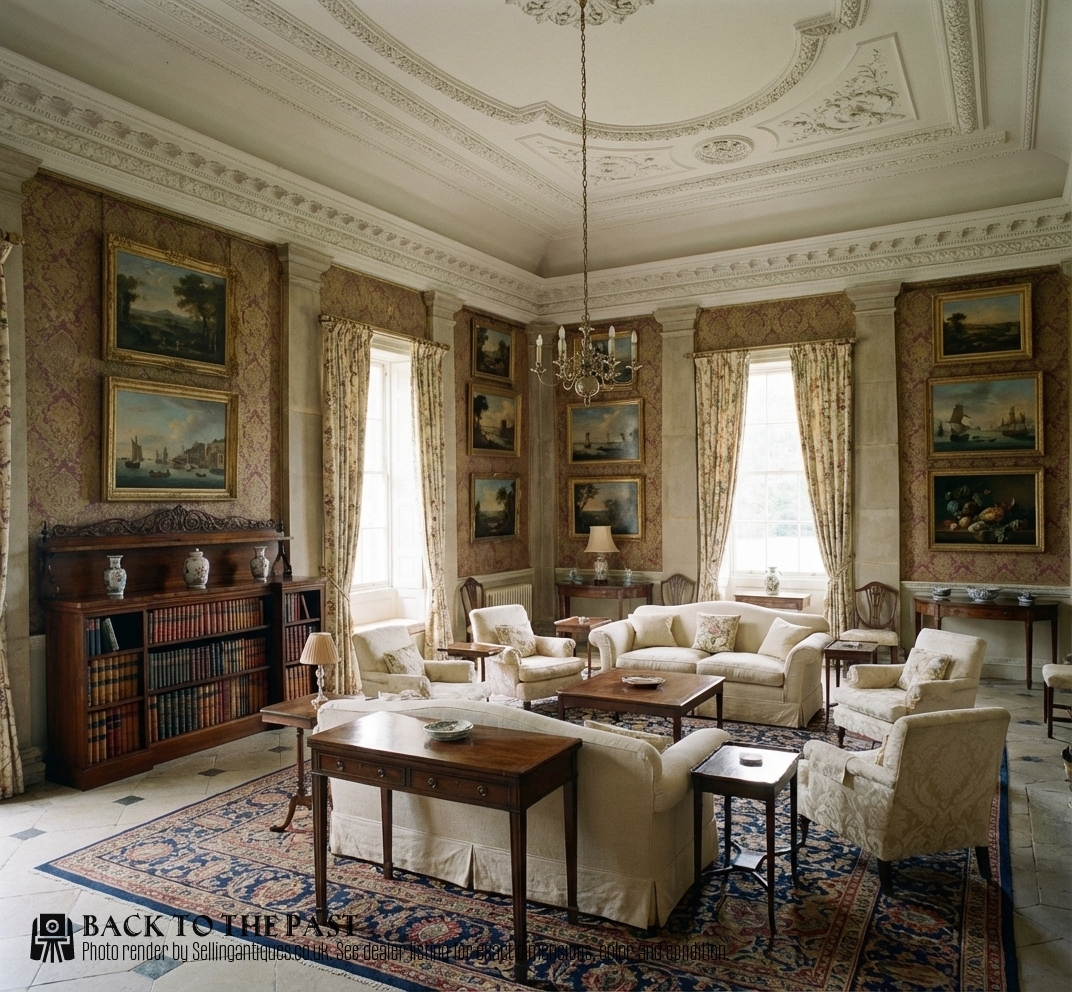
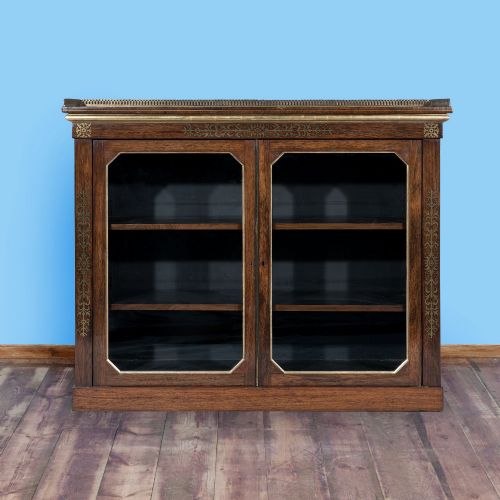
Regency Rosewood Inverted Breakfront Bookcase, Regency
Priced at £4,200 from The Antique Furniture Company
Saw mills changed veneer thickness. Early examples have thick, hand-sawn veneers, whereas later Victorian pieces use much thinner machine-cut sheets.
Turn a shelf over. The undersides often show circular saw marks on later pieces, compared to straight pit-saw lines on earlier ones.
Brass stringing required precise channelling. Craftsmen routed narrow grooves into the solid wood edges to accept flat brass wire.
"The scent lingers for centuries. If you sand a hidden edge of genuine rosewood, it still gives off a faint floral smell."
"Many early examples break down into surprisingly small sections. This clever construction allowed them to navigate tight townhouse staircases."
"Original door glass has character. Crown glass ripples slightly and catches the light differently to modern float glass."
Based on almost 25 years of Sellingantiques UK antique market data, Antique Rosewood Bookcases appeared 1249 times (out of 1,100,000 antiques) which gives it a rarity score of 78/100.
This score measures scarcity within the Sellingantiques archive only and is not a survey of the entire antiques market, so these statistics may not be indicative of the general availability of Antique Rosewood Bookcases elsewhere.
Keep it simple. Dust the wood lightly with a soft cloth. You can apply a good quality beeswax polish once or twice a year to feed the surface.
Avoid modern spray polishes. They contain silicones that build up and cloud the finish over time.
Yes, brass grilles are common on the lower doors of antique rosewood bookcases. They often cover a pleated silk or cotton lining.
These grilles allowed air to circulate while keeping dust off the contents. The fabric hid untidy items like maps or loose papers that weren't bound for display on the open shelves above.
Most do. The uprights normally have a series of holes holding small wooden pegs.
If the shelves are fixed, check for later alterations.
Those tiny cracks are called crazing. The original French polish or varnish breaks down over time due to sunlight and changes in humidity.
The white marks usually happen when moisture gets trapped under that degraded finish. It is a surface issue rather than structural damage. A restorer can often revive the polish without having to strip the wood bare.
Please note: This Antique Rosewood Bookcases guide and its associated pricing data are provided for general informational purposes only. It does not constitute formal financial, investment, or appraisal advice and should not be relied upon as the sole basis for any commercial activity, purchasing, or sales decisions. Sellingantiques.co.uk accepts no liability for any actions taken in reliance on this information. Always consult with a qualified professional or independent appraiser.
