3,806  PAGES BROWSED TODAY PAGES TODAY 0 ANTIQUES UPLOADED TODAYNEW ARRIVALS
LATEST STOCK
Sort Order
Items Per Page
Browse Categories
Sort order
Relevant Links
Items per page
ID #SA937776
FOR SALE
£4,250
Email
Save
Antique Biedermeier Secretaire Chest Secretaire Abattant19th C
Regent Antiques
for sale €4,973     $5,398
£4,250
Regent Antiques

Regent Antiques

Sellingantiques Verified Since Sep 2016
View Dealers Stock Page
  • About Us
    We specialise in english and continental furniture, silver, porcelain and decorative items.
  • Trade Associations
    Regent Antiques is a registered member of LAPADA  CINOA
Id #SA937776
PDF SHARE
SAVE

Antique Biedermeier Secretaire Chest Secretaire Abattant19th C

19th century
For Sale by Regent Antiques
Description

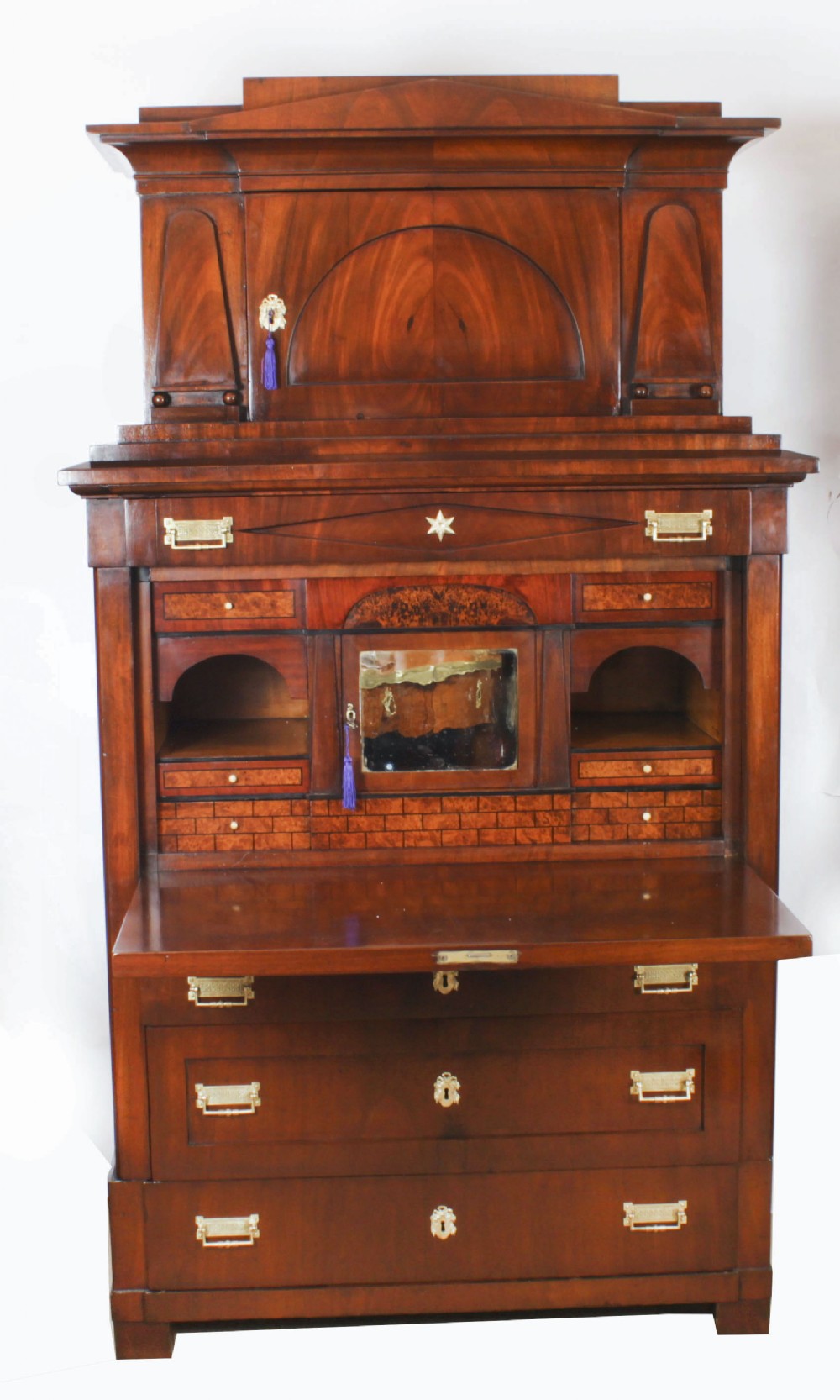
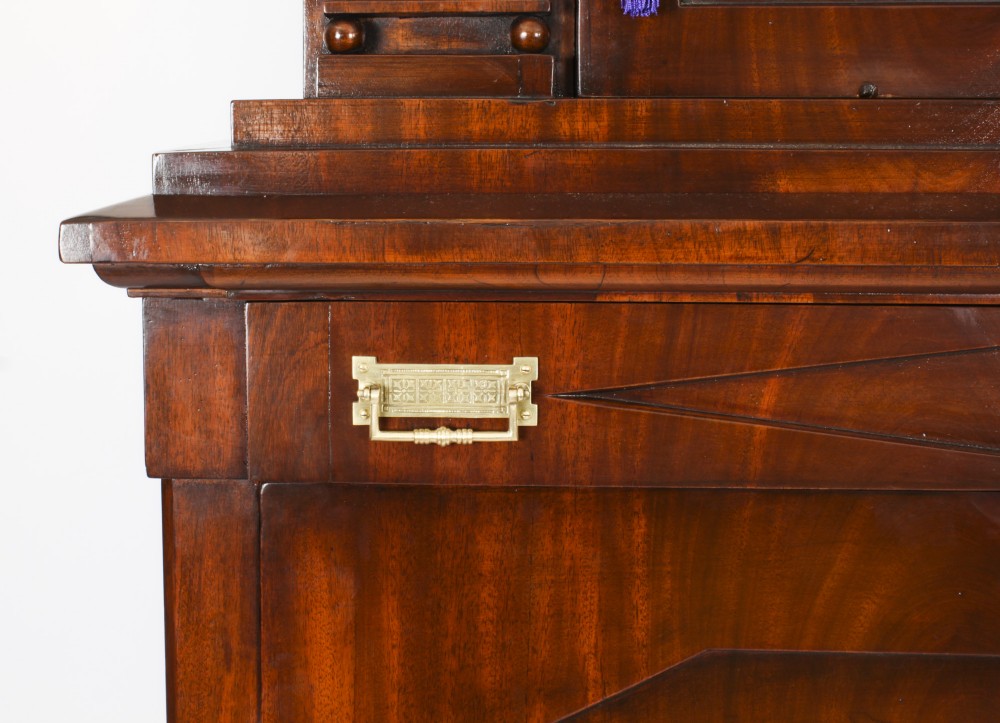
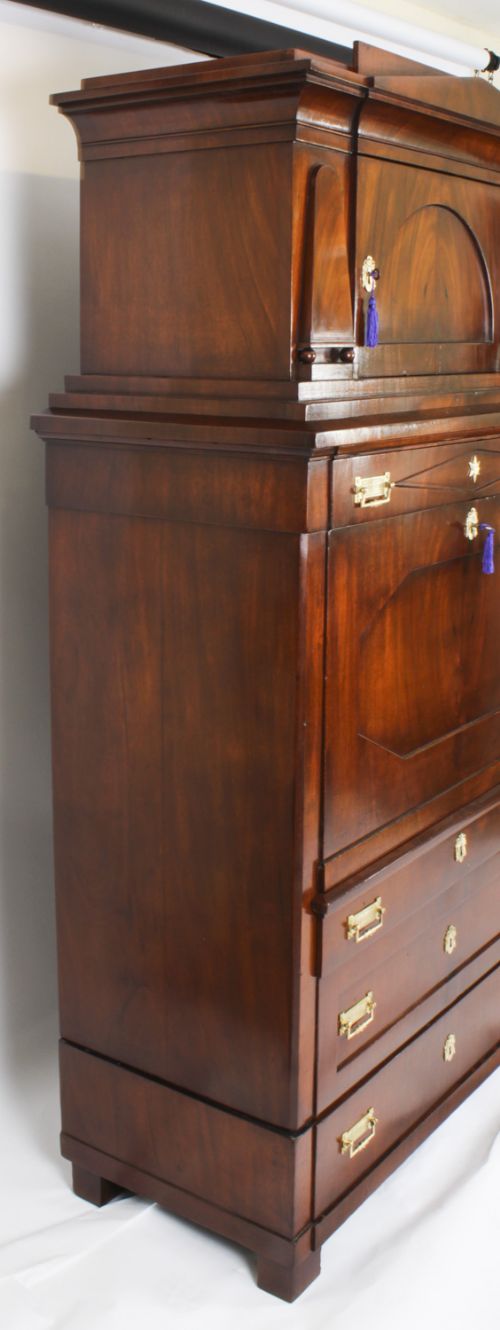
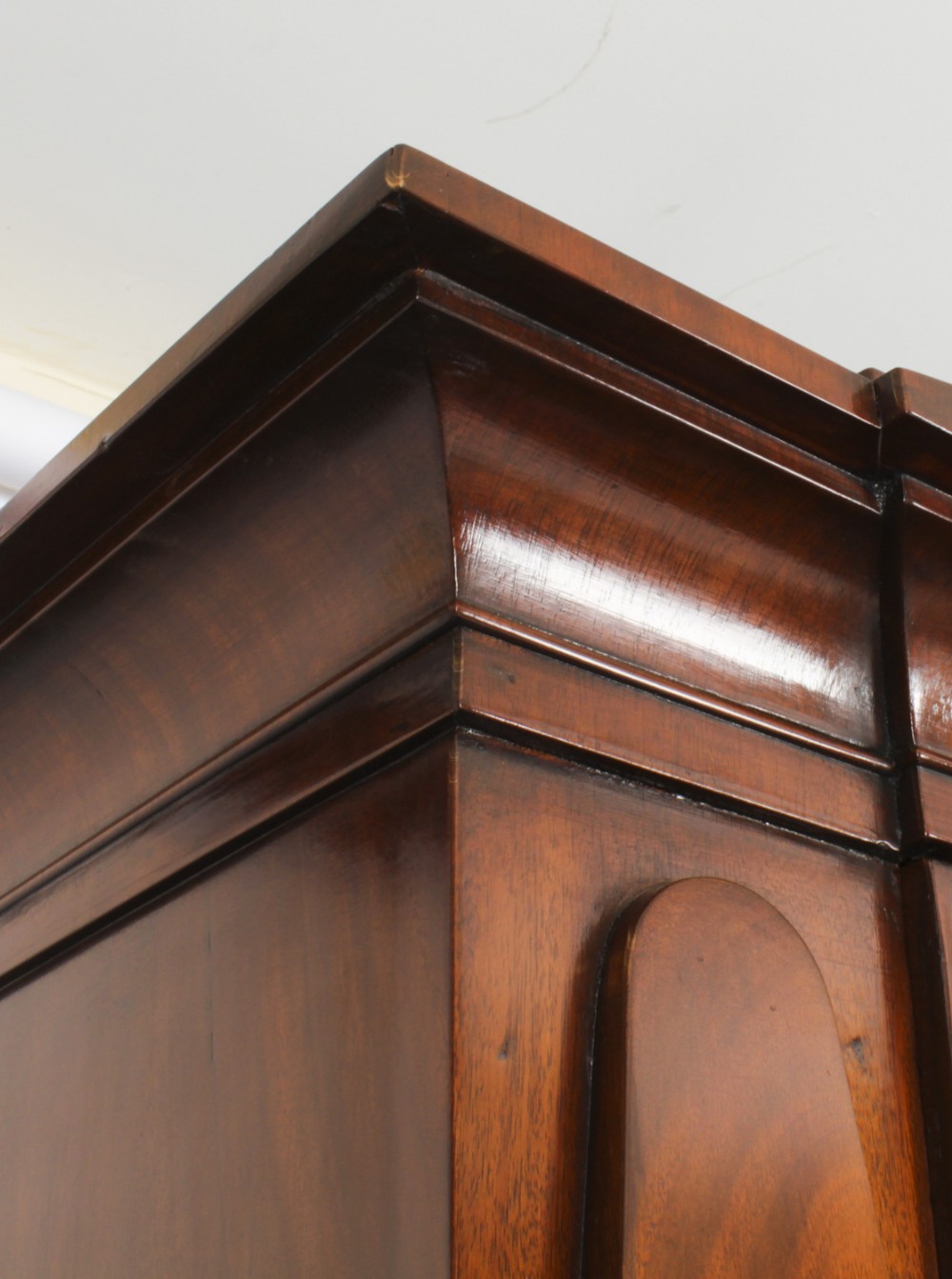
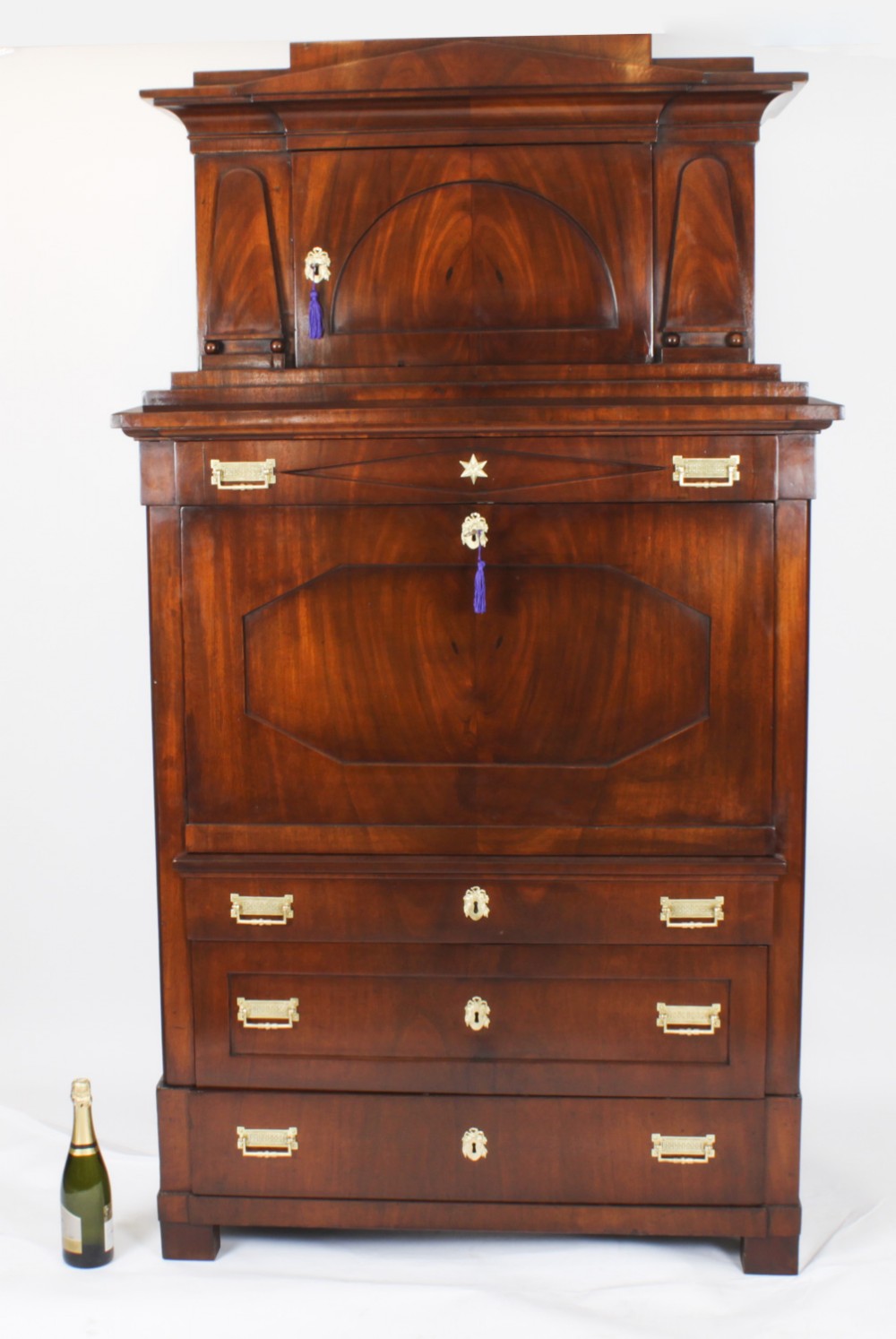
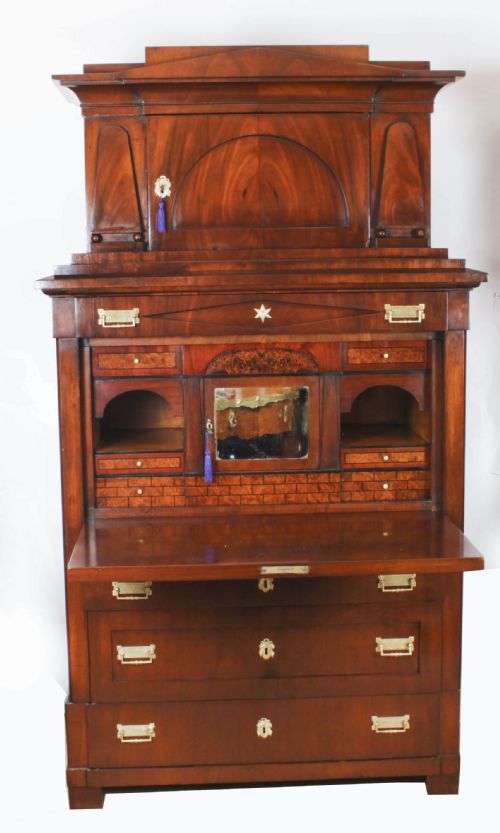
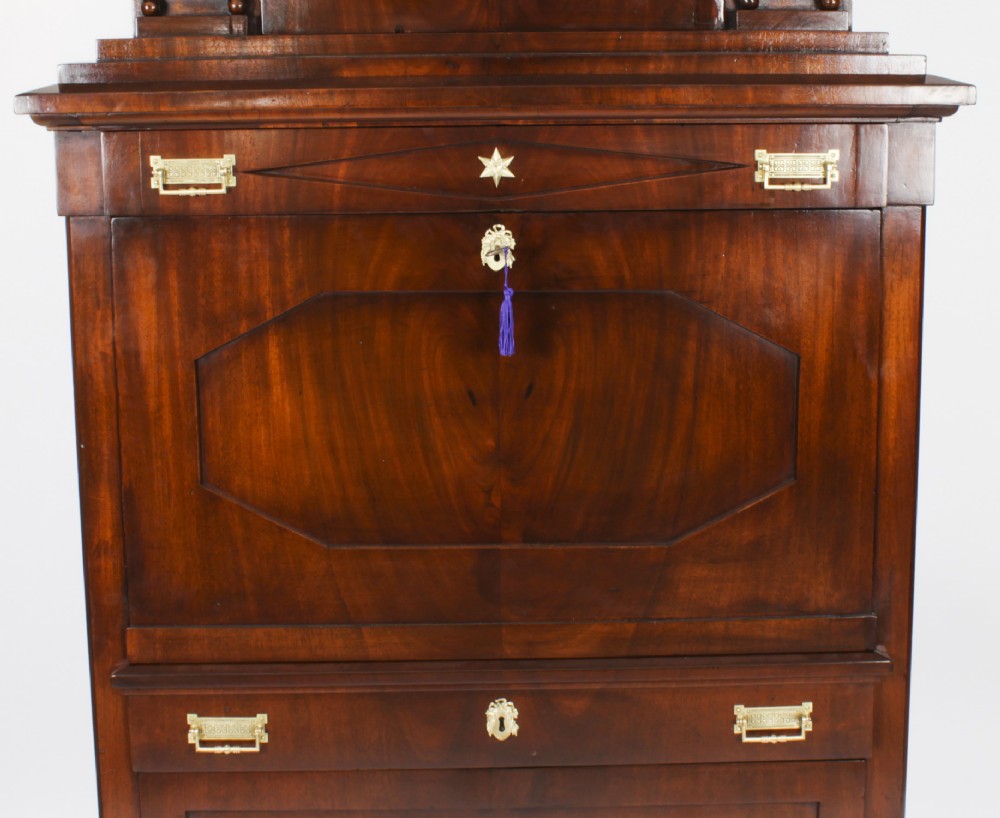
A truly magnificent antique flame mahogany architectural biedermeier secretaire abattant, circa 1840 in date.

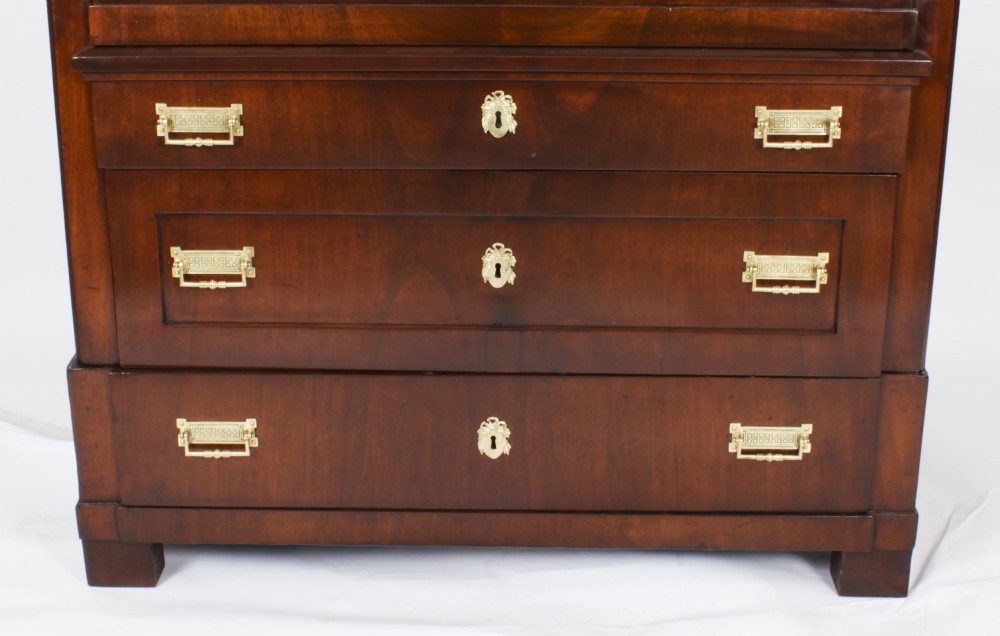
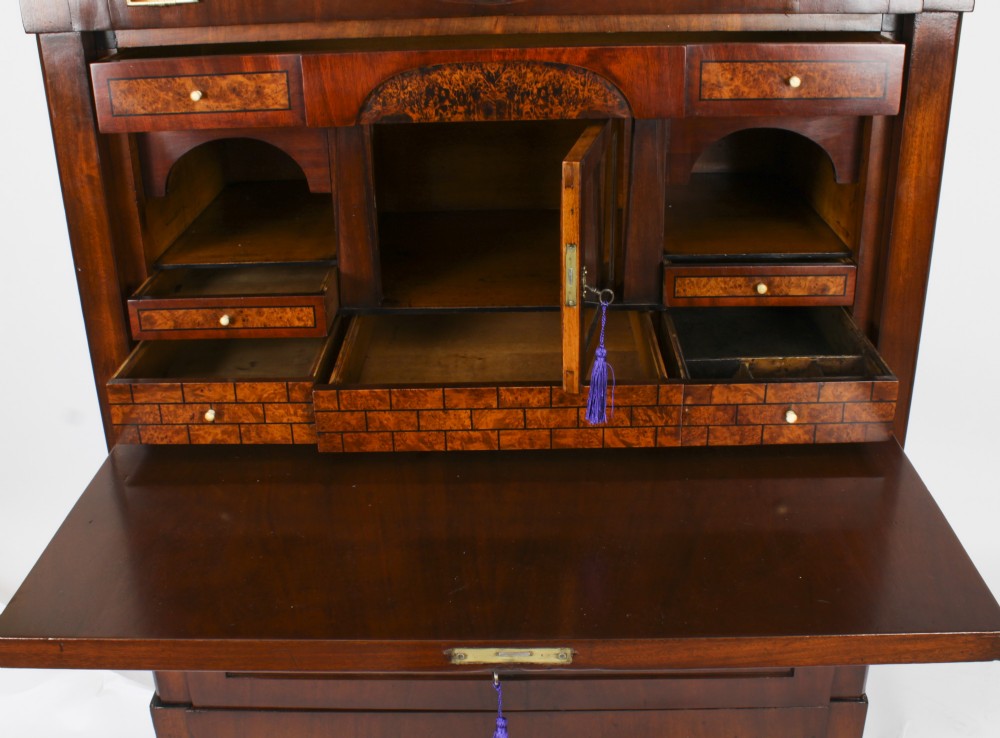
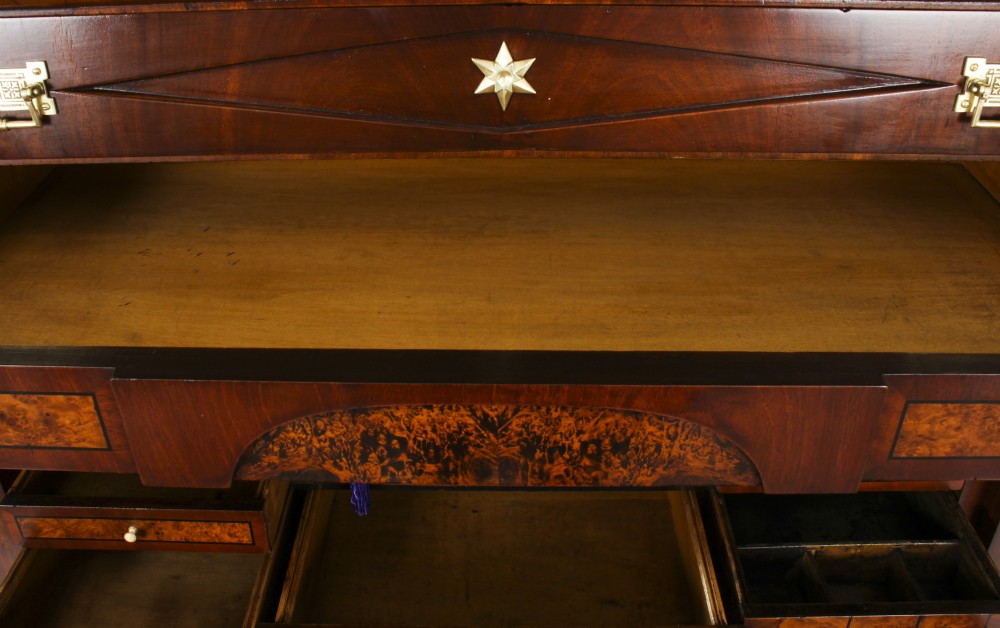
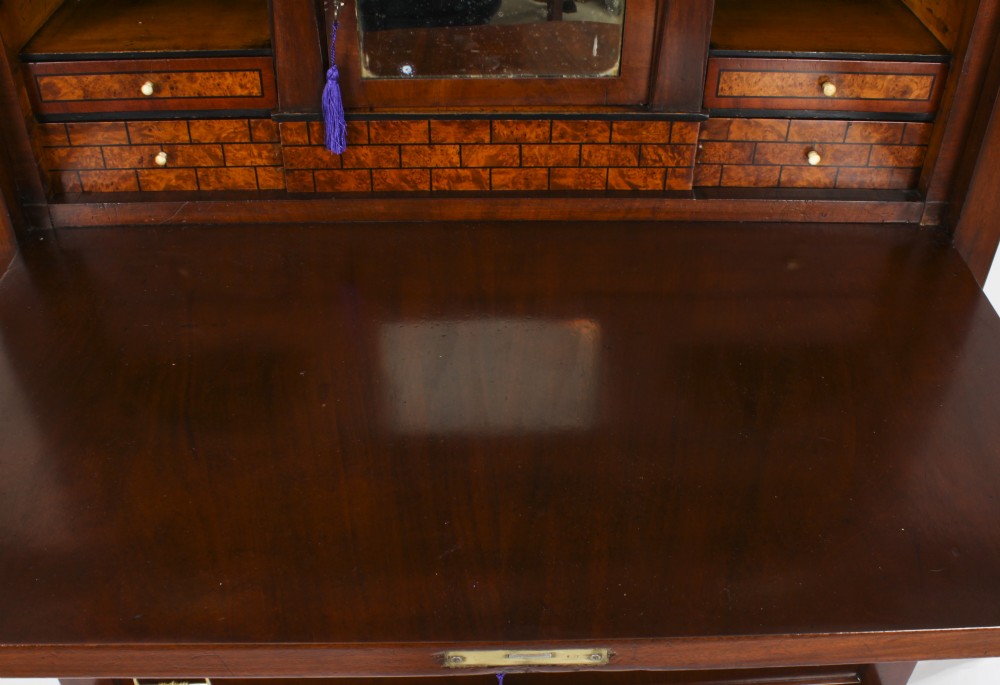
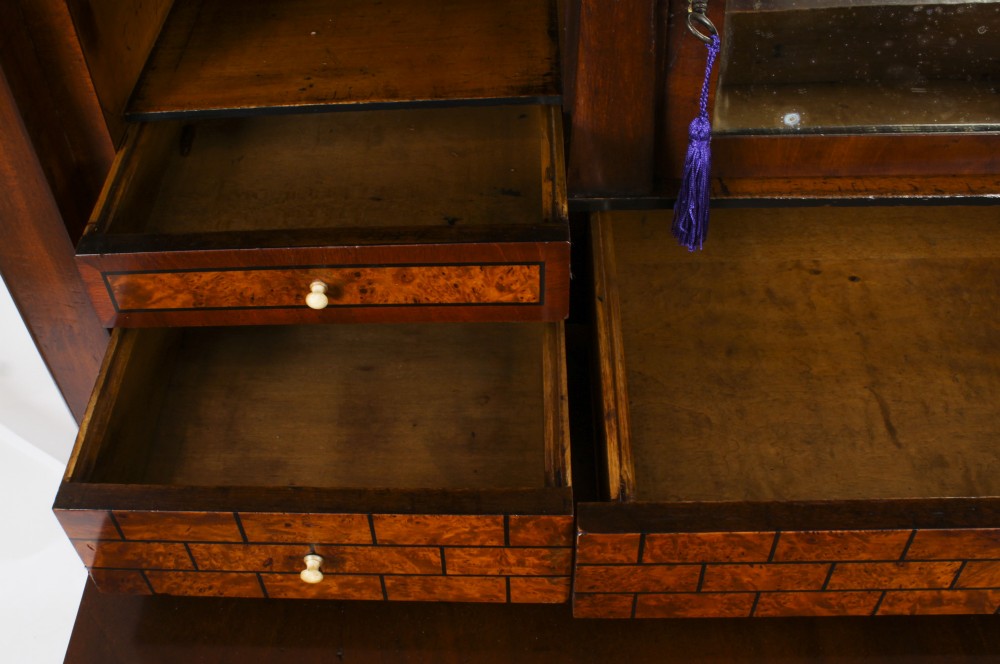
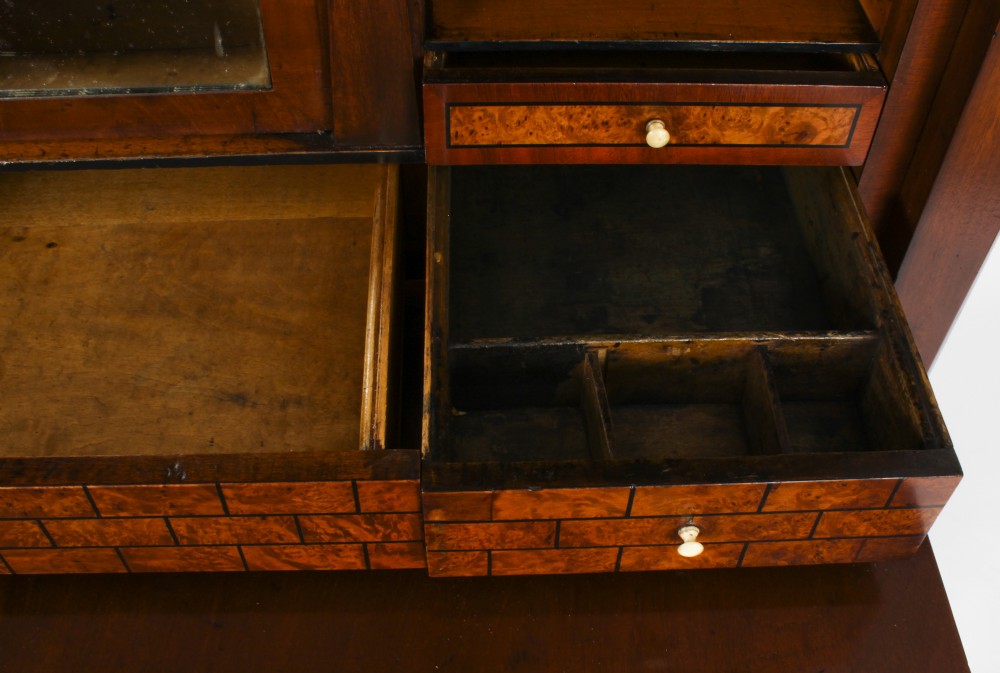
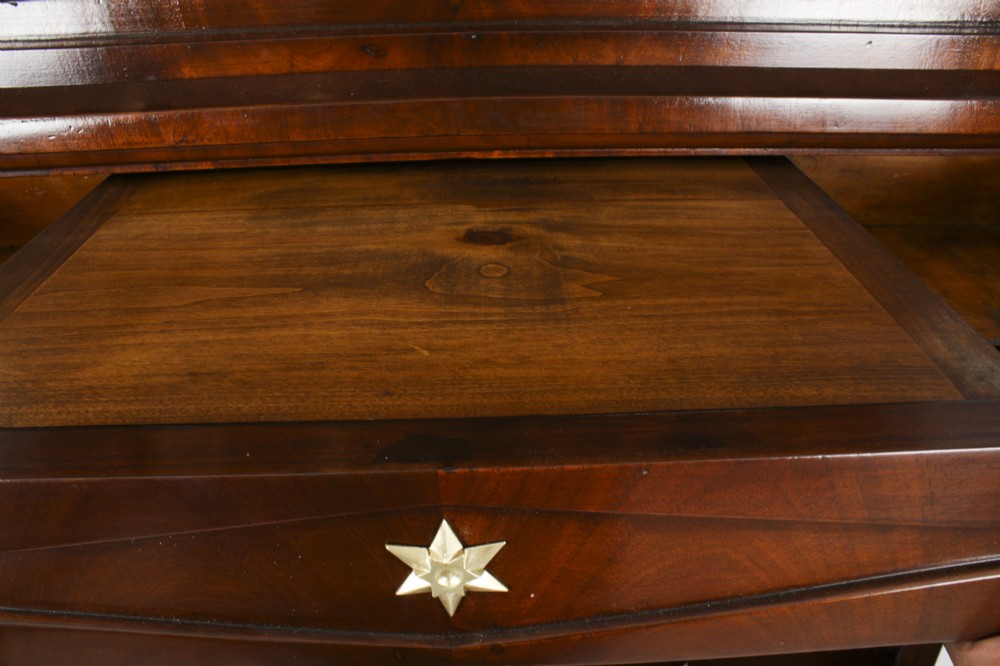
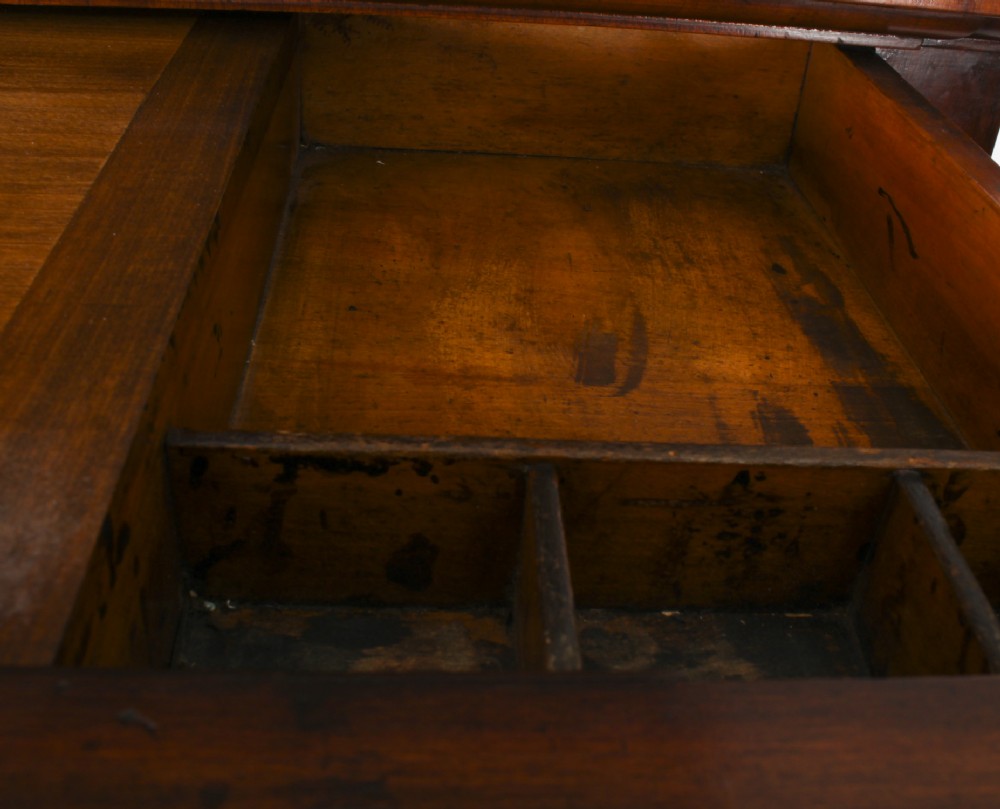
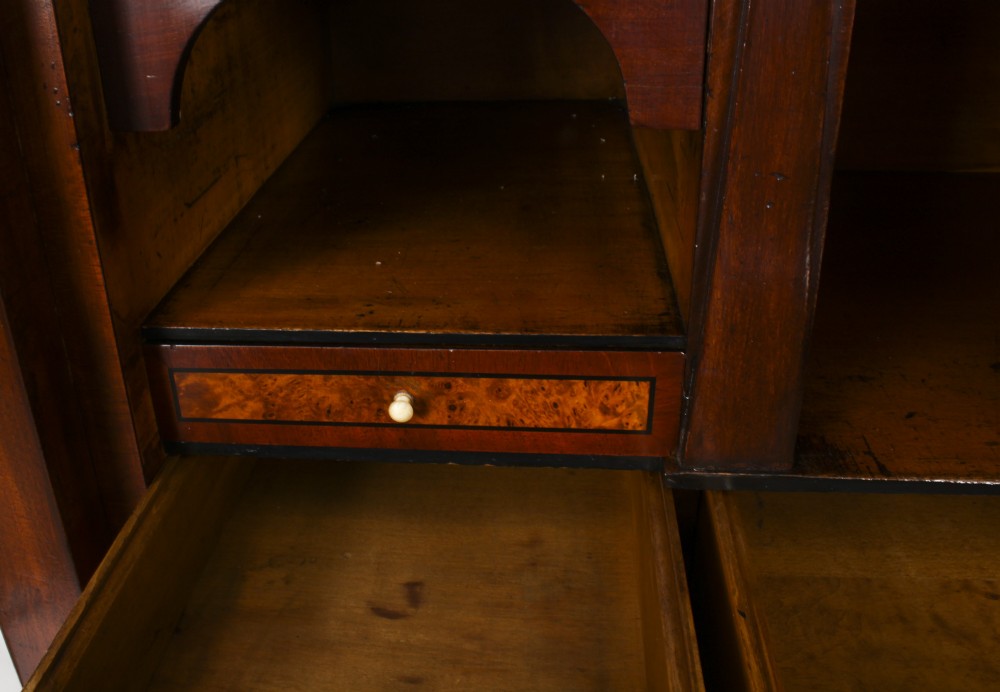
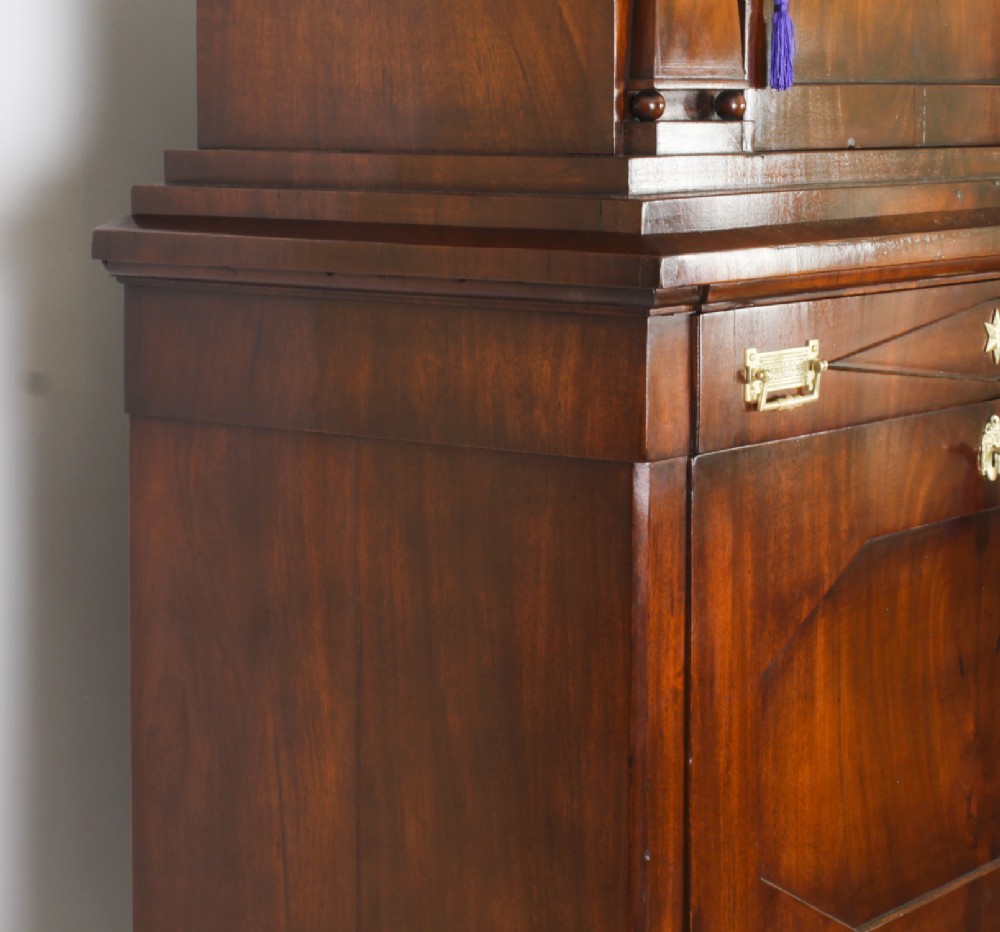
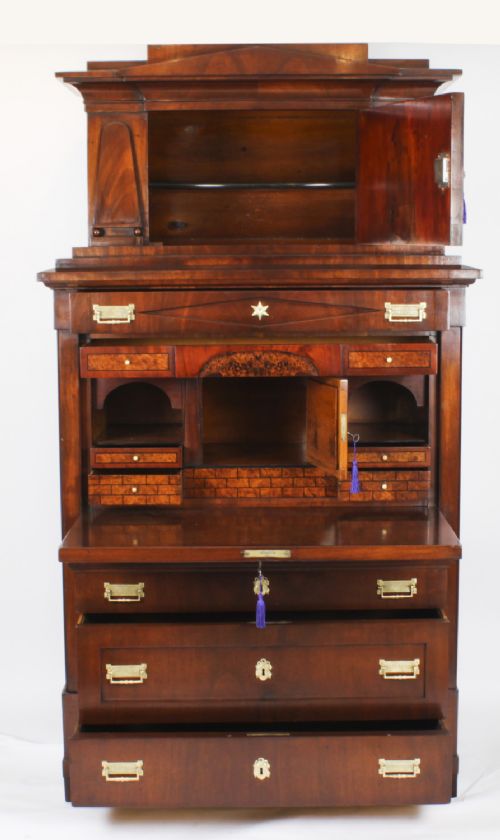
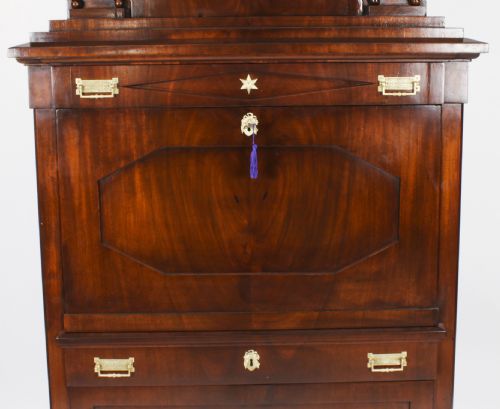
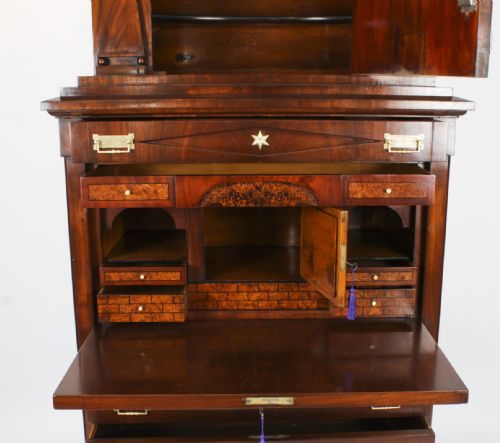
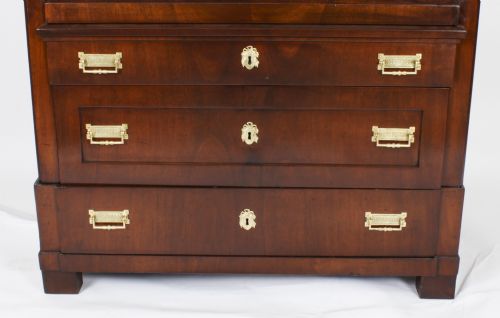
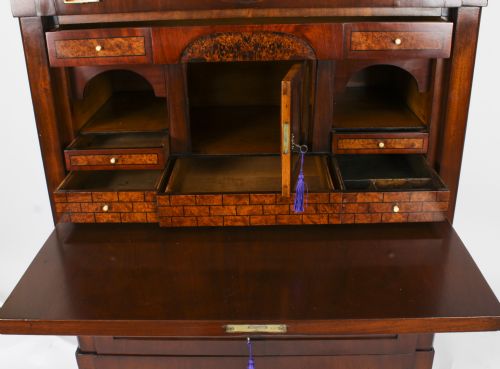
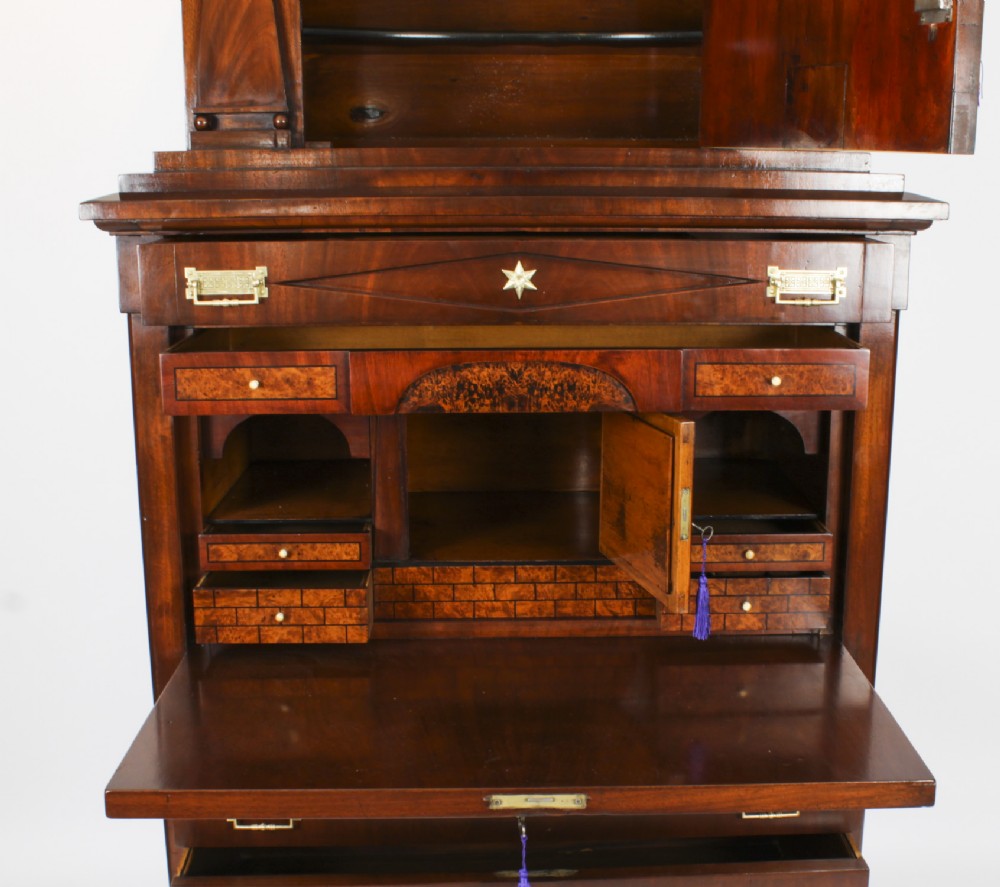
The top section with a projecting cornice over an arched panelled door enclosed by applied shaped mounts. The lower section with a frieze drawer over a fall front which opens to reveal a fabulous interior fitted with drawers and a central cupboard, above three full width drawers drawers below.
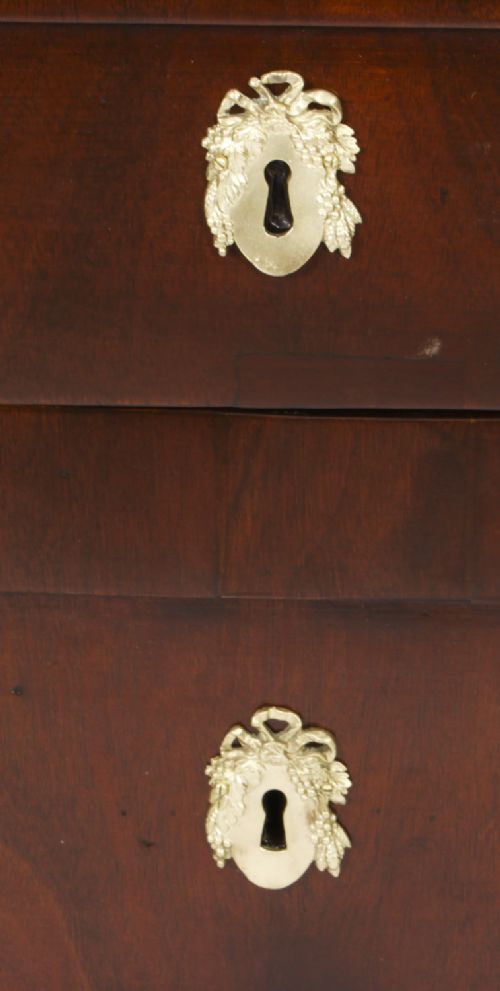
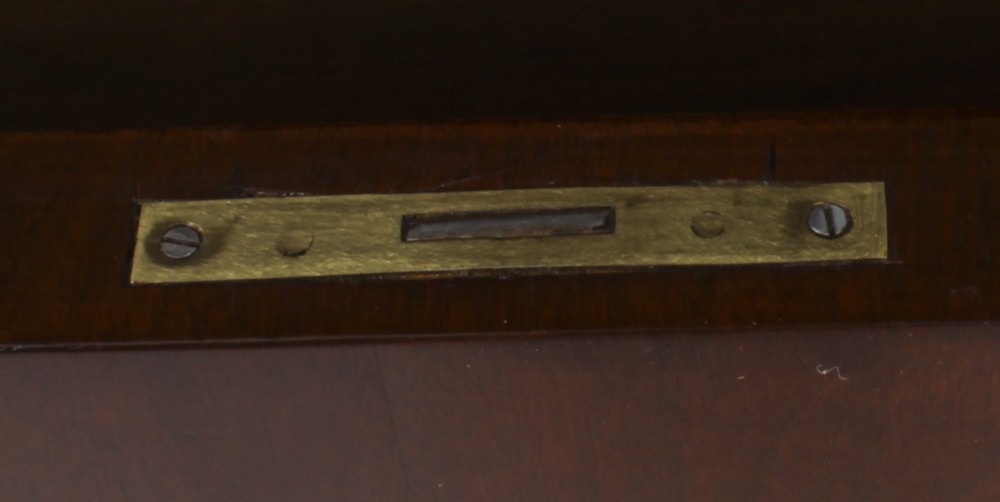
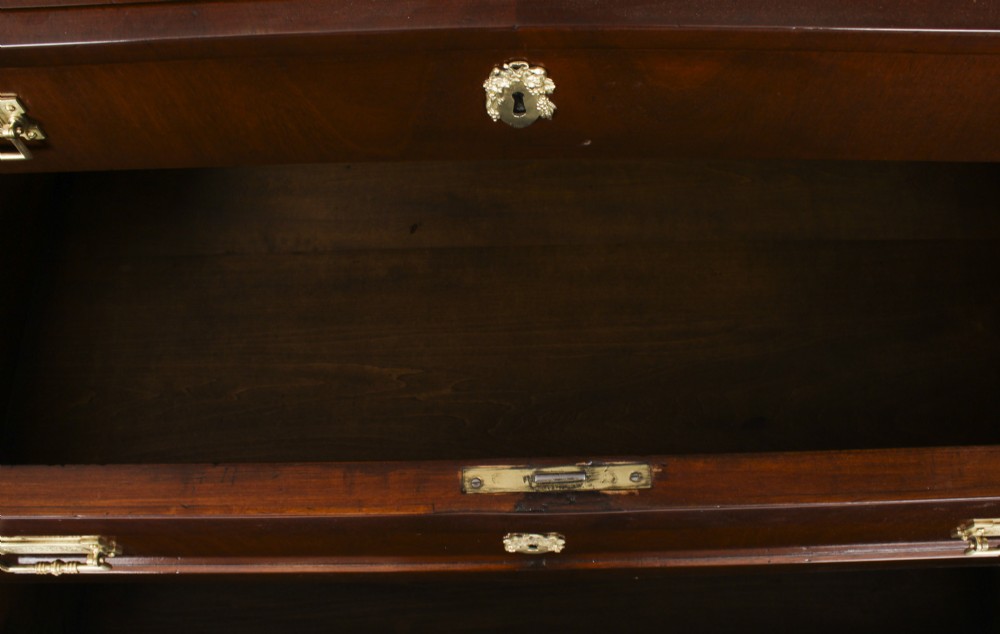
Complete with working locks and keys.

A fabulous example of the timeless Architectural style.

Condition:

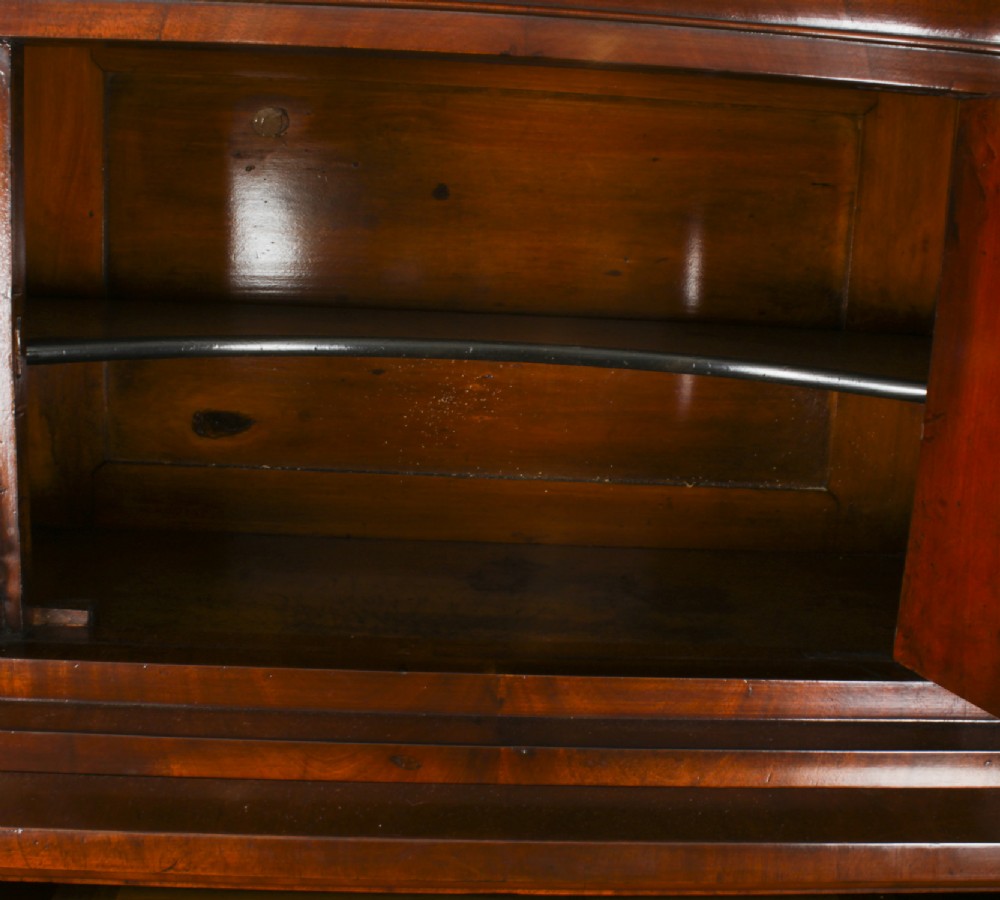
In really excellent condition having been beautifully cleaned, polished and waxed in our workshops, please see photos for confirmation.
Dimensions in cm:

Height 199 x Width 113 x Depth 54

Dimensions in inches:

Height 6 foot, 6 inches x Width 3 foot, 8 inches x Depth 1 foot, 9 inches

Biedermeier period,

refers to an era in Central Europe during which arts appealed to common sensibilities in the historical period between 1815, the year of the Congress of Vienna at the end of the Napoleonic Wars, and 1848, the year of the European revolutions.
Although the term itself is a historical reference, it is predominantly used to denote the artistic styles that flourished in the fields of literature, music, the visual arts and interior design.

Biedermeier was an influential style of furniture design from Germany during the years 1815–1848, based on utilitarian principles. The period extended into Austria and Scandinavia.
Throughout the period, emphasis was kept upon clean lines and minimal ornamentation. As the period progressed, however, the style moved from the early rebellion against Romantic-era fussiness to increasingly ornate commissions by a rising middle class, eager to show their newfound wealth.
The idea of clean lines and utilitarian postures would resurface in the 20th century, continuing into the present day. The Biedermeier style was a simplified interpretation of the influential French Empire Style of Napoleon I, which introduced the romance of ancient Roman Empire styles, adapting these to modern early 19th century households. Biedermeier furniture used locally available materials such as cherry, ash and oak woods.
Biedermeier furniture and lifestyle was a focus on exhibitions at the Vienna applied arts museum in 1896. The many visitors to this exhibition were so influenced by this fantasy style and its elegance that a new resurgence or revival period became popular amongst European cabinetmakers.
This revival period lasted up until the Art Deco style was taken up. Biedermeier also influenced the various Bauhaus styles through their truth in material philosophy.

Flame Mahogany

Thomas Sheraton - 18th century furniture designer, once characterized mahogany as "best suited to furniture where strength is demanded as well as a wood that works up easily, has a beautiful figure and polishes so well that it is an ornament to any room in which it may be placed." Matching his words to his work, Sheraton designed much mahogany furniture. The qualities that impressed Sheraton are particularly evident in a distinctive pattern of wood called "flame mahogany."

The flame figure in the wood is revealed by slicing through the face of the branch at the point where it joins another element of the tree.

Our reference: A2704

Physical Dimensions
Height
199cm (78.35")
Width
113cm (44.49")
Depth
54cm (21.26")
Declaration

Regent Antiques has dated this Biedermeier Secretaire a Abattant to the 19th Century.

Reference Numbers
Sellingantiques Reference
SA937776
Dealers Internal Reference
A2704
Description
A truly magnificent antique flame mahogany architectural biedermeier secretaire abattant, circa 1840 in date.
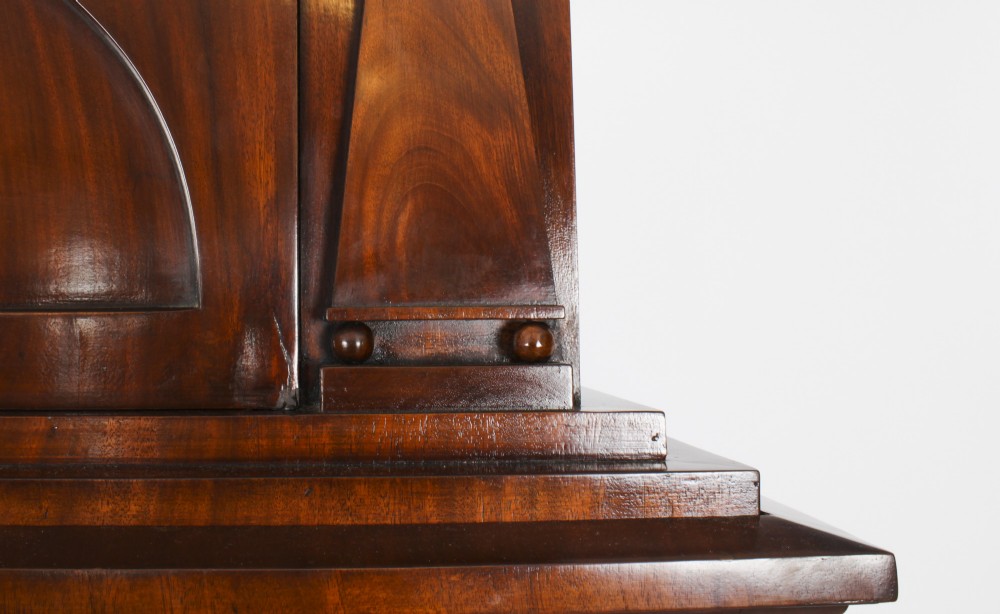
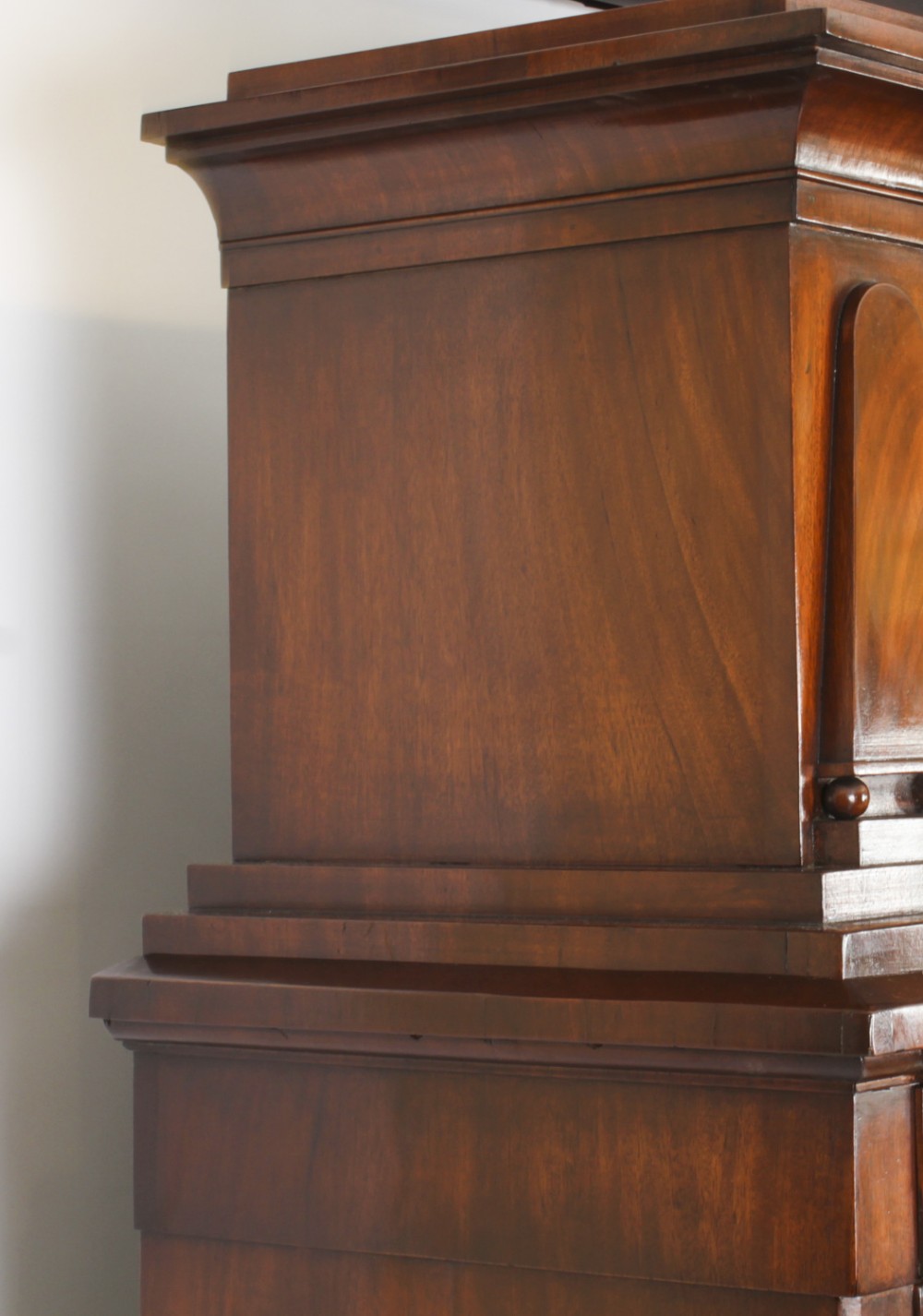
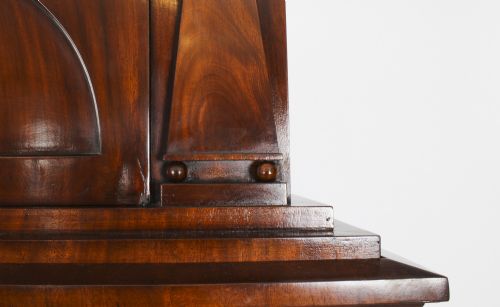
The top section with a projecting cornice over an arched panelled door enclosed by applied shaped mounts.
Regent Antiques

The lower section with a frieze drawer over a fall front which opens to reveal a fabulous interior fitted with drawers and a central cupboard, above three full width drawers drawers below.

fig 1. A 19th-century Biedermeier mahogany secretaire a abattant with an upper superstructure, drop-front flap, lower drawers, and brass mounts.
fig 1. Antique Biedermeier Secretaire Chest Secretaire Abattant19th C

Complete with working locks and keys.

A fabulous example of the timeless Architectural style.

Condition:

In really excellent condition having been beautifully cleaned, polished and waxed in our workshops, please see photos for confirmation.

fig 2. A 19th-century Biedermeier mahogany secretaire a abattant with an upper superstructure, drop-front flap, lower drawers, and brass mounts.
fig 2. Antique Biedermeier Secretaire Chest Secretaire Abattant19th C

Dimensions in cm:

Height 199 x Width 113 x Depth 54

Dimensions in inches:

Height 6 foot, 6 inches x Width 3 foot, 8 inches x Depth 1 foot, 9 inches

Biedermeier period,

refers to an era in Central Europe during which arts appealed to common sensibilities in the historical period between 1815, the year of the Congress of Vienna at the end of the Napoleonic Wars, and 1848, the year of the European revolutions.

fig 3. A 19th-century Biedermeier mahogany secretaire a abattant with an upper superstructure, drop-front flap, lower drawers, and brass mounts.
fig 3. Antique Biedermeier Secretaire Chest Secretaire Abattant19th C

Although the term itself is a historical reference, it is predominantly used to denote the artistic styles that flourished in the fields of literature, music, the visual arts and interior design.

Biedermeier was an influential style of furniture design from Germany during the years 1815–1848, based on utilitarian principles. The period extended into Austria and Scandinavia.

fig 4. A 19th-century Biedermeier mahogany secretaire a abattant with an upper superstructure, drop-front flap, lower drawers, and brass mounts.
fig 4. Antique Biedermeier Secretaire Chest Secretaire Abattant19th C

Throughout the period, emphasis was kept upon clean lines and minimal ornamentation. As the period progressed, however, the style moved from the early rebellion against Romantic-era fussiness to increasingly ornate commissions by a rising middle class, eager to show their newfound wealth.

fig 5. A 19th-century Biedermeier mahogany secretaire a abattant with an upper superstructure, drop-front flap, lower drawers, and brass mounts.
fig 5. Antique Biedermeier Secretaire Chest Secretaire Abattant19th C

The idea of clean lines and utilitarian postures would resurface in the 20th century, continuing into the present day. The Biedermeier style was a simplified interpretation of the influential French Empire Style of Napoleon I, which introduced the romance of ancient Roman Empire styles, adapting these to modern early 19th century households. Biedermeier furniture used locally available materials such as cherry, ash and oak woods.

fig 6. A 19th-century Biedermeier mahogany secretaire a abattant with an upper superstructure, drop-front flap, lower drawers, and brass mounts.
fig 6. Antique Biedermeier Secretaire Chest Secretaire Abattant19th C

Biedermeier furniture and lifestyle was a focus on exhibitions at the Vienna applied arts museum in 1896. The many visitors to this exhibition were so influenced by this fantasy style and its elegance that a new resurgence or revival period became popular amongst European cabinetmakers.

fig 7. A 19th-century Biedermeier mahogany secretaire a abattant with an upper superstructure, drop-front flap, lower drawers, and brass mounts.
fig 7. Antique Biedermeier Secretaire Chest Secretaire Abattant19th C

This revival period lasted up until the Art Deco style was taken up. Biedermeier also influenced the various Bauhaus styles through their truth in material philosophy.

Flame Mahogany

Thomas Sheraton - 18th century furniture designer, once characterized mahogany as "best suited to furniture where strength is demanded as well as a wood that works up easily, has a beautiful figure and polishes so well that it is an ornament to any room in which it may be placed." Matching his words to his work, Sheraton designed much mahogany furniture. The qualities that impressed Sheraton are particularly evident in a distinctive pattern of wood called "flame mahogany."

The flame figure in the wood is revealed by slicing through the face of the branch at the point where it joins another element of the tree.

Our reference: A2704

Height
199cm (78.35")
Width
113cm (44.49")
Depth
54cm (21.26")
Date of Manufacture

Regent Antiques has dated this Biedermeier Secretaire a Abattant to the 19th Century.

Reference Numbers
Sellingantiques Ref
SA937776
Dealers Internal Ref
A2704
Regent Antiques
Regent Antiques
Sellingantiques verified Since Sep 2016

We specialise in english and continental furniture, silver, porcelain and decorative items.

Dealer Profile

You can view the stock and full dealer information on the Regent Antiques Profile Page

Trade Associations

Regent Antiques is a registered member of LAPADA  CINOA

PDF SHARE
SAVE
A 19th-century Biedermeier mahogany secretaire a abattant with an upper superstructure, drop-front flap, lower drawers, and brass mounts.
1 / 25
Archive I A 19th-century Biedermeier mahogany secretaire a abattant with an upper superstructure, drop-front flap, lower drawers, and brass mounts.

Antique Biedermeier Secretaire Chest Secretaire Abattant19th C
Archive II A 19th-century Biedermeier mahogany secretaire a abattant with an upper superstructure, drop-front flap, lower drawers, and brass mounts. View II
Archive III A 19th-century Biedermeier mahogany secretaire a abattant with an upper superstructure, drop-front flap, lower drawers, and brass mounts. View III
Archive IV A 19th-century Biedermeier mahogany secretaire a abattant with an upper superstructure, drop-front flap, lower drawers, and brass mounts. View IV
Archive V A 19th-century Biedermeier mahogany secretaire a abattant with an upper superstructure, drop-front flap, lower drawers, and brass mounts. View V
Archive VI A 19th-century Biedermeier mahogany secretaire a abattant with an upper superstructure, drop-front flap, lower drawers, and brass mounts. View VI
Archive VII A 19th-century Biedermeier mahogany secretaire a abattant with an upper superstructure, drop-front flap, lower drawers, and brass mounts. View VII
Archive VIII A 19th-century Biedermeier mahogany secretaire a abattant with an upper superstructure, drop-front flap, lower drawers, and brass mounts. View VIII
Archive IX A 19th-century Biedermeier mahogany secretaire a abattant with an upper superstructure, drop-front flap, lower drawers, and brass mounts. View IX
Archive X A 19th-century Biedermeier mahogany secretaire a abattant with an upper superstructure, drop-front flap, lower drawers, and brass mounts. View X
Archive XI A 19th-century Biedermeier mahogany secretaire a abattant with an upper superstructure, drop-front flap, lower drawers, and brass mounts. View XI
Archive XII A 19th-century Biedermeier mahogany secretaire a abattant with an upper superstructure, drop-front flap, lower drawers, and brass mounts. View XII
Archive XIII A 19th-century Biedermeier mahogany secretaire a abattant with an upper superstructure, drop-front flap, lower drawers, and brass mounts. View XIII
Archive XIV A 19th-century Biedermeier mahogany secretaire a abattant with an upper superstructure, drop-front flap, lower drawers, and brass mounts. View XIV
Archive XV A 19th-century Biedermeier mahogany secretaire a abattant with an upper superstructure, drop-front flap, lower drawers, and brass mounts. View XV
Archive XVI A 19th-century Biedermeier mahogany secretaire a abattant with an upper superstructure, drop-front flap, lower drawers, and brass mounts. View XVI
Archive XVII A 19th-century Biedermeier mahogany secretaire a abattant with an upper superstructure, drop-front flap, lower drawers, and brass mounts. View XVII
Archive XVIII A 19th-century Biedermeier mahogany secretaire a abattant with an upper superstructure, drop-front flap, lower drawers, and brass mounts. View XVIII
Archive XIX A 19th-century Biedermeier mahogany secretaire a abattant with an upper superstructure, drop-front flap, lower drawers, and brass mounts. View XIX
Archive XX A 19th-century Biedermeier mahogany secretaire a abattant with an upper superstructure, drop-front flap, lower drawers, and brass mounts. View XX
Archive XXI A 19th-century Biedermeier mahogany secretaire a abattant with an upper superstructure, drop-front flap, lower drawers, and brass mounts. View XXI
Archive XXII A 19th-century Biedermeier mahogany secretaire a abattant with an upper superstructure, drop-front flap, lower drawers, and brass mounts. View XXII
Archive XXIII A 19th-century Biedermeier mahogany secretaire a abattant with an upper superstructure, drop-front flap, lower drawers, and brass mounts. View XXIII
Archive XXIV A 19th-century Biedermeier mahogany secretaire a abattant with an upper superstructure, drop-front flap, lower drawers, and brass mounts. View XXIV
Archive XXV A 19th-century Biedermeier mahogany secretaire a abattant with an upper superstructure, drop-front flap, lower drawers, and brass mounts. View XXV
Enlarged Archival View
Location
Manor Warehouse
318 Green Lanes
London
N4 1BX
United Kingdom
Verified Since Sep 2016
Items For Sale 643
Items Sold 2,638
Regent Antiques
Regent Antiques
Verified Since Sep 2016
View Dealer Info
Location: Manor Warehouse, 318 Green Lanes, London, N4 1BX, United Kingdom
Verified
Sep 2016
For Sale
643
Sold
2,638
A 19th-century Biedermeier mahogany secretaire a abattant with an upper superstructure, drop-front flap, lower drawers, and brass mounts.
Antique Biedermeier Secretaire Chest Secretaire Abattant19th C
Ref: SA937776
A 19th-century Biedermeier mahogany secretaire a abattant with an upper superstructure, drop-front flap, lower drawers, and brass mounts.
Detail View 1
Detail View 2
Detail View 3
Detail View 4
Detail View 5
Detail View 6
Detail View 7
Detail View 8
Detail View 9
Detail View 10
Detail View 11
Detail View 12
Detail View 13
Detail View 14
Detail View 15
Detail View 16
Detail View 17
Detail View 18
Detail View 19
Detail View 20
Detail View 21
Detail View 22
Detail View 23
Detail View 24
Archival Detail
Every single antique dealer on our platform is individually approved by our internal team. We verify their professional trade history, ethical standards, and photographic quality to ensure a secure, high-standard buying environment. Upon joining, every dealer agrees to a strict 9-point code of conduct. While issues can occasionally arise, our dealers typically resolve them swiftly and directly with the buyer. In fact, since our founding in 2002, Sellingantiques has only had to step in to help resolve an issue on roughly five occasions—a true testament to the quality of our dealers and their dedication to your happiness.
Our dealers are highly experienced in packing and shipping fragile, high-value antiques. Because you are in direct contact with the dealer, you will be able to easily go through all available shipping and insurance options together to ensure your item arrives safely.
Antiques are the ultimate green purchase. By choosing historical pieces over newly manufactured goods, you completely eliminate the carbon footprint of modern mass production while preserving exceptional, timeless craftsmanship.

A Biedermeier secretaire a abattant is a tall 19th-century Continental writing cabinet featuring a drop-down flap that lowers to form a flat writing surface, concealing small internal drawers and compartments.

Biedermeier craftsmen typically utilised rich native and imported wood veneers, such as mahogany, walnut, cherry, and birch, often accented with brass keyhole escutcheons and ebonised details.

Authentic pieces exhibit clean geometric lines, prominent book-matched timber veneers, hand-cut dovetail drawer joints, original iron or brass lock mechanisms, and minimal applied carved ornamentation.

Position the cabinet as a focal point against a neutral wall in a study, hallway, or living room, balancing its strong architectural silhouette with contemporary artwork or minimal ceramic decor.

Dust the wood regularly with a dry microfibre cloth and apply a quality beeswax polish periodically along the grain, avoiding silicone sprays, direct heat sources, and damp environments.
items
Add keywords to the filter
Price
£100
£250000
Era
Movements
Material
Origin
Stock Location
Freshness
Online Payments
Categories