


Mahogany Secretaire Abattant
A mahogany secretaire abattant provides concealed writing space behind a drop-down front, combining practical utility with formal elegance.
Mahogany Secretaire Abattant
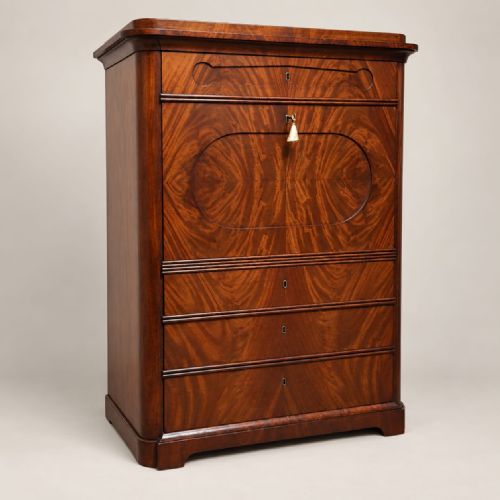
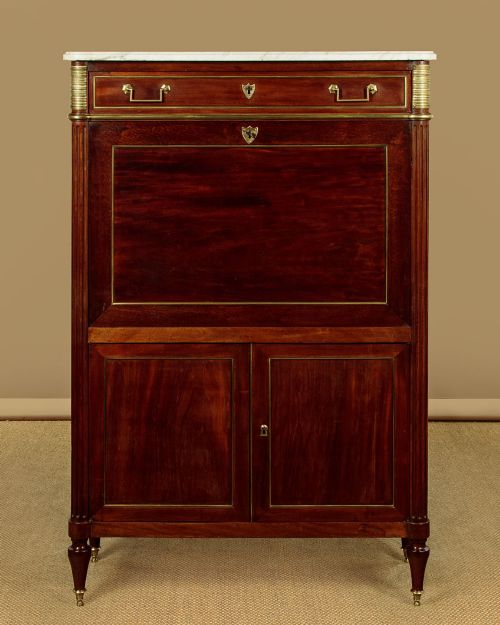
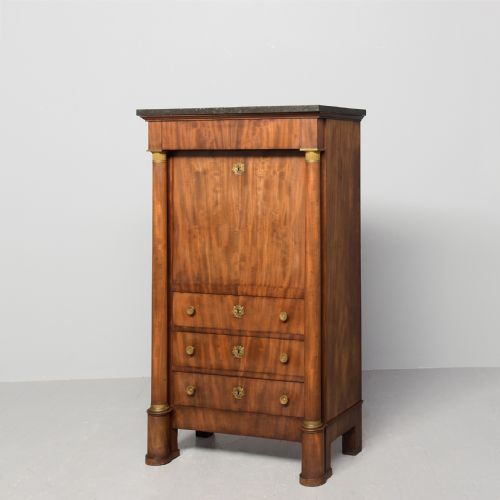
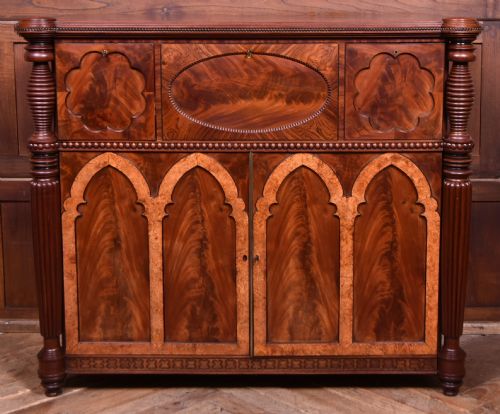
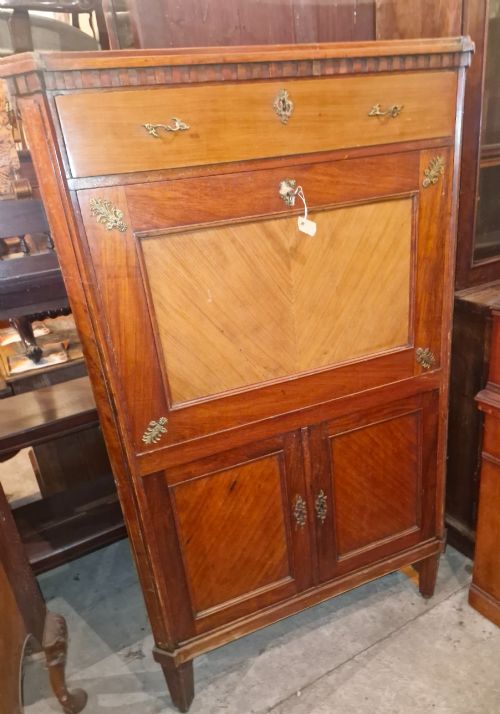
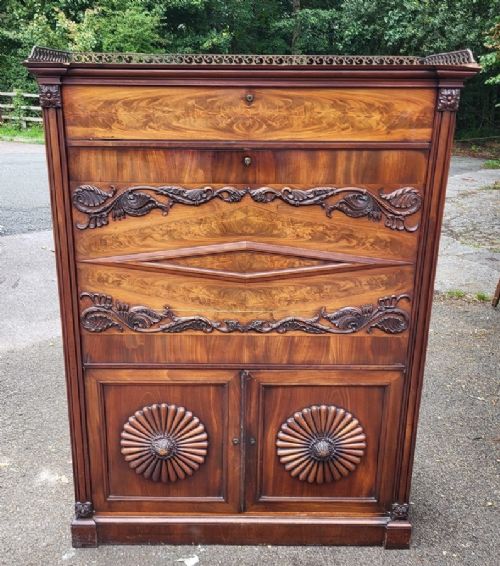
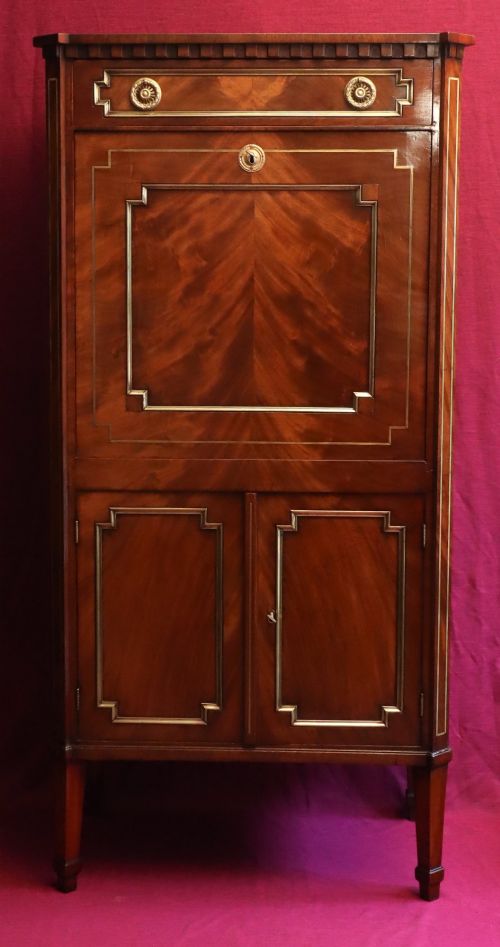
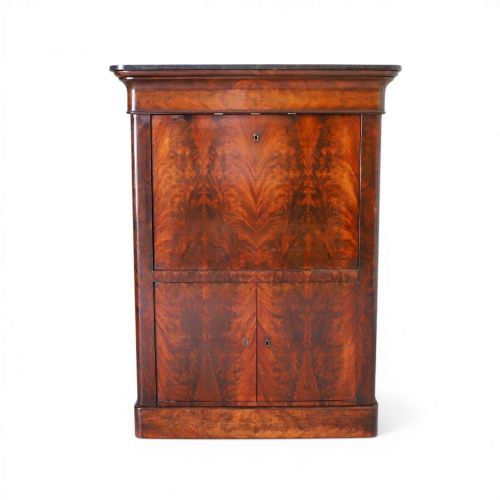
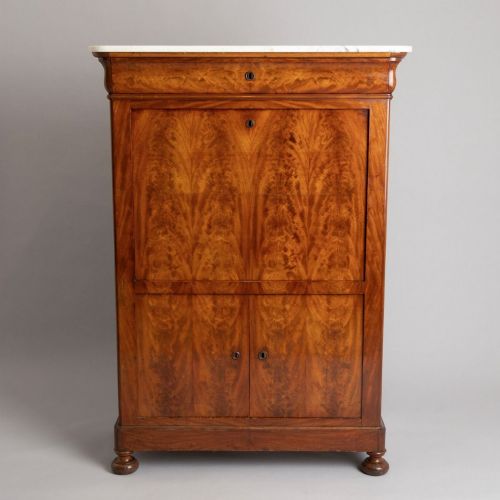
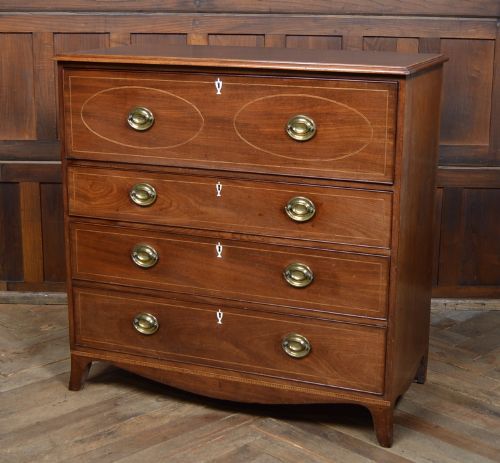
A mahogany secretaire abattant is a tall writing cabinet featuring a fall-front door that lowers to reveal a fitted interior of small drawers and compartments. Buyers searching for a mahogany secretaire abattant encounter pieces originating from French, Regency, Victorian, and Biedermeier workshops spanning the nineteenth century.
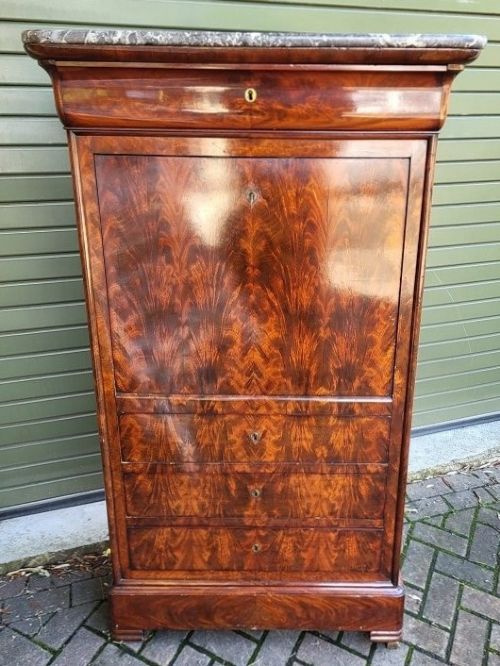
The format appears under various descriptions including escritoire, secretaire cabinet, and secretaire chest. The most frequently met examples on this page are nineteenth-century French models featuring marble tops and flame mahogany veneers.
Materials and Construction
Cabinetmakers constructed these pieces using solid timber frames overlaid with flame mahogany veneers to create striking grain patterns across the fall-front panels and drawer fronts. Oak and other secondary timbers form the internal carcase work and drawer linings.
Many examples incorporate marble tops, brass mounts, or ormolu details, while select pieces display mother-of-pearl inlay or Dutch marquetry. Secret drawers integrated within the internal fitments demonstrate the precise joinery typical of the period.
Listings feature nineteenth-century pieces spanning the Regency, Victorian, Biedermeier, and French Empire styles, constructed primarily in mahogany with marble and brass.
Evaluating Execution
Quality rests upon the selection and matching of the timber veneers, particularly how the grain mirrors across the drop-front surface. Superior examples maintain crisp architectural proportions and seamless integration of the writing surface within the primary carcase.
The refinement of the internal stationary drawers, the integrity of the marble top, and the retention of original brass hardware or locks separate standard utility pieces from finer cabinetwork.
Gillows
The Mahogany Secretaire Abattant Glossary
- Abattant
- A drop-front panel or fall-front door that lowers horizontally to serve as a writing surface. This architectural feature conceals the internal pigeonholes and small drawers.
- Escritoire
- A writing cabinet or desk. The term frequently appears interchangeably with secretaire abattant in nineteenth-century cataloguing.
- Flame mahogany
- Timber cut from the fork of the mahogany tree to produce a flickering, flame-like grain pattern. Cabinetmakers prized this veneer for principal exterior surfaces.
- Ormolu
- Gilded bronze mounted onto furniture as decorative enrichment. French Empire and restoration pieces utilise this technique extensively.
Mahogany Secretaire Abattant: Frequently Asked Questions
What is a secretaire abattant?
A secretaire abattant is a tall cabinet with a hinged front that folds down to create a writing desk. It typically houses small drawers and pigeonholes behind the main door.
Lower drawers sit beneath the drop-front, offering substantial storage capacity while maintaining a compact footprint in a room.
How do I use one today?
These cabinets function effectively as compact home office desks or statement storage pieces in reception rooms. The fall-front closes to hide papers and laptops entirely.
Surface tops accommodate lamps or decorative objects, while internal compartments organise stationery and modern correspondence.
Are marble tops original?
Marble tops are entirely original to many continental examples, particularly nineteenth-century French models. They provided a durable, decorative surface for the cabinet top.
White or grey marble slabs were bedded directly onto the timber carcase during construction.
How do I identify a Biedermeier piece?
Biedermeier examples display cleaner architectural lines, restrained ornamentation, and warm mahogany veneers without heavy gilt bronze mounts. The focus remains on timber grain and form.
Originating in Central Europe, these pieces emphasise domestic comfort and functional craftsmanship.