



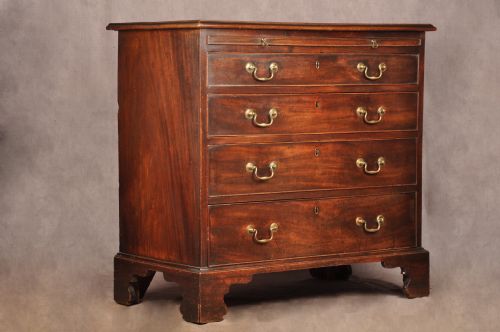


Rich Brown Bureau
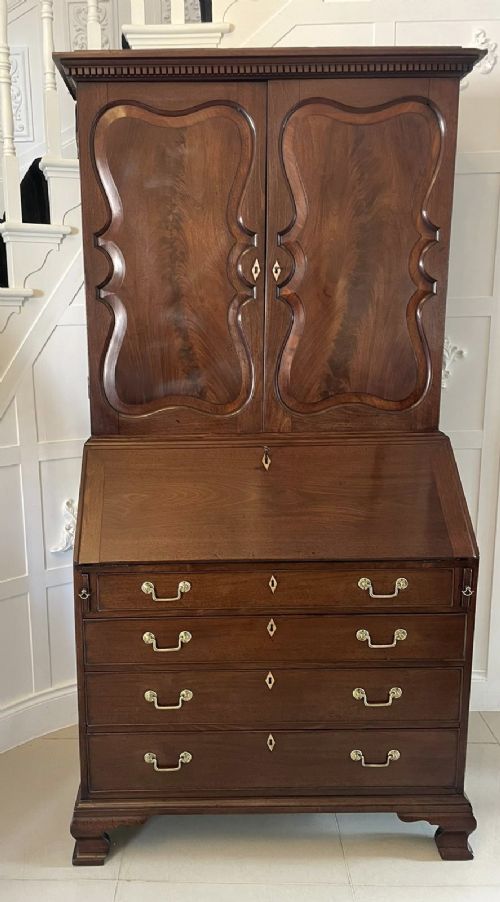
A rich brown bureau brings warmth and working space to a room, offering hidden compartments beneath a sloping fall front.
Rich Brown Bureau
A rich brown bureau is a dedicated writing desk featuring a hinged flap that conceals pigeonholes and small drawers. These pieces emerge primarily from the Georgian, Victorian, and Edwardian eras, constructed in substantial timber forms.
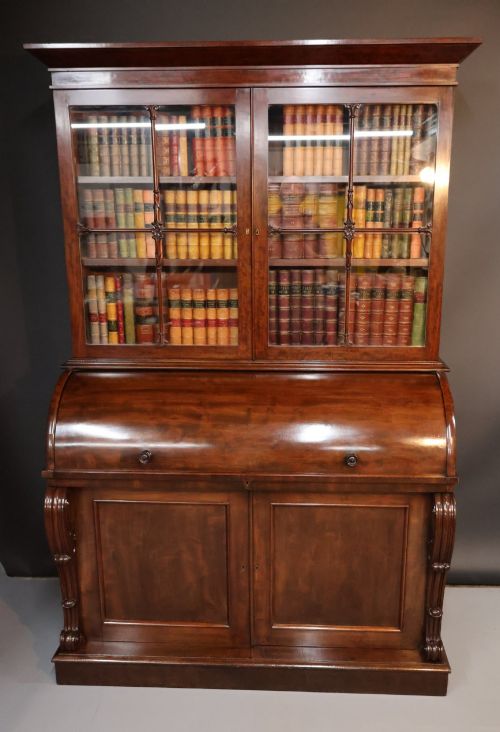
The selection here encompasses bureau bookcases, cylinder desks, and secretaire abattants alongside standard writing desks and chests of drawers. Mahogany dominates the offerings, appearing alongside walnut, amboyna veneer, and satinwood.
Buyers encounter eighteenth century George II and George III examples as well as nineteenth century Regency, William IV, and Biedermeier interpretations. Continental pieces featuring marquetry sit alongside British craftsmanship from provincial workshops and metropolitan cabinet makers.
How they were made
Cabinet makers built these items using solid mahogany, walnut, and satinwood, often applying figured veneers over secondary woods to create deep grain patterns. Brass handles, escutcheons, and hinges secure the fall fronts and drawers.
Inlaid stringing, marquetry, and crossbanding ornament the surfaces of Georgian and continental pieces, requiring precise hand-cutting and fitting. Secondary timbers such as oak or pine appear in the drawer linings and internal divisions.
The listings here span the eighteenth, nineteenth, and early twentieth centuries, featuring mahogany, burr walnut, and amboyna veneer.
What varies in quality
The depth of figure in the mahogany or burr walnut veneer dictates much of the visual weight, separating standard utilitarian furniture from exhibition quality items. Selected timbers display symmetrical grain patterns across large unbroken surfaces like the fall front and drawer faces.
Interior complexity sets finer desks apart, where secret compartments, shaped pigeonholes, and central cupboards demonstrate the joiner's skill. The crispness of hand-cut dovetails in the drawers and the integration of original brass hardware indicate higher workshop standards.
Maple of London
The Rich Brown Bureau Glossary
- Bureau
- A writing desk with a sloping lid that opens to form a writing surface. It encloses small drawers and pigeonholes inside.
- Cylinder Desk
- A desk featuring a rolling curved cylinder of wood that slides back to reveal the writing surface and interior fittings. It provides a smooth mechanical alternative to the hinged flap.
- Marquetry
- Decorative patterns formed by fitting together thin slices of various coloured woods and veneers. It covers surfaces on Dutch and continental pieces.
- Brushing Slide
- A pull-out shelf mounted above the top drawers of a chest or desk to provide a temporary writing or display surface.
Rich Brown Bureau: Frequently Asked Questions
How do I use a bureau daily?
Lower the sloping front flap to create a sturdy writing surface supported by integrated wooden brackets or pull-out lopers. The internal compartments organise stationery, letters, and small items out of sight.
Closing the flap instantly conceals paperwork, returning the room to a tidy living space.
How do I identify a Georgian bureau?
Georgian pieces date from the eighteenth century, displaying hand-cut dovetails, dense mahogany timber, and traditional brass hardware. Their proportions reflect classic cabinet-making proportions without later Victorian mass production.
Look for secondary woods like oak inside the drawers and candle slides or pigeonholes styled with period architectural details.
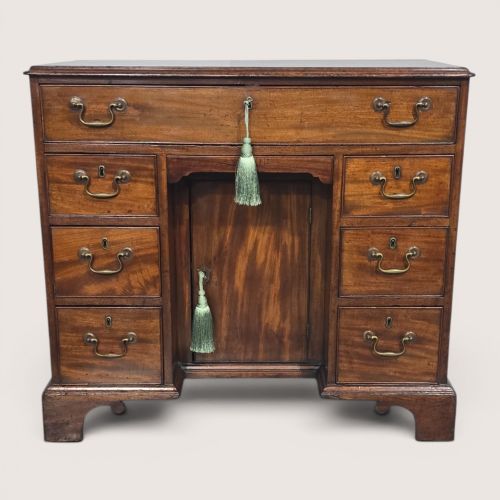
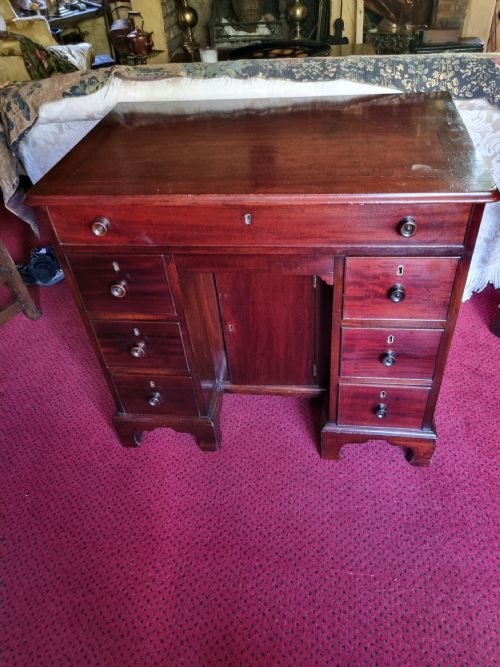
What is a kneehole desk?
A kneehole desk is a compact writing table with a recessed central space for the user's legs, flanked by pedestals of small drawers. Eighteenth-century examples often include a central cupboard behind the kneehole space.
These desks fit smaller studies where a full pedestal partner desk proves too large.