
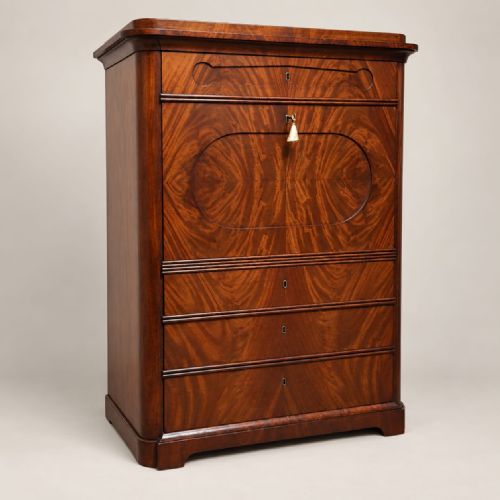
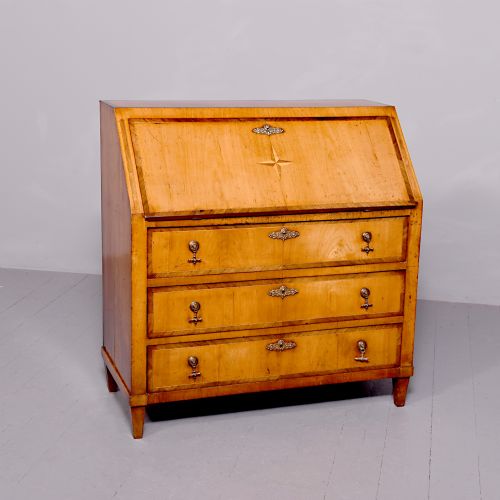
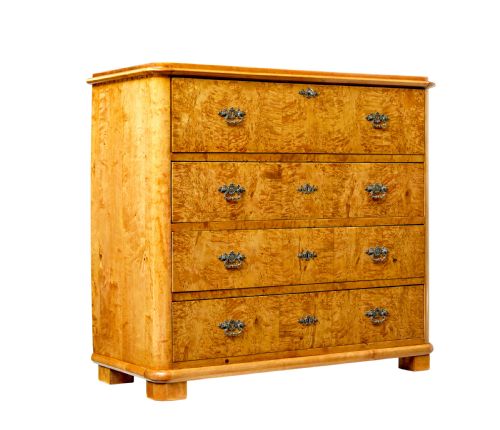
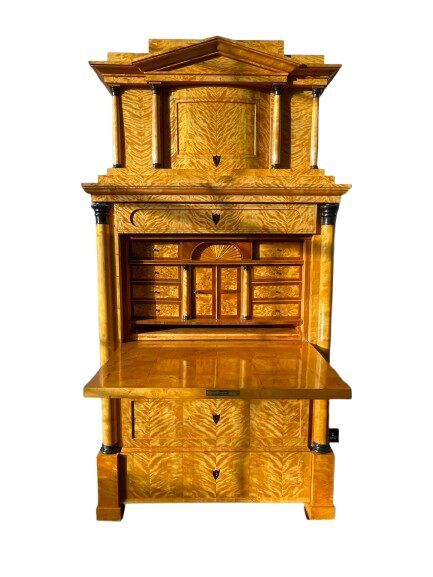
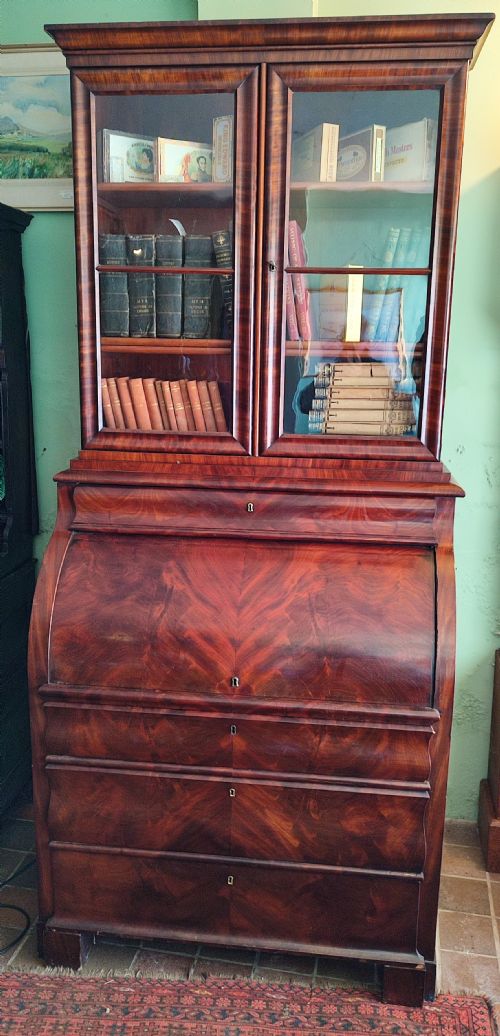


Biedermeier Writing Cabinet
A biedermeier writing cabinet combines architectural restraint with striking figured veneers, offering a discreet workspace for the nineteenth-century interior.
Biedermeier Writing Cabinet
When searching for a biedermeier writing cabinet, one encounters tall case furniture designed for writing and storage, most frequently taking the form of a secretaire chest of drawers or an abattant.
The prevailing examples originate from nineteenth-century continental workshops, spanning decades from the early nineteenth century through to eighteen seventy.
These pieces present clean geometric lines that highlight timber grains rather than relying on heavy carving, offering a functional desk surface that conceals away when not in use.
How they were made
Cabinetmakers constructed the carcase using secondary softwoods like pine, onto which they applied sophisticated veneers of birch, rosewood, walnut, or mahogany.
Makers utilised contrasting ebonised wood details and delicate brass mounts to accentuate the architectural drawer fronts and drop-down writing flaps.
Biedermeier Writing Cabinet Retail Price Guide 2026
Typical asking prices for biedermeier writing cabinet among the pieces listed under this phrase on Sellingantiques today, from the lower quarter to the upper quarter. They describe what is for sale here now, not the wider market.
Listings feature nineteenth-century continental pieces utilising mahogany, rosewood, walnut, birch veneer, ebonised wood, and brass.
What varies in quality
The distinction lies in the choice and symmetry of the wood veneers, particularly how burr birch or masur birch is matched across the drawer faces.
Proportion and the restraint of the decorative ebonised accents separate standard cabinetwork from the most accomplished continental examples.
The Biedermeier Writing Cabinet Glossary
- Secretaire abattant
- A tall upright cabinet featuring a hinged fall-front writing surface that drops down to reveal fitted interior drawers and pigeonholes.
- Escritoire
- A writing cabinet or desk designed for correspondence, incorporating a concealed writing flap and internal compartments.
- Masur birch
- A decorative timber featuring distinctive natural swirls and dark knots, highly prized by nineteenth-century Scandinavian makers.
- Ebonised wood
- Timber treated with a dark stain or finish to imitate ebony, providing sharp linear contrast against blonde or reddish veneers.
Biedermeier Writing Cabinet: Frequently Asked Questions
What is a secretaire abattant?
A secretaire abattant is an upright cabinet with a hinged front panel that pulls down to form a writing ledge.
Behind this drop-front lie small drawers and pigeonholes for stationery and correspondence.
Where were these cabinets made?
These pieces originate from continental European workshops during the nineteenth century.
Sweden and other northern regions produced many notable examples using native birch timbers.
How do I use one today?
A biedermeier writing cabinet serves well as a compact bureau in a study or living area.
The fall-front provides a practical surface for writing while keeping papers out of sight when closed.
What woods were used?
Cabinetmakers utilised a foundation of pine faced with expensive veneers such as mahogany, walnut, and rosewood.
Lighter figured timbers like burr birch, blonde walnut, and masur birch appear frequently on continental pieces.