






Burr Walnut Secretaire
A burr walnut secretaire combines a richly figured writing surface with concealed drawers behind a drop-front panel.
Burr Walnut Secretaire
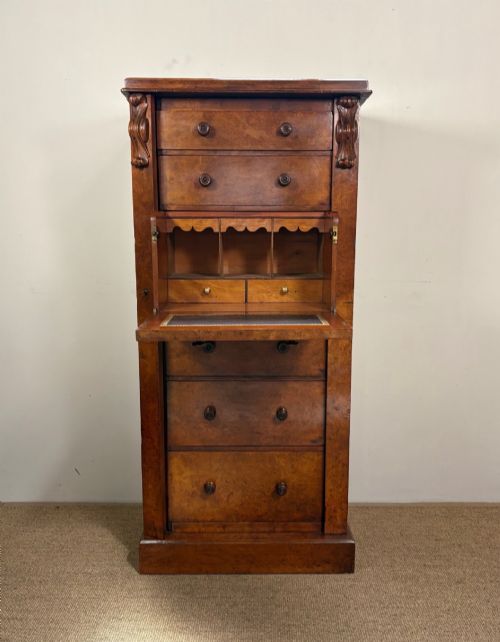
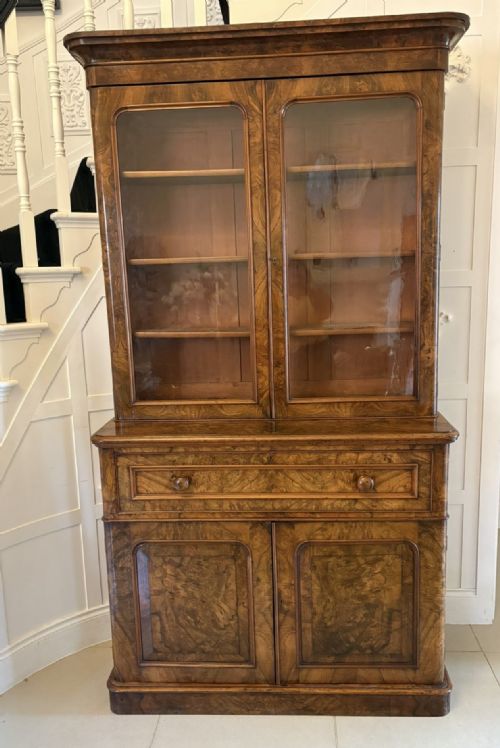
A burr walnut secretaire appears in several distinct forms across the 18th and 19th centuries, ranging from tall bureau bookcases to compact Wellington chests and fall-front abattants. Buyers seeking this phrase encounter pieces that double as storage chests and functional writing desks.
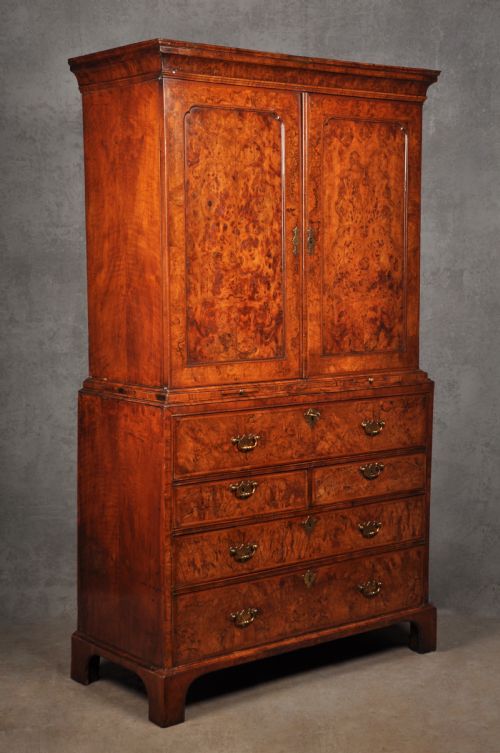
The George I and Queen Anne periods provide early examples in the form of secretaire chest on chest pieces and kneehole desks, often showing rich figuring. Victorian makers later revived these rich veneers on Wellington chests, credenzas, and glazed bookcases.
French and Swedish variations also emerge in the records alongside English craftsmanship, offering differing proportions and marble tops while retaining the signature fall-front writing drawer.
Materials and Construction Techniques
Cabinetmakers constructed the carcase using solid foundational woods like oak or pine before applying thin layers of burr walnut veneer across the exterior surfaces. This technique allowed craftsmen to display the swirling, knotty grain patterns of the walnut burl across wide drawer fronts and fall-front panels.
Internal fittings frequently incorporate secondary woods alongside pigeonholes and small secret drawers lined in leather or baize. Brass hardware, glass door panels, and occasional ormolu mounts complete the structural assembly of these writing cabinets.
Burr Walnut Secretaire Retail Price Guide 2026
Typical asking prices for burr walnut secretaire among the pieces listed under this phrase on Sellingantiques today, from the lower quarter to the upper quarter. They describe what is for sale here now, not the wider market.
Several Victorian pieces include secret sliding panels designed to hide private letters from curious eyes.
Evaluating Burr Walnut Secretaire Quality
The visual impact of a burr walnut secretaire depends largely on the matching and continuity of the veneer across the primary facade. Finer examples display symmetrical grain patterns that flow seamlessly across adjoining drawers and panels.
Construction depth within the internal desk fittings also separates standard production from exceptional work. Elaborate pigeonhole arrangements, concealed secondary compartments, and original brasses indicate a higher tier of cabinetmaking.
The Burr Walnut Secretaire Glossary
- Secretaire
- A piece of furniture containing a built-in writing drawer or fold-down writing flap. This feature conceals internal compartments for stationery and letters.
- Burr Walnut
- Timber taken from the gnarled growth of a walnut tree, yielding dense, swirling grain patterns. It is sliced into thin veneers for decorative cabinet fronts.
- Abattant
- A tall cabinet featuring a vertical drop-front panel that opens to reveal a writing surface and inner drawers. This form frequently appears in Victorian and continental pieces.
- Wellington Chest
- A tall, narrow chest of drawers secured by a locking hinged side pilaster. Several examples integrate a secretaire drawer into the upper section.
- Bureau Bookcase
- A tall cabinet combining a sloping or drop-front desk compartment below enclosed upper shelving. These pieces often date from the early 18th century.
Burr Walnut Secretaire: Frequently Asked Questions
What is a secretaire chest?
A secretaire chest resembles a standard chest of drawers from the outside, but one drawer hides a drop-front writing surface. Inside, small compartments hold writing materials and letters.
Cabinetmakers designed these pieces to save space in smaller rooms by combining storage and a desk into a single footprint.
How do I identify a George I piece?
George I examples typically feature early 18th-century proportions, rich figured walnut veneers, and herringbone banding. The internal fittings often show distinct traditional joinery and unglazed or panelled doors.
These pieces emphasise architectural walnut fronts rather than the heavier carvings found in later periods.
Where were these desks used?
Owners placed secretaire cabinets in private studies, libraries, and bedrooms for managing correspondence. The lockable drop-front kept private documents secure.
In modern rooms, they function as compact writing stations while providing substantial drawer storage.
What is a Wellington secretaire?
A Wellington secretaire is a tall, narrow Victorian chest secured by a locking side pilaster bar. One of the top drawers drops forward to create a writing desk.
This specific vertical format maximises storage capacity in rooms with limited floor space.