

19th Century Secretaire Desk
A 19th century secretaire desk combines everyday workspace and concealed storage within handsome period timber.
19th Century Secretaire Desk
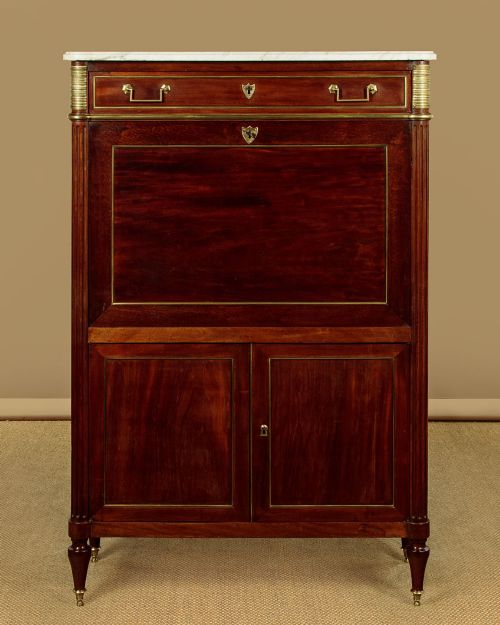
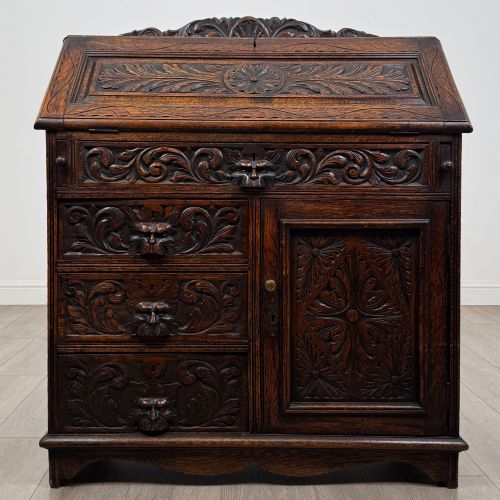
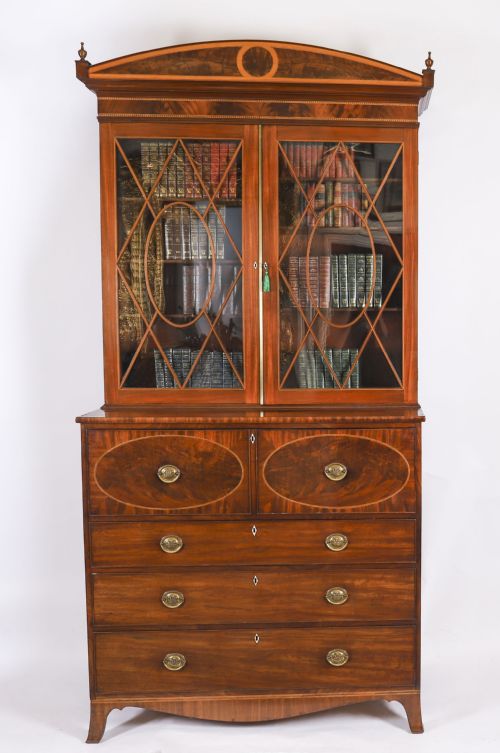
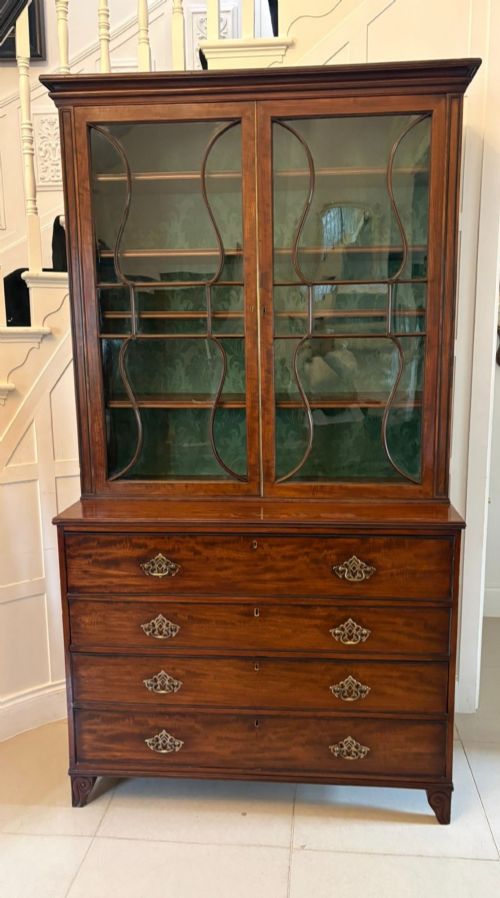
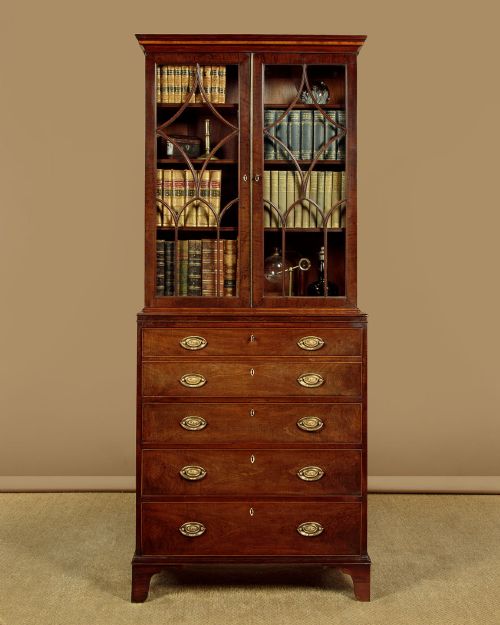
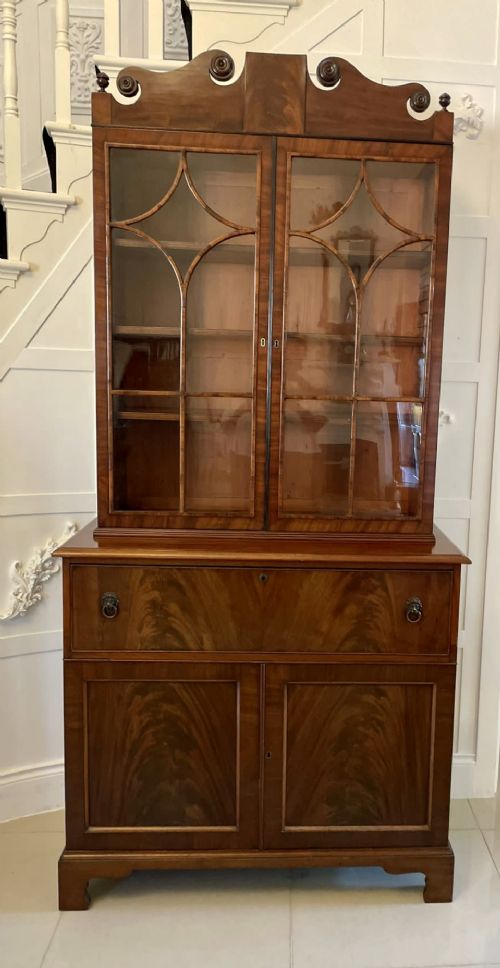
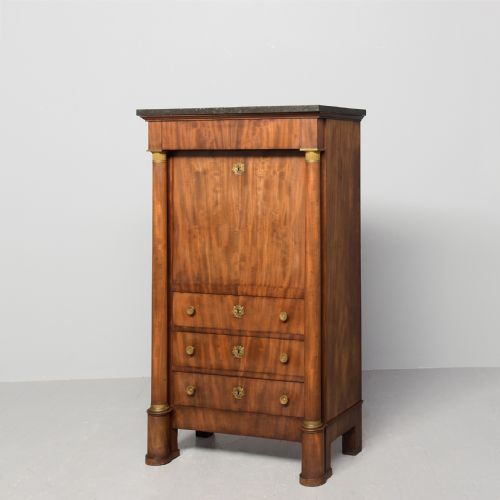
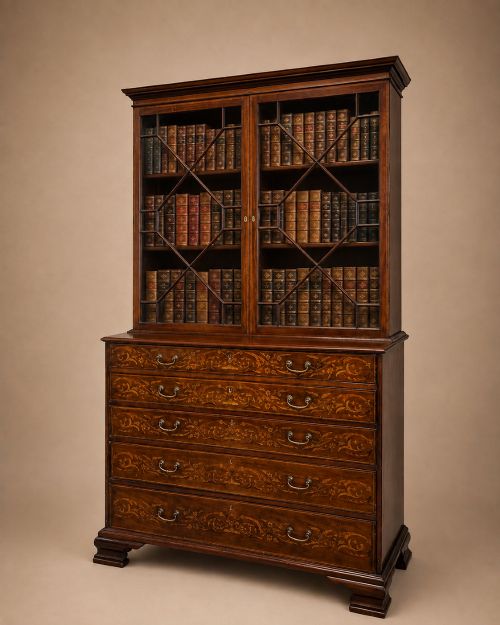
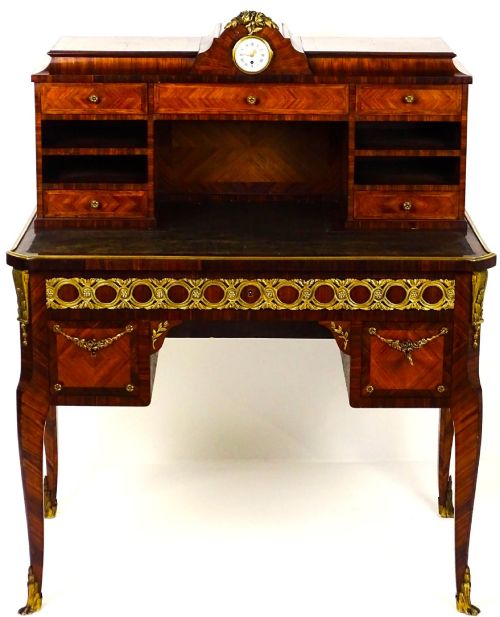
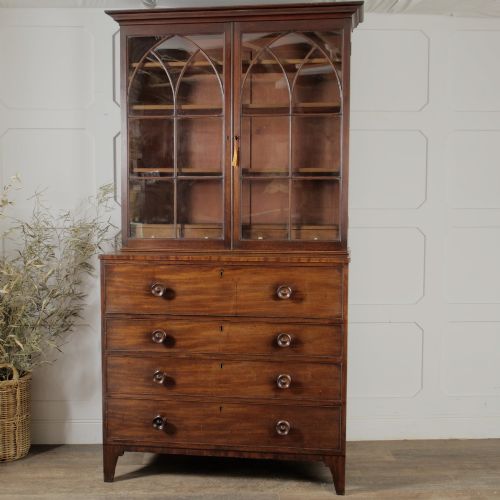
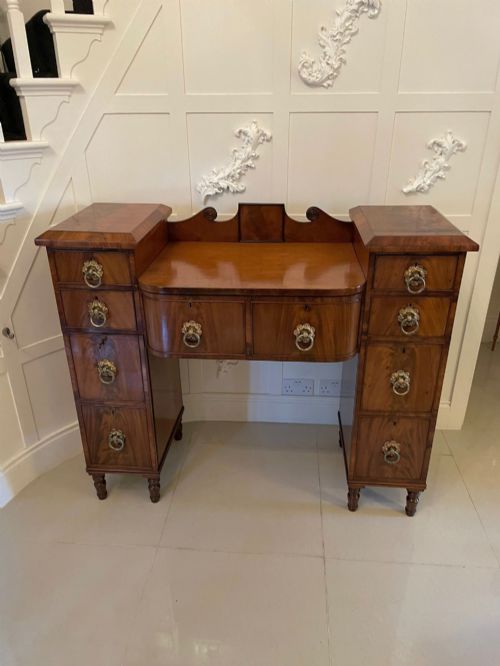
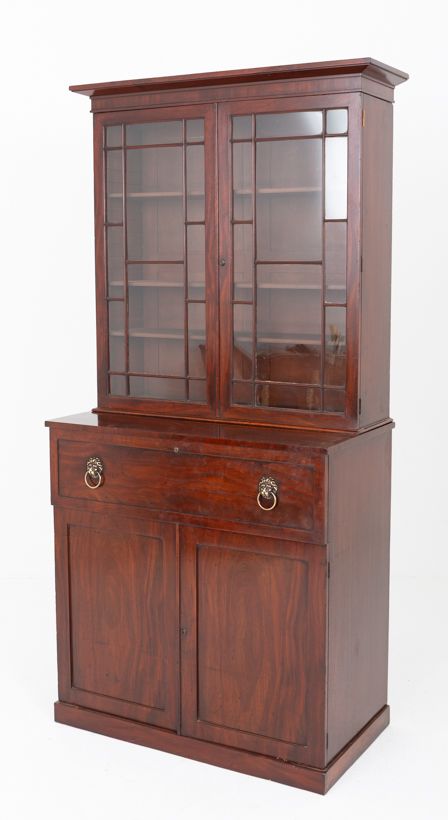
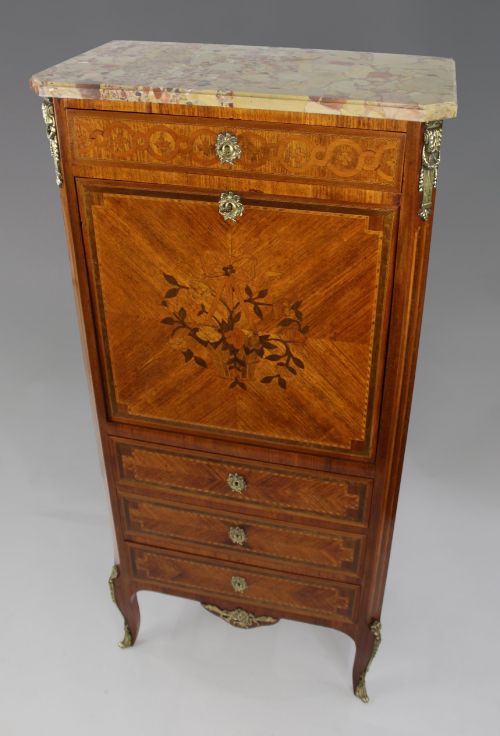
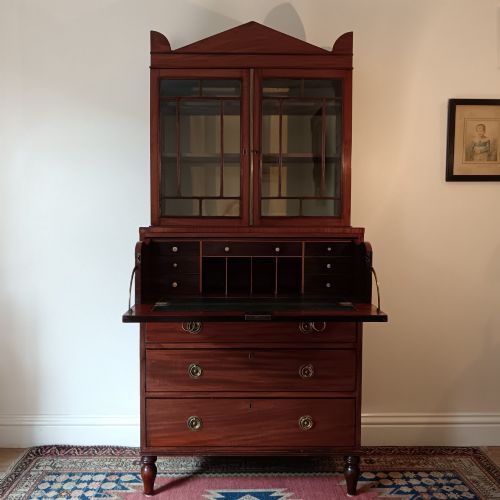
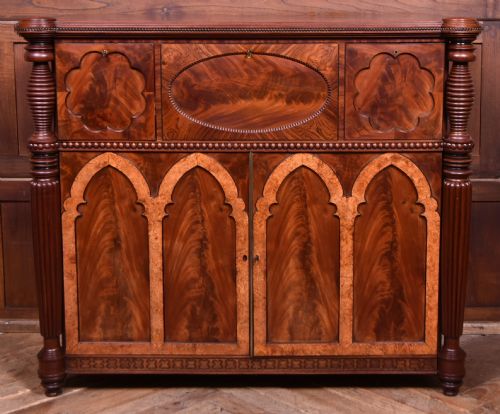
A 19th century secretaire desk spans various forms, from tall secretaire bookcases and upright abattant cabinets to military campaign chests and cylinder desks. These pieces served domestic and administrative duties across the nineteenth century, housing writing materials behind a drop-front panel that conceals a fitted interior of small drawers and pigeonholes.
The most common examples on this page are upright secretaire abattants and multi-drawer secretaire bookcases built in mahogany, walnut, and rosewood. These variations reflect the aesthetic preferences of different decades, shifting from Georgian and Regency classicism towards Victorian robustness and Continental revival styles.
Materials and construction
Cabinet makers built these pieces using solid timbers and decorative veneers such as flame mahogany, burr birch, kingwood, and walnut applied to secondary framing. French and Continental examples frequently incorporate marble tops, ormolu mounts, and intricate marquetry or parquetry inlay.
Structural integrity relied on dovetailed drawer construction and robust carcase assembly to support heavy fall-front writing surfaces and upper bookcase sections. Brass hardware, including campaign mounts and lock plates, provided both functional reinforcement and decorative contrast.
19th Century Secretaire Desk Retail Price Guide 2026
Typical asking prices for 19th century secretaire desk among the pieces listed under this phrase on Sellingantiques today, from the lower quarter to the upper quarter. They describe what is for sale here now, not the wider market.
Listings feature various regional styles, combining British mahogany workmanship with Continental burr birch and marquetry examples.
Markers of distinction
Quality in a 19th century secretaire desk rests on the selection of figured timber veneers and the precision of internal joinery within the fitted writing compartment. Superior pieces exhibit seamless matching of grain across drawer fronts and fall panels, alongside meticulous hand-cut dovetails.
The sophistication of the internal mechanism, such as secret drawers released by hidden catches or balanced cylinder actions, separates workshop output. Integration of secondary materials like original white marble tops and fire-gilt ormolu mounts also distinguishes finer productions.
Paul Sormani·Gillows·Maison Krieger·George Oakley
The 19th Century Secretaire Desk Glossary
- Abattant
- A vertical cabinet with a drop-down front panel that opens to reveal a writing surface and internal compartments. This form is particularly common in French nineteenth-century furniture.
- Cylinder desk
- A desk featuring a rolling curved wooden shutter that conceals the writing desk and internal pigeonholes when closed. It requires careful alignment of wooden slats on runners.
- Campaign chest
- A portable chest of drawers, often split into sections with brass corners and recessed carrying handles, designed for military transport. Secretaire variants incorporate a fitted writing drawer.
- Fitted interior
- The arrangement of small drawers, pigeonholes, and central compartments revealed when the secretaire drawer or fall-front is opened. It often includes hidden secret compartments.
19th Century Secretaire Desk: Frequently Asked Questions
What is a secretaire desk?
A secretaire desk is a piece of furniture equipped with a fold-down or pull-out writing surface that conceals internal compartments. It merges the storage capacity of a chest of drawers or bookcase with a dedicated workspace.
Nineteenth-century versions range from tall upright abattants to bureau bookcases and campaign chests. The drop-front mechanism allows owners to hide correspondence and writing implements when not in use.
How do you use a drop-front desk?
Operating a drop-front desk involves releasing internal latches or locks to lower the hinged writing flap into a horizontal position. Support arms or quadrant stays hold the panel level to create a stable writing surface.
Once lowered, the user gains access to a cluster of small drawers and pigeonholes designed for stationery and letters. Closing the flap secures these internal compartments and presents a tidy cabinet exterior.
Where were these desks placed?
These desks served primarily in private studies, libraries, drawing rooms, and bedrooms where correspondence and personal administration took place. Upright abattants and cylinder desks suited smaller residential rooms.
Larger secretaire bookcases and bureau cabinets occupied prominent positions in grander libraries and reception rooms. Campaign secretaires travelled with military officers or administrators on assignment.
How do you distinguish styles?
Distinguishing styles involves observing timber choices, decorative mounts, and architectural proportions. Regency and Georgian pieces emphasise classical lines and figured mahogany, while Victorian examples often feature darker woods and heavier carvings.
Continental pieces, such as Biedermeier or French Empire models, display distinct blonde veneers, column supports, or marble tops. Comparing the hardware and inlay patterns helps assign pieces to specific decades.