



French Empire Secretaire
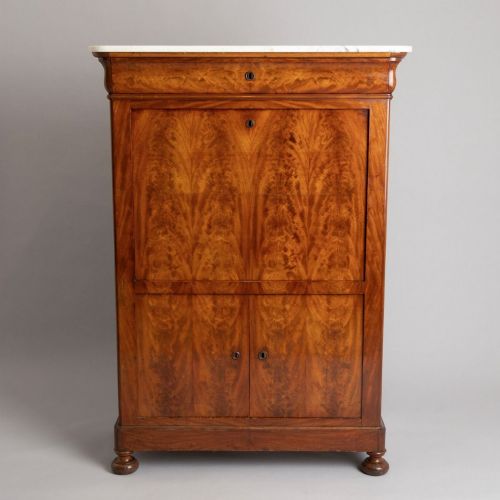
A french empire secretaire brings stately architectural presence to a room, offering a concealed writing surface behind a drop-front panel.
French Empire Secretaire
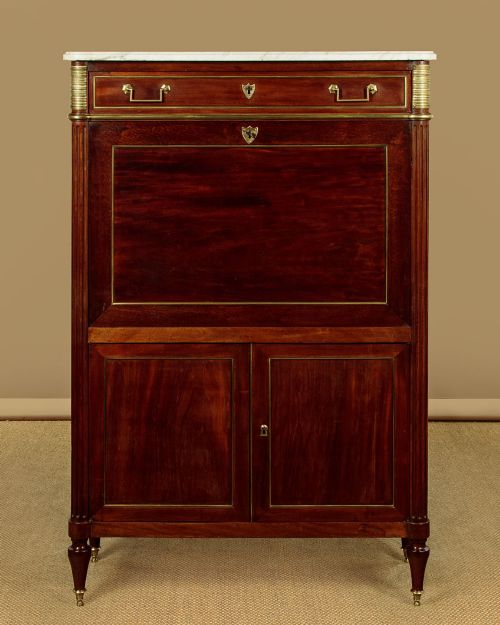
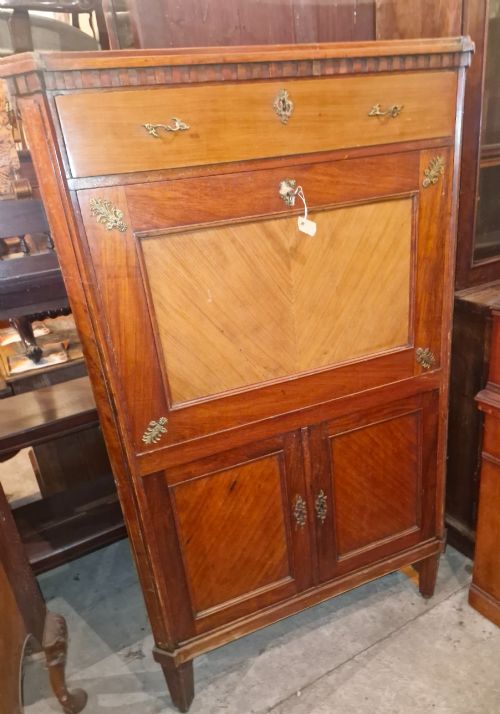
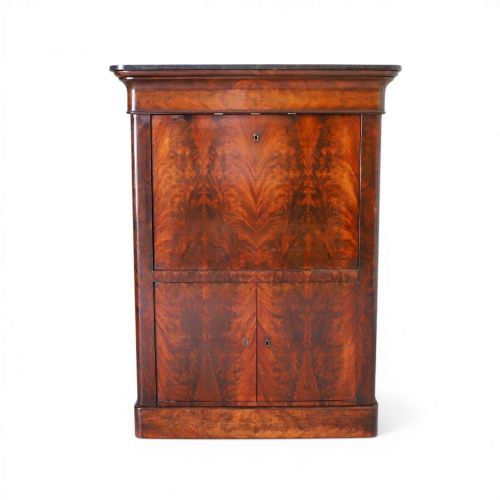
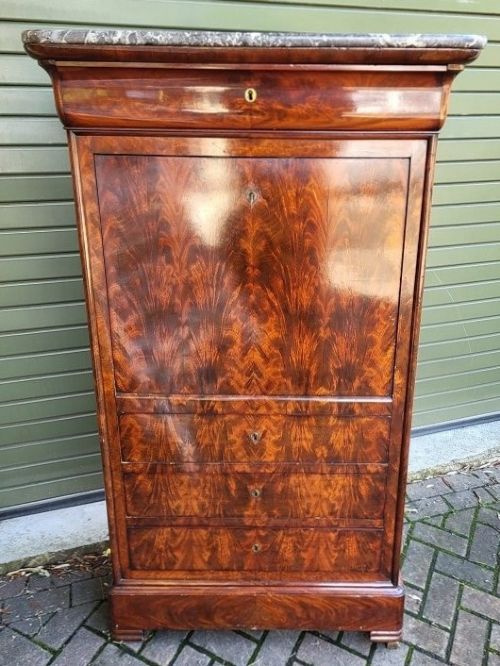
A french empire secretaire primarily manifests as the classic secretaire à abattant cabinet, where a heavy vertical carcase conceals a fitted desk interior behind a drop-down leaf. These pieces emerge chiefly from the nineteenth century, including specific periods like eighteen-fifty and eighteen-sixty, alongside occasional eighteenth-century examples.
The forms span tall pharmacy chests, cylinder desks, and escritoire variations alongside standard writing cabinets and drinks cabinets. Walnut, flame mahogany, and standard mahogany form the primary wooden structures encountered across these listings.
How they were made
Cabinetmakers utilised dense timbers like mahogany, flame mahogany, walnut, and rosewood over foundational structures of oak, creating stable carcases for heavy daily use. Decorative impact relied heavily on matching timber grains and applying cast or chased brass and ormolu mounts to accent architectural lines.
Marble tops frequently crown these cabinets, providing a cold, smooth counterpoint to the warm timber surfaces below. Interior compartments and secret drawers demonstrate meticulous joinery, designed to conceal valuables while supporting correspondence.
French Empire Secretaire Retail Price Guide 2026
Typical asking prices for french empire secretaire among the pieces listed under this phrase on Sellingantiques today, from the lower quarter to the upper quarter. They describe what is for sale here now, not the wider market.
Listings span mahogany, flame mahogany, walnut, rosewood, oak, marble, brass, and ormolu across nineteenth-century and eighteenth-century periods.
What varies in quality
Quality rests in the selection of timber veneers, where highly figured flame mahogany or rich walnut displays deliberate grain alignment across the facade. The crispness of ormolu mounts and the integration of heavy marble slabs further distinguish finer workshops from simpler regional iterations.
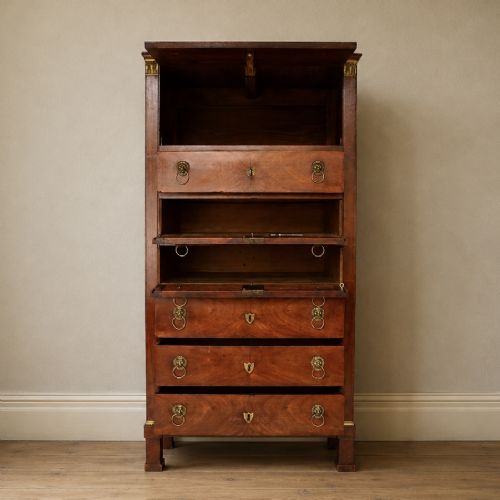
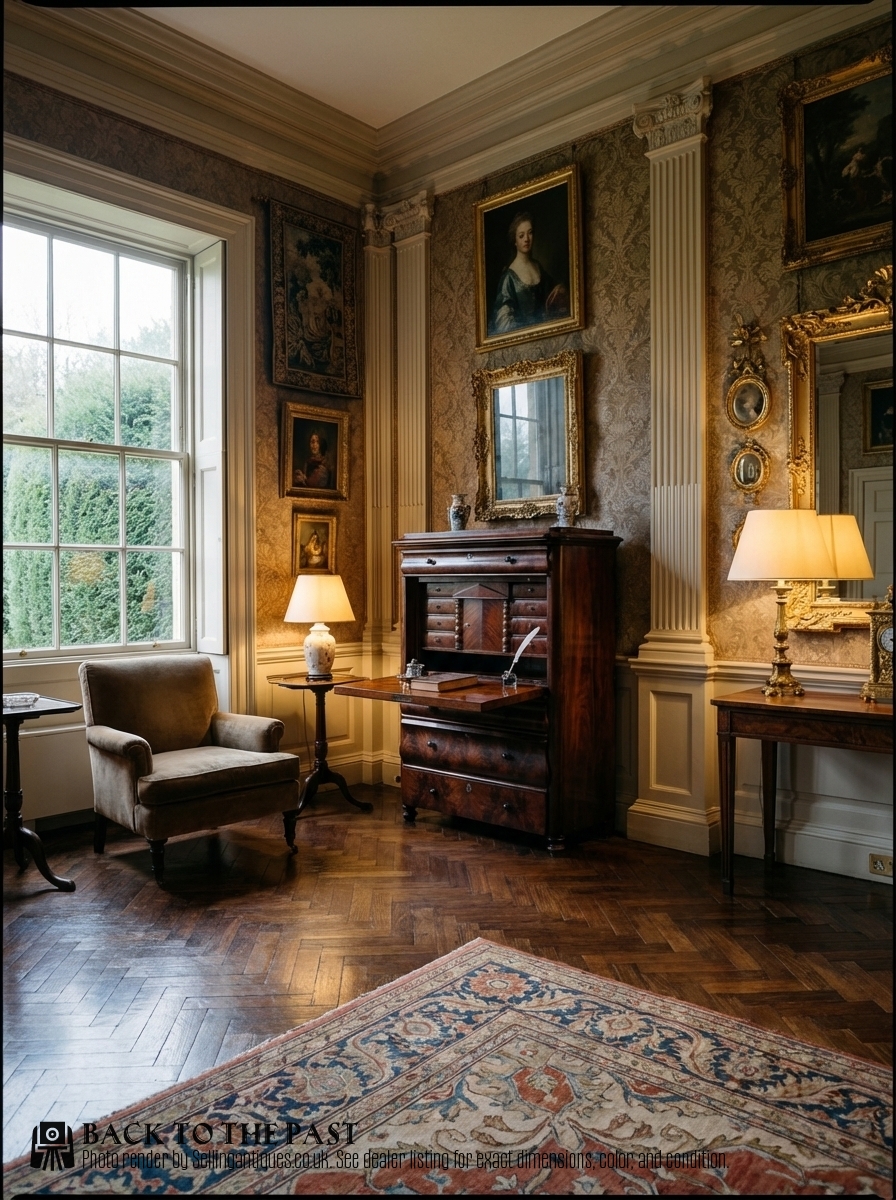
Internal complexity dictates utility and craft standard, visible in the sophistication of secret drawers, pigeonholes, and fitted mirror arrangements within the drop-front cavity.
The French Empire Secretaire Glossary
- Secretaire à abattant
- A tall vertical writing cabinet featuring a hinged drop-front flap that opens to reveal a fitted desk interior. This form dominates the French Empire and nineteenth-century inventory.
- Ormolu
- Gilded bronze mounts applied to furniture to highlight corners, pilasters, and key escutcheons. It provides metallic contrast against dark mahogany and walnut carcases.
- Flame mahogany
- A highly figured cut of mahogany displaying flickering, flame-like grain patterns. Cabinetmakers reserved this prized veneer for prominent exterior panels.
- Escritoire
- A traditional writing desk or cabinet designed for correspondence and storage. Examples range from eighteenth-century Louis XV pieces to later nineteenth-century iterations.
- Cylinder desk
- A desk featuring a curved, rolling wooden cylinder that retracts to expose the writing surface and interior pigeonholes.
French Empire Secretaire: Frequently Asked Questions
What is a secretaire abattant?
A secretaire abattant is a tall cabinet with a vertical drop-front panel that pulls down to serve as a writing desk. It conceals numerous small drawers and pigeonholes inside.
This form allowed owners to lock away correspondence and valuables securely when the room was not in use, maintaining a tidy exterior facade.
How do I use a marble top?
The heavy marble slab on top of these cabinets provides a durable, heat-resistant surface that protects the wood beneath. It often matches the classical severity typical of the period.
Keep heavy impacts away from the edges and clean the stone gently with damp cloths to preserve the polished finish without scratching.
Where were these desks placed?
These cabinets sat primarily in studies, bedrooms, or formal reception rooms where residents managed daily correspondence and accounts. Their vertical footprint maximised storage without consuming excessive floor space.
Positioning them away from direct sunlight and heat sources protects the timber veneers and prevents the wood from warping over time.
How do I spot walnut from mahogany?
Walnut typically displays a softer, warmer brown tone with varied grain figures and occasional darker streaks. Mahogany runs deeper in colour, shifting toward reddish-brown with tighter, straighter grain structures unless cut as flame veneer.
Both woods formed the backbone of nineteenth-century French cabinetmaking, often paired with contrasting brass or ormolu mounts.