


Biedermeier Drop Front Desk
A biedermeier drop front desk combines architectural clarity with hidden fitted drawers behind a hinged writing flap.
Biedermeier Drop Front Desk
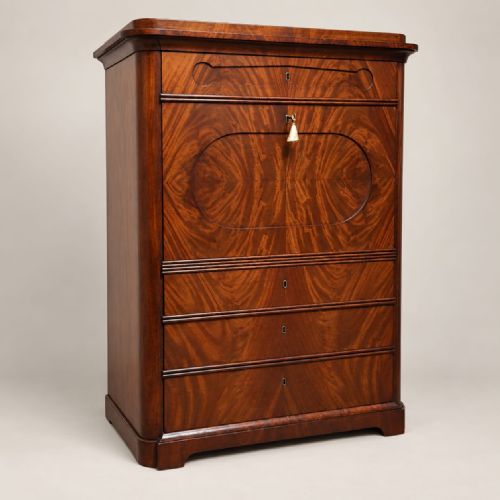
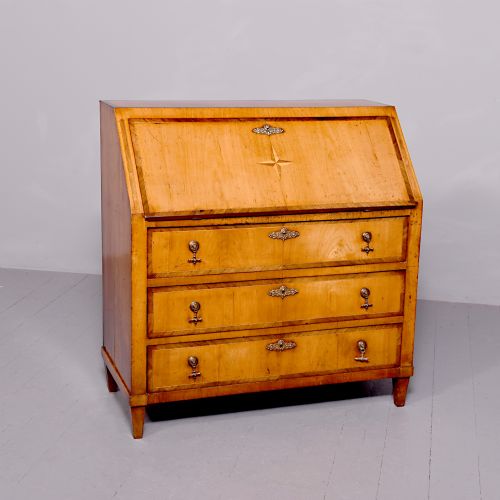
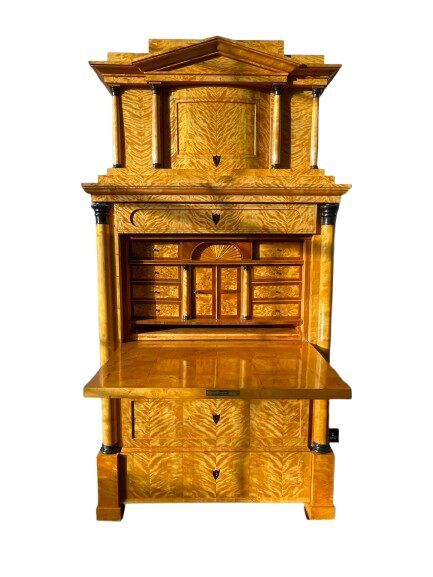
A biedermeier drop front desk is a form of writing furniture designed in the nineteenth century, most commonly encountered here as a secretaire a abattant or escritoire. These pieces typically present a tall case featuring a hinged writing surface that folds down to reveal a fitted interior of small drawers and compartments.
The objects listed range from specific dates like the eighteen sixties and eighties to the broader nineteenth century, reflecting continental European production centres. Swedish examples frequently appear alongside pieces identified simply as nineteenth century continental.
Makers utilised distinct regional forms, resulting in variations between a classic secretaire chest of drawers and a dedicated escritoire. Buyers searching for a biedermeier drop front desk will find these upright cabinet forms dominating the selection.
Materials and construction
Construction relies upon a carcase of secondary timbers such as pine, layered with decorative veneers chosen for their striking grain patterns. Mahogany, walnut, and rosewood provide deep, uniform tones, while birch varieties offer lighter, highly figured surfaces.
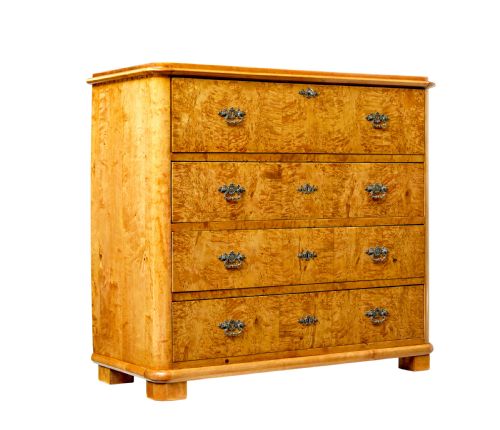
Cabinetmakers applied burr birch, birch veneer, and Karelian birch across the primary facades to create bold optical patterns. Ebonised wood and contrasting brass mounts appear as structural highlights, defining the architectural lines typical of the style.
Biedermeier Drop Front Desk Retail Price Guide 2026
Typical asking prices for biedermeier drop front desk among the pieces listed under this phrase on Sellingantiques today, from the lower quarter to the upper quarter. They describe what is for sale here now, not the wider market.
Secret compartments hidden behind miniature drawers rewarded nineteenth-century letter writers with private spaces for their most prized valuables.
Distinctions in quality
Quality rests upon the selection and matching of wood veneers across the primary facade. Finer examples display continuous grain patterns that flow across the drawers and the dropped flap, whereas simpler pieces use disjointed sections of timber.
The interior arrangement dictates the grade of the piece, with superior desks offering complex secret compartments and finely constructed small drawers. The integration of brass hardware and the crispness of ebonised details further separate standard production from exceptional cabinet work.
The Biedermeier Drop Front Desk Glossary
- Secretaire a abattant
- A tall upright desk featuring a hinged drop front panel that opens to serve as a writing surface. This form conceals multiple interior compartments and small drawers.
- Escritoire
- A term for a writing cabinet or desk, often used interchangeably with secretaire in continental pieces. It describes an upright bureau format.
- Burr birch
- A timber harvested from the growth excrescences on birch trees, yielding a swirling, highly decorative grain pattern. Cabinetmakers prized this material for prominent drawer fronts.
- Ebonised wood
- Timber treated with a chemical or dye to imitate the dense, dark appearance of ebony. Nineteenth-century makers applied this finish to create stark visual contrasts against blonde woods.
- Veneer
- A thin layer of finely figured wood applied over a stable secondary timber like pine. This technique permitted the display of expensive grain patterns across large surfaces.
Biedermeier Drop Front Desk: Frequently Asked Questions
What is a secretaire a abattant?
A secretaire a abattant is an upright cabinet with a hinged front flap that pulls down for writing.
Behind this drop front lies a structured arrangement of small drawers and pigeonholes for correspondence.
How do I identify Swedish pieces?
Swedish examples frequently utilise blonde timbers such as birch, masur birch, and burr birch veneers.
These northern European pieces often display clean, architectural lines with minimal applied ornamentation.
What woods were used?
Cabinetmakers employed a foundation of pine overlaid with decorative veneers of mahogany, walnut, and rosewood.
Lighter alternatives include birch, Karelian birch, and contrasting sections of ebonised wood.
How do I use these desks?
The hinged drop front lowers to horizontal, providing a dedicated writing surface above lower storage drawers.
Interior compartments organise stationery, while the lower cabinet stores larger documents or household items.