



Swedish Biedermeier Furniture
Swedish biedermeier furniture brings sculptural warmth and luminous wood figures to domestic interiors.
Swedish Biedermeier Furniture
Swedish biedermeier furniture comprises domestic utilitarian forms produced primarily through the nineteenth century and into the twentieth, spanning the main biedermeier period, empire revivals, and later art deco interpretations. Pieces centre on practical household functions, incorporating seating, storage, and small display tables designed for domestic utility.
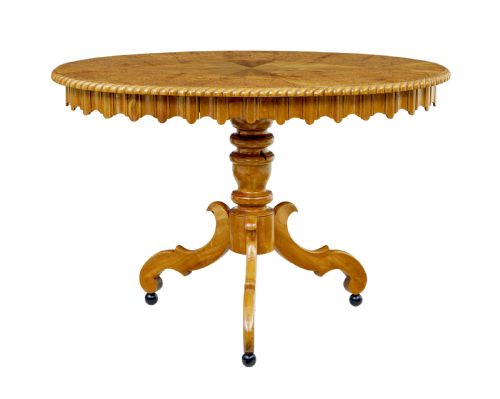
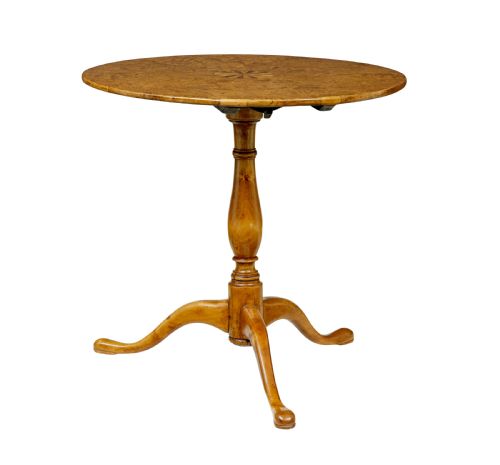
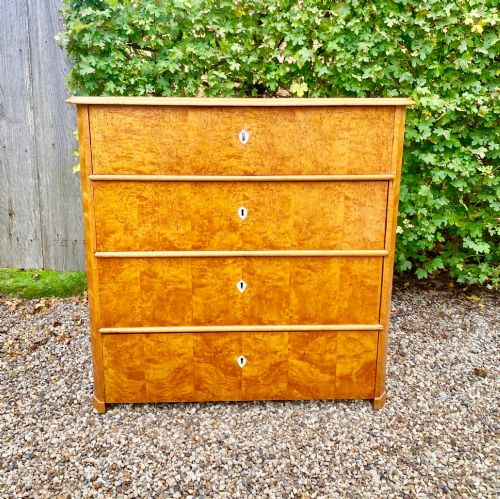
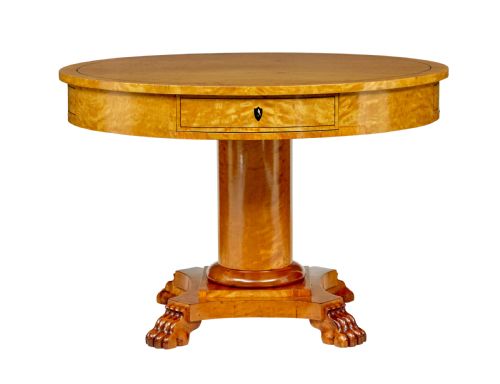
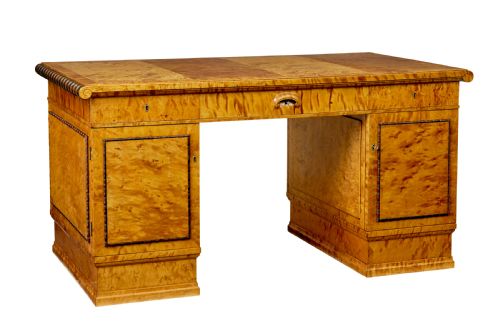
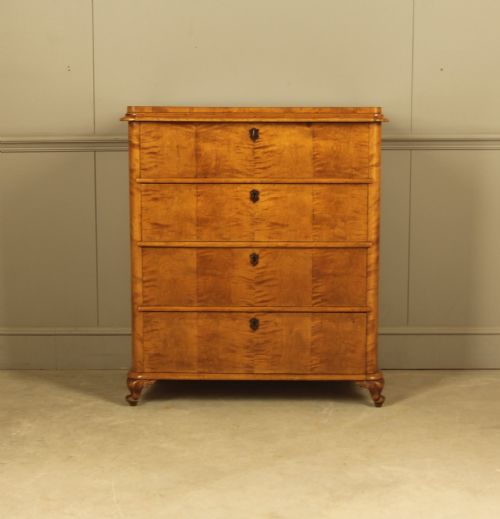
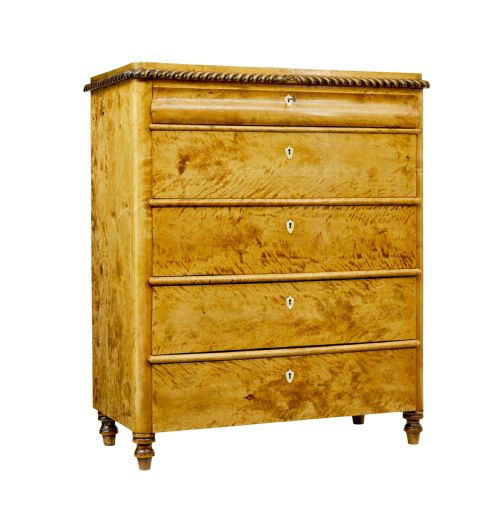
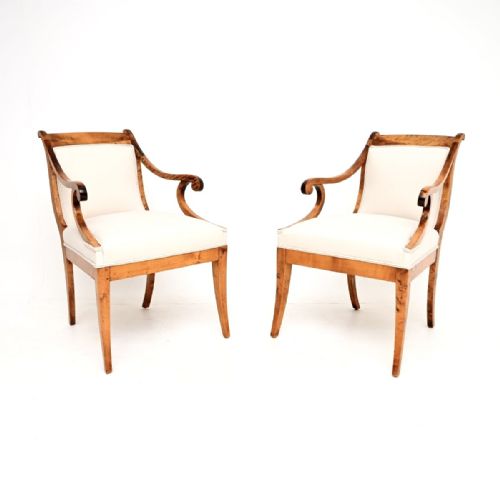
The most common survivals on this page are chests of drawers, occasional tables, and seating such as armchairs and stools. Chests typically present rectilinear or tiered drawer arrangements in varied birch grains, while tables range from tripod bases to circular centre tables.
How they were made
Makers utilised native softwoods and hardwoods as foundational structures, applying decorative veneers of birch, burr birch, flame birch, tiger birch, and satin birch to visible surfaces. These veneers accentuate natural grain patterns through book-matching and symmetrical placement.
Secondary materials include pine for internal carcases, alongside brass mounts, ebonised wood details, and occasionally marble tops for bedside cabinets. Hand-painted simulated finishes also appear on specific twentieth-century items.
Listings feature items spanning the nineteenth century through to nineteen-thirty, predominantly constructed from birch, satin birch, and pine.
What varies in quality
Quality rests principally in the selection and application of wood veneers, where lively burr, flame, or tiger figures display superior visual depth compared to plain surfaces. The skill of the cabinetmaker shows in the seamless continuity of grain across drawer fronts and structural joins.
Proportion and restraint define the finer examples, where classical architectural influence balances functional mass. Secondary details such as brass fittings, inlaid stringing, and well-executed carving elevate the standard of individual pieces.
Gemla Fabrikers
The Swedish Biedermeier Furniture Glossary
- Biedermeier
- A style of central European and Scandinavian furniture dating from the nineteenth century, focusing on domestic comfort and clean architectural lines.
- Burr birch
- Wood harvested from tree growths that produce complex, swirling grain patterns, highly prized for veneering cabinet fronts.
- Secretaire
- A desk or chest of drawers featuring a fitted pull-down writing flap that conceals small compartments and pigeonholes.
- Ebonised wood
- Timber treated with a dark stain or chemical process to imitate the appearance of ebony, often used for contrasting mouldings.
Swedish Biedermeier Furniture: Frequently Asked Questions
Where should I place a Swedish biedermeier chest?
These chests suit bedrooms, hallways, or living rooms where their pale wood tones contrast effectively against darker walls.
Ensure they sit away from direct heat sources to protect the delicate birch veneers from drying out.
How do I care for birch veneer surfaces?
Dust surfaces regularly with a soft, dry cloth and avoid commercial silicone polishes that build up residue over time.
Maintain stable room humidity to prevent the thin decorative veneers from lifting or cracking.
What is a secretaire chest?
A secretaire chest combines standard drawer storage with a dedicated writing surface concealed behind a drop-front drawer.
This fitted interior provides hidden compartments for stationery and small documents.
How do I distinguish empire revival pieces?
Empire revival items reference earlier neoclassical proportions, featuring bolder architectural columns, brass mounts, and symmetrical layouts.
These pieces typically date from later revivals around the turn of the twentieth century rather than the original nineteenth-century movement.