



Satin Birch Chest of Drawers
A satin birch chest of drawers brings a pale, figured timber to the bedroom, offering generous storage through nineteenth-century craftsmanship.
Satin Birch Chest of Drawers
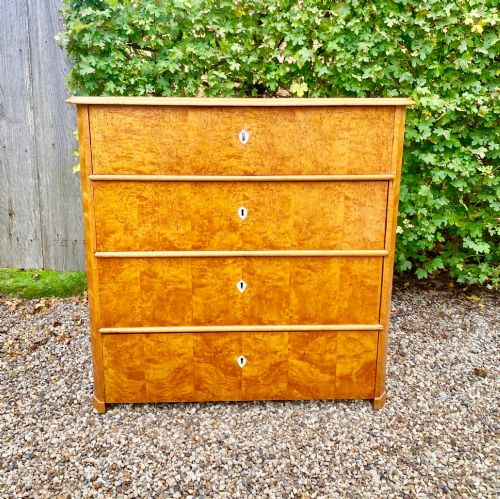
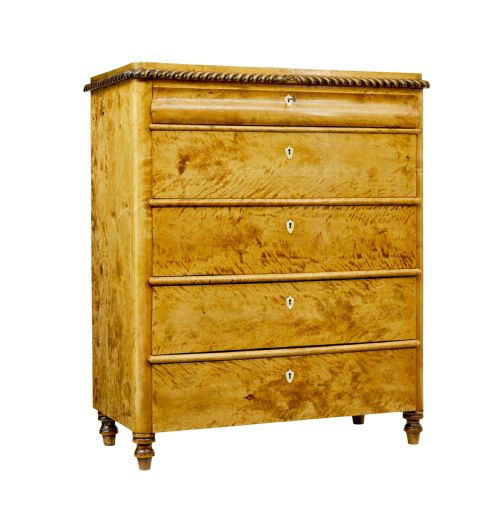
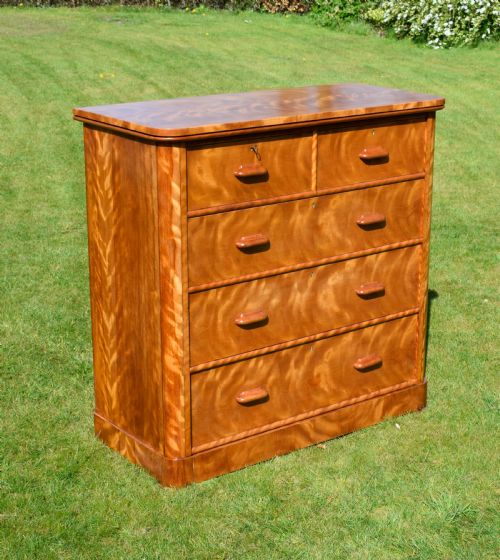
A satin birch chest of drawers is a storage piece constructed primarily from figured birch wood, emerging frequently across nineteenth-century British and Scandinavian workshops. Buyers searching for a satin birch chest of drawers encounter various regional forms, from British Victorian straight-fronted models to continental Biedermeier and Empire revival designs.
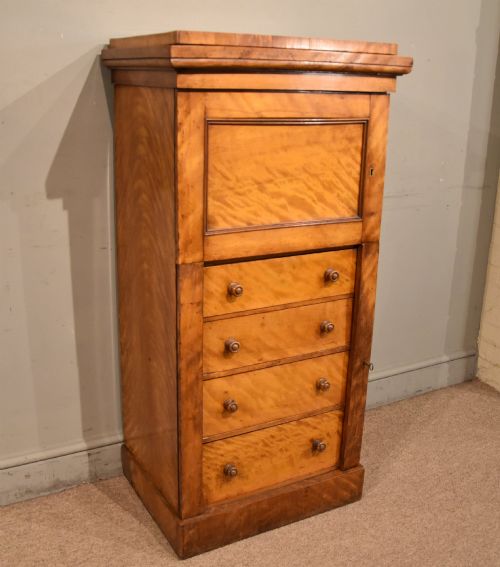
The selection ranges from standard four-drawer configurations to specialised pieces incorporating dressing mirrors, cupboards, or secretaire desks. Victorian English examples often appear alongside Swedish and continental counterparts, reflecting widespread nineteenth-century appreciation for the timber's blonde grain.
Beyond standard chests, related forms include bedside tables, linen presses, and collectors cabinets sharing the same characteristic satin birch surface. These pieces provide functional storage while displaying the distinct golden lustre inherent to the wood.
How they were made
Cabinet makers utilised solid satin birch and applied veneers over secondary timbers like pine to construct the carcase and drawer fronts. The wood was selected for its natural shimmer, often arranged symmetrically across drawer facades to create patterned grain effects.
Hardware details incorporated brass drawer pulls, locks, and occasionally glass or bone escutcheons, fastened to dovetailed drawer construction. Structural support varied from simple bracket feet to enclosed plinths on continental Biedermeier pieces and turned legs on Victorian examples.
The documented forms range from bedside tables and collectors cabinets to large linen presses and dressing chests.
What varies in quality
The visual impact of a piece depends heavily on the selection and matching of the birch veneer figures across the drawer fronts. Superior examples demonstrate careful grain alignment and minimal disturbance from repairs or replaced hardware.
Construction methods distinguish standard utility pieces from high-workshop production, visible in the precision of the drawer dovetailing and the weight of the brass fittings. The integration of secondary timbers such as mahogany or walnut also marks the distinction between workshop tiers.
Holland and Sons·Gillows·Heal and Son
The Satin Birch Chest of Drawers Glossary
- Satin birch
- A timber derived from the birch tree, characterised by a natural chatoyant lustre that resembles satin when polished. It was favoured by nineteenth-century cabinet makers for bedroom furniture.
- Biedermeier
- A central European style dating from the nineteenth century, known for clean architectural lines and emphasis on wood grain rather than ornate carving. Pieces in this style often feature minimal hardware to showcase the veneer.
- Wellington chest
- A tall, narrow chest of drawers secured by a hinged locking side flap that fastens over the drawer edges. This form originated in the nineteenth century for secure storage.
- Secretaire
- A cabinet or chest featuring a pull-down writing drawer fitted with small internal compartments and pigeonholes. It combines desk functionality with standard drawer storage.
- Dovetail
- A traditional interlocking joint used in drawer construction, formed by interlocking wedge-shaped fingers. Hand-cut variations indicate earlier nineteenth-century manufacture.
Satin Birch Chest of Drawers: Frequently Asked Questions
How do I care for satin birch surfaces?
Keep the wood away from direct sunlight and excessive heat sources to prevent the blonde timber from darkening or splitting over time. Dust gently with a dry cloth and avoid modern silicone polishes.
Apply a microcrystalline wax occasionally to nourish the surface and maintain the natural sheen of the grain. This protects the finish without building up heavy residues.
Where were these chests made?
Production centres were split primarily between British workshops in London and Lancaster, alongside significant manufacturing across Sweden and Scandinavia. British pieces often align with Victorian stylistic periods.
Continental pieces frequently display Biedermeier or Empire revival characteristics, utilising local birch stocks with distinct regional construction methods. The shared material links these different geographical origins together.
Are the drawers interchangeable?
Nineteenth-century drawers were individually fitted to their specific openings by hand, meaning they rarely slide smoothly into alternative positions. Each drawer is usually numbered or marked to ensure correct placement within the carcase.
Keeping drawers in their original slots prevents binding and maintains the flush alignment of the facade. Forcing a drawer into the wrong opening can damage the internal runners.
How do I distinguish British from Swedish pieces?
British examples typically follow Victorian proportions with applied mouldings, turned feet, and sometimes mahogany secondary woods. They often include dressing attachments or standard brass drop handles.
Swedish pieces tend to exhibit Biedermeier simplicity, featuring flat expanses of book-matched veneer, concealed locks, and integrated plinth bases. The structural framing beneath the surface also reveals regional timber choices like pine.