
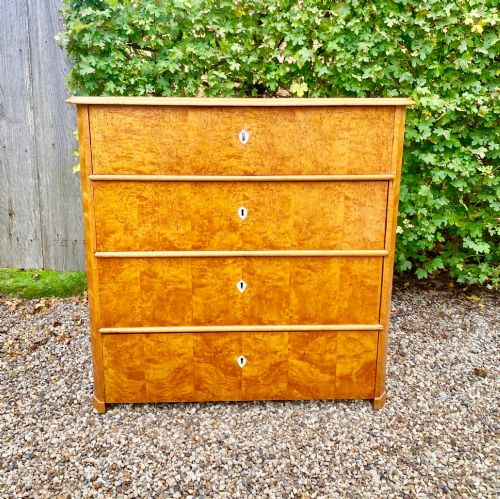
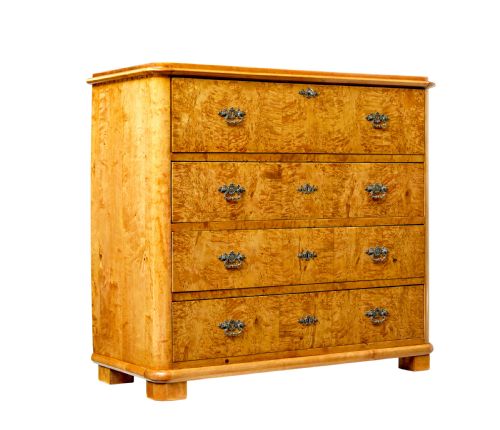
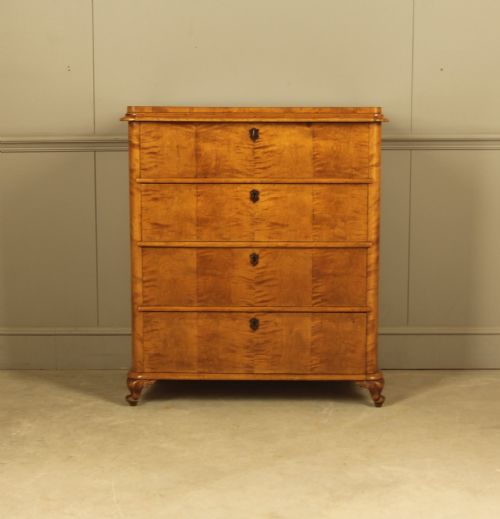
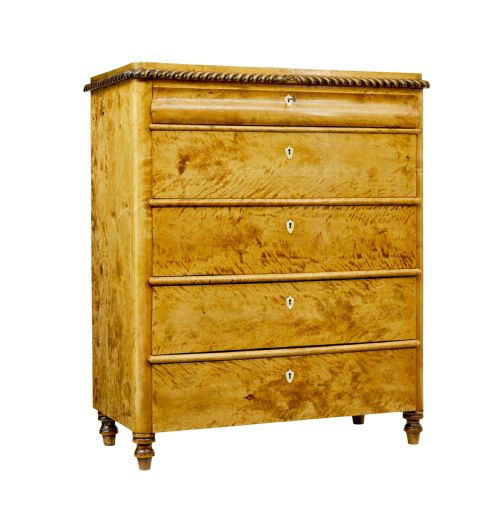
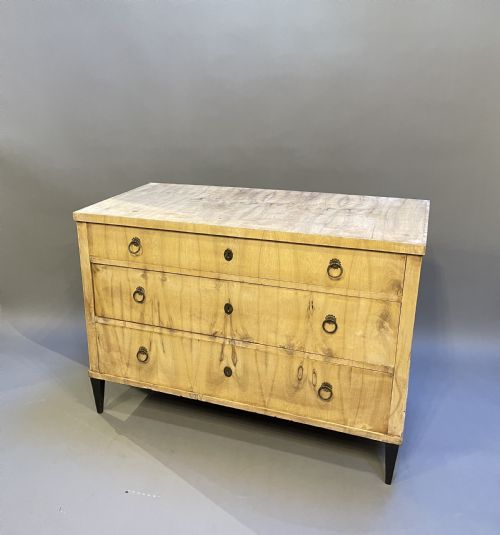


Biedermeier Birch Commode
A biedermeier birch commode brings warmth and restrained elegance to a room through striking timber figures.
Biedermeier Birch Commode
When you search for a biedermeier birch commode, you encounter substantial storage furniture primarily originating from 19th-century Sweden and the wider continent. These pieces take the form of chests of drawers, secretaire chests with drop-down writing desks, and traditional commodes designed for domestic utility and visual harmony.
The version you are most likely to meet on this page is a Swedish chest of drawers featuring clean architectural lines and balanced proportions. These functional items range from simple straight-fronted carcases to elaborate secretaire variants equipped with fitted interior compartments.
Materials and construction methods
Cabinetmakers constructed the carcases using solid pine as a stable secondary wood, upon which they applied decorative veneers. Timber selection focused heavily on native and regional hardwoods chosen for their distinct natural patterns.
Makers utilised distinct grain variations including flame birch, burr birch, masur birch, and tiger birch to create geometric surface patterns. Detail work occasionally incorporated contrasting materials such as brass, bone, or metal fittings, alongside hand-painted simulated finishes on later examples.
Materials recorded across the inventory include pine, birch, satin birch, flame birch veneer, tiger birch, masur birch, brass, bone, and metal.
Evaluating quality and execution
Quality rests primarily in the choice and bookmatching of the veneer across the drawer fronts. Superior examples display symmetrical flame or tiger grain that flows naturally across the elevation of the piece.
Construction integrity and the subtlety of carved or inlaid details further separate standard production from exceptional cabinetwork. The precision of the drawer construction and the integration of secretaire compartments dictate the standing of an individual commode.
Gemla Fabrikers
The Biedermeier Birch Commode Glossary
- Biedermeier
- A Central European and Scandinavian design style dating to the 19th century that prioritised clean lines, utility, and beautiful wood grain over heavy ornamentation. This aesthetic defined domestic interiors across Sweden and neighbouring regions.
- Flame Birch
- A decorative timber veneer displaying rippled, undulating patterns resembling tongues of flame. Cabinetmakers laid these veneers outwards to create symmetrical reflections.
- Secretaire Chest
- A chest of drawers featuring a central pull-down drawer front that conceals a fitted desk interior with small pigeonholes and small drawers. This dual-purpose form was popular in 19th-century bedrooms and studies.
- Masur Birch
- A natural timber growth variation producing dense, swirling patterns filled with small dark spots and knots. Craftsmen prized this figured wood for high-status cabinet fronts.
- Caddy Top
- A raised, stepped moulding profile along the upper edge of a chest of drawers. This traditional top treatment adds architectural definition to the silhouette.
Biedermeier Birch Commode: Frequently Asked Questions
What is a biedermeier birch commode?
A biedermeier birch commode is a 19th-century chest of drawers or storage cabinet characterised by minimalist classical forms and striking birch veneers.
These pieces emphasise natural wood grain patterns over carved decoration, making them central decorative items in Scandinavian interiors.
How do I identify Swedish biedermeier furniture?
Swedish biedermeier pieces typically feature pale birch timbers, architectural proportions, and restrained brass or dark wood contrasts.
Many examples take the form of straight-fronted chests of drawers or secretaire desks dating from the mid 19th century.
How were these commodes used?
These chests served primarily for storing clothing and household linens in bedrooms and dressing rooms.
Secretaire variants provided a dual function by incorporating a drop-front writing surface for correspondence and record-keeping.
What woods besides birch appear on these pieces?
While birch dominates the surface appearance, cabinetmakers used pine as a secondary structural timber for internal carcases and drawer linings.
Accents of brass, bone, and metal occasionally appear on escutcheons, handles, and structural trim.