
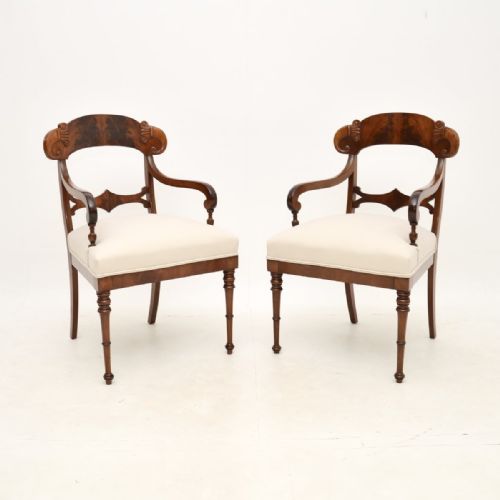
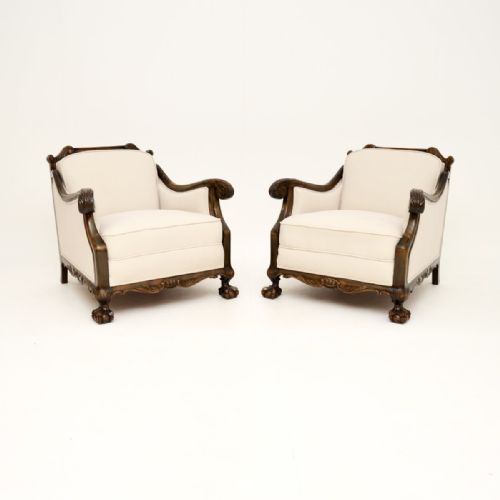
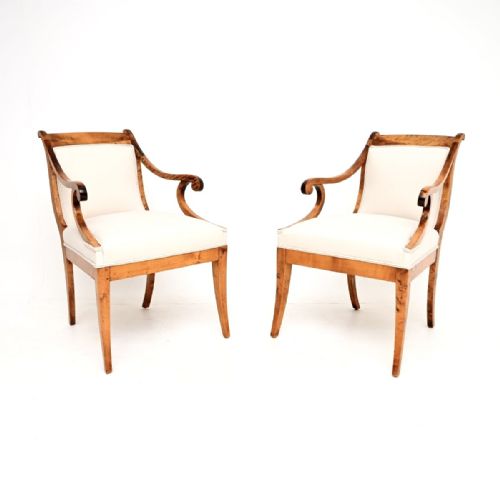


Antique Biedermeier Chairs
These antique biedermeier chairs bring clean lines and warm wood grains into a room, offering both sculptural presence and comfortable seating.
Antique Biedermeier Chairs
When you search for antique biedermeier chairs, you encounter seating built primarily during the nineteenth century across Sweden, Germany, and Austria. The forms span armchairs, side chairs, and elbow chairs, alongside larger seating options like settees and living room suites.
The pieces appearing here lean heavily towards Swedish origin, often displaying classic regional interpretations of the style. You meet pairs and larger dining sets most frequently, reflecting how these items survived together in domestic spaces.
How they were made
Cabinetmakers utilised indigenous and imported timbers, selecting birch, satin birch, tiger birch, and burr birch alongside mahogany, walnut, maple, ash, and satinwood. Ebonised details frequently provided sharp contrast against the pale blonde figures of the primary wood.
Construction relied on solid timber framing paired with veneered surfaces designed to highlight intricate wood grain patterns. Upholstery fabrics, leather, and traditional padding completed the seats, aligning with the comfort-focused domestic ethos of the period.
Cabinetmakers occasionally used tiger birch so intensely patterned that the wood grain appears to ripple when caught in evening lamplight.
What varies in quality
The grade of timber veneer dictates much of the visual impact, with richly figured tiger birch or burr birch elevating a piece above plain wooden surfaces. Select examples show careful matching of grain across symmetrical frames, demonstrating superior workshop execution.
Proportion and restraint in carving define the finer pieces, where structural elegance takes precedence over heavy ornamentation. Surviving sets sharing uniform timber selection and matching upholstery hold greater architectural cohesion than assembled groups.
The Antique Biedermeier Chairs Glossary
- Biedermeier
- A Central European style spanning the nineteenth century that prioritised utility, comfort, and clean architectural lines over excessive ornamentation. It emerged in reaction to the heavy pomp of the Napoleonic era.
- Satin birch
- A bright, light-coloured timber with a shimmering grain pattern often utilised in Scandinavian furniture production. Cabinetmakers valued it for creating luminous, decorative surfaces.
- Karl Johan
- A Scandinavian neoclassical style bridging the Empire period and full Biedermeier design, named after the Swedish monarch. It maintained classical proportions while introducing simpler domestic forms.
- Tiger birch
- A distinctively figured wood variant displaying zebra-like stripes across the grain. This natural variation made each veneered panel uniquely decorative.
- Ebonised
- Wood treated with a dark finish to imitate ebony, commonly applied to mouldings or structural accents. The dark tone created sharp visual contrast against pale birch bodies.
Antique Biedermeier Chairs: Frequently Asked Questions
What defines biedermeier chair design?
These chairs combine functional comfort with restrained neoclassical geometry, avoiding superfluous decoration. The focus rests squarely on harmonious proportions and the natural beauty of wood grain.
Craftsmen allowed polished timber surfaces to speak for themselves, using dark ebonised framing lines to accentuate pale birch or mahogany panels.
Where were most biedermeier chairs made?
Production centred largely in German-speaking Central Europe and across Scandinavia, particularly Sweden. Swedish workshops developed a distinct, luminous interpretation of the style using local timbers.
Many surviving sets originate from Swedish estates, where pale birch veneers matched the bright interiors characteristic of northern homes.
How do I identify a side chair from an armchair?
Side chairs lack the armrests built into armchair frames, making them narrower and suited for tucking neatly beneath dining tables. Armchairs feature integrated elbow supports, often curved or sculptural in profile.
Both forms shared the same underlying wood types and joinery techniques within a given dining suite or living room group.
Were these chairs made in sets?
Makers frequently produced matching pairs of armchairs alongside sets of four, six, or twelve dining chairs. Larger living room suites combined settees with multiple armchairs to furnish complete interior spaces.
Finding intact sets remains a key consideration for collectors seeking uniform wood grain and consistent upholstery across a room.