
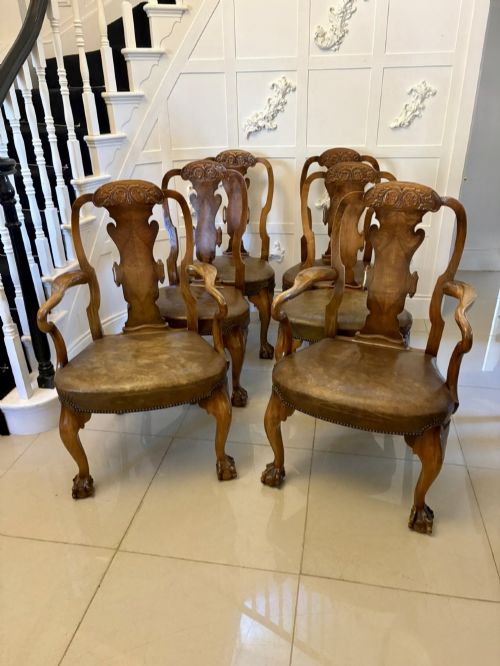
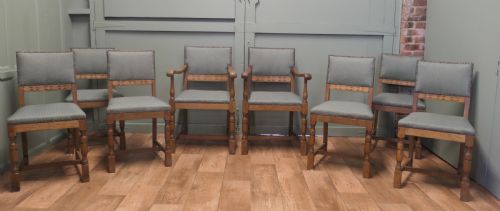
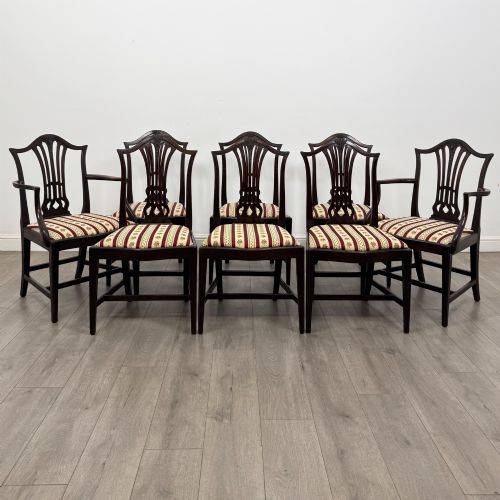
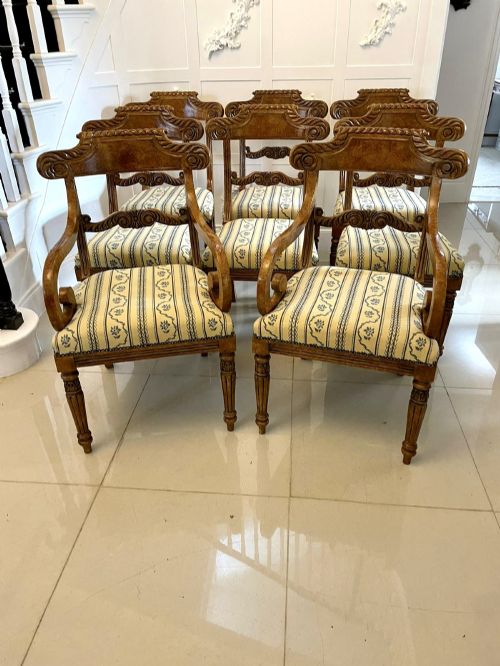
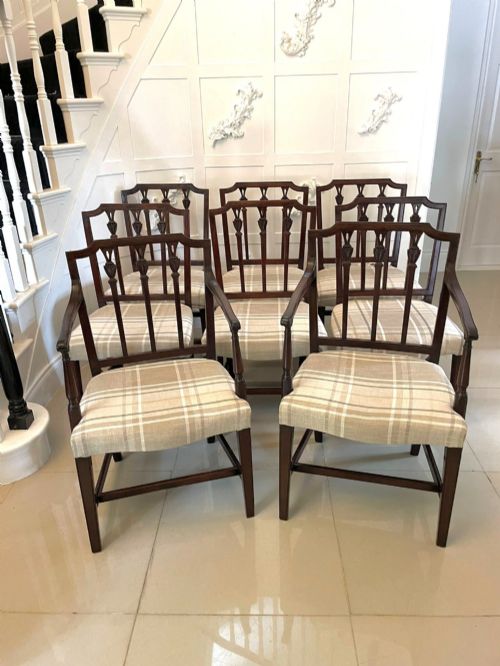
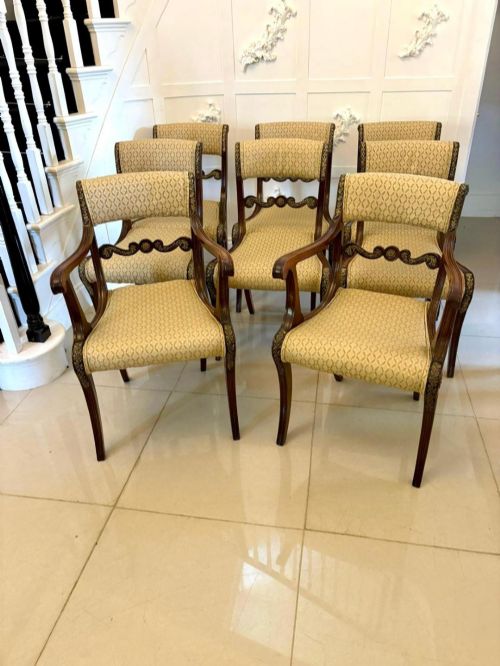
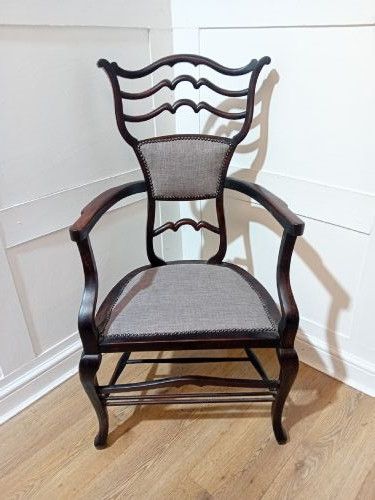
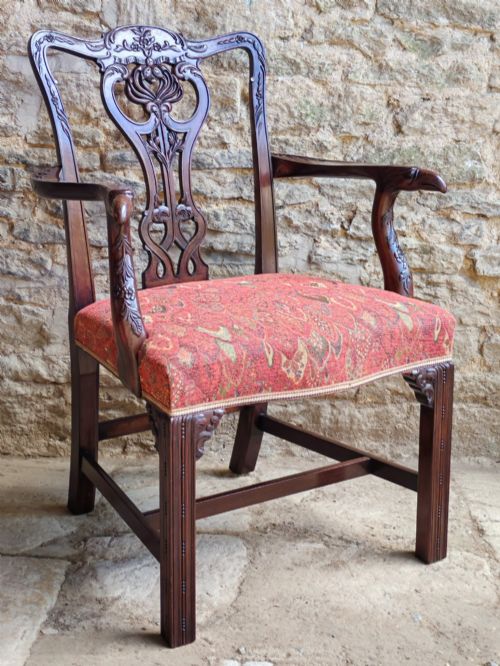
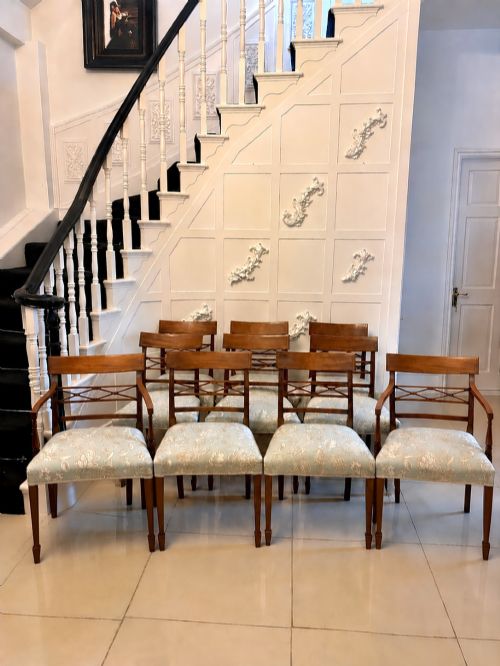
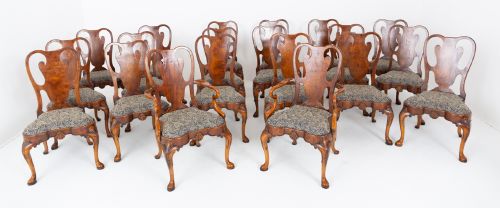
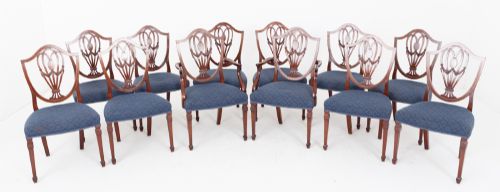
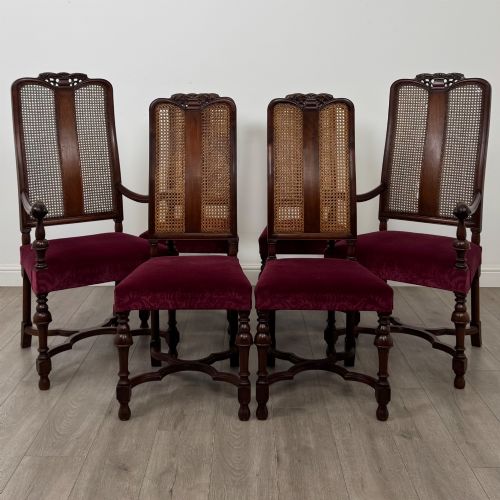
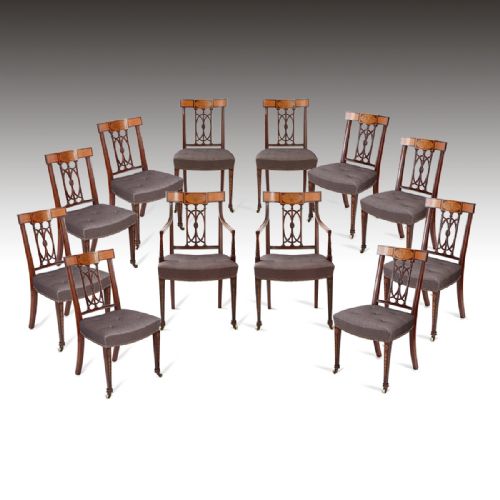
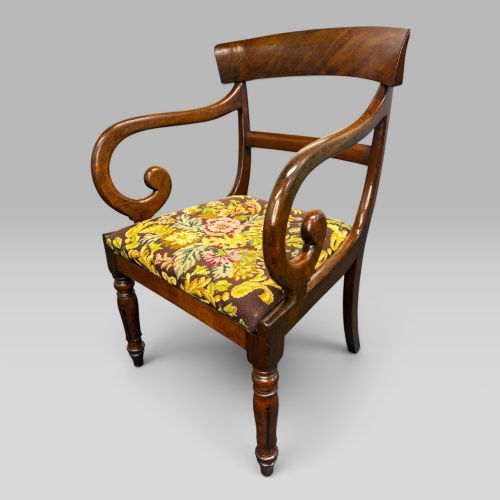
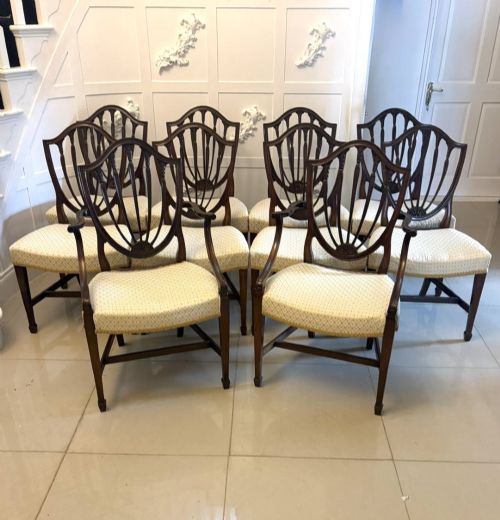
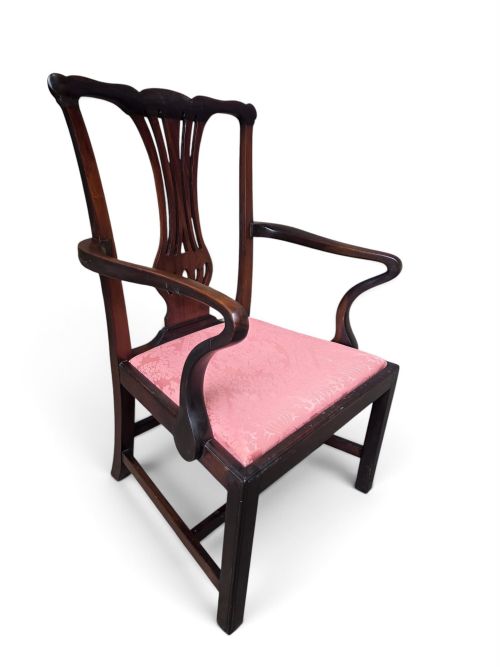
Antique Upholstered Carver
An antique upholstered carver is a sturdy seated timber armchair with armrests, offering comfortable support and period craftsmanship for the home.
What They Are
When searching for an antique upholstered carver, a buyer is examining sturdy seated timber armchairs designed with armrests for daily use. These forms emerge across the seventeenth, eighteenth, and nineteenth centuries, spanning distinct decorative movements.
The versions most commonly met on this page include mahogany frameworks alongside walnut, fruitwood inlay, and laburnum woods. They frequently feature fabric, textile, or velvet upholstery across the seat and back panels.
Examples range from seventeenth-century laburnum pieces and eighteenth-century Dutch marquetry or Hepplewhite designs to Regency, Victorian, Edwardian, and Art Nouveau interpretations. Each period contributes distinct joinery methods and surface treatments to the typology.
How They Were Made
Cabinet makers constructed these armchairs utilising solid timbers such as mahogany, walnut, and laburnum, often incorporating fruitwood inlay for decorative contrast. Structural stability relied upon traditional joinery techniques suited to supporting a seated occupant.
Upholstery methods involved securing fabric, textile, or velvet coverings over padded interiors using traditional tacks or brass elements. Surface finishes highlighted the natural grain of the wood through polishing and oiling.
Retail Price Guide 2026
Typical UK retail prices for upholstered carver, calculated from the Sellingantiques database of over a million retail prices indexed since 2003. This retail price guide relies exclusively on Sellingantiques data; no external sources or auction records are used, so the figures do not describe the wider market.
Listings feature mahogany, walnut, and laburnum frameworks paired with fabric, velvet, and brass elements.
What Varies in Quality
The distinction between standard examples and the top of the range rests upon the precision of the timber carving and the sophistication of any inlay work. Finer items demonstrate superior joinery integration and more ambitious stylistic execution.
Material selection also dictates standing, with dense native hardwoods and complex textile choices marking out the more accomplished workshops. The harmony between the exposed wooden frame and the upholstered elements defines the overall success of the piece.
The Antique Upholstered Carver Glossary
- Carver
- An armchair with wooden armrests, originally designed for the head of the dining table. These pieces often match a set of standard side chairs.
- Marquetry
- A decorative technique where small pieces of varied wood veneer are fitted together to form pictorial patterns on a timber surface. This method appears on eighteenth-century Dutch examples.
- Shield Back
- A chair back shaped in the outline of a heraldic shield, popular during the Hepplewhite period. This silhouette provides a lighter visual weight while maintaining structural integrity.
- Laburnum
- A dense hardwood derived from the laburnum tree, utilised for cabinet making in the seventeenth century. Its timber exhibits distinctive dark and light colour variations.
- Fauteuil
- An open-armed French armchair featuring exposed wooden framing and upholstered seat and back panels. These chairs are associated with continental seating traditions.
Frequently Asked Questions
What is a carver chair?
A carver chair is an armchair featuring built-in armrests, traditionally placed at the head and foot of a dining table. They offer broader seating and greater arm support than standard dining chairs.
Over time, these seating forms evolved across various stylistic periods, incorporating diverse upholstery materials and decorative timber framing.
How do I date an antique carver?
Dating an antique carver involves examining the timber species, joinery methods, and stylistic motifs present in the frame. Seventeenth-century examples often utilise laburnum, whereas eighteenth-century pieces frequently employ mahogany or fruitwood inlay.
Reference points such as Hepplewhite shield backs or Art Nouveau contours further assist in placing the armchair within its specific historical period.
Where should I place an armchair?
These armchairs suit placement in studies, living rooms, or bedrooms as occasional seating rather than primary dining furniture. Their decorative frames and upholstered panels allow them to function as focal points within a room.
Ensure the chair is positioned away from direct sunlight and excessive heat sources to protect the wooden frame and textile upholstery.
What materials are used in construction?
Construction materials primarily consist of hardwoods including mahogany, walnut, and laburnum, occasionally enhanced by fruitwood inlay. Upholstery elements incorporate various fabrics, textiles, velvet, and sometimes brass details.
These combined components create both the structural support and the decorative surface finish characteristic of each period.