




Small Mahogany Secretary
A small mahogany secretary combines compact domestic scale with fitted writing storage, offering a practical workspace for modern rooms.
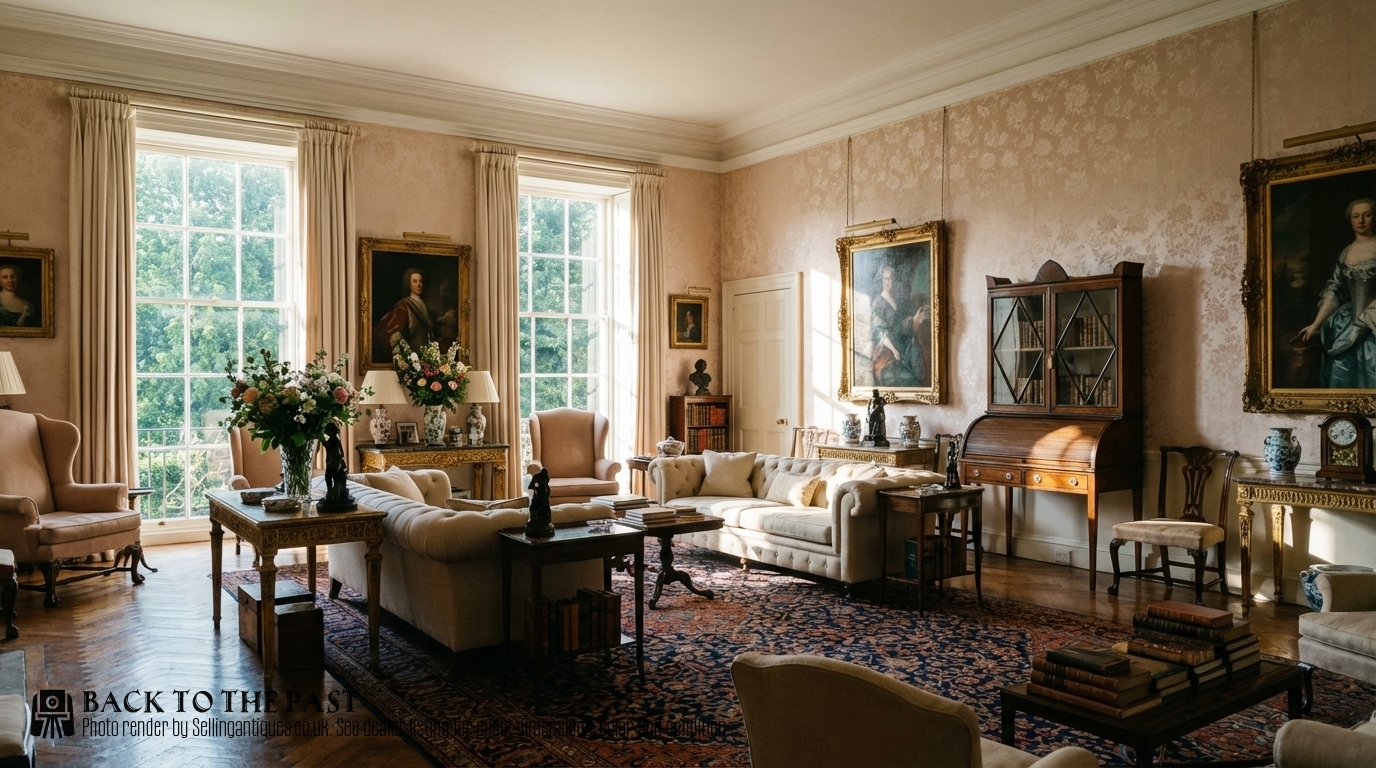
Small Mahogany Secretary
A small mahogany secretary is a fitted writing cabinet designed to conceal papers and stationery behind a fall-front desk or within a bookcase combination. These compact writing pieces appear across the Georgian, Regency, and Victorian eras, reflecting shifting domestic requirements for private correspondence.
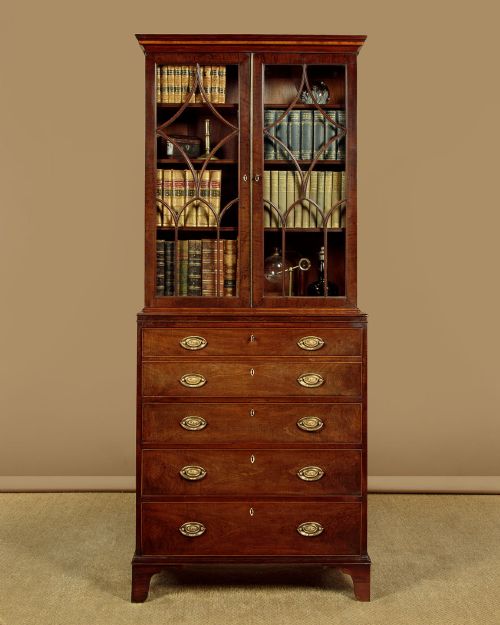
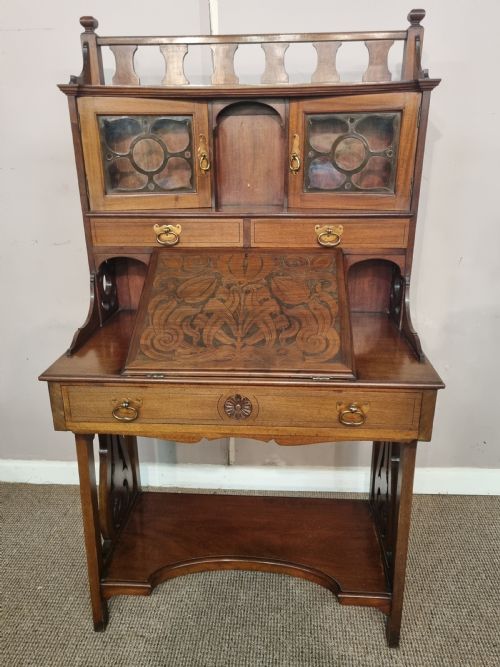
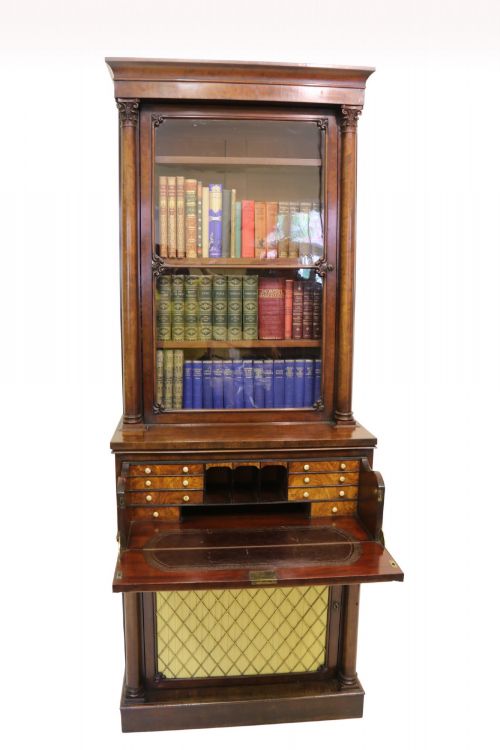
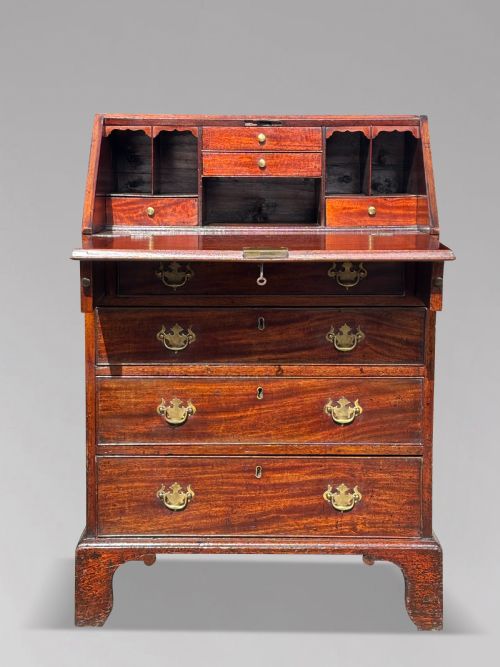
The selections on this page run from 18th-century George II and George III bureaux to Regency secretaire bookcases and later Arts and Crafts cabinets. Buyers frequently encounter drop-front bureaux of diminutive proportions alongside taller bookcase variants fitted with glass-fronted upper sections.
Originating in periods when paperwork required dedicated domestic furniture, these desks suit contemporary studies or living spaces needing surface area without heavy proportions. The structural forms prioritize internal pigeonholes, small drawers, and hidden compartments beneath the primary writing surface.
How they were made
Makers constructed these cabinets primarily using solid mahogany and flame mahogany veneers applied to secondary woods such as oak. Cabinetmakers utilised figured timber for drawer fronts and fall-front panels to create visual depth across the main surfaces.
Fine joinery details include satinwood inlay, brass handles, and occasionally glass panels for upper bookcase doors. Drawers typically feature hand-cut dovetails and oak linings, ensuring durability within the compact framework of the desk.
Diminutive writing desks often conceal secret compartments behind sliding pigeonholes where owners hid private correspondence and small valuables.
What varies in quality
Quality rests upon the selection of timber veneers, the crispness of inlaid stringing, and the integrity of the internal fittings. Superior examples display carefully matched flame mahogany and finely executed pigeonhole compartments.
Construction standards differentiate workshop production, ranging from standard provincial furniture to pieces bearing attribution to known makers such as Gillows. The handling of secondary woods and the precision of the brass hardware further separate standard production from exceptional cabinet work.
Gillows of Lancaster
The Small Mahogany Secretary Glossary
- Bureau
- A sloping front desk enclosing a fitted interior of small drawers and pigeonholes. This form serves as the primary writing cabinet structure.
- Secretaire bookcase
- A tall cabinet combining a writing drawer or fall-front desk with upper shelving enclosed by glass doors. These pieces unite library storage with a compact writing surface.
- Bonheur du jour
- A light lady's writing desk featuring a small cabinet or set of drawers upon the upper surface. This French form gained popularity during later periods.
- Tambour
- A sliding shutter formed of narrow vertical strips of wood glued to a canvas backing. This mechanism conceals compartments on specialised writing tables.
- Satinwood
- A pale, lustrous exotic timber utilised for contrasting inlay and stringing across mahogany surfaces. Cabinetmakers employed this wood to highlight drawer fronts and borders.
Small Mahogany Secretary: Frequently Asked Questions
What is a small mahogany secretary?
A small mahogany secretary is a compact writing desk featuring a fall-front panel or fitted drawer that conceals inner compartments for stationery and papers. These pieces range from simple drop-front bureaux to taller bookcase combinations designed for domestic studies.
Built primarily during the Georgian, Regency, and Victorian periods, they provide functional workspace while occupying minimal floor space in contemporary interiors.
How do I date a secretary?
Dating relies upon structural characteristics, timber selection, and hardware styles associated with specific periods like the 18th century or Regency era. Earlier pieces often display bracket feet and solid mahogany construction, while Regency variants incorporate figured veneers and brass mounts.
Interior layouts also change over time, shifting from stepped pigeonholes in Georgian bureaux to more architectural drawer arrangements in later 19th-century examples.
Where were they used?
These desks served as private writing spaces within principal rooms, libraries, and bedrooms of period homes. Their compact scale allowed them to fit into smaller domestic quarters where large partner desks were impractical.
Owners utilised the fitted interiors for managing correspondence, personal accounts, and valuable documents away from household traffic.
Are secretaire bookcases heavy?
Secretaire bookcases combine a heavy lower desk base with an upper glazed cabinet, giving them substantial weight despite their small footprint. Mahogany is a dense timber, particularly when combined with oak drawer linings and glass doors.
Many taller variants divide into two separate sections - an upper bookcase and a lower bureau base - to facilitate transport and placement within a room.
How do I care for mahogany?
Mahogany furniture benefits from stable indoor humidity and protection from direct sunlight to preserve the rich tone of the timber veneer. Regular dusting with a soft, dry cloth maintains the surface without the buildup of modern silicones.
Applying traditional beeswax polish occasionally feeds the wood and highlights the natural grain figures found across period pieces.