


Glazed Bookcase Desk
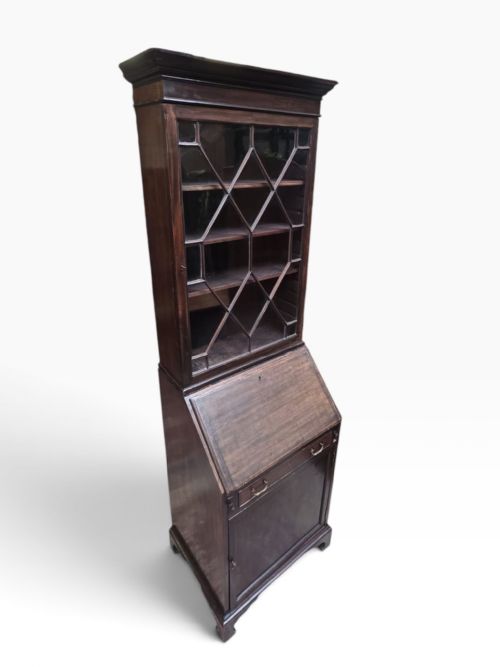
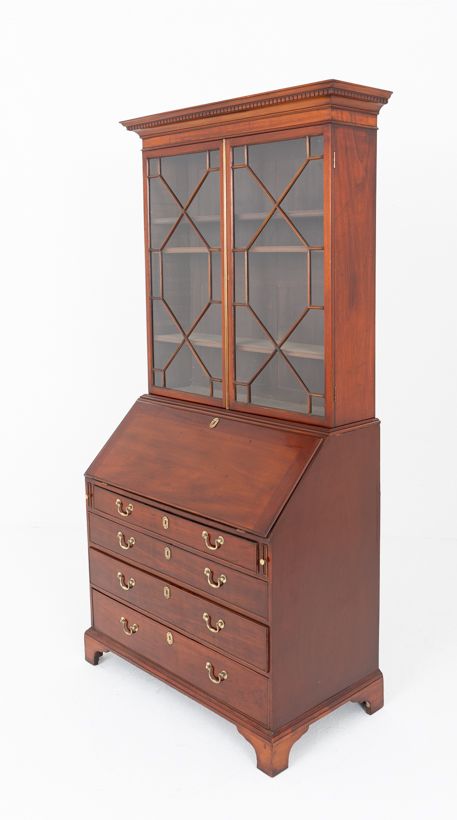
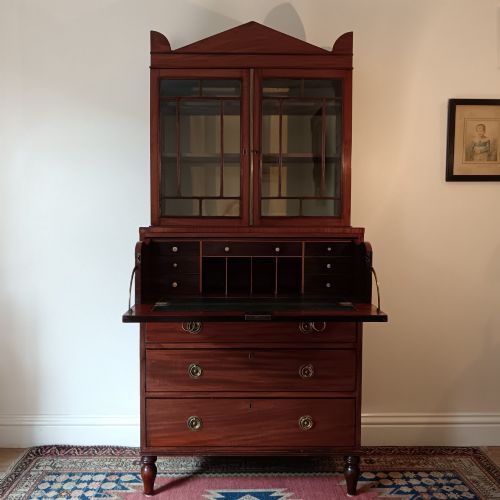
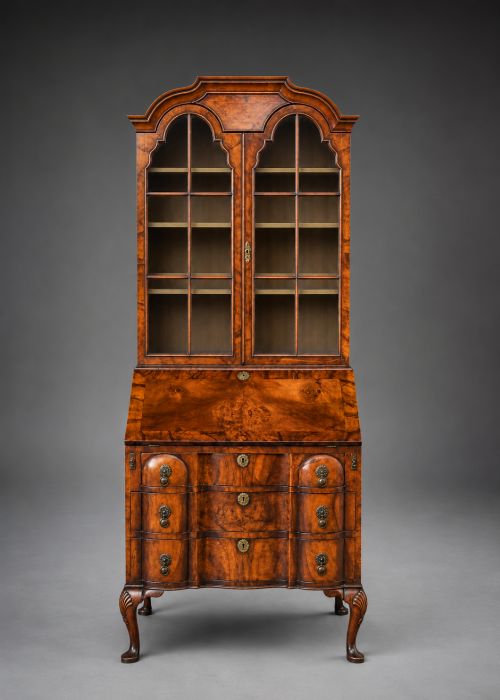
A glazed bookcase desk combines upper display shelving with a drop-front writing surface, offering a dual-purpose library and workspace.
Glazed Bookcase Desk
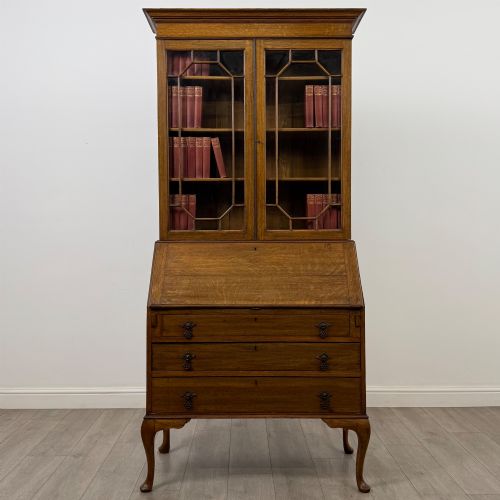
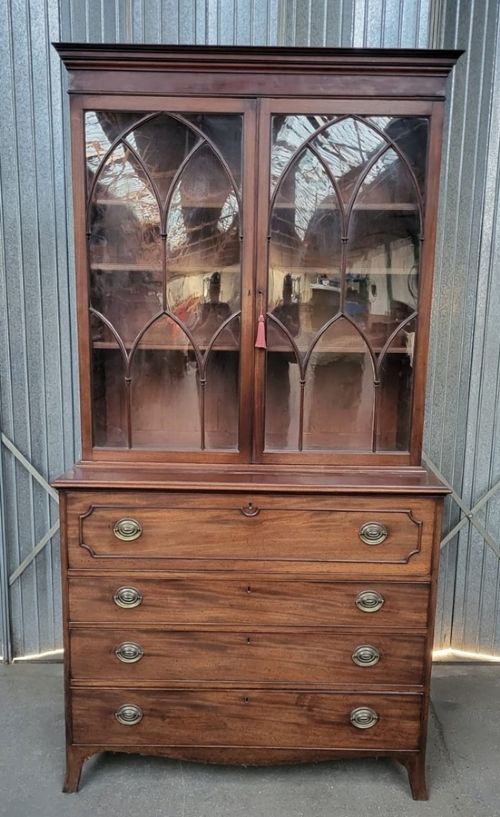
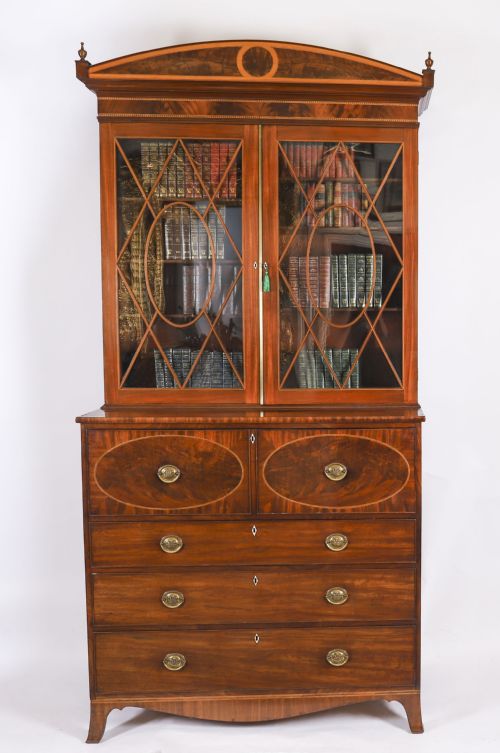
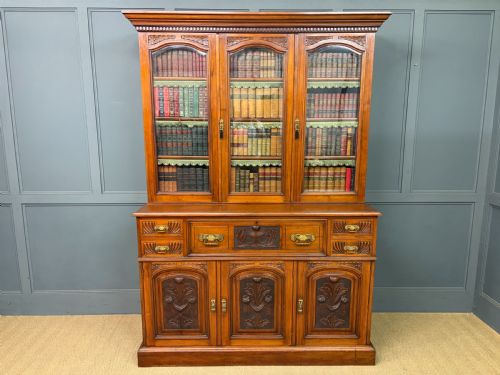
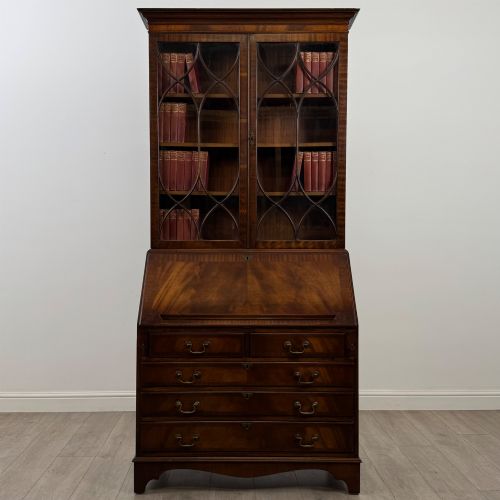
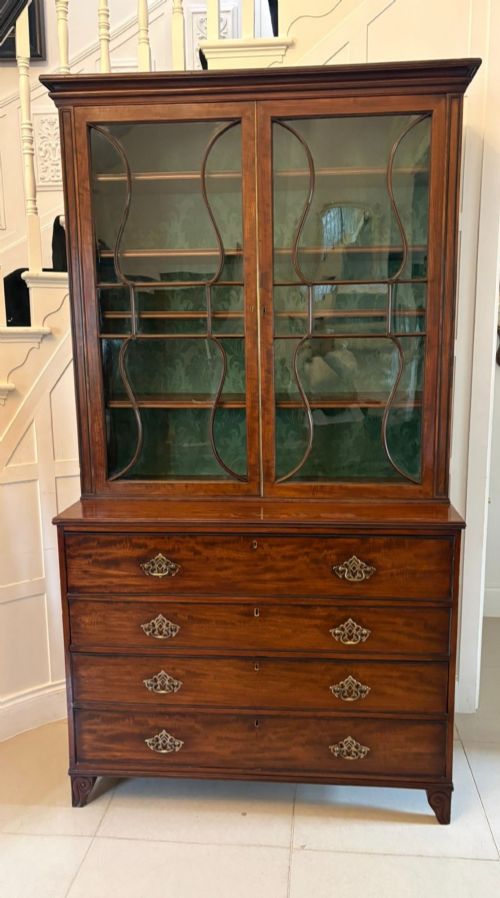
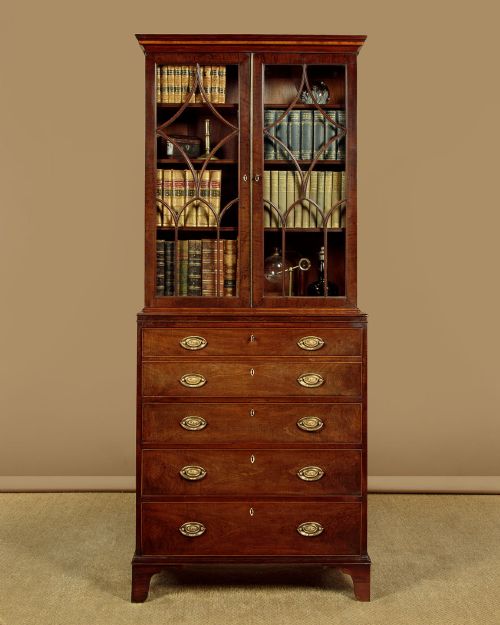
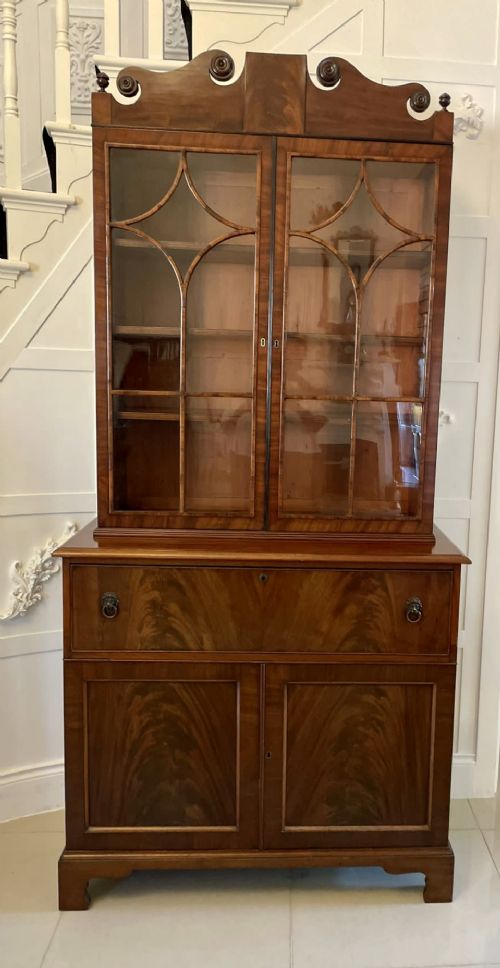
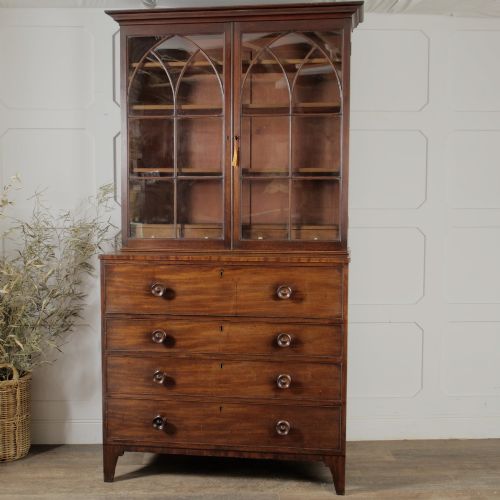
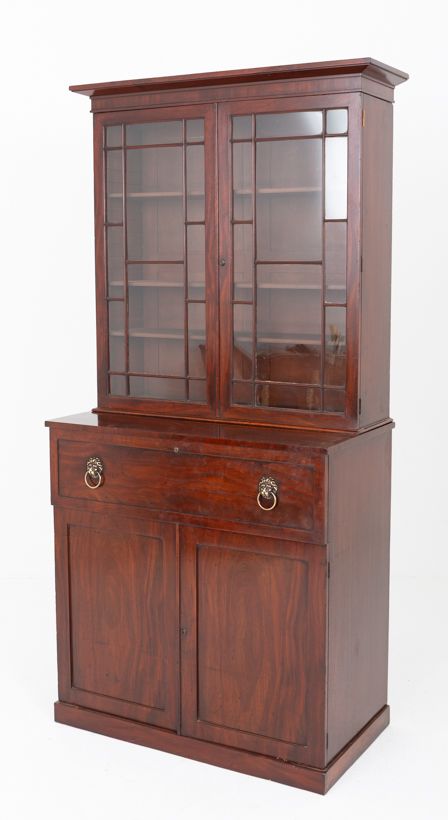
A glazed bookcase desk combines a shelved upper cabinet with a lower writing compartment, taking the form of bureau bookcases and secretaire bookcases across Georgian, Regency, Victorian, and Edwardian periods.
The most common examples on this page are mahogany bureau bookcases from the Georgian and 19th Century eras, alongside Edwardian variations in oak, satinwood, and yew wood.
Makers and workshops ranging from Gillows to Edwards & Roberts produced these dual-purpose library cabinets in various scales, from tall 18th-century pieces down to miniature apprentice samples.
Materials and construction
Makers utilised solid timbers and veneers including mahogany, oak, walnut, satinwood, and burr walnut, often framing the upper display sections with glass and brass fittings.
Writing compartments frequently incorporate fitted interiors with small drawers and pigeonholes, housed behind drop-front writing surfaces or cylinder lids operated alongside leather writing inserts.
One listed item is a miniature mahogany bureau bookcase reduced to a quarter size as an apprentice French polished furniture sample.
Craftsmanship and proportion
Quality rests in the choice of timber figures, such as flame mahogany or figured walnut, and the precision of string inlay and marquetry details.
Structural harmony dictates the piece, where tall and slim proportions maintain balance between the glazed upper cabinet and the fitted lower bureau.
George Oakley·Tudor and Burrey·Edwards and Roberts·Gillows of Lancaster·Maple and Co·Mercier Freres
The Glazed Bookcase Desk Glossary
- Secretaire
- A writing cabinet or desk featuring a pull-out or drop-front drawer that conceals a fitted interior of small drawers and pigeonholes.
- Astragal glazed
- Glass doors divided into smaller panes by narrow wooden bars, typical of 18th and 19th-century bookcase construction.
- Bureau bookcase
- A furniture form combining a slant-front writing desk below an enclosed bookcase cabinet.
- Cylinder desk
- A writing desk featuring a quarter-circle rotating wooden cylinder that covers the desk surface and fitted interior.
- Flame mahogany
- A veneer cut from the fork of a mahogany tree that produces a distinctive flame-like pattern.
Glazed Bookcase Desk: Frequently Asked Questions
How do I use a secretaire drawer?
The front of the secretaire drawer folds downward on hinges to create a flat writing surface at a comfortable seated height. This reveals an internal arrangement of miniature drawers, slots, and central compartments designed for stationery.
Once the writing session is complete, documents and writing implements remain tucked inside before the fall-front is closed and secured with a key.
How do I care for antique wood finishes?
Maintenance involves applying a quality beeswax polish periodically to nourish timber surfaces like mahogany, oak, and walnut. Avoid placing the furniture in direct sunlight or near heat sources to prevent the wood from drying and warping.
Keep glass doors clean with a soft cloth and mild glass cleaner, taking care not to let moisture seep into wooden frames or brass mounts.
Can these cabinets be separated for moving?
Many examples are constructed in two or more distinct sections, such as a glazed upper bookcase resting upon a lower bureau base. George I walnut iterations, for instance, are recorded in three sections.
Lifting the upper cabinet off the base reduces weight and makes transportation through doorways manageable, though professional removal is recommended for taller or heavier pieces.