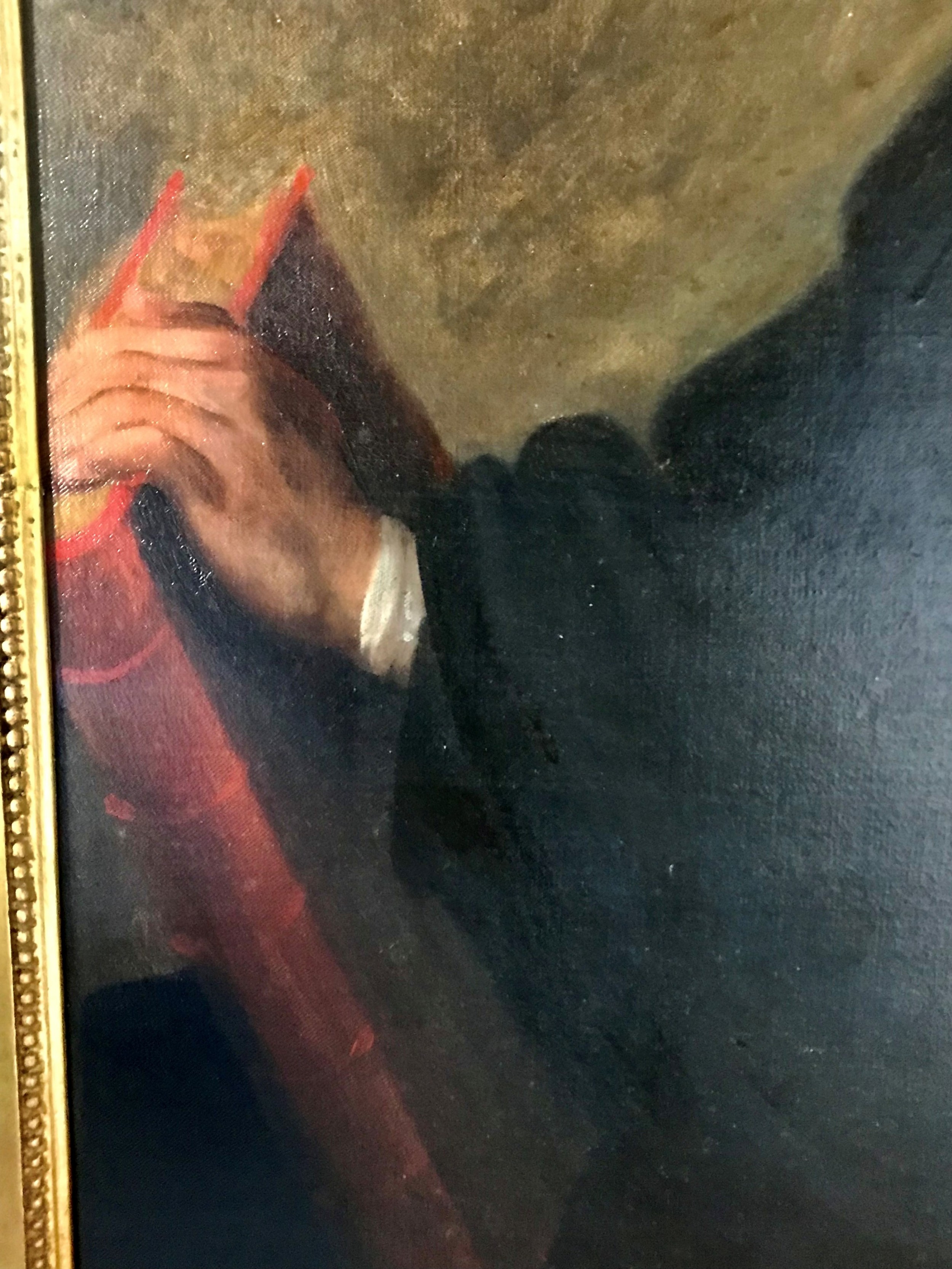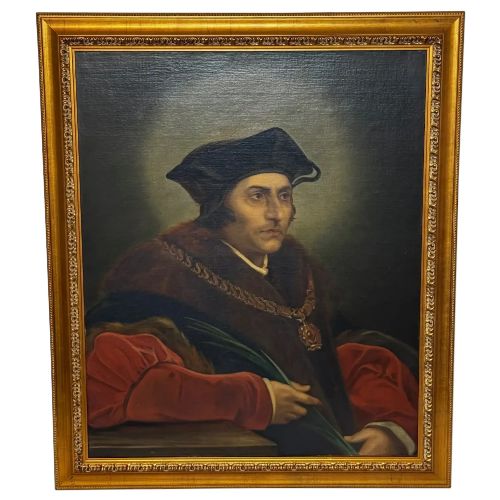
Roy Precious - Antiques & Fine Art has dated this Georgian Oil Portrait Painting to the 18th Century.
A powerful and penetrating portrait of the Reverend William Jones of Nayland, Essex. (1726-1800).
He was also a prolific and entertaining writer and composer.
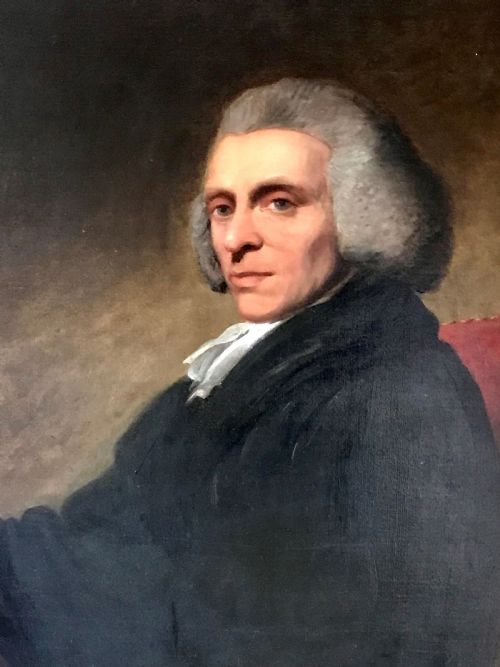
The eighteenth century produced a vintage crop of eccentrics who were also men of letters. Several of these were clerics. An age that can boast Swift, Pope, Walpole and Doctor Johnson takes a lot of beating, but William Jones of Nayland fits neatly, if more modestly, into the pattern.
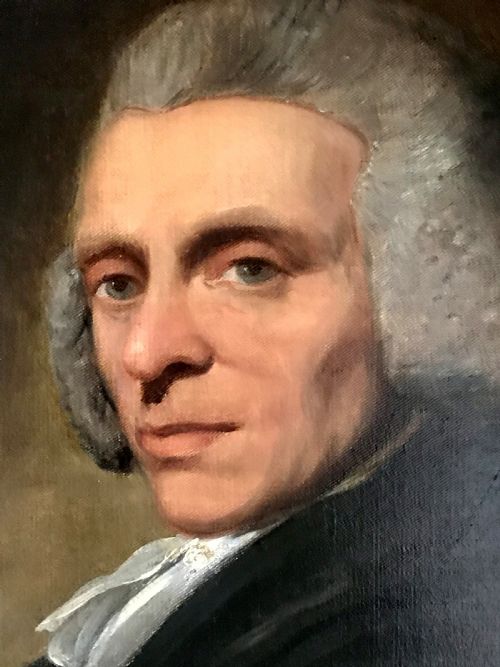
Jones was born at Lowick, Northamptonshire, on the 30th July 1726, to Morgan Jones and his wife, Sarah Lettin. He was a descendant of Colonel John Jones, the regicide, and throughout his life paid penance for the crime of his ancestor, spending each anniversary of King Charles' execution on January 30th in fasting and prayer. After an education which included Charterhouse and University College, Oxford, where he was awarded his B.A. in 1749, Jones was ordained deacon in the same year by the Bishop of Peterborough. Two years later he became a priest. As well as being a Theologian and Latin scholar, Jones was an accomplished musician.
In 1754 he was given the curacy of Wadenhoe in Northants, where he married Elizabeth Bridges, his vicar’s daughter. During the ensuing twenty years he held two livings in Kent before returning to his native county and the vicarage of Paston.
Authorities differ as to the date of Jones’ appointment to the perpetual curacy of Nayland. The Dictionary of National Biography plumps for 1777, but Grove and other reference books prefer the previous year. Jones’ own biographer, the Reverend W. Stevens, who was also a close friend, gives 1776 as the date, which may be said to settle the matter.
While at Nayland he composed works for the organ which he had caused to be built by Samuel Green of Isleworth in 1787, to encourage the choir. The instrument became known as the Jones Organ and he became known as Jones of Nayland.
W.J. as he was also affectionately known to his friends, died on the 6th January 1800. He is buried in the vault he prepared for his family beneath the Vestry, close to that of Thomas and Martha (Patty) Smith, Constable’s aunt, which was constructed in 1783.
(www.naylandconservation.org.uk)
SIR WILLIAM BEECHEY RA FSA (1753-1839). He was born in Burford, Oxfordshire and entered the Royal Academy Schools in 1774.
After some years in London he moved to Norwich, then a very important city, where he enjoyed a good practice painting conversation pieces and life size portraits from c.1783. He returned to London in 1787 and worked from Brook Street; he became extremely successful and moved to Hill Street, Berkeley Square, then to Hanover Square and ultimately to Harley Street.
He was elected an Associate of the Royal Academy in 1793, then RA in 1798 and was knighted in 1798 (the first artist to receive this honour since Reynolds).
Beechey was appointed Portrait Painter to Queen Charlotte in 1793 and by 1814 Portrait Painter to Her Majesty and to HRH the Duke of Gloucester.
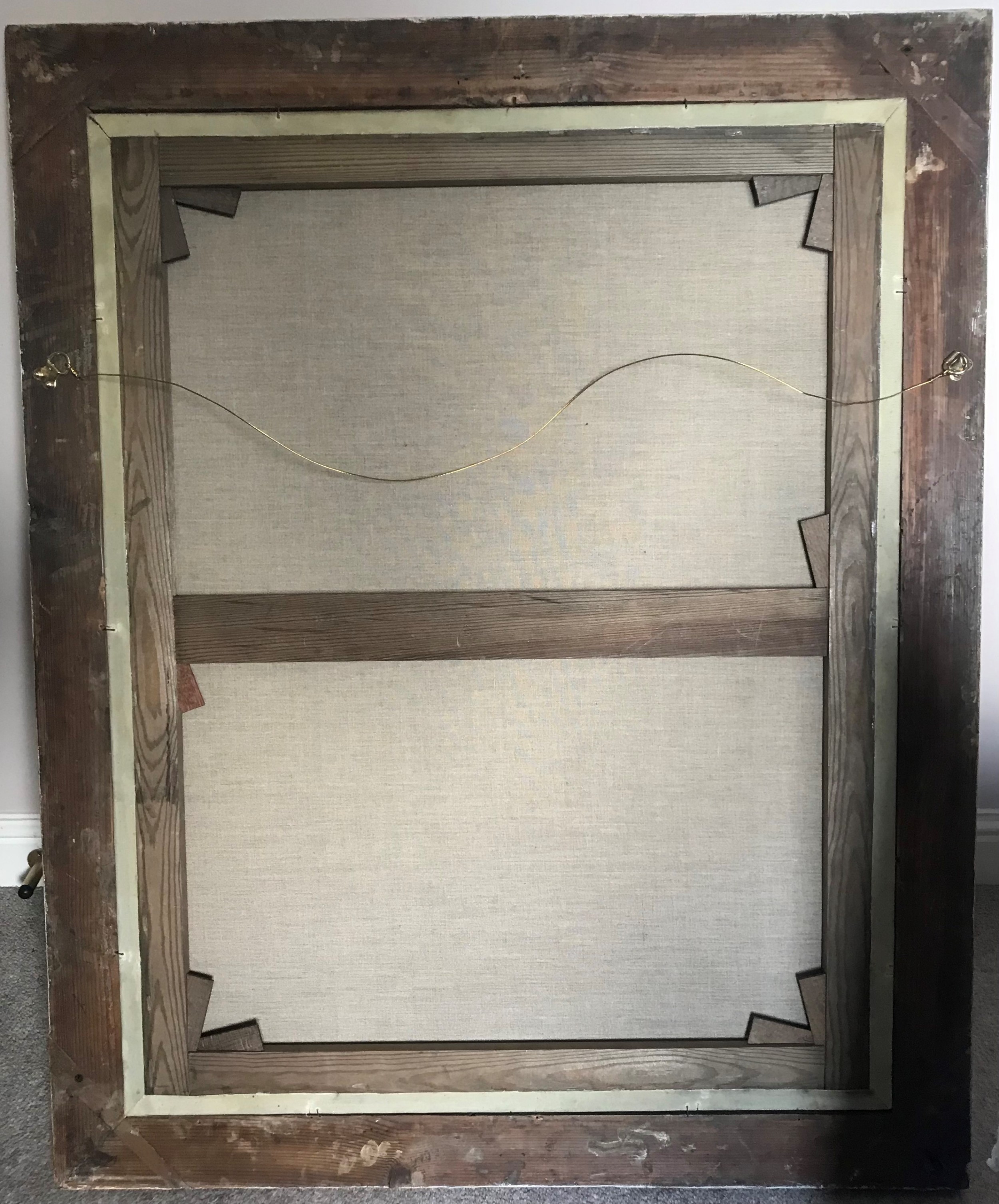
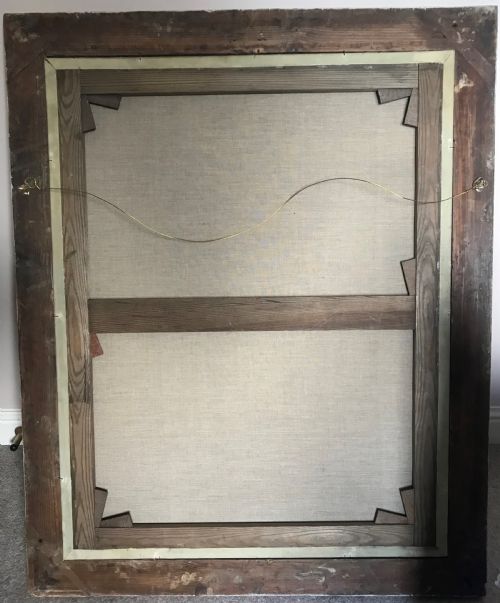
SIZE: 42 x 34 inches including the frame.
PROVENANCE: 50 years in an Essex private collection.
Roy Precious - Antiques & Fine Art has dated this Georgian Oil Portrait Painting to the 18th Century.
Roy and nadine precious: specialists in portraiture from the 16th to the 20th century. Established in 1972.
You can view the stock and full dealer information on the Roy Precious - Antiques & Fine Art Profile Page
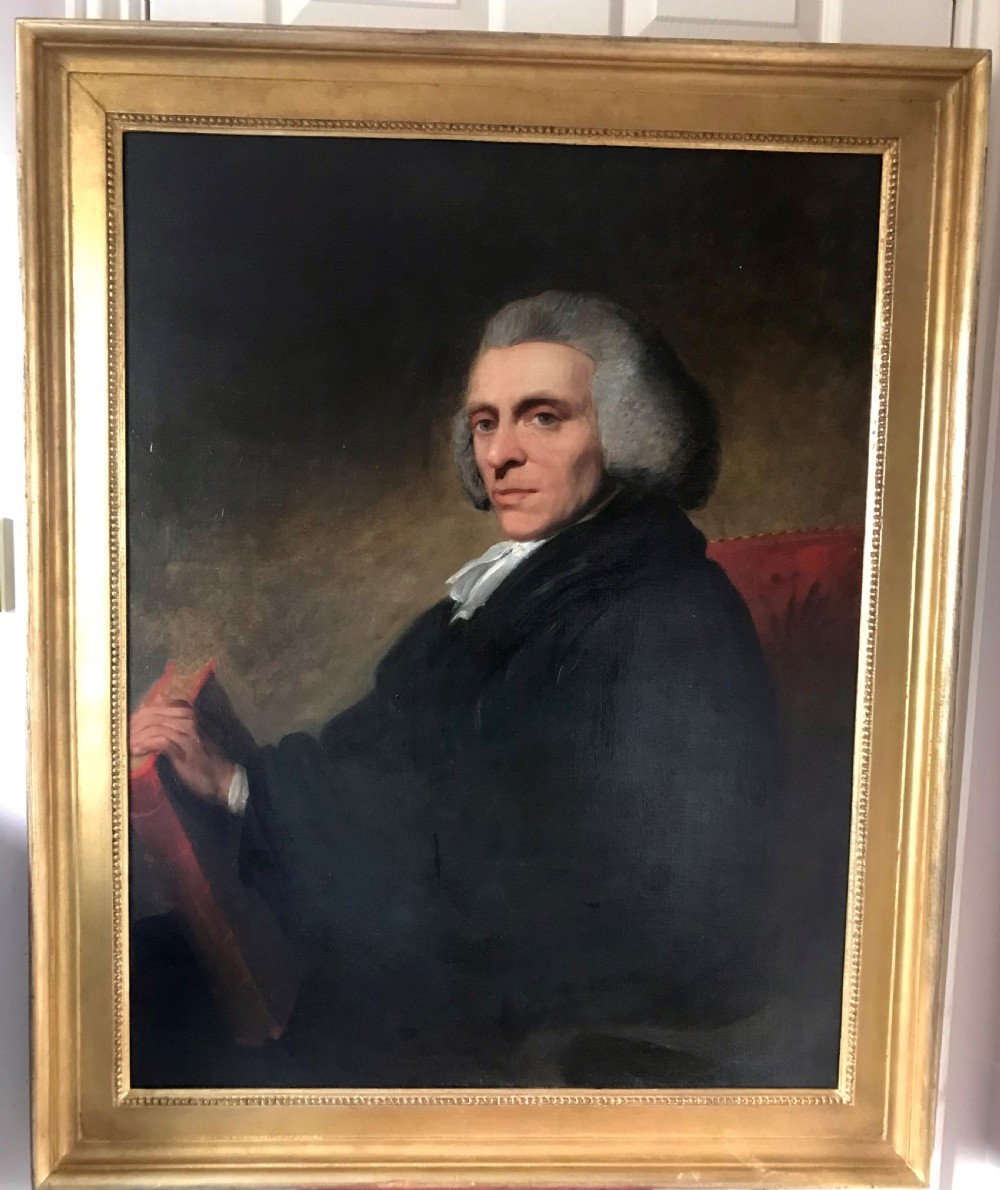

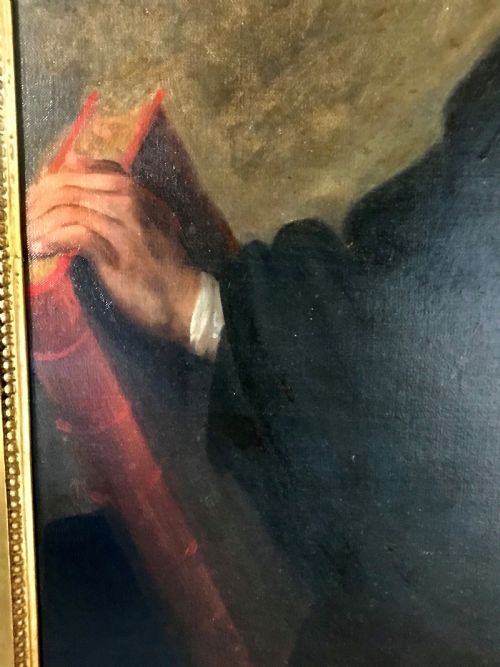
Portrait of the Reverend William Jones of Nayland C.1790, Circle of Beechey.