10,130  PAGES BROWSED TODAY PAGES TODAY 36  ANTIQUES UPLOADED TODAY NEW ARRIVALS
ID #SA780968
FOR SALE
£3,500
Email
Save
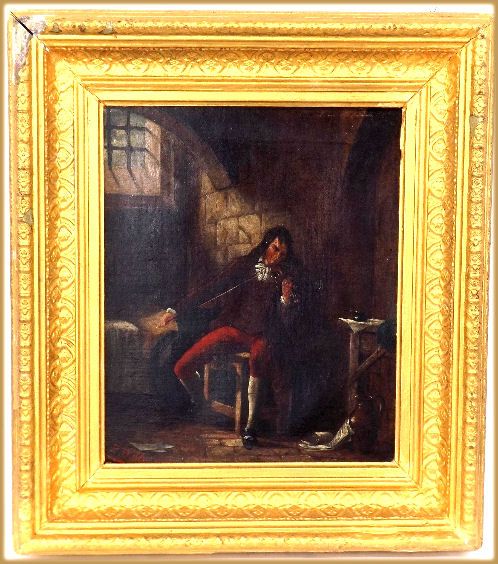
Ferdinand Barth, 1842-1892 Nicolo Paganini 1782 - 1840 Seated in a Prison Cell, Playing His Violin oil on Canvas 31 X 26 Cm. 12 X 10 In.
Artware Fineart
for sale €4,095     $4,445
£3,500

Artware Fineart

Sellingantiques Verified Since Sep 2008
View Dealers Stock Page
Relevant Links
Id #SA780968
PDF SHARE
SAVE

Ferdinand Barth, 1842-1892 Nicolo Paganini 1782 - 1840 Seated in a Prison Cell, Playing His Violin oil on Canvas 31 X 26 Cm. 12 X 10 In.

19th century
For Sale by Artware Fineart
Description

Ferdinand Barth, 1842-1892

Nicolo Paganini 1782 - 1840 seated in a Prison Cell, Playing his Violin

oil on canvas

31 x 26 cm. 12 x 10 in.

It was said that Paganini had been imprisoned for a love affair with only his violin for company. During the alleged prison term all three upper strings had broken, and so Paganini had continued to play on only his G-string.
Notes

Just as there was no Tuscan lady of rank, neither was there a murdered mistress. Much to Paganini’s distress, the French painter, Louis Boulanger, perpetuated the fantastic tale of murder with a lithograph depicting Paganini in prison (Paganini en prison), and it went on display in Paris in 1831 precisely in the week that Paganini was making his début in the city.12 The foundations for the story of Paganini’s eight-year prison sentence for murder lay in an unfortunate liaison with a girl of twenty, Angelina Cavanna, whom Paganini had been accused by the courts of abducting in 1815 and for which crime he spent 3000 lire in damages. By 1815 Paganini was a wealthy celebrity and open to exploitation by females who were well aware of the potential material advantages of getting involved with him. De Courcy’s view is that Angelina’s father, an ‘impecunious tailor’, indoctrinated his daughter in a strategy to frame the violinist.13 Similarly, Pietro Berri refers to Miss Cavanna as ‘an astute and perverted tool of extortion’ rather than the ‘innocent, ingenuous soul’ 14 that she was presented as being in court. Paganini’s lawyer had argued that Angelina’s father exerted no control over his daughter’s movements, and that she had left home with Paganini of her own volition. It was the first, but not the last, time that the violinist succumbed to feminine wiles and plunged heedlessly into a snare which would gain him a reputation as an abuser of women. In 1834, the English factotum, John Watson, contrived in a similar fashion to frame Paganini with his daughter, Charlotte Watson. John Watson was someone whom Paganini had repeatedly bailed out of prison for debt.

Niccolò (or Nicolò) Paganini 27 October 1782 – 27 May 1840) was an Italian violinist, violist, guitarist, and composer. He was the most celebrated violin virtuoso of his time, and left his mark as one of the pillars of modern violin technique. His 24 Caprices for Solo Violin Op. 1 are among the best known of his compositions, and have served as an inspiration for many prominent composers.

File:Paganinis all six violin concertos Nikolay Madoyan Conductor Karen Durgaryan camera recording from hall Armenian National Academic Theater Symphonic Orchestra - Paganini's Cantabile.webm

Paganini: all six violin concertos

Biography

Portrait of young Paganini

Childhood

Niccolò Paganini was born in Genoa, then capital of the Republic of Genoa, the third of the six children of Antonio and Teresa (née Bocciardo) Paganini. Paganini's father was an unsuccessful trader, but he managed to supplement his income by playing music on the mandolin. At the age of five, Paganini started learning the mandolin from his father and moved to the violin by the age of seven. His musical talents were quickly recognized, earning him numerous scholarships for violin lessons. The young Paganini studied under various local violinists, including Giovanni Servetto and Giacomo Costa, but his progress quickly outpaced their abilities. Paganini and his father then traveled to Parma to seek further guidance from Alessandro Rolla. But upon listening to Paganini's playing, Rolla immediately referred him to his own teacher, Ferdinando Paer and, later, Paer's own teacher, Gasparo Ghiretti. Though Paganini did not stay long with Paer or Ghiretti, the two had considerable influence on his compositional style.

Early career

The French invaded northern Italy in March 1796, and Genoa was not spared. The Paganinis sough

Physical Dimensions
Height
31cm (12.20")
Width
26cm (10.24")
Depth
2cm (0.79")
Declaration

Artware Fineart has dated this Nicolo Paganini Oil Painting to the 19th Century.

Reference Numbers
Sellingantiques Reference
SA780968
Dealers Internal Reference
4363
Description
Ferdinand Barth, 1842-1892

Nicolo Paganini 1782 - 1840 seated in a Prison Cell, Playing his Violin

oil on canvas

31 x 26 cm. 12 x 10 in.

It was said that Paganini had been imprisoned for a love affair with only his violin for company.

During the alleged prison term all three upper strings had broken, and so Paganini had continued to play on only his G-string.
Artware Fineart
fig 1. An oil painting on canvas depicting violinist Nicolo Paganini playing in a stone prison cell.
fig 1. Ferdinand Barth, 1842-1892 Nicolo Paganini 1782 - 1840 Seated in a Prison Cell, Playing His Violin oil on Canvas 31 X 26 Cm. 12 X 10 In.

Notes

Just as there was no Tuscan lady of rank, neither was there a murdered mistress. Much to Paganini’s distress, the French painter, Louis Boulanger, perpetuated the fantastic tale of murder with a lithograph depicting Paganini in prison (Paganini en prison), and it went on display in Paris in 1831 precisely in the week that Paganini was making his début in the city.12 The foundations for the story of Paganini’s eight-year prison sentence for murder lay in an unfortunate liaison with a girl of twenty, Angelina Cavanna, whom Paganini had been accused by the courts of abducting in 1815 and for which crime he spent 3000 lire in damages. By 1815 Paganini was a wealthy celebrity and open to exploitation by females who were well aware of the potential material advantages of getting involved with him. De Courcy’s view is that Angelina’s father, an ‘impecunious tailor’, indoctrinated his daughter in a strategy to frame the violinist.13 Similarly, Pietro Berri refers to Miss Cavanna as ‘an astute and perverted tool of extortion’ rather than the ‘innocent, ingenuous soul’ 14 that she was presented as being in court. Paganini’s lawyer had argued that Angelina’s father exerted no control over his daughter’s movements, and that she had left home with Paganini of her own volition. It was the first, but not the last, time that the violinist succumbed to feminine wiles and plunged heedlessly into a snare which would gain him a reputation as an abuser of women. In 1834, the English factotum, John Watson, contrived in a similar fashion to frame Paganini with his daughter, Charlotte Watson. John Watson was someone whom Paganini had repeatedly bailed out of prison for debt.

Niccolò (or Nicolò) Paganini 27 October 1782 – 27 May 1840) was an Italian violinist, violist, guitarist, and composer. He was the most celebrated violin virtuoso of his time, and left his mark as one of the pillars of modern violin technique. His 24 Caprices for Solo Violin Op. 1 are among the best known of his compositions, and have served as an inspiration for many prominent composers.

File:Paganinis all six violin concertos Nikolay Madoyan Conductor Karen Durgaryan camera recording from hall Armenian National Academic Theater Symphonic Orchestra - Paganini's Cantabile.webm

Paganini: all six violin concertos

Biography

Portrait of young Paganini

Childhood

Niccolò Paganini was born in Genoa, then capital of the Republic of Genoa, the third of the six children of Antonio and Teresa (née Bocciardo) Paganini. Paganini's father was an unsuccessful trader, but he managed to supplement his income by playing music on the mandolin. At the age of five, Paganini started learning the mandolin from his father and moved to the violin by the age of seven. His musical talents were quickly recognized, earning him numerous scholarships for violin lessons. The young Paganini studied under various local violinists, including Giovanni Servetto and Giacomo Costa, but his progress quickly outpaced their abilities. Paganini and his father then traveled to Parma to seek further guidance from Alessandro Rolla. But upon listening to Paganini's playing, Rolla immediately referred him to his own teacher, Ferdinando Paer and, later, Paer's own teacher, Gasparo Ghiretti. Though Paganini did not stay long with Paer or Ghiretti, the two had considerable influence on his compositional style.

Early career

The French invaded northern Italy in March 1796, and Genoa was not spared. The Paganinis sough

Height
31cm (12.20")
Width
26cm (10.24")
Depth
2cm (0.79")
Date of Manufacture

Artware Fineart has dated this Nicolo Paganini Oil Painting to the 19th Century.

Reference Numbers
Sellingantiques Ref
SA780968
Dealers Internal Ref
4363
Artware Fineart
Sellingantiques verified Since Sep 2008
Dealer Profile

You can view the stock and full dealer information on the Artware Fineart Profile Page
Relevant Links
PDF SHARE
SAVE
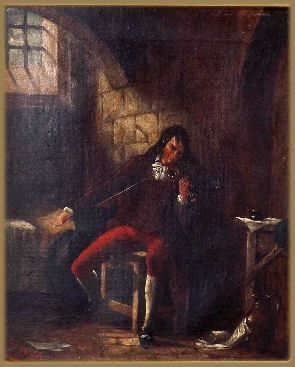
An oil painting on canvas depicting violinist Nicolo Paganini playing in a stone prison cell.
1 / 2
Archive I An oil painting on canvas depicting violinist Nicolo Paganini playing in a stone prison cell.

Ferdinand Barth, 1842-1892 Nicolo Paganini 1782 - 1840 Seated in a Prison Cell, Playing His Violin oil on Canvas 31 X 26 Cm. 12 X 10 In.

Archive II An oil painting on canvas depicting violinist Nicolo Paganini playing in a stone prison cell. View II
Enlarged Archival View
Telephone 07958 699 645
Location
18 La Gare
51 Surrey Row
London
SE1 0BZ
United Kingdom
Verified Since Sep 2008
Items For Sale 243
Items Sold 223
Artware Fineart
Verified Since Sep 2008
View Dealer Info
Location: 18 La Gare , 51 Surrey Row , London , SE1 0BZ , United Kingdom
Verified
Sep 2008
For Sale
243
Sold
223
An oil painting on canvas depicting violinist Nicolo Paganini playing in a stone prison cell.
Ferdinand Barth, 1842-1892 Nicolo Paganini 1782 - 1840 seated in a Prison Cell, Playing his Violin oil on canvas 31 x 26 cm. 12 x 10 in.
Ref: SA780968
An oil painting on canvas depicting violinist Nicolo Paganini playing in a stone prison cell.
Detail View 1
Archival Detail
Every single antique dealer on our platform is individually approved by our internal team. We verify their professional trade history, ethical standards, and photographic quality to ensure a secure, high-standard buying environment. Upon joining, every dealer agrees to a strict 9-point code of conduct. While issues can occasionally arise, our dealers typically resolve them swiftly and directly with the buyer. In fact, since our founding in 2002, Sellingantiques has only had to step in to help resolve an issue on roughly five occasions—a true testament to the quality of our dealers and their dedication to your happiness.
Our dealers are highly experienced in packing and shipping fragile, high-value antiques. Because you are in direct contact with the dealer, you will be able to easily go through all available shipping and insurance options together to ensure your item arrives safely.
Antiques are the ultimate green purchase. By choosing historical pieces over newly manufactured goods, you completely eliminate the carbon footprint of modern mass production while preserving exceptional, timeless craftsmanship.

19th-century historical genre painting focuses on romanticised depictions of notable historical figures, narrative events, and dramatic scene staging. These works frequently incorporate strong chiaroscuro, narrative symbolism, and realistic figurative detail.

Artists during this period typically applied hand-ground oil pigments onto linen or cotton canvas stretched over wooden frames. Paintings were built up using layered glazes and finished with natural resin varnishes such as dammar or mastic.

Authentic pieces generally exhibit natural craquelure consistent with age, period-appropriate stretcher bars, hand-cut tacks, and subtle oxidisation of varnish layers. Examination under ultraviolet light can also reveal period pigment composition and retouching history.

Dark narrative paintings create visual focus when hung against deep neutral walls or integrated into a gallery wall within a library, study, or hallway. Directional accent lighting enhances the subtle tonal gradations and depth of the compositions.

Canvas paintings must be kept away from direct sunlight, high humidity, and extreme temperature shifts. Surface dust should be removed gently using a soft, dry brush, while deep cleaning or varnish removal requires professional art conservation.
items
Add keywords to the filter
Price
£100
£250000
Era
Movements
Material
Origin
Stock Location
Freshness
Online Payments
Categories