30,587  PAGES BROWSED TODAY PAGES TODAY 74  ANTIQUES UPLOADED TODAY NEW ARRIVALS
ID #SA780963
FOR SALE
£3,500
Email
Save
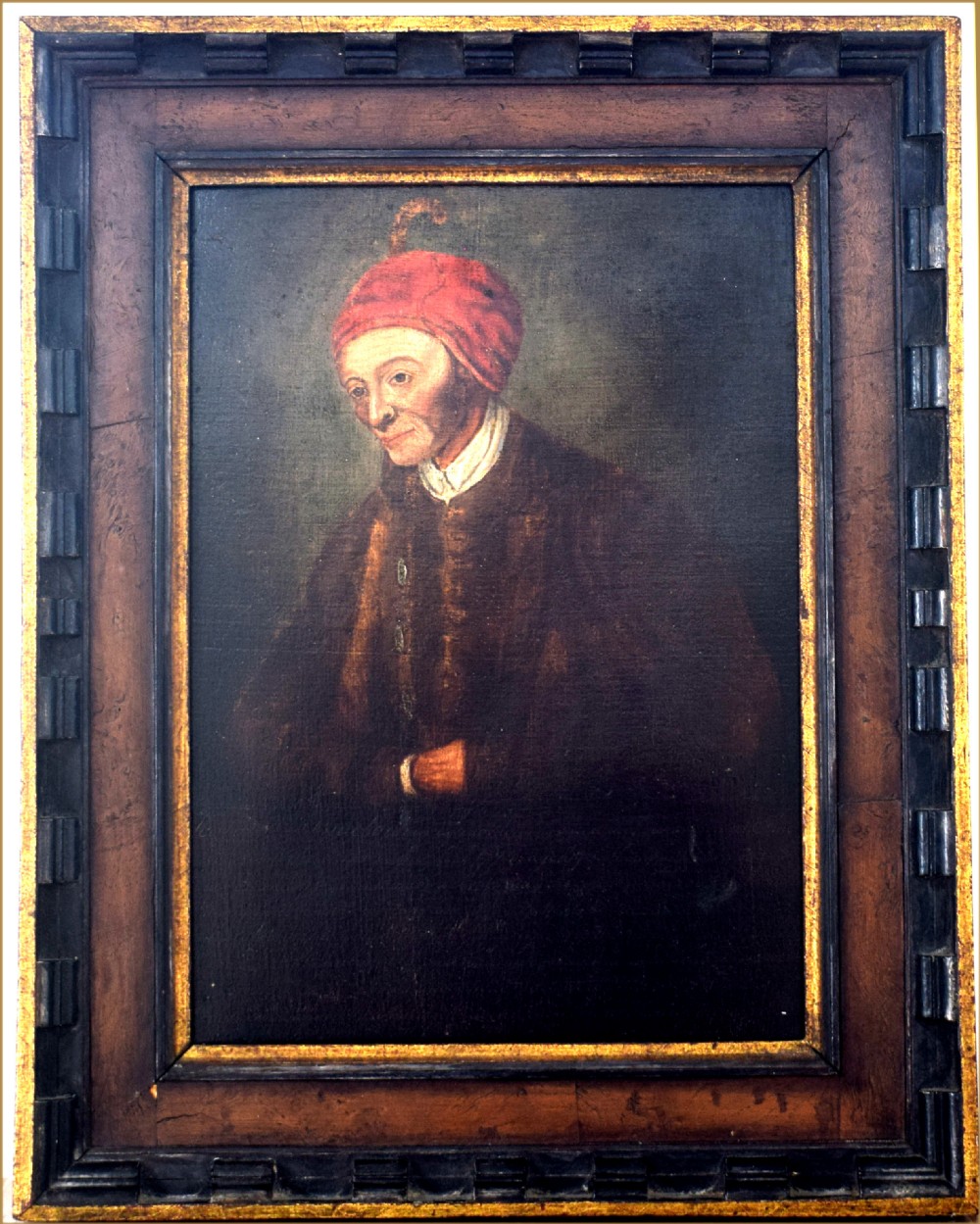
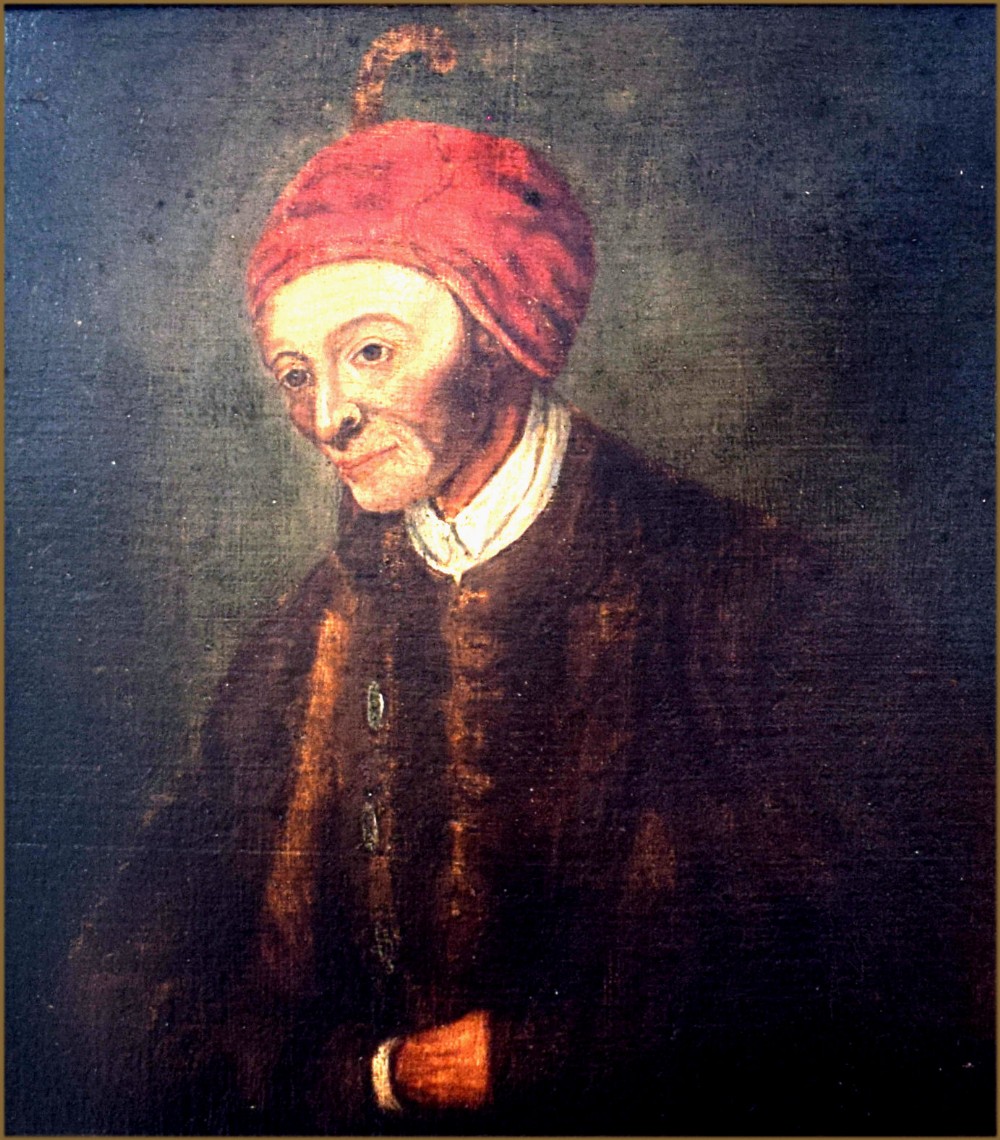
English School 18th, Century portrait of Jedidiah Buxton 1707–1772, Mathematician & English Mental Calculator
Artware Fineart
for sale €4,095     $4,445
£3,500

Artware Fineart

Sellingantiques Verified Since Sep 2008
View Dealers Stock Page
Relevant Links
Id #SA780963
PDF SHARE
SAVE

English School 18th, Century portrait of Jedidiah Buxton 1707–1772, Mathematician & English Mental Calculator

18th century
For Sale by Artware Fineart
Description

English School 18th, Century

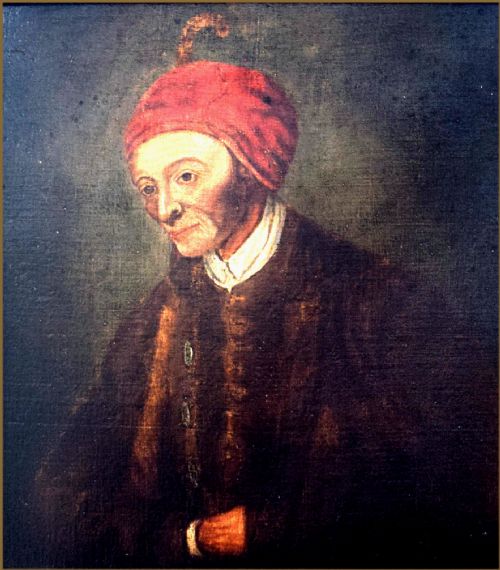
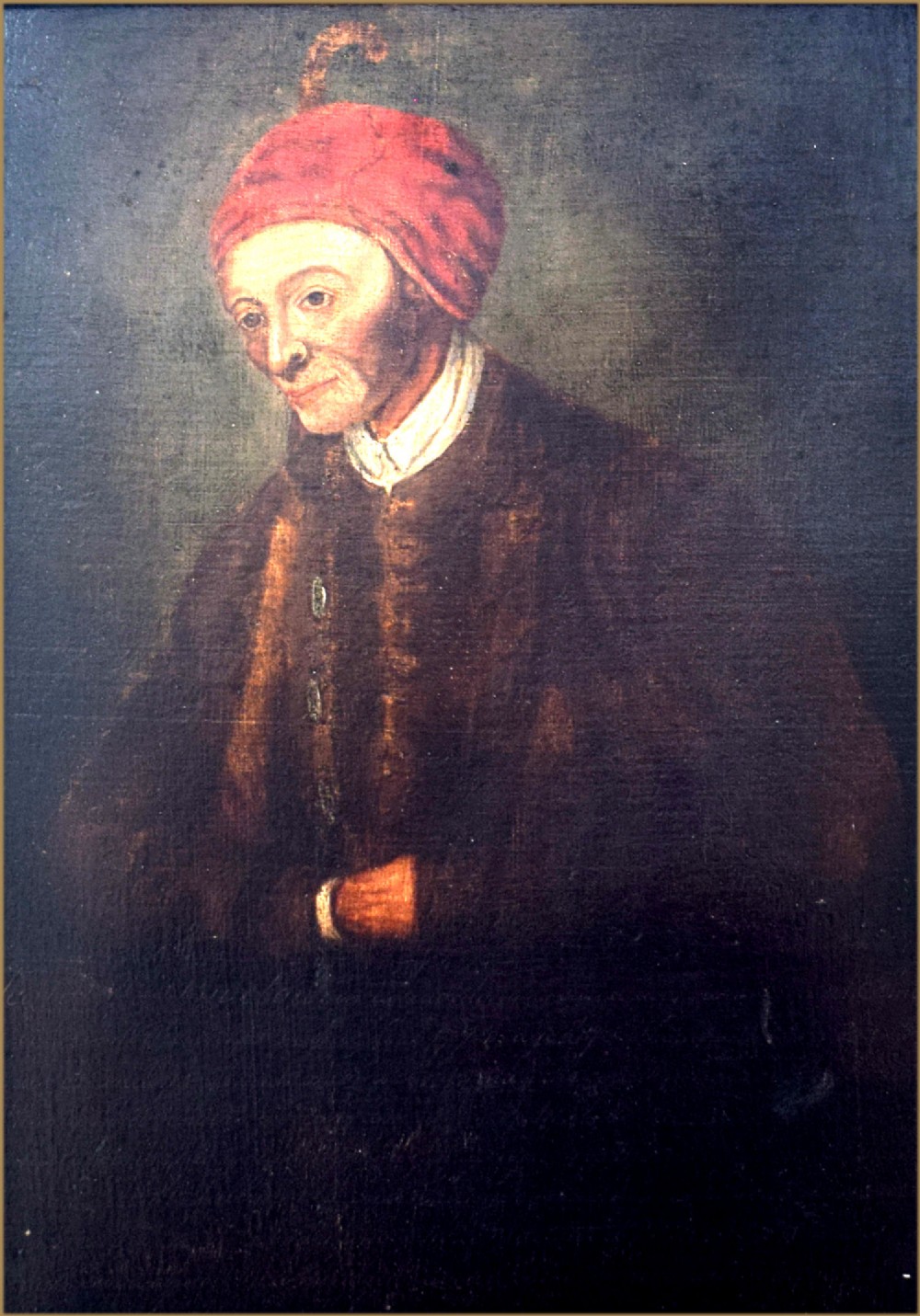
Portrait of Jedidiah Buxton 1707–1772, Mathematician & English mental calculator

Jedidiah Buxton

Signed/Inscribed:

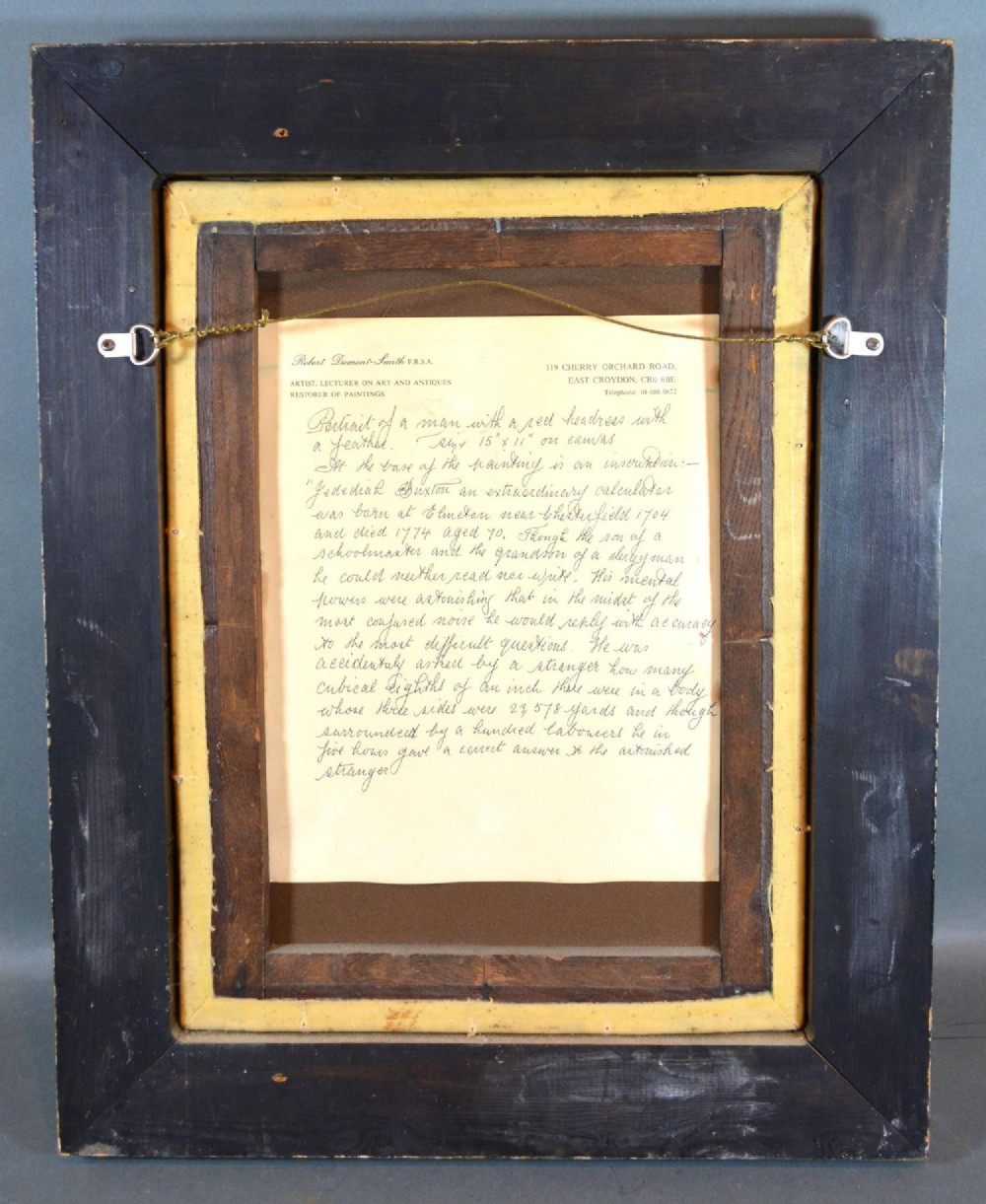
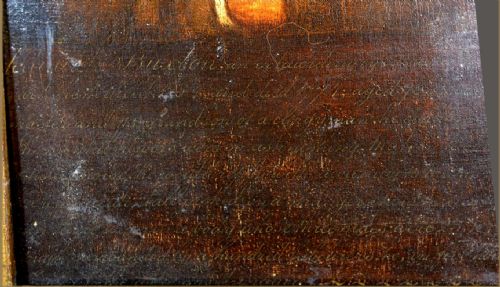
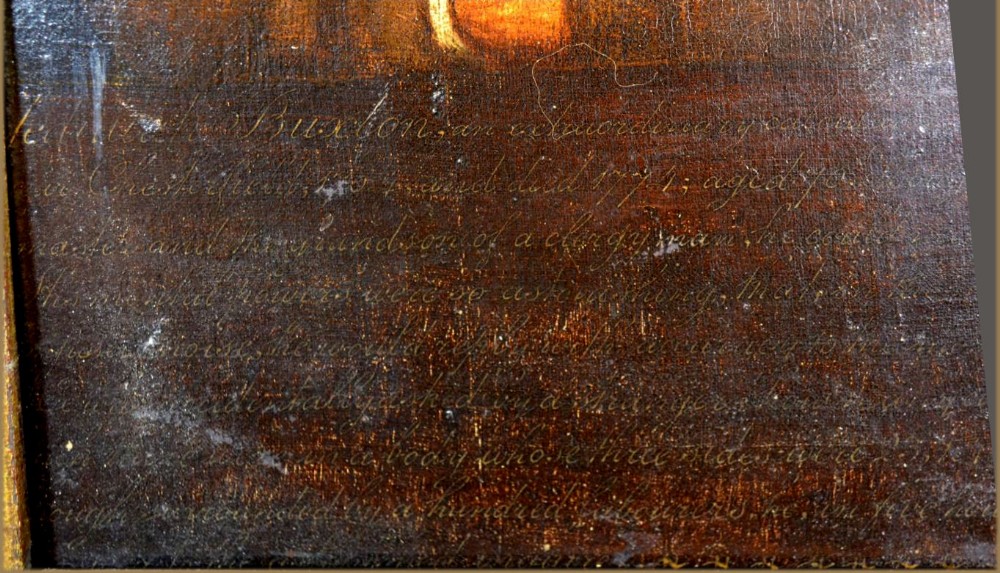
Inscribed at the foot of the Portrait " Jedediah Buxton an extraordinary Calculator was born at Elmeton near Chesterfield 1704 and died 1774 aged 70. Though the son of a schoolmaster and grandson of a clergyman he could neither read nor write. His mental powers were astonishing that in the midst of the most confused noise he would reply with accuracy to the most difficult questions. He was accidental asked by a stranger how many cubic eighths of an inch there were in a body whose three sides were 23,578 yards and though surrounded by a hundred labourers he in five hours gave a correct answer to the astonished stranger."
oil on canvas

35 x 25 cm. (14 x 10 in.)

Buxton, Jedidiah (1707–1772), mental arithmetician, was born on 20 March 1707 at Elmton, Derbyshire, the eldest of four surviving children of William Buxton (1672–1739), originally from Chelmorton, but then a farmer and schoolmaster of Elmton, and his wife, Sarah (1677–1760), daughter of John Short of Elmton. His paternal grandmother, Ann, was married to John Davenport, vicar of Elmton. Buxton married Alice Eastwood (d. 1753) on 4 February 1733 at Kirton, Nottinghamshire; they had at least two children. Although his father was schoolmaster of Elmton, and his grandfather had been the vicar, he could not write; and his knowledge, except of numbers, was extremely limited. How he came to understand the relative proportions of numbers, and their progressive denominations, he did not remember. However this was his interest. He frequently took no notice of objects, and when he did, it was only with reference to their numbers. After hearing a sermon he knew nothing about its content other than that it contained a certain number of words which he had counted during its delivery.
Despite his father's profession Buxton never learned to write and throughout his life was employed as a farm labourer. His inability to acquire the rudiments of education seems to have been caused by his absorbing passion for mental calculations, which occupied his mind to the exclusion of all else, and in which he attained a degree of skill that made him the wonder of the neighbourhood. He was first brought into more general notice by a letter in the Gentleman's Magazine for February 1751, by George Saxe, a gardener employed by the duke of Kingston, which was shortly followed by further communications in August 1751 and November 1753 from a Mr Holliday, of Haughton Park, Nottinghamshire. Among the many examples of Buxton's arithmetical feats which are given in these letters may be mentioned his calculation of the product of a farthing doubled 139 times. The result, expressed in pounds, extends to thirty-nine figures, and can be verified by the use of a computer. Buxton afterwards multiplied this enormous number by itself. It appears that he had invented an original nomenclature for large numbers, a 'tribe' being the cube of a million, and a 'cramp' a thousand 'tribes of tribes'. In April 1754 he walked to London, where he was entertained by Edward Cave, editor of the Gentleman's Magazine, at St John's Gate. He was introduced to the Royal Society, before whom he gave some illustrations of his calculating powers. He was also taken to see Garrick in Richard III, but paid no attention to the performance except to count the words spoken by the actors. A memoir of Buxton, with an uncredited portrait in Gentleman's Magazine, June 1754, gives his age as forty-nine, which does not agree with the date of his birth in Elmton parish register at the time of his baptism.

He measured the lands of Elmton, consisting of some thousand acres (4 km2), simply by striding over it. He gave the area not only in acres, roods and perches, but even in square in

Physical Dimensions
Height
35cm (13.78")
Width
25cm (9.84")
Depth
2cm (0.79")
Declaration

Artware Fineart has dated this 18th Century Portrait Painting to the 18th Century.

Reference Numbers
Sellingantiques Reference
SA780963
Dealers Internal Reference
4359
Description
English School 18th, Century

Portrait of Jedidiah Buxton 1707–1772, Mathematician & English mental calculator

Jedidiah Buxton

Signed/Inscribed:

Inscribed at the foot of the Portrait " Jedediah Buxton an extraordinary Calculator was born at Elmeton near Chesterfield 1704 and died 1774 aged 70.
Artware Fineart

Though the son of a schoolmaster and grandson of a clergyman he could neither read nor write. His mental powers were astonishing that in the midst of the most confused noise he would reply with accuracy to the most difficult questions. He was accidental asked by a stranger how many cubic eighths of an inch there were in a body whose three sides were 23,578 yards and though surrounded by a hundred labourers he in five hours gave a correct answer to the astonished stranger."

fig 1. An 18th-century oil painting depicting an elderly man wearing a red cap and dark coat against a dark background.
fig 1. English School 18th, Century portrait of Jedidiah Buxton 1707–1772, Mathematician & English Mental Calculator

oil on canvas

35 x 25 cm. (14 x 10 in.)

Buxton, Jedidiah (1707–1772), mental arithmetician, was born on 20 March 1707 at Elmton, Derbyshire, the eldest of four surviving children of William Buxton (1672–1739), originally from Chelmorton, but then a farmer and schoolmaster of Elmton, and his wife, Sarah (1677–1760), daughter of John Short of Elmton. His paternal grandmother, Ann, was married to John Davenport, vicar of Elmton. Buxton married Alice Eastwood (d. 1753) on 4 February 1733 at Kirton, Nottinghamshire; they had at least two children. Although his father was schoolmaster of Elmton, and his grandfather had been the vicar, he could not write; and his knowledge, except of numbers, was extremely limited. How he came to understand the relative proportions of numbers, and their progressive denominations, he did not remember. However this was his interest. He frequently took no notice of objects, and when he did, it was only with reference to their numbers. After hearing a sermon he knew nothing about its content other than that it contained a certain number of words which he had counted during its delivery.

fig 2. An 18th-century oil painting depicting an elderly man wearing a red cap and dark coat against a dark background.
fig 2. English School 18th, Century portrait of Jedidiah Buxton 1707–1772, Mathematician & English Mental Calculator

Despite his father's profession Buxton never learned to write and throughout his life was employed as a farm labourer. His inability to acquire the rudiments of education seems to have been caused by his absorbing passion for mental calculations, which occupied his mind to the exclusion of all else, and in which he attained a degree of skill that made him the wonder of the neighbourhood. He was first brought into more general notice by a letter in the Gentleman's Magazine for February 1751, by George Saxe, a gardener employed by the duke of Kingston, which was shortly followed by further communications in August 1751 and November 1753 from a Mr Holliday, of Haughton Park, Nottinghamshire. Among the many examples of Buxton's arithmetical feats which are given in these letters may be mentioned his calculation of the product of a farthing doubled 139 times. The result, expressed in pounds, extends to thirty-nine figures, and can be verified by the use of a computer. Buxton afterwards multiplied this enormous number by itself. It appears that he had invented an original nomenclature for large numbers, a 'tribe' being the cube of a million, and a 'cramp' a thousand 'tribes of tribes'. In April 1754 he walked to London, where he was entertained by Edward Cave, editor of the Gentleman's Magazine, at St John's Gate. He was introduced to the Royal Society, before whom he gave some illustrations of his calculating powers. He was also taken to see Garrick in Richard III, but paid no attention to the performance except to count the words spoken by the actors. A memoir of Buxton, with an uncredited portrait in Gentleman's Magazine, June 1754, gives his age as forty-nine, which does not agree with the date of his birth in Elmton parish register at the time of his baptism.

He measured the lands of Elmton, consisting of some thousand acres (4 km2), simply by striding over it. He gave the area not only in acres, roods and perches, but even in square in

Height
35cm (13.78")
Width
25cm (9.84")
Depth
2cm (0.79")
Date of Manufacture

Artware Fineart has dated this 18th Century Portrait Painting to the 18th Century.

Reference Numbers
Sellingantiques Ref
SA780963
Dealers Internal Ref
4359
Artware Fineart
Sellingantiques verified Since Sep 2008
Dealer Profile

You can view the stock and full dealer information on the Artware Fineart Profile Page
Relevant Links
PDF SHARE
SAVE
An 18th-century oil painting depicting an elderly man wearing a red cap and dark coat against a dark background.
1 / 6
Archive I An 18th-century oil painting depicting an elderly man wearing a red cap and dark coat against a dark background.

English School 18th, Century portrait of Jedidiah Buxton 1707–1772, Mathematician & English Mental Calculator
Archive II An 18th-century oil painting depicting an elderly man wearing a red cap and dark coat against a dark background. View II
Archive III An 18th-century oil painting depicting an elderly man wearing a red cap and dark coat against a dark background. View III
Archive IV An 18th-century oil painting depicting an elderly man wearing a red cap and dark coat against a dark background. View IV
Archive V An 18th-century oil painting depicting an elderly man wearing a red cap and dark coat against a dark background. View V
Archive VI An 18th-century oil painting depicting an elderly man wearing a red cap and dark coat against a dark background. View VI
FURTHER BROWSING

Visitors also looked at these ⇣

Enlarged Archival View
Telephone 07958 699 645
Location
18 La Gare
51 Surrey Row
London
SE1 0BZ
United Kingdom
Verified Since Sep 2008
Items For Sale 243
Items Sold 223
Artware Fineart
Verified Since Sep 2008
View Dealer Info
Location: 18 La Gare , 51 Surrey Row , London , SE1 0BZ , United Kingdom
Verified
Sep 2008
For Sale
243
Sold
223
An 18th-century oil painting depicting an elderly man wearing a red cap and dark coat against a dark background.
English School 18th, Century Portrait of Jedidiah Buxton 1707–1772, Mathematician & English mental calculator
Ref: SA780963
An 18th-century oil painting depicting an elderly man wearing a red cap and dark coat against a dark background.
Detail View 1
Detail View 2
Detail View 3
Detail View 4
Detail View 5
Archival Detail
Every single antique dealer on our platform is individually approved by our internal team. We verify their professional trade history, ethical standards, and photographic quality to ensure a secure, high-standard buying environment. Upon joining, every dealer agrees to a strict 9-point code of conduct. While issues can occasionally arise, our dealers typically resolve them swiftly and directly with the buyer. In fact, since our founding in 2002, Sellingantiques has only had to step in to help resolve an issue on roughly five occasions—a true testament to the quality of our dealers and their dedication to your happiness.
Our dealers are highly experienced in packing and shipping fragile, high-value antiques. Because you are in direct contact with the dealer, you will be able to easily go through all available shipping and insurance options together to ensure your item arrives safely.
Antiques are the ultimate green purchase. By choosing historical pieces over newly manufactured goods, you completely eliminate the carbon footprint of modern mass production while preserving exceptional, timeless craftsmanship.

18th-century English School portraiture typically features realistic depictions of sitters against dark, atmospheric backgrounds, capturing scholars, intellectuals, and notable figures of the Georgian era with restrained tones.

Georgian portraits were primarily created using hand-ground oil pigments on stretched flax canvas or linen, occasionally executed on wood panels or copper plates.

Authentic 18th-century oil paintings display age-appropriate craquelure patterns across the varnish and pigment, natural canvas oxidisation on the reverse side, and period-specific stretcher construction.

An 18th-century oil portrait can be hung in a library, study, or dining room above a timber sideboard to introduce texture and historical context to modern schemes.

Keep the canvas away from direct sunlight, high humidity, and radiators, cleaning the surface only with a dry, soft brush rather than liquid solutions.
items
Add keywords to the filter
Price
£100
£250000
Era
Movements
Material
Origin
Stock Location
Freshness
Online Payments
Categories