32,837  PAGES BROWSED TODAY PAGES TODAY • 145 ANTIQUES UPLOADED TODAYNEW ARRIVALS
GIFTS
145 ITEMS ADDED TODAY
Sort Order
Items Per Page
Antiques dealer?
Join as a Seller
Browse Categories
Sort order
Items per page
sold SA772528
Sorry, but this item has been sold.
Regent Antiques

Regent Antiques

Sellingantiques Verified Since Sep 2016
Browse dealers 639 items
  • About Us
    We specialise in english and continental furniture, silver, porcelain and decorative items.
  • Trade Associations
    Regent Antiques is a registered member of LAPADA  CINOA
Id #SA772528
SHARE
SAVE

Antique Large French Art Nouveau Enamelled Glass Vase Circa 1890 19th C

19th century
Sold 3 May 2021 · Regent Antiques
This “Antique Large French Art Nouveau Enamelled Glass Vase Circa 1890 19th C ” found a buyer.

It was listed by Regent Antiques. Sold pieces stay on Sellingantiques as a record of what has passed through, and the next one is rarely far away.

Description

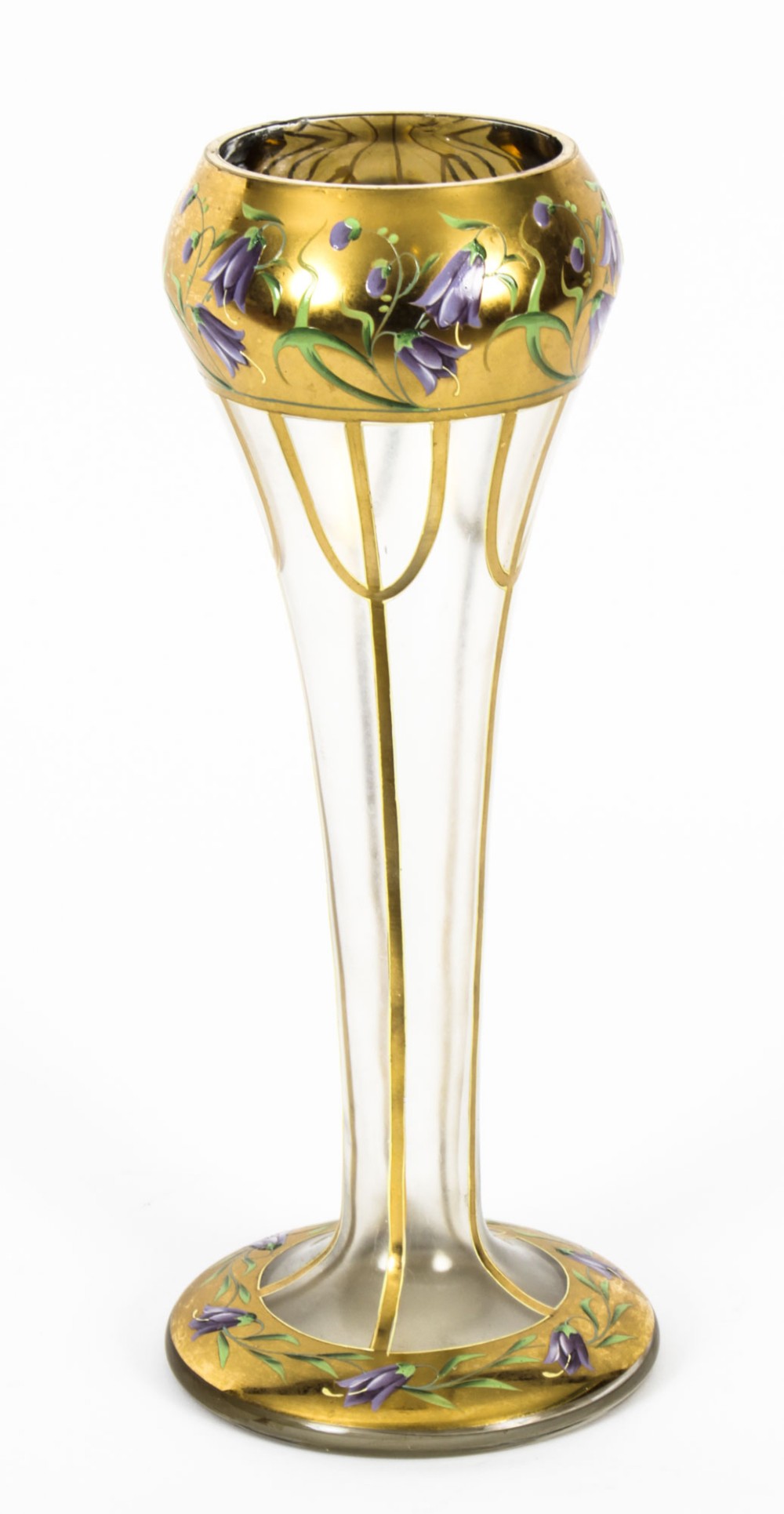
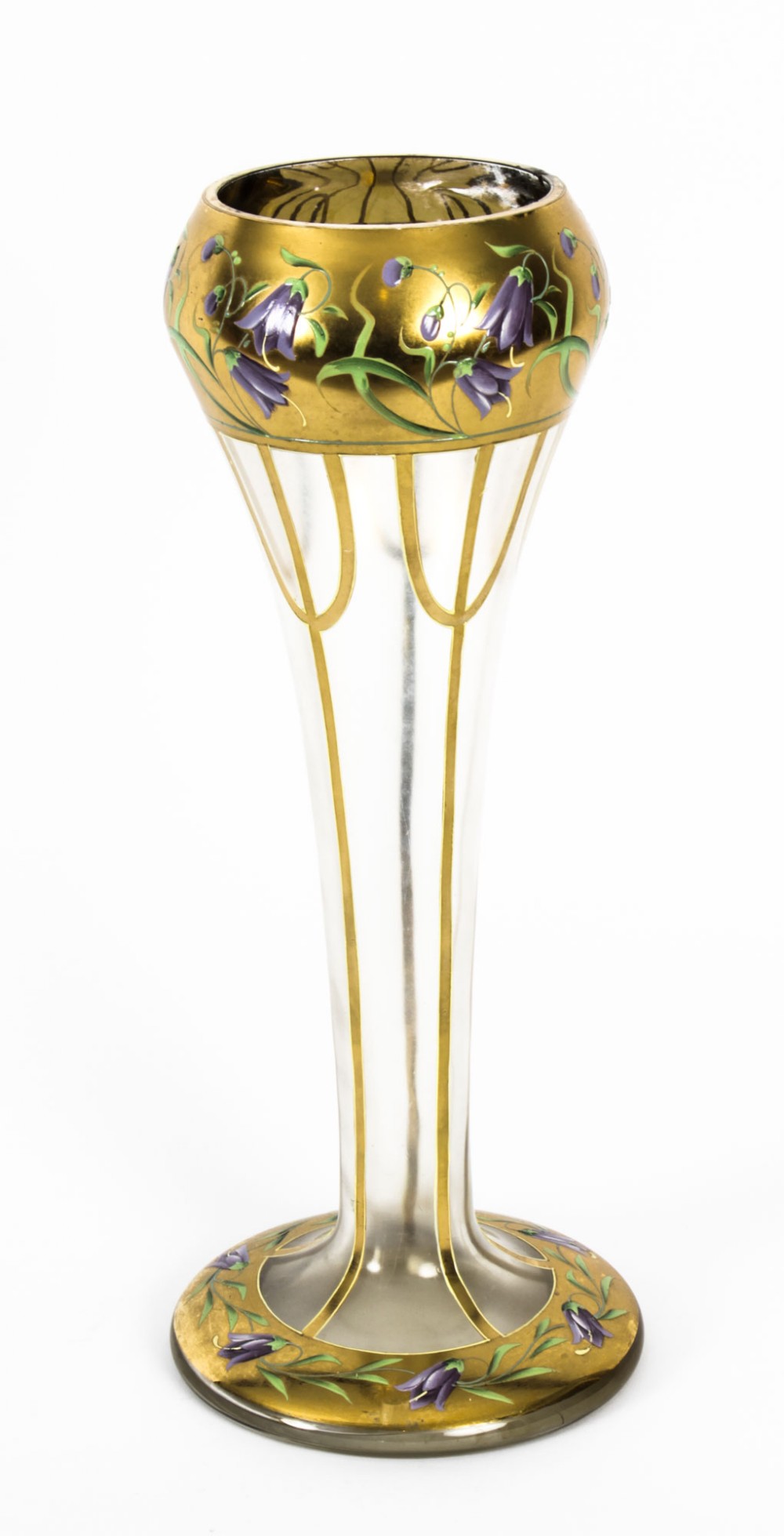
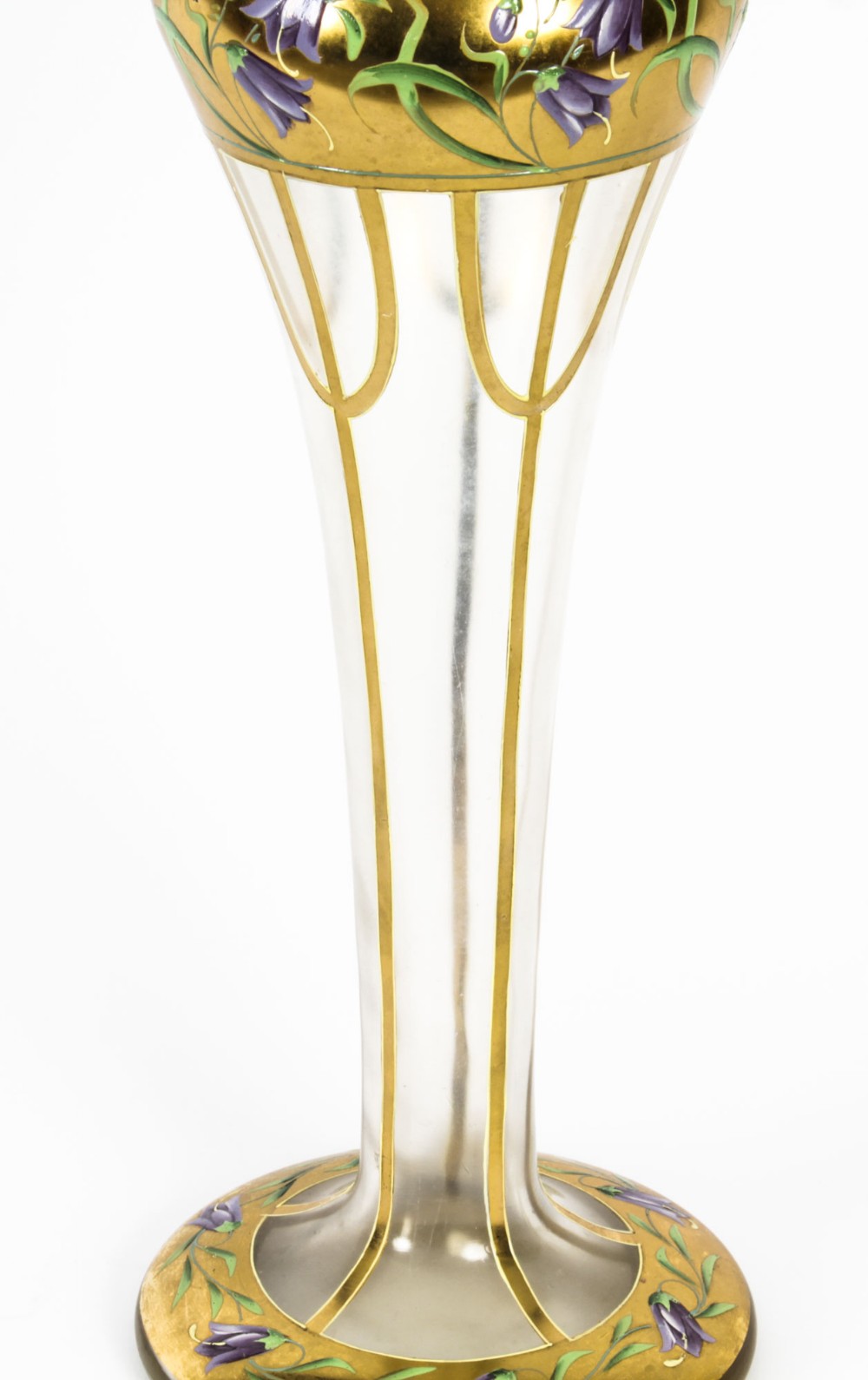
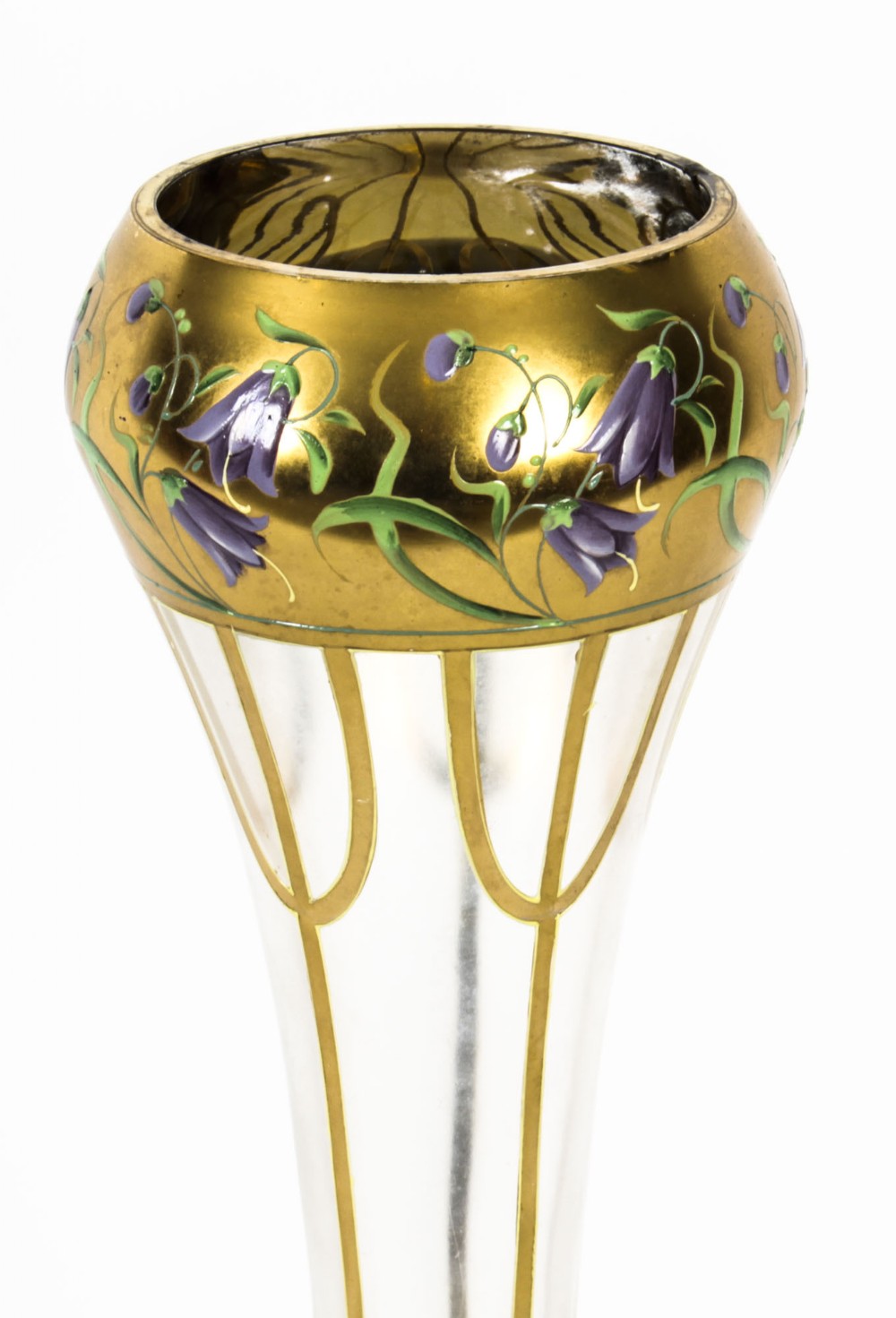
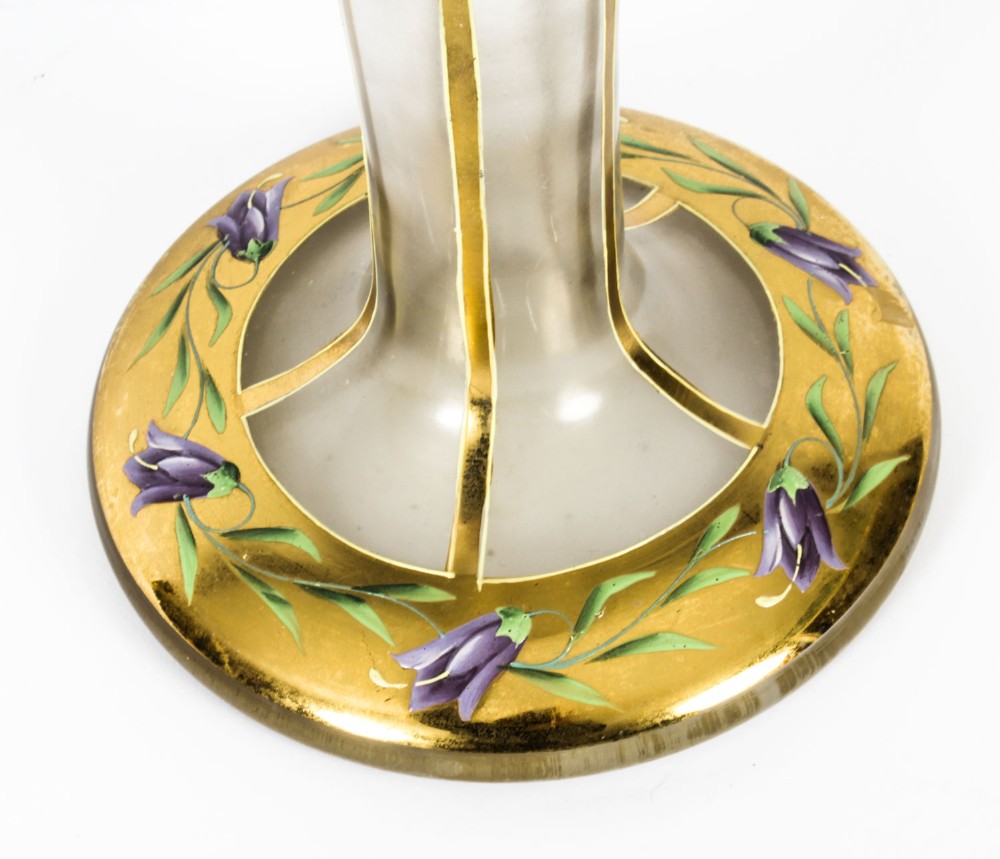
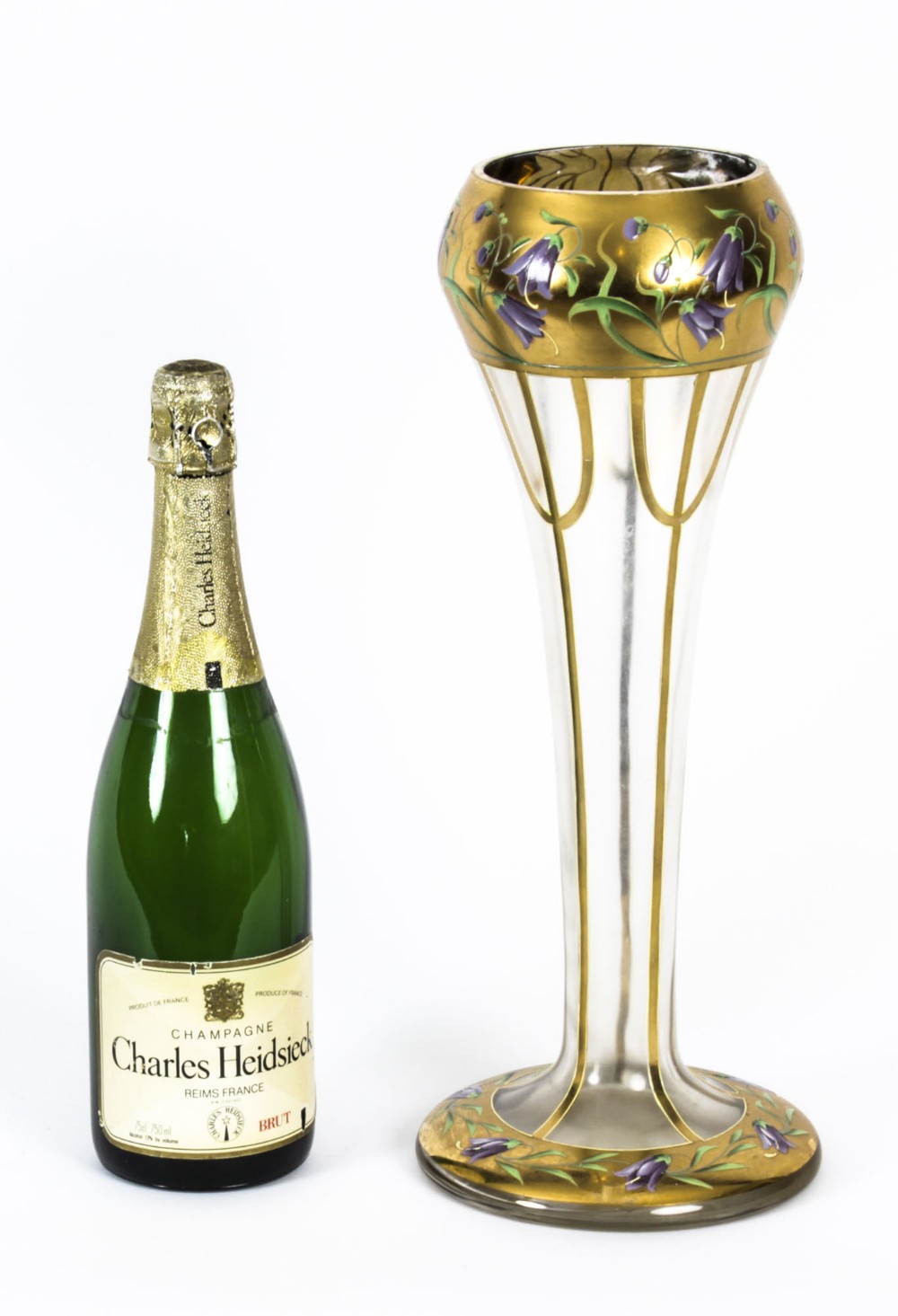
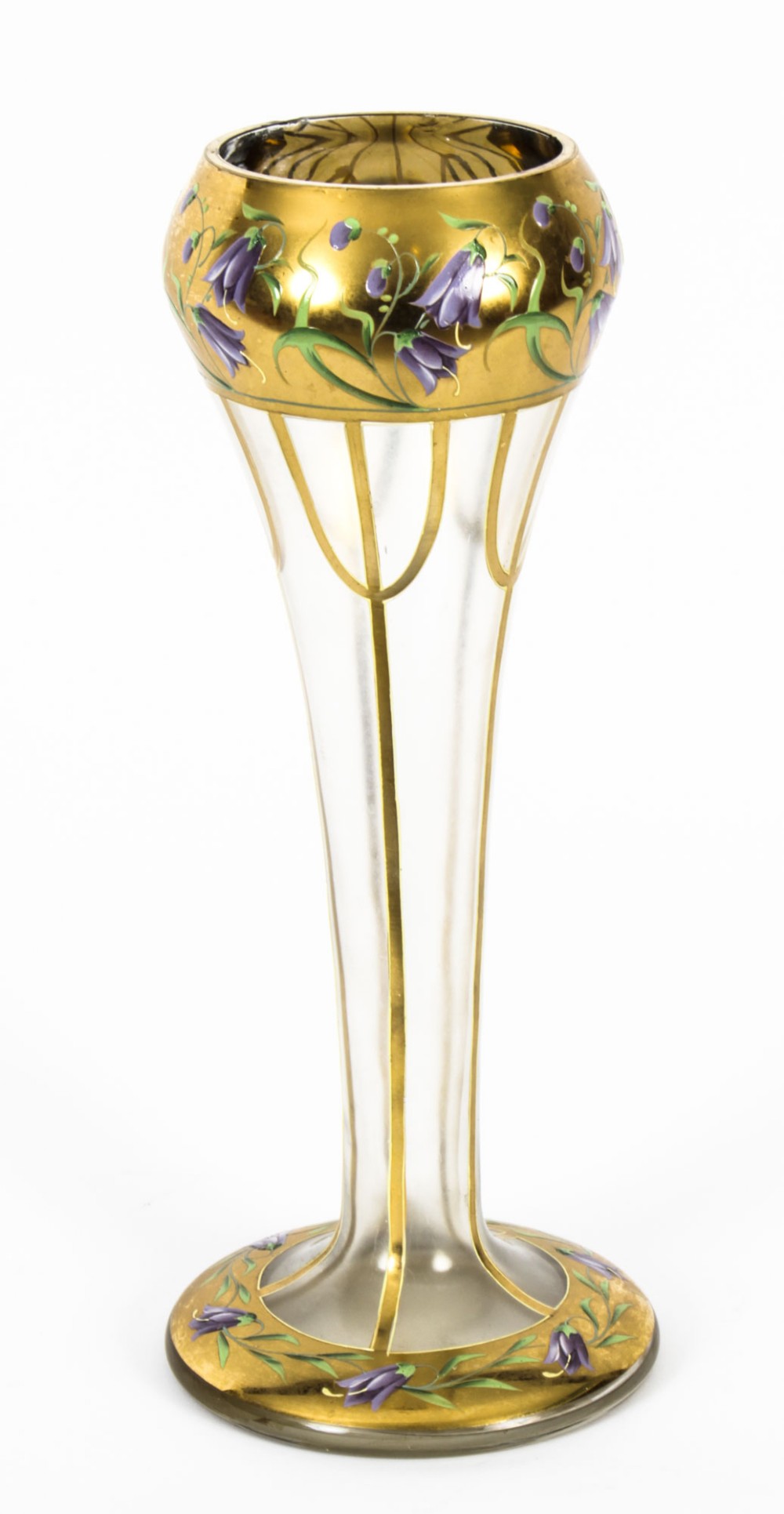
A large antique French Art Nouveau enamelled glass vase, Circa 1890 in date.

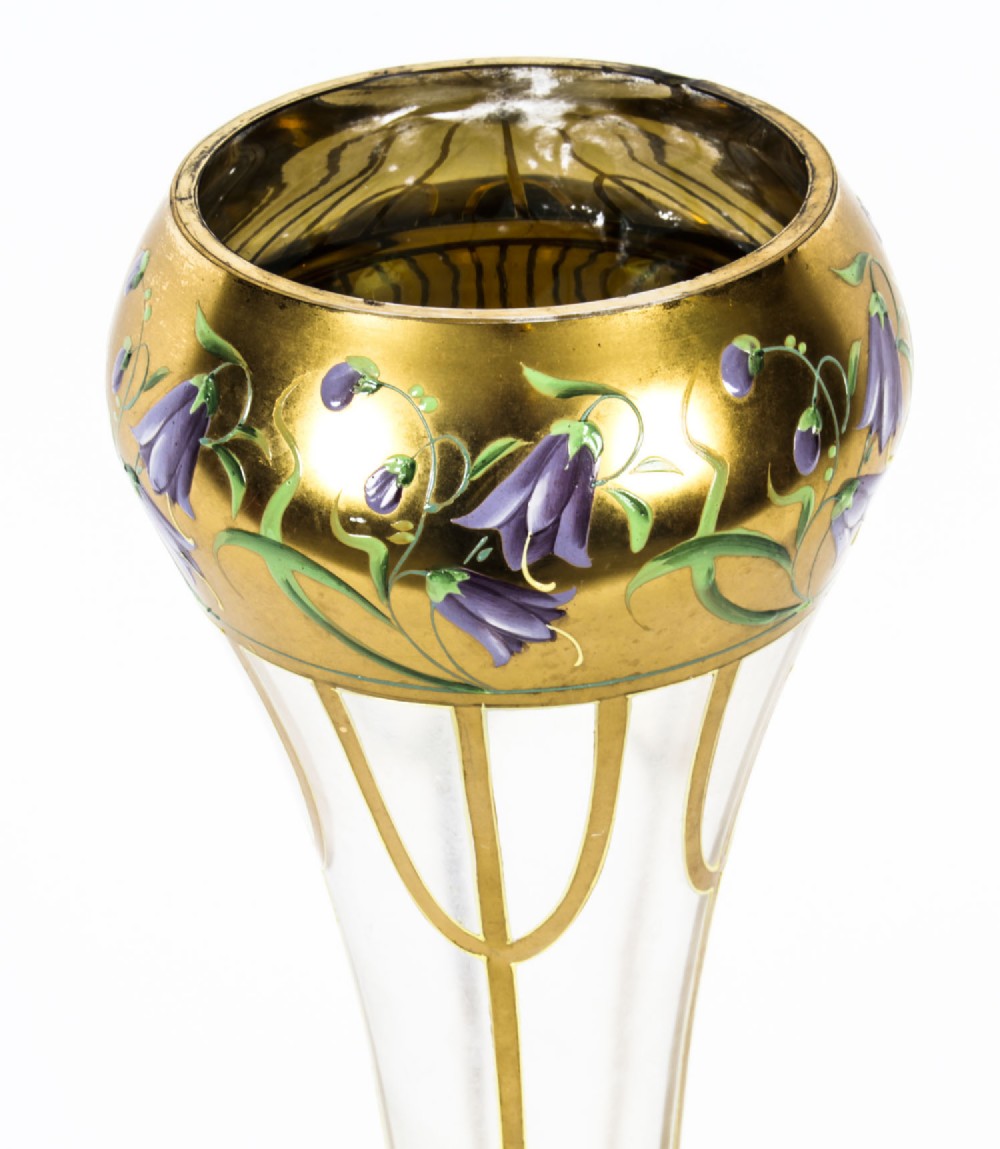
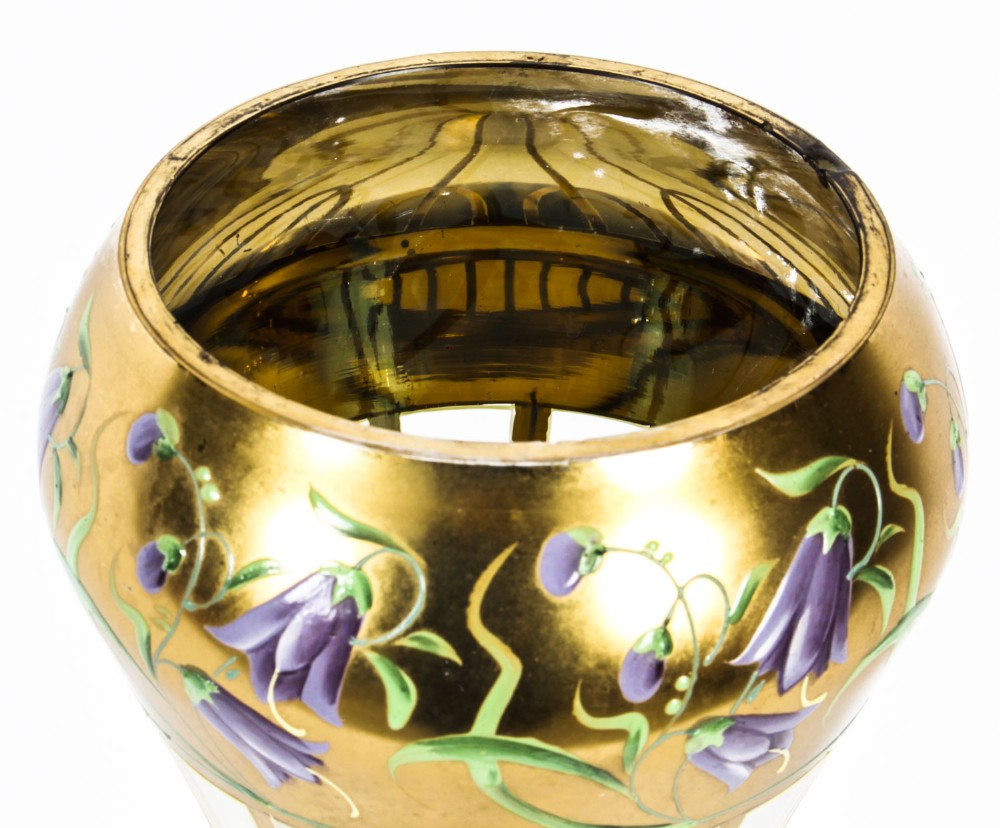
The tall frosted glass vase features a squat ballon base with a long slender tapering stem that opens into a large sphere decorated with gilded high-lights and enamelled violets.

A thoroughly delightful superb quality hand painted enamelled glass vase dating from the late-19th century.

Condition:

In really excellent condition, please see photos for confirmation.

Dimensions in cm:

Height 39 x Width 17 x Depth 17

Dimensions in inches:

Height 15.4 x Width 6.7 x Depth 6.7

Art Nouveau is an international style of art, architecture, and applied art, especially the decorative arts, known in different languages by different names: Jugendstil in German, Stile Liberty in Italian, Modernisme català in Catalan, etc. In English it is also known as the Modern Style (British Art Nouveau style). The style was most popular between 1890 and 1910. It was a reaction against the academic art, eclecticism and historicism of 19th century architecture and decoration. It was often inspired by natural forms such as the sinuous curves of plants and flowers. Other characteristics of Art Nouveau were a sense of dynamism and movement, often given by asymmetry or whiplash lines, and the use of modern materials, particularly iron, glass, ceramics and later concrete, to create unusual forms and larger open spaces.

One major objective of Art Nouveau was to break down the traditional distinction between fine arts (especially painting and sculpture) and applied arts. It was most widely used in interior design, graphic arts, furniture, glass art, textiles, ceramics, jewellery and metal work. The style responded to leading 19-century theoreticians, such as French architect Eugène-Emmanuel Viollet-le-Duc (1814–1879) and British art critic John Ruskin (1819–1900). In Britain, it was influenced by William Morris and the Arts and Crafts movement. German architects and designers sought a spiritually uplifting Gesamtkunstwerk ("total work of art") that would unify the architecture, furnishings, and art in the interior in a common style, to uplift and inspire the residents.

The first Art Nouveau houses and interior decoration appeared in Brussels in the 1890s, in the architecture and interior design of houses designed by Paul Hankar, Henry van de Velde, and especially Victor Horta, whose Hôtel Tassel was completed in 1893. It moved quickly to Paris, where it was adapted by Hector Guimard, who saw Horta's work in Brussels and applied the style for the entrances of the new Paris Métro. It reached its peak at the 1900 Paris International Exposition, which introduced the Art Nouveau work of artists such as Louis Tiffany. It appeared in graphic arts in the posters of Alphonse Mucha, and the glassware of René Lalique and Émile Gallé.

From Belgium and France, it spread to the rest of Europe, taking on different names and characteristics in each country (see Naming section below). It often appeared not only in capitals, but also in rapidly growing cities that wanted to establish artistic identities (Turin and Palermo in Italy; Glasgow in Scotland; Munich and Darmstadt in Germany), as well as in centres of independence movements (Helsinki in Finland, then part of the Russian Empire; Barcelona in Catalonia, Spain).

By 1914, and with the beginning of the First World War, Art Nouveau was largely exhausted. In the 1920s, it was replaced as the dominant architectural and decorative art style by Art Deco and then Modernism. The Art Nouveau style began to receive more positive attention from critics in the late 1960s, with a major exhibition of the work of Hector Guimard at the Museum of Modern Art in 1970.

Our reference: A1702

Date of Manufacture

Regent Antiques has dated this piece to the 19th Century.

Physical Dimensions
Height
39cm (15.35")
Width
17cm (6.69")
Depth
17cm (6.69")
Reference Numbers
Sellingantiques Reference
SA772528
Dealers Internal Reference
A1702
Antique Large French Art Nouveau Enamelled Glass Vase Circa 1890 19th C
Detail view 1Detail view 2Detail view 3Detail view 4Detail view 5Detail view 6Detail view 7Detail view 8
SOLD6+ MONTHS AGO
1 / 9
19th Century · SA772528
Antique Large French Art Nouveau Enamelled Glass Vase Circa 1890 19th C
Sorry, but this item has been sold.
Description
A large antique French Art Nouveau enamelled glass vase, Circa 1890 in date.

The tall frosted glass vase features a squat ballon base with a long slender tapering stem that opens into a large sphere decorated with gilded high-lights and enamelled violets.

A thoroughly delightful superb quality hand painted enamelled glass vase dating from the late-19th century.

Condition:

In really excellent condition, please see photos for confirmation.

Dimensions in cm:

Height 39 x Width 17 x Depth 17

Dimensions in inches:

Height 15.4 x Width 6.7 x Depth 6.7

Art Nouveau is an international style of art, architecture, and applied art, especially the decorative arts, known in different languages by different names: Jugendstil in German, Stile Liberty in Italian, Modernisme català in Catalan, etc. In English it is also known as the Modern Style (British Art Nouveau style). The style was most popular between 1890 and 1910. It was a reaction against the academic art, eclecticism and historicism of 19th century architecture and decoration. It was often inspired by natural forms such as the sinuous curves of plants and flowers. Other characteristics of Art Nouveau were a sense of dynamism and movement, often given by asymmetry or whiplash lines, and the use of modern materials, particularly iron, glass, ceramics and later concrete, to create unusual forms and larger open spaces.

One major objective of Art Nouveau was to break down the traditional distinction between fine arts (especially painting and sculpture) and applied arts. It was most widely used in interior design, graphic arts, furniture, glass art, textiles, ceramics, jewellery and metal work. The style responded to leading 19-century theoreticians, such as French architect Eugène-Emmanuel Viollet-le-Duc (1814–1879) and British art critic John Ruskin (1819–1900). In Britain, it was influenced by William Morris and the Arts and Crafts movement. German architects and designers sought a spiritually uplifting Gesamtkunstwerk ("total work of art") that would unify the architecture, furnishings, and art in the interior in a common style, to uplift and inspire the residents.

The first Art Nouveau houses and interior decoration appeared in Brussels in the 1890s, in the architecture and interior design of houses designed by Paul Hankar, Henry van de Velde, and especially Victor Horta, whose Hôtel Tassel was completed in 1893. It moved quickly to Paris, where it was adapted by Hector Guimard, who saw Horta's work in Brussels and applied the style for the entrances of the new Paris Métro. It reached its peak at the 1900 Paris International Exposition, which introduced the Art Nouveau work of artists such as Louis Tiffany. It appeared in graphic arts in the posters of Alphonse Mucha, and the glassware of René Lalique and Émile Gallé.

From Belgium and France, it spread to the rest of Europe, taking on different names and characteristics in each country (see Naming section below). It often appeared not only in capitals, but also in rapidly growing cities that wanted to establish artistic identities (Turin and Palermo in Italy; Glasgow in Scotland; Munich and Darmstadt in Germany), as well as in centres of independence movements (Helsinki in Finland, then part of the Russian Empire; Barcelona in Catalonia, Spain).

By 1914, and with the beginning of the First World War, Art Nouveau was largely exhausted. In the 1920s, it was replaced as the dominant architectural and decorative art style by Art Deco and then Modernism. The Art Nouveau style began to receive more positive attention from critics in the late 1960s, with a major exhibition of the work of Hector Guimard at the Museum of Modern Art in 1970.

Our reference: A1702
Date19th Century
Height39cm (15.35")
Width17cm (6.69")
Depth17cm (6.69")
ReferenceSA772528
Dealer's referenceA1702
Regent Antiques
Regent AntiquesSellingantiques verified since Sep 2016

We specialise in english and continental furniture, silver, porcelain and decorative items.

Member of LAPADA CINOA

SHARE
SAVE
Archive I Antique Large French Art Nouveau Enamelled Glass Vase Circa 1890 19th C
SOLD6+ MONTHS AGO

Antique Large French Art Nouveau Enamelled Glass Vase Circa 1890 19th C

Archive II Antique Large French Art Nouveau Enamelled Glass Vase Circa 1890 19th C
 View II
Archive III Antique Large French Art Nouveau Enamelled Glass Vase Circa 1890 19th C
 View III
Archive IV Antique Large French Art Nouveau Enamelled Glass Vase Circa 1890 19th C
 View IV
Archive V Antique Large French Art Nouveau Enamelled Glass Vase Circa 1890 19th C
 View V
Archive VI Antique Large French Art Nouveau Enamelled Glass Vase Circa 1890 19th C
 View VI
Archive VII Antique Large French Art Nouveau Enamelled Glass Vase Circa 1890 19th C
 View VII
Archive VIII Antique Large French Art Nouveau Enamelled Glass Vase Circa 1890 19th C
 View VIII
Archive IX Antique Large French Art Nouveau Enamelled Glass Vase Circa 1890 19th C
 View IX
Enlarged Archival View
Location
Manor Warehouse
318 Green Lanes
London
N4 1BX
United Kingdom
Verified Since Sep 2016
Items For Sale 639
Items Sold 2,756
Regent Antiques
Regent Antiques
Verified Since Sep 2016
View Dealer Info
Location: Manor Warehouse, 318 Green Lanes, London, N4 1BX, United Kingdom
Verified
Sep 2016
For Sale
639
Sold
2,756
Antique Large French Art Nouveau Enamelled Glass Vase Circa 1890 19th C
Ref: SA772528
Antique Large French Art Nouveau Enamelled Glass Vase Circa 1890 19th C
Detail View 1
Detail View 2
Detail View 3
Detail View 4
Detail View 5
Detail View 6
Detail View 7
Detail View 8
Archival Detail
Every single antique dealer on our platform is individually approved by our internal team. We verify their professional trade history, ethical standards, and photographic quality to ensure a secure, high-standard buying environment. Upon joining, every dealer agrees to a strict 9-point code of conduct. While issues can occasionally arise, our dealers typically resolve them swiftly and directly with the buyer. In fact, since our founding in 2002, Sellingantiques has only had to step in to help resolve an issue on roughly five occasions—a true testament to the quality of our dealers and their dedication to your happiness.
Our dealers are highly experienced in packing and shipping fragile, high-value antiques. Because you are in direct contact with the dealer, you will be able to easily go through all available shipping and insurance options together to ensure your item arrives safely.
Antiques are the ultimate green purchase. By choosing historical pieces over newly manufactured goods, you completely eliminate the carbon footprint of modern mass production while preserving exceptional, timeless craftsmanship.
Written by Sellingantiques from the dealer’s photographs and listing
  • Period19th century
  • SizeH 39 cm (15 in) x W 17 cm (7 in) x D 17 cm (7 in)
items
Add keywords to the filter
Price
£100
£250000
Era
Period
Style
Material
Origin
Stock Location
Recently Added
Online Payments
Categories