4,499  PAGES BROWSED TODAY PAGES TODAY • 0 ANTIQUES UPLOADED TODAYNEW ARRIVALS
GIFTS
LATEST STOCK
Sort Order
Items Per Page
Browse Categories
Sort order
Items per page
ID #SA653159
SOLD
Email Phone
Save
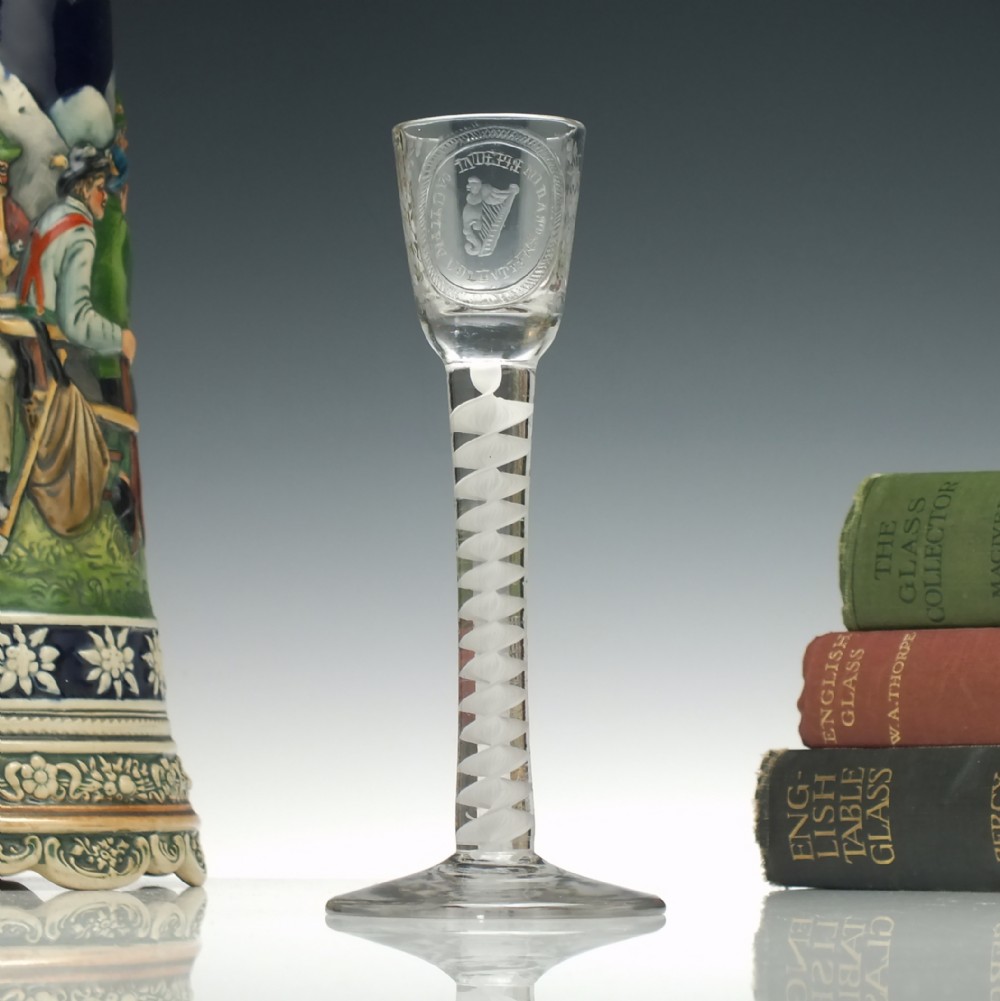
Rare 'Irish' Volunteer Opaque Twist Cordial Glass C1760
Sold by Exhibit Antiques
sold SA653159
Sorry, but this item has been sold.
Exhibit Antiques

Exhibit Antiques

Sellingantiques Verified Since Mar 2019
Browse dealers 145 items
  • About Us
    Specialists in 18th & 19th century antique glass
Id #SA653159
PDF SHARE
SAVE

Rare 'Irish' Volunteer Opaque Twist Cordial Glass C1760

18th century
Sold 18 September 2020 · Exhibit Antiques
This “Rare 'Irish' Volunteer Opaque Twist Cordial Glass C1760” found a buyer.

It was listed by Exhibit Antiques. Sold pieces stay on Sellingantiques as a record of what has passed through, and the next one is rarely far away.

Description

Date & Origin

Ireland, c1760. Period of George III.

Condition

Excellent, age-related wear as shown.

Dimensions

Height: 17cm Bowl diameter: 3.9cm Foot diameter: 7.1cm.

Weight

140 grams

Technical Description

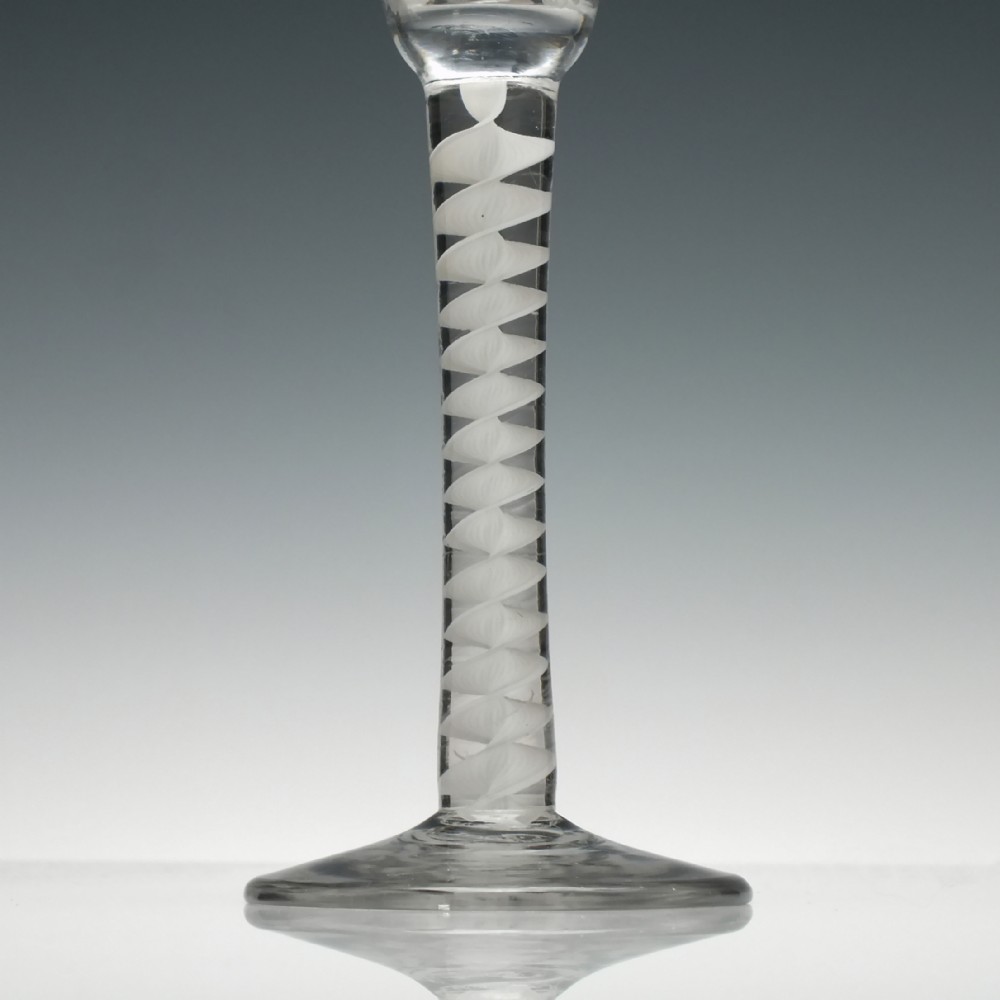
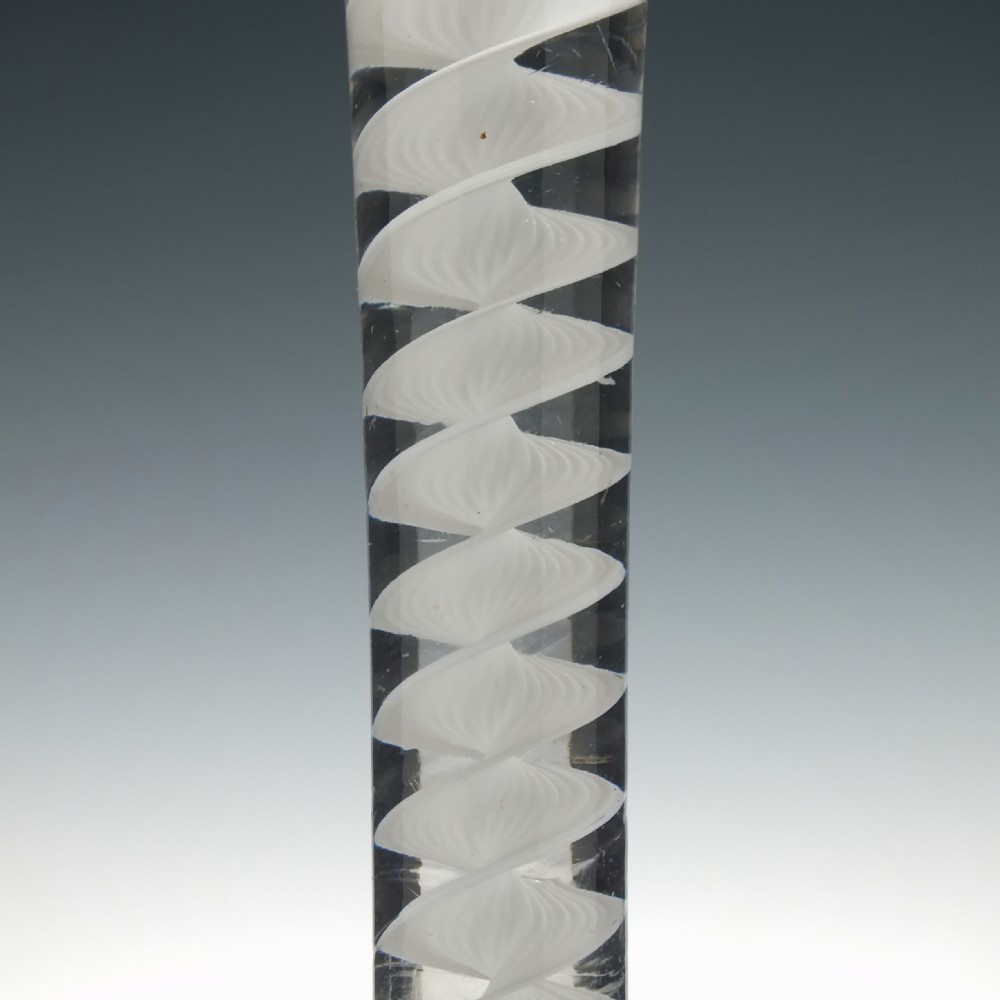
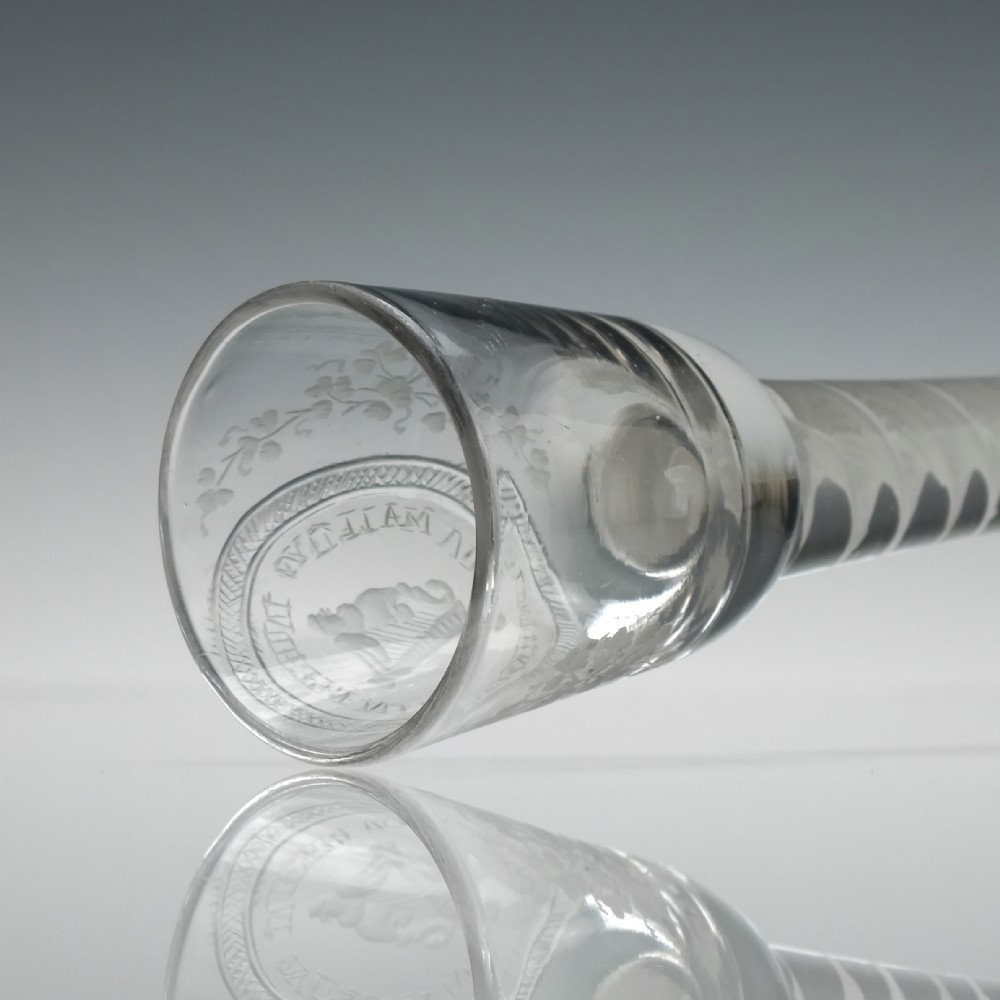
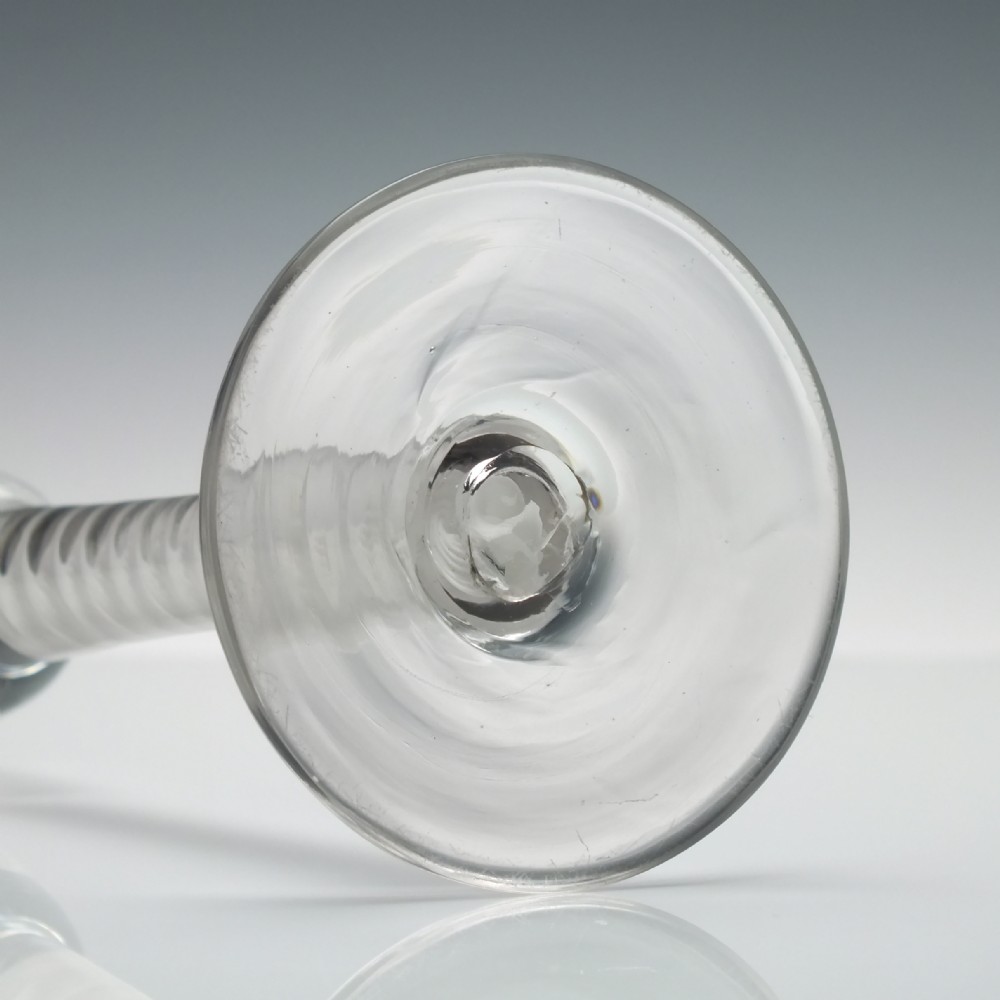
An opaque twist cordial glass with a small round funnel bowl with a solid section at the base. Sits on a thick single series opaque twist stem consisting of a multiply corkscrew. Conical foot with a snapped pontil.
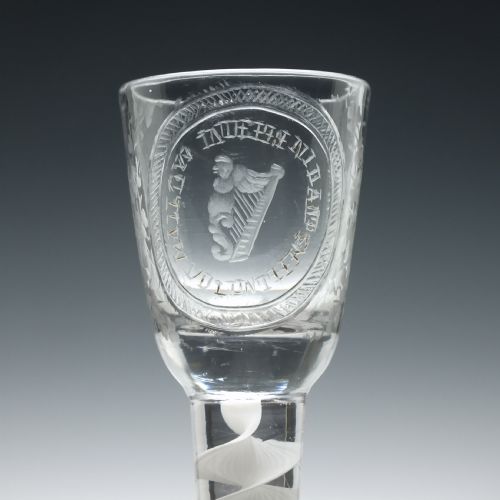
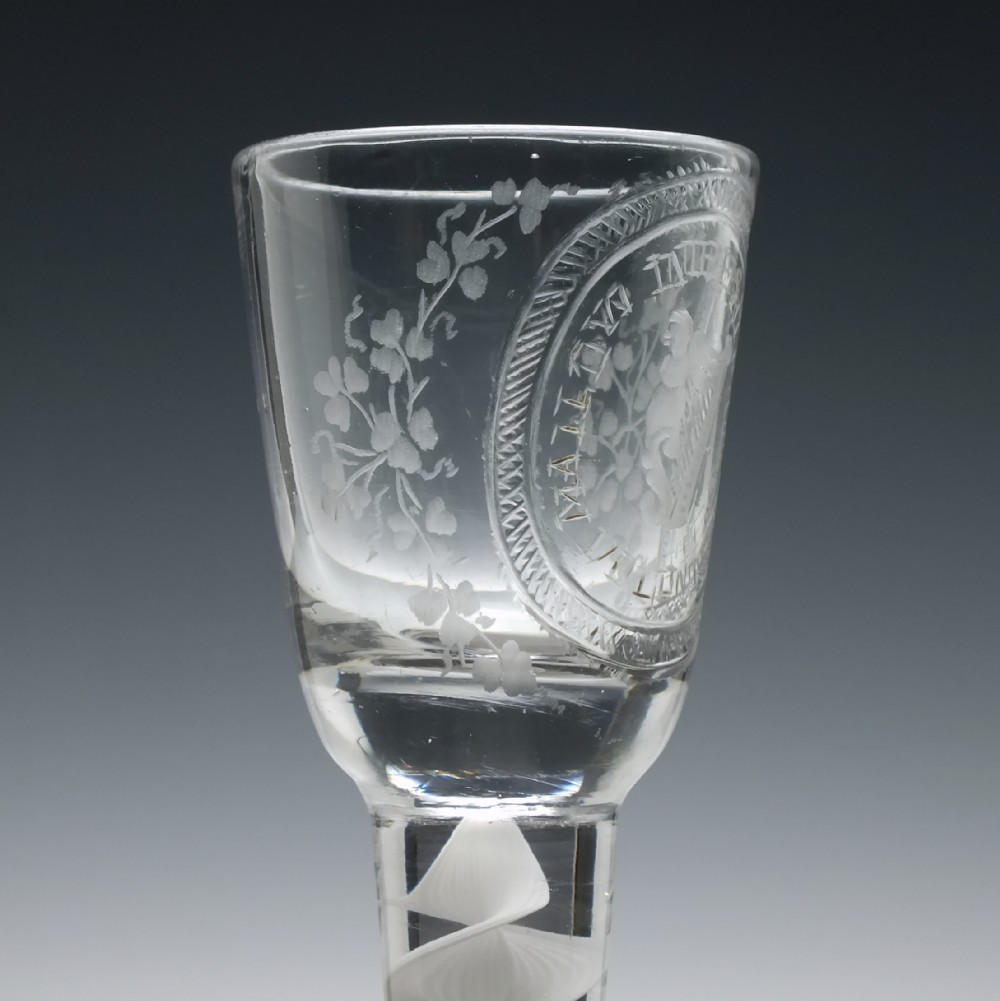
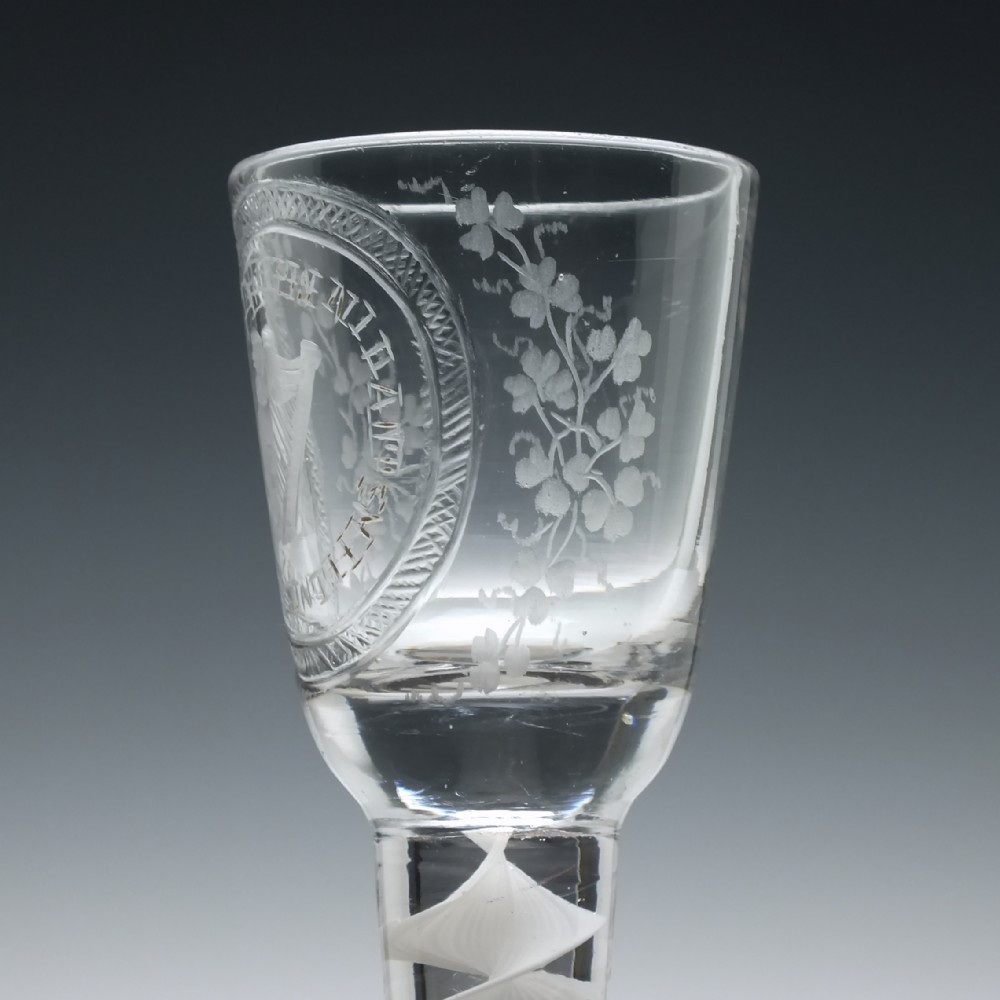
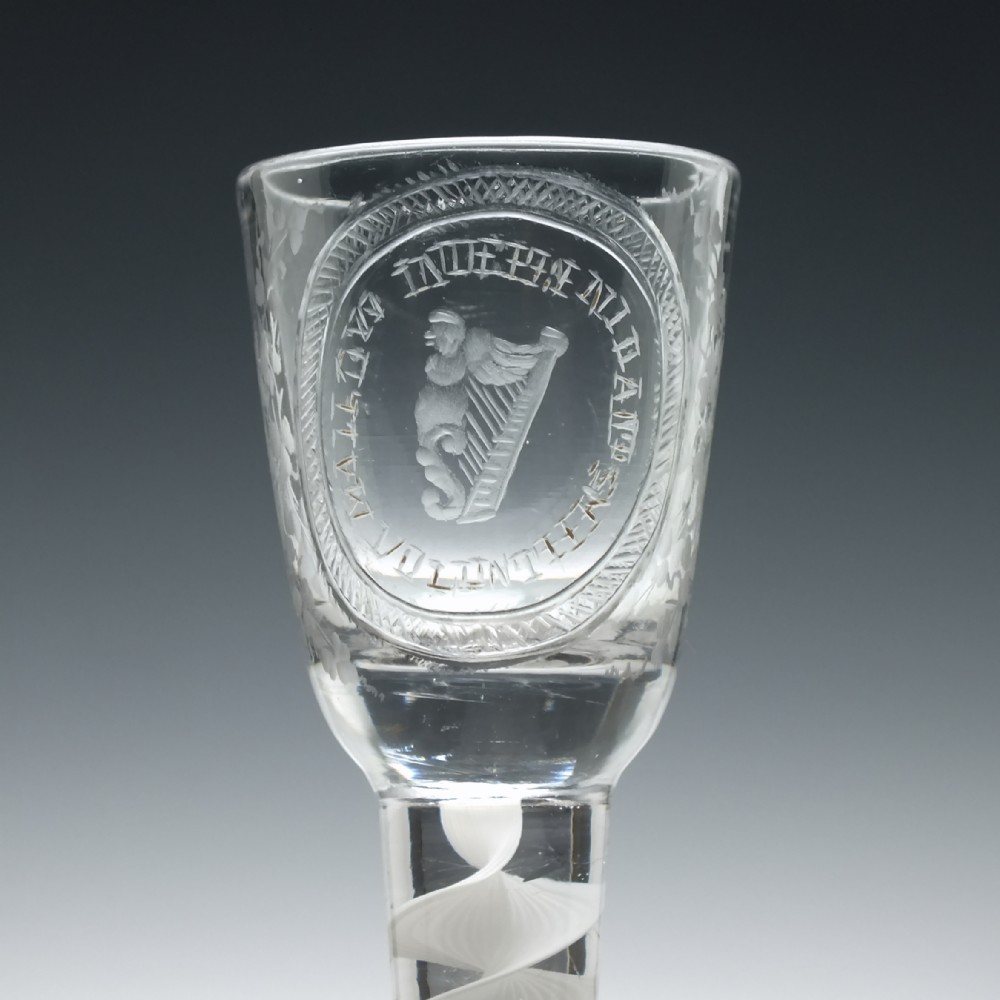
The bowl has been engraved with a flower rimed, blaze/diamond cut cartouche with a central harp and the words MALLOW INDEPENDENT VOLUNTEERS.

Points worth considering

18th century Volunteer glasses are rare things indeed and I can’t honestly say that in the past I've never had an example which I considered genuine, although I dare say they exist.
The Irish Volunteers were formed in 1778 and were local militias used to keep law and order and guard against invasion when the British soldiers were withdrawn from Ireland to fight in American Revolutionary war. The Mallow Independent Volunteers were formed around this time and there are a few online references covering the history and minutes of their meetings during this period.
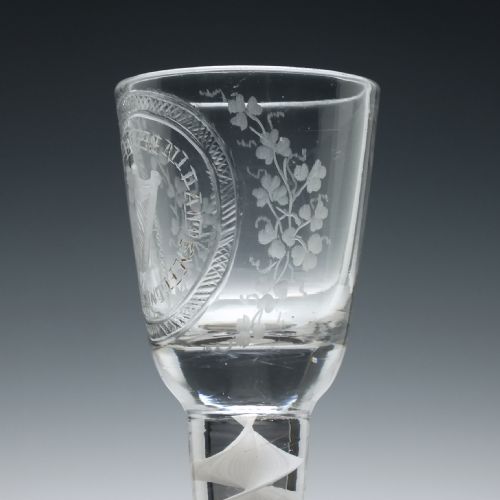
The glass itself is most certainly 18th century dating to c1760-65. The thickness of the stem would indicate that it belonged to the ‘Irish’ form having an approx. 50% thicker stem than there so-called English counterparts.
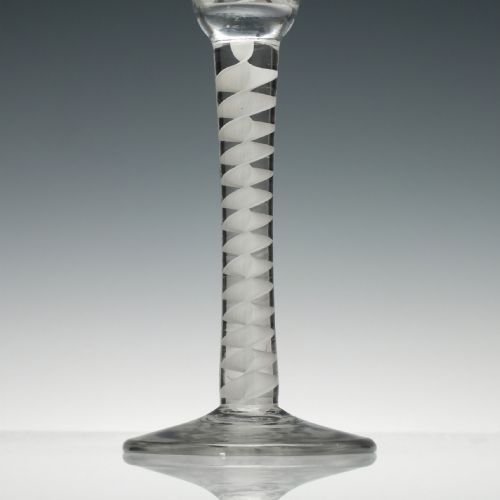
This then leads us to the engravings and the question of their date…period or later?

As many glass collectors know and a subject written about many times, the gentleman Franz Tieze (1842-1932) an active engraver in Dublin in the late 19th century, was almost certainly responsible for the vast majority of Volunteer engravings on both period and later reproduction glasses. We have had many examples of Tieze workmanship over the years and we have included a picture of his workmanship on a glass we sold recently. So the obvious question becomes…is the engraving by Franz Teize? In my opinion, most certainly not, for the simple reason that the engraving style is not good enough to be Tieze. Although certainly not the best, his workmanship and lettering was of a high standard and for many years his work got past some of the world’s top museum curators. So based on comparison the engraving is not Tieze.
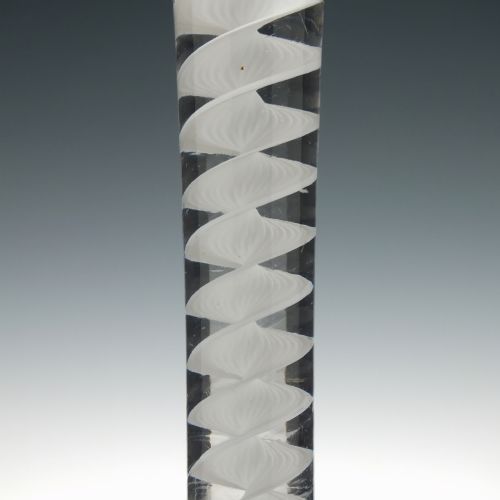
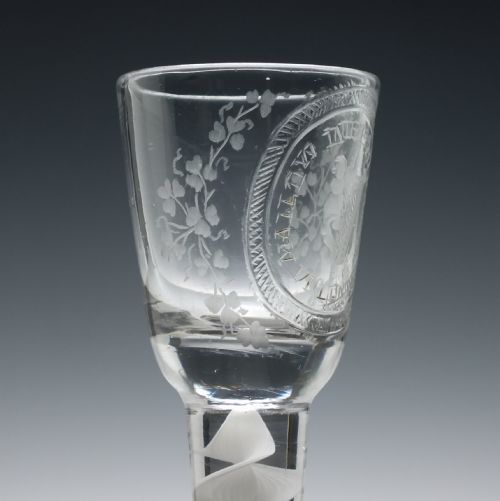
Are the engravings 18th century? A difficult question and perhaps not one with a definitive answer. The little leaves around the cartouche are quite delicate, as is the central harp. In comparison, the circular band of blaze/diamonds as well as the lettering is quite naïve initially leading one to suspect that perhaps two different engravers were involved. However, looking at the ‘strings’ on the harp and comparing to the blaze circular workmanship, it would seem, that they are by the same hand... The actual lettering itself is quite irregular as far as spacing and letter size accuracy is concerned as is some of the blaze work which runs outside the circle in small parts… which is unusual. Becoming proficient and passing an apprenticeship in glass engravings was a very long process and like any form of art, some were better than others.
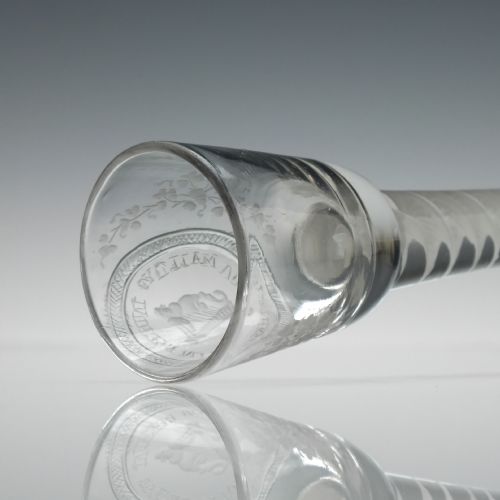
From my own perspective, I can see nothing in the engravings or their style that would say they were ‘significantly’ later than the glass…they are later…perhaps 1782…1790…1800…I’m afraid it’s impossible to say. Are they late 19th century…I see no reason why they would be. They were certainly not placed on the glass to deceive and if they were, I would expect to see ‘quality’ workmanship.

In conclusion and in our opinion, the engravings are probably period but slightly later than the date of glass manufacture…

Physical Dimensions
Height
17cm (6.69")
Width
3.9cm (1.54")
Depth
7.1cm (2.80")
Declaration

Exhibit Antiques has dated this piece to the 18th Century.

Reference Numbers
Sellingantiques Reference
SA653159
Dealers Internal Reference
2019090402
Description
Date & Origin

Ireland, c1760. Period of George III.

Condition

Excellent, age-related wear as shown.

Dimensions

Height: 17cm Bowl diameter: 3.9cm Foot diameter: 7.1cm.

Weight

140 grams

Technical Description

An opaque twist cordial glass with a small round funnel bowl with a solid section at the base. Sits on a thick single series opaque twist stem consisting of a multiply corkscrew. Conical foot with a snapped pontil.

“
The bowl has been engraved with a flower rimed, blaze/diamond cut cartouche with a central harp and the words MALLOW INDEPENDENT VOLUNTEERS.
Exhibit Antiques
fig 1. Rare 'Irish' Volunteer Opaque Twist Cordial Glass c1760
fig 1. Rare 'Irish' Volunteer Opaque Twist Cordial Glass C1760

Points worth considering

18th century Volunteer glasses are rare things indeed and I can’t honestly say that in the past I've never had an example which I considered genuine, although I dare say they exist.

fig 2. Rare 'Irish' Volunteer Opaque Twist Cordial Glass c1760
fig 2. Rare 'Irish' Volunteer Opaque Twist Cordial Glass C1760

The Irish Volunteers were formed in 1778 and were local militias used to keep law and order and guard against invasion when the British soldiers were withdrawn from Ireland to fight in American Revolutionary war. The Mallow Independent Volunteers were formed around this time and there are a few online references covering the history and minutes of their meetings during this period.

fig 3. Rare 'Irish' Volunteer Opaque Twist Cordial Glass c1760
fig 3. Rare 'Irish' Volunteer Opaque Twist Cordial Glass C1760

The glass itself is most certainly 18th century dating to c1760-65. The thickness of the stem would indicate that it belonged to the ‘Irish’ form having an approx. 50% thicker stem than there so-called English counterparts.

fig 4. Rare 'Irish' Volunteer Opaque Twist Cordial Glass c1760
fig 4. Rare 'Irish' Volunteer Opaque Twist Cordial Glass C1760

This then leads us to the engravings and the question of their date…period or later?

As many glass collectors know and a subject written about many times, the gentleman Franz Tieze (1842-1932) an active engraver in Dublin in the late 19th century, was almost certainly responsible for the vast majority of Volunteer engravings on both period and later reproduction glasses. We have had many examples of Tieze workmanship over the years and we have included a picture of his workmanship on a glass we sold recently. So the obvious question becomes…is the engraving by Franz Teize? In my opinion, most certainly not, for the simple reason that the engraving style is not good enough to be Tieze. Although certainly not the best, his workmanship and lettering was of a high standard and for many years his work got past some of the world’s top museum curators. So based on comparison the engraving is not Tieze.

fig 5. Rare 'Irish' Volunteer Opaque Twist Cordial Glass c1760
fig 5. Rare 'Irish' Volunteer Opaque Twist Cordial Glass C1760

Are the engravings 18th century? A difficult question and perhaps not one with a definitive answer. The little leaves around the cartouche are quite delicate, as is the central harp. In comparison, the circular band of blaze/diamonds as well as the lettering is quite naïve initially leading one to suspect that perhaps two different engravers were involved. However, looking at the ‘strings’ on the harp and comparing to the blaze circular workmanship, it would seem, that they are by the same hand... The actual lettering itself is quite irregular as far as spacing and letter size accuracy is concerned as is some of the blaze work which runs outside the circle in small parts… which is unusual. Becoming proficient and passing an apprenticeship in glass engravings was a very long process and like any form of art, some were better than others.

fig 6. Rare 'Irish' Volunteer Opaque Twist Cordial Glass c1760
fig 6. Rare 'Irish' Volunteer Opaque Twist Cordial Glass C1760

From my own perspective, I can see nothing in the engravings or their style that would say they were ‘significantly’ later than the glass…they are later…perhaps 1782…1790…1800…I’m afraid it’s impossible to say. Are they late 19th century…I see no reason why they would be. They were certainly not placed on the glass to deceive and if they were, I would expect to see ‘quality’ workmanship.

In conclusion and in our opinion, the engravings are probably period but slightly later than the date of glass manufacture…

Height
17cm (6.69")
Width
3.9cm (1.54")
Depth
7.1cm (2.80")
Date of Manufacture

Exhibit Antiques has dated this piece to the 18th Century.

Reference Numbers
Sellingantiques Ref
SA653159
Dealers Internal Ref
2019090402
Exhibit Antiques
Exhibit Antiques
Sellingantiques verified Since Mar 2019

Specialists in 18th & 19th century antique glass

Dealer Profile

You can view the stock and full dealer information on the Exhibit Antiques Profile Page
PDF SHARE
SAVE
Rare 'Irish' Volunteer Opaque Twist Cordial Glass c1760 SOLD6+ MONTHS AGO
1 / 8
Archive I Rare 'Irish' Volunteer Opaque Twist Cordial Glass c1760 SOLD6+ MONTHS AGO

Rare 'Irish' Volunteer Opaque Twist Cordial Glass C1760
Archive II Rare 'Irish' Volunteer Opaque Twist Cordial Glass c1760 View II
Archive III Rare 'Irish' Volunteer Opaque Twist Cordial Glass c1760 View III
Archive IV Rare 'Irish' Volunteer Opaque Twist Cordial Glass c1760 View IV
Archive V Rare 'Irish' Volunteer Opaque Twist Cordial Glass c1760 View V
Archive VI Rare 'Irish' Volunteer Opaque Twist Cordial Glass c1760 View VI
Archive VII Rare 'Irish' Volunteer Opaque Twist Cordial Glass c1760 View VII
Archive VIII Rare 'Irish' Volunteer Opaque Twist Cordial Glass c1760 View VIII
Enlarged Archival View
Telephone 01501 228 282
Location
Glasgow
Scotland
United Kingdom
Verified Since Mar 2019
Items For Sale 145
Items Sold 2,193
Exhibit Antiques
Exhibit Antiques
Verified Since Mar 2019
View Dealer Info
Location: Glasgow, Scotland, United Kingdom
Verified
Mar 2019
For Sale
145
Sold
2,193
Rare 'Irish' Volunteer Opaque Twist Cordial Glass c1760
Ref: SA653159
Rare 'Irish' Volunteer Opaque Twist Cordial Glass c1760
Detail View 1
Detail View 2
Detail View 3
Detail View 4
Detail View 5
Detail View 6
Detail View 7
Archival Detail
Every single antique dealer on our platform is individually approved by our internal team. We verify their professional trade history, ethical standards, and photographic quality to ensure a secure, high-standard buying environment. Upon joining, every dealer agrees to a strict 9-point code of conduct. While issues can occasionally arise, our dealers typically resolve them swiftly and directly with the buyer. In fact, since our founding in 2002, Sellingantiques has only had to step in to help resolve an issue on roughly five occasions—a true testament to the quality of our dealers and their dedication to your happiness.
Our dealers are highly experienced in packing and shipping fragile, high-value antiques. Because you are in direct contact with the dealer, you will be able to easily go through all available shipping and insurance options together to ensure your item arrives safely.
Antiques are the ultimate green purchase. By choosing historical pieces over newly manufactured goods, you completely eliminate the carbon footprint of modern mass production while preserving exceptional, timeless craftsmanship.
Written by Sellingantiques from the dealer’s photographs and listing
  • Period18th century
  • SizeH 17 cm (7 in) x W 3.9 cm (2 in) x D 7.1 cm (3 in)
items
Add keywords to the filter
Price
£100
£250000
Era
Period
Style
Material
Origin
Stock Location
Recently Added
Online Payments
Categories