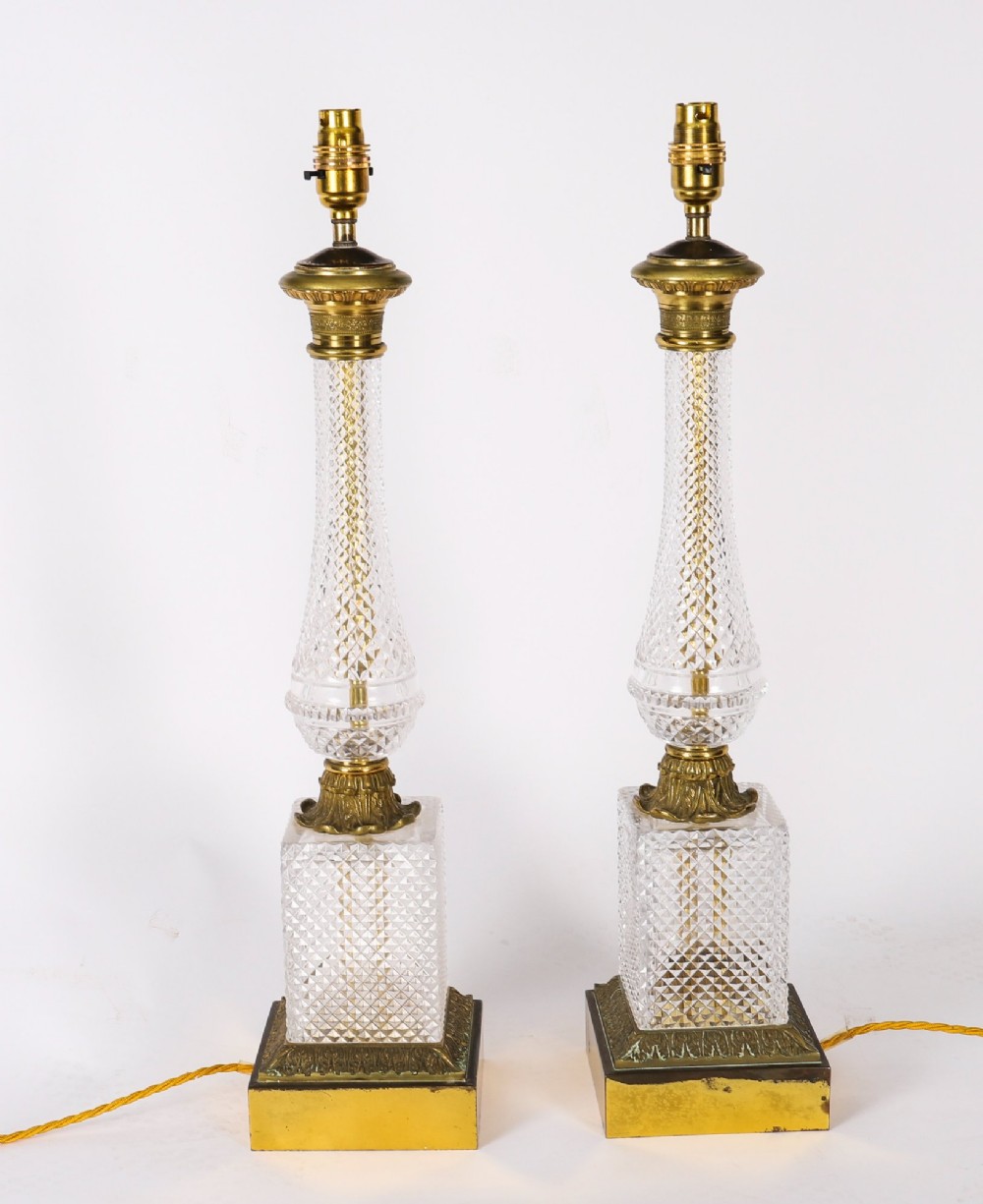
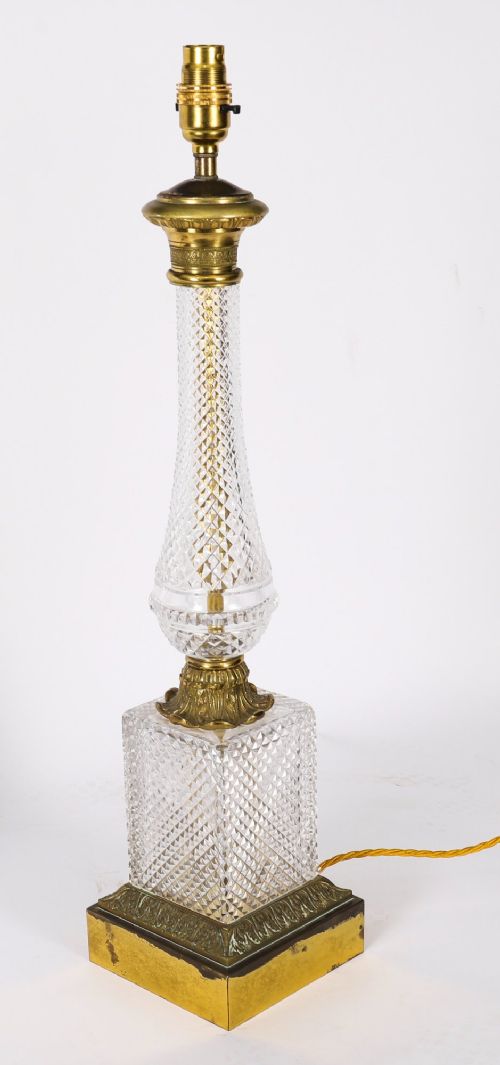
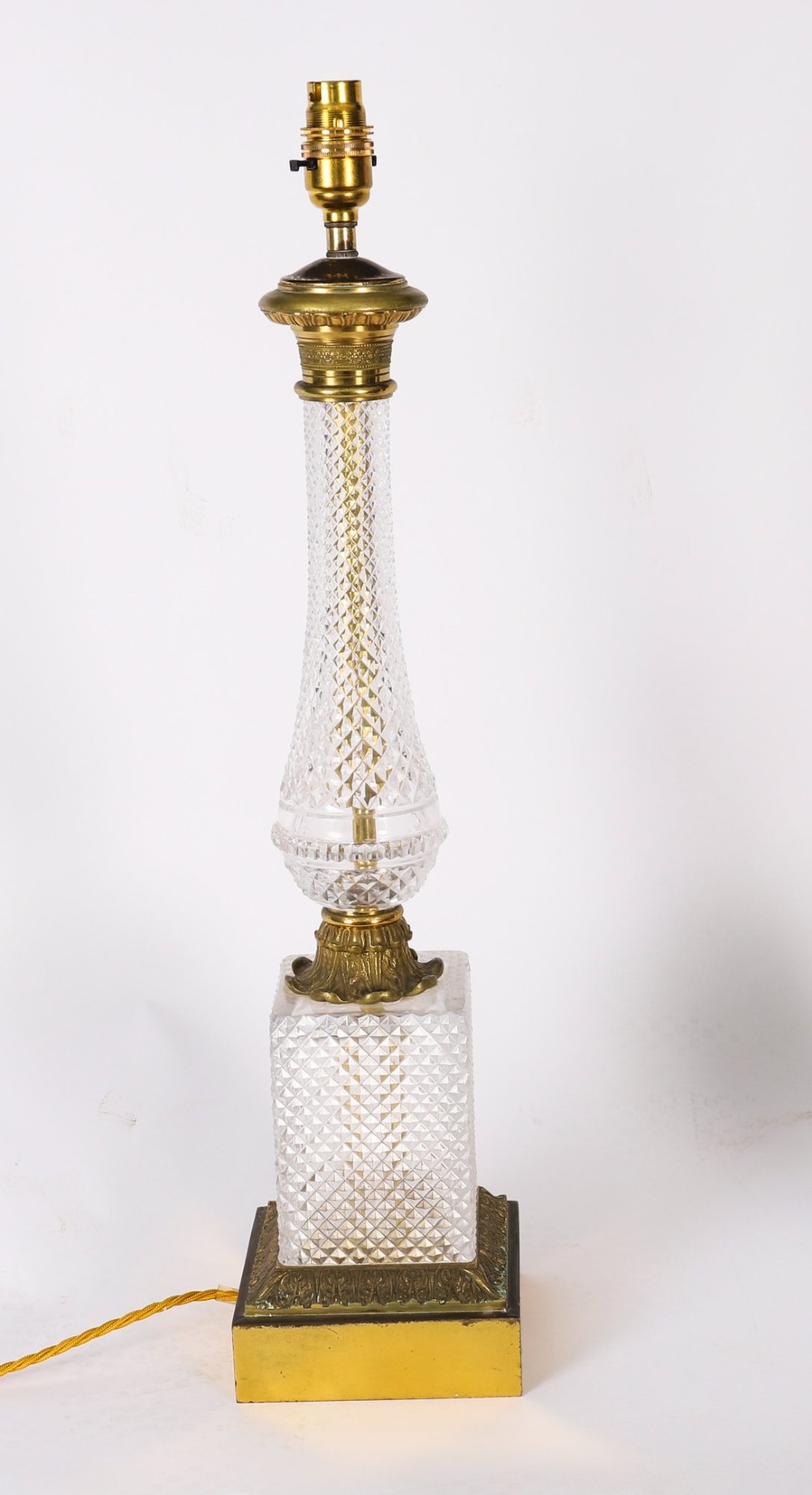
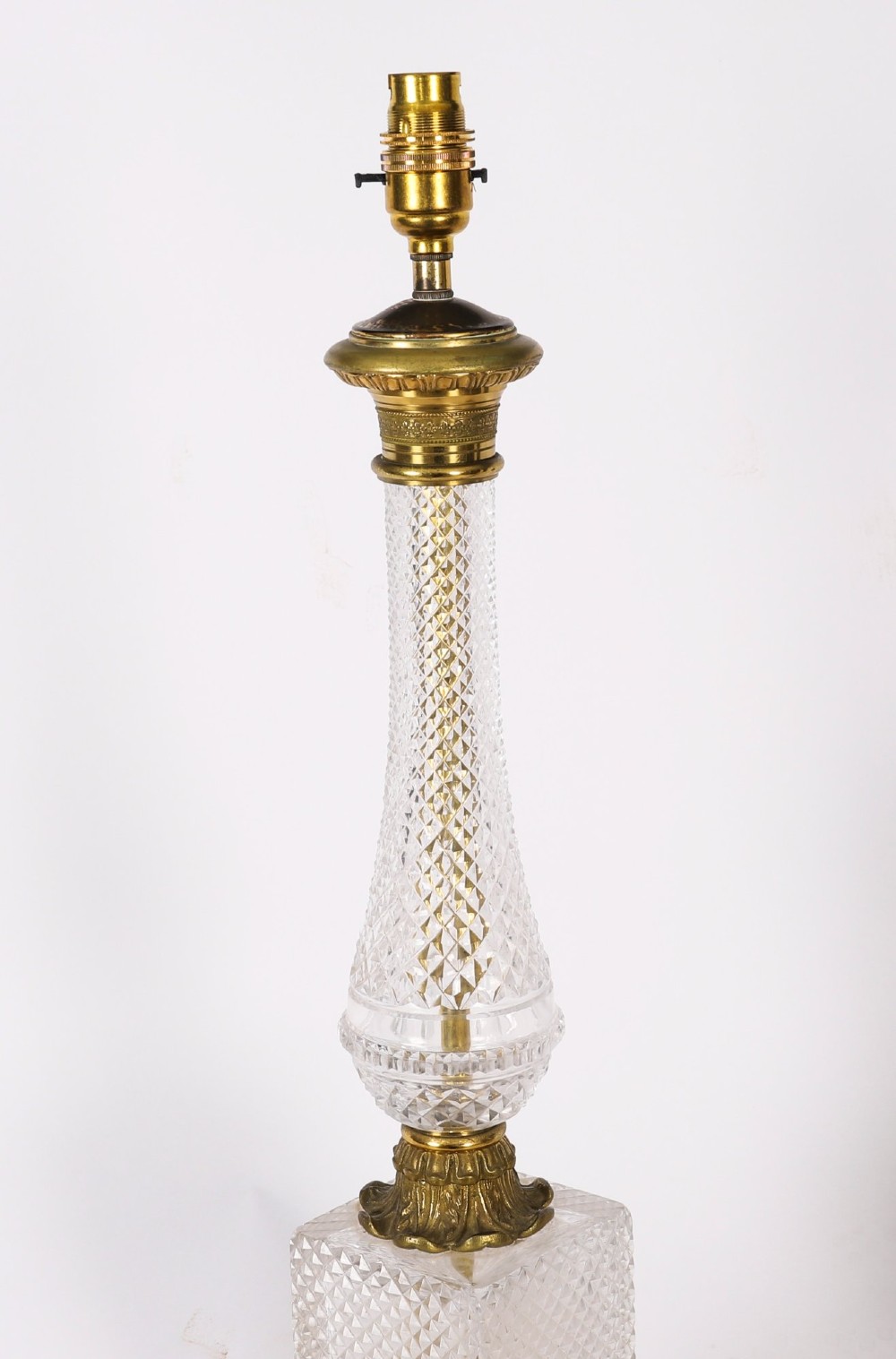
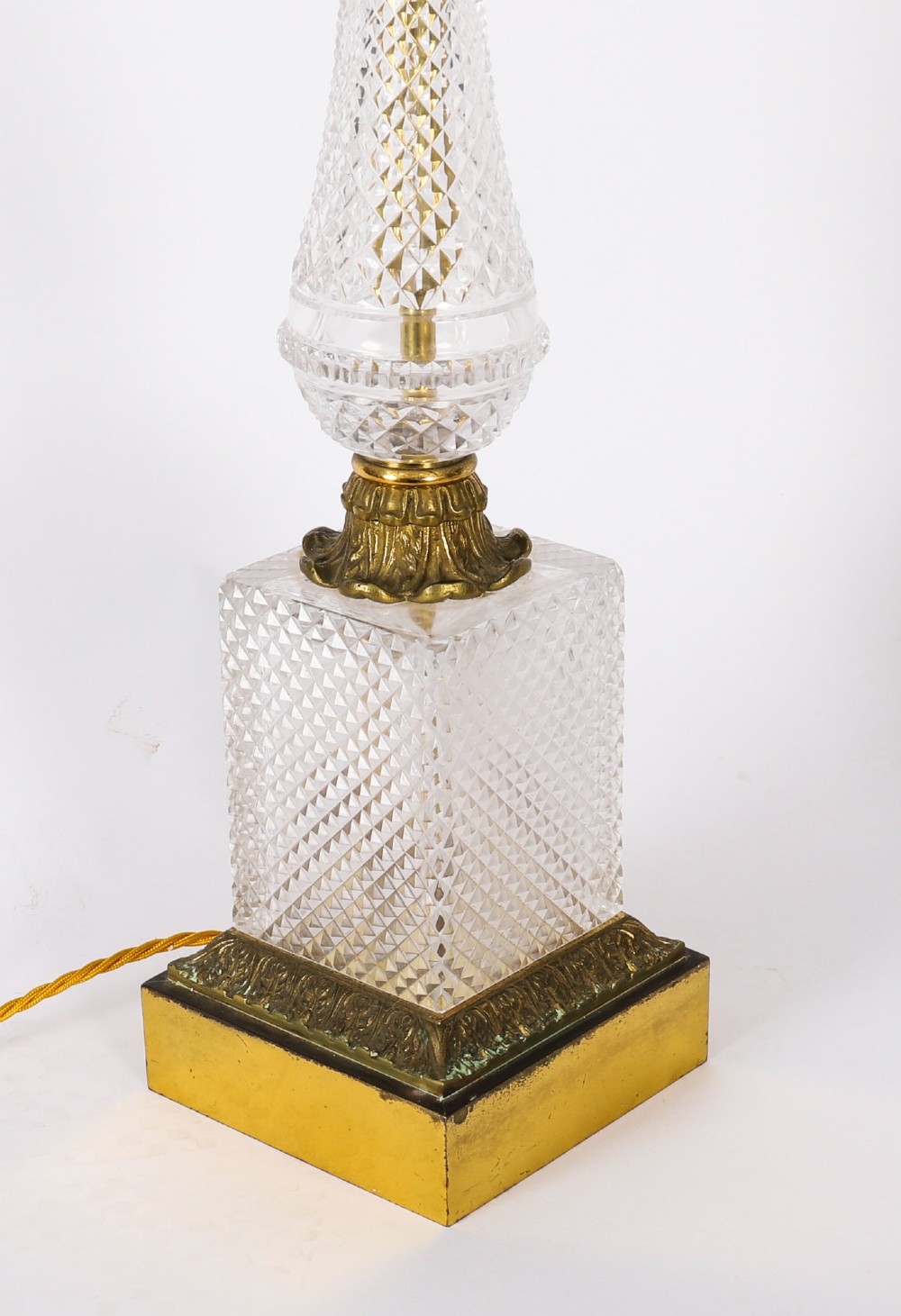
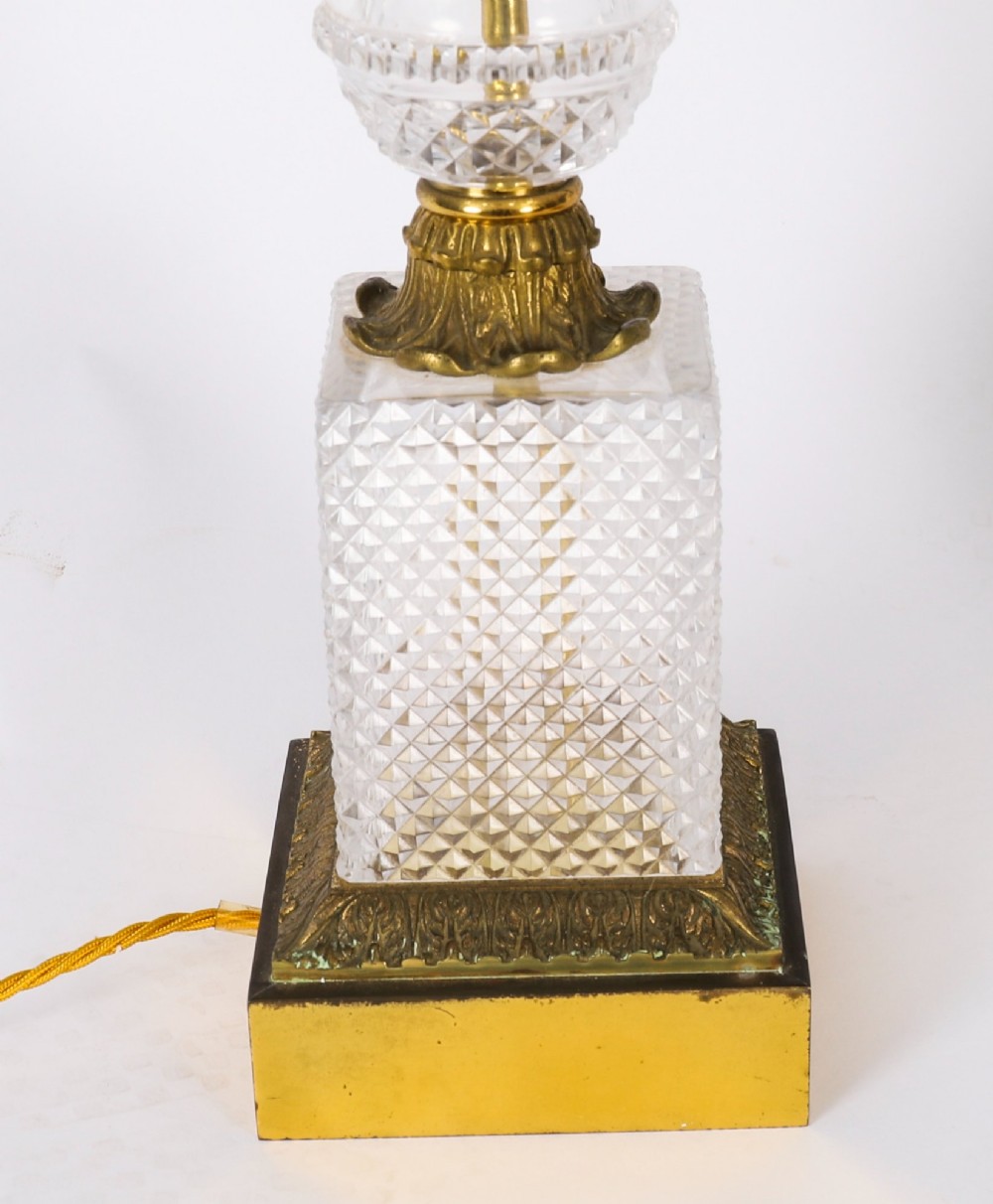
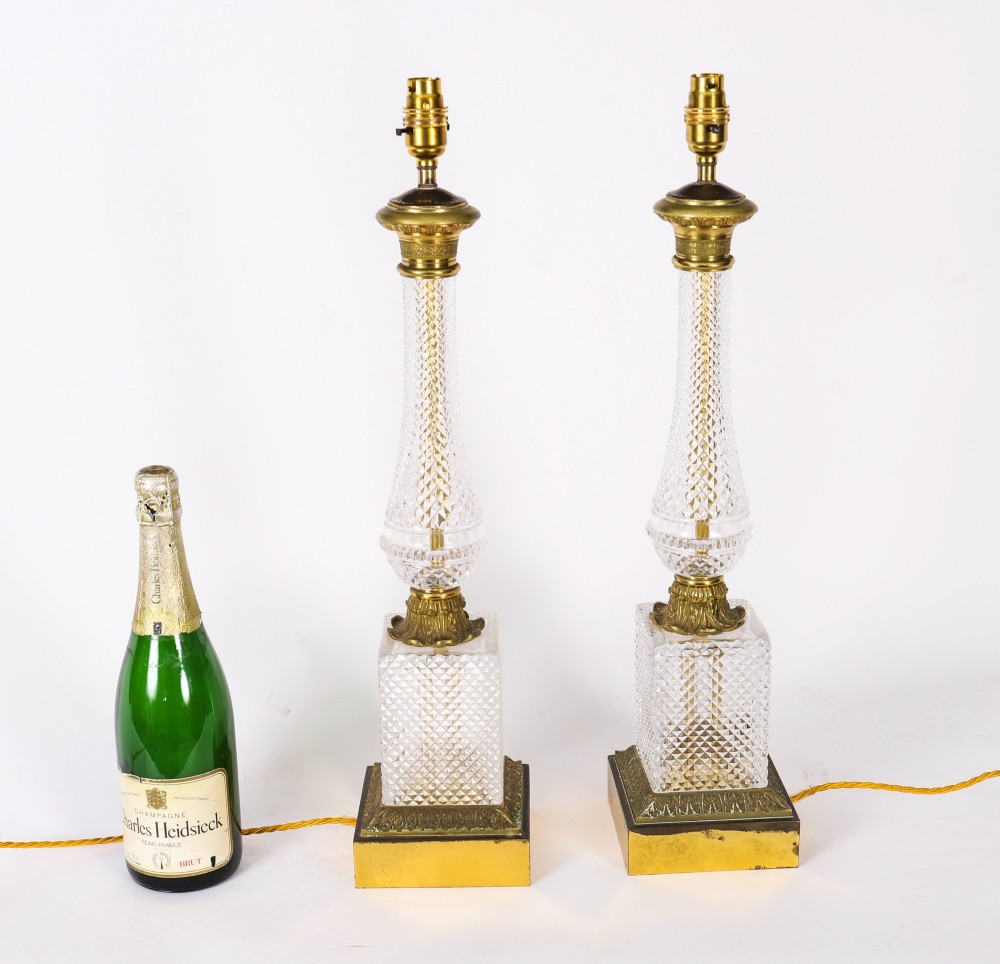
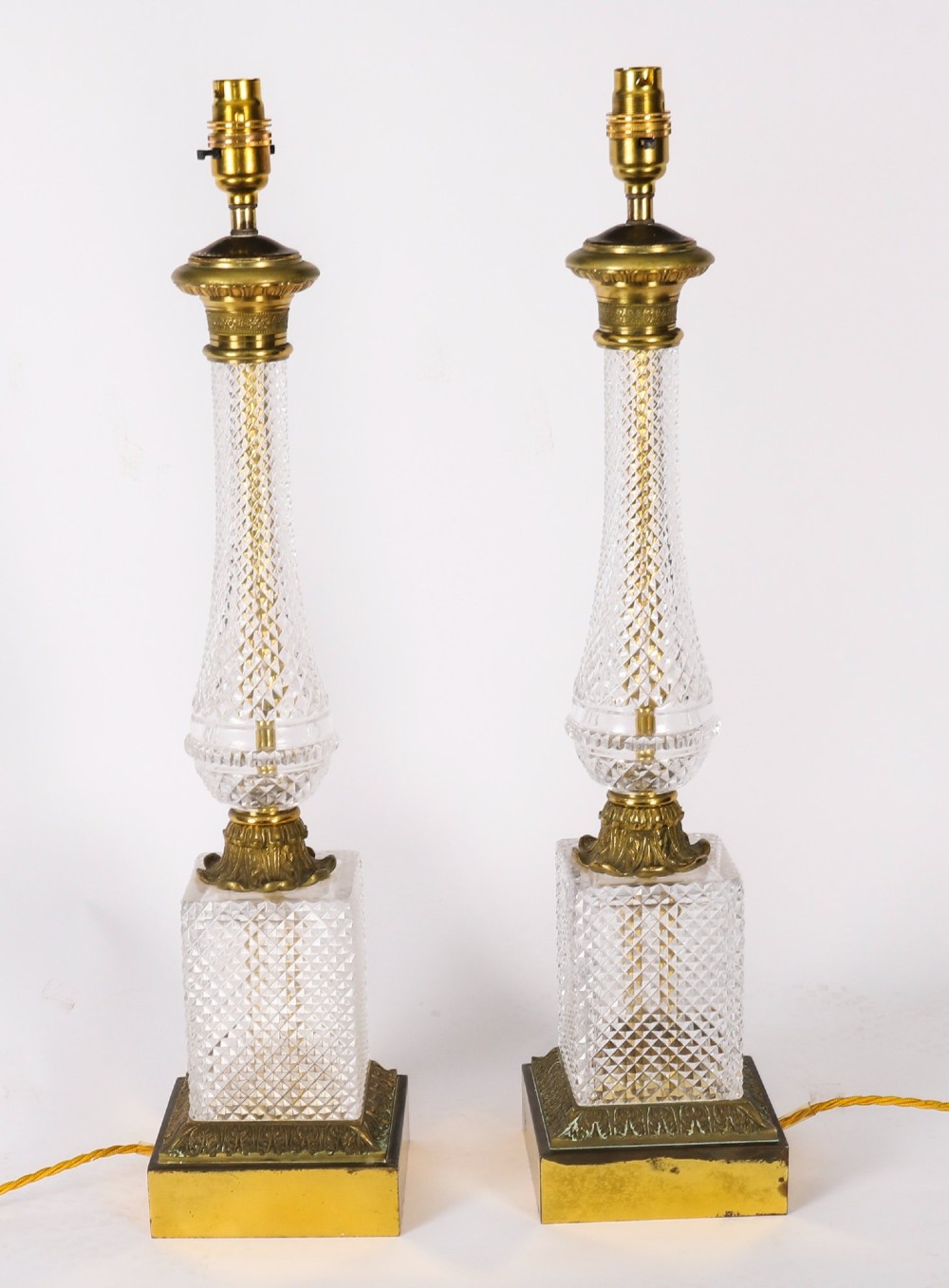
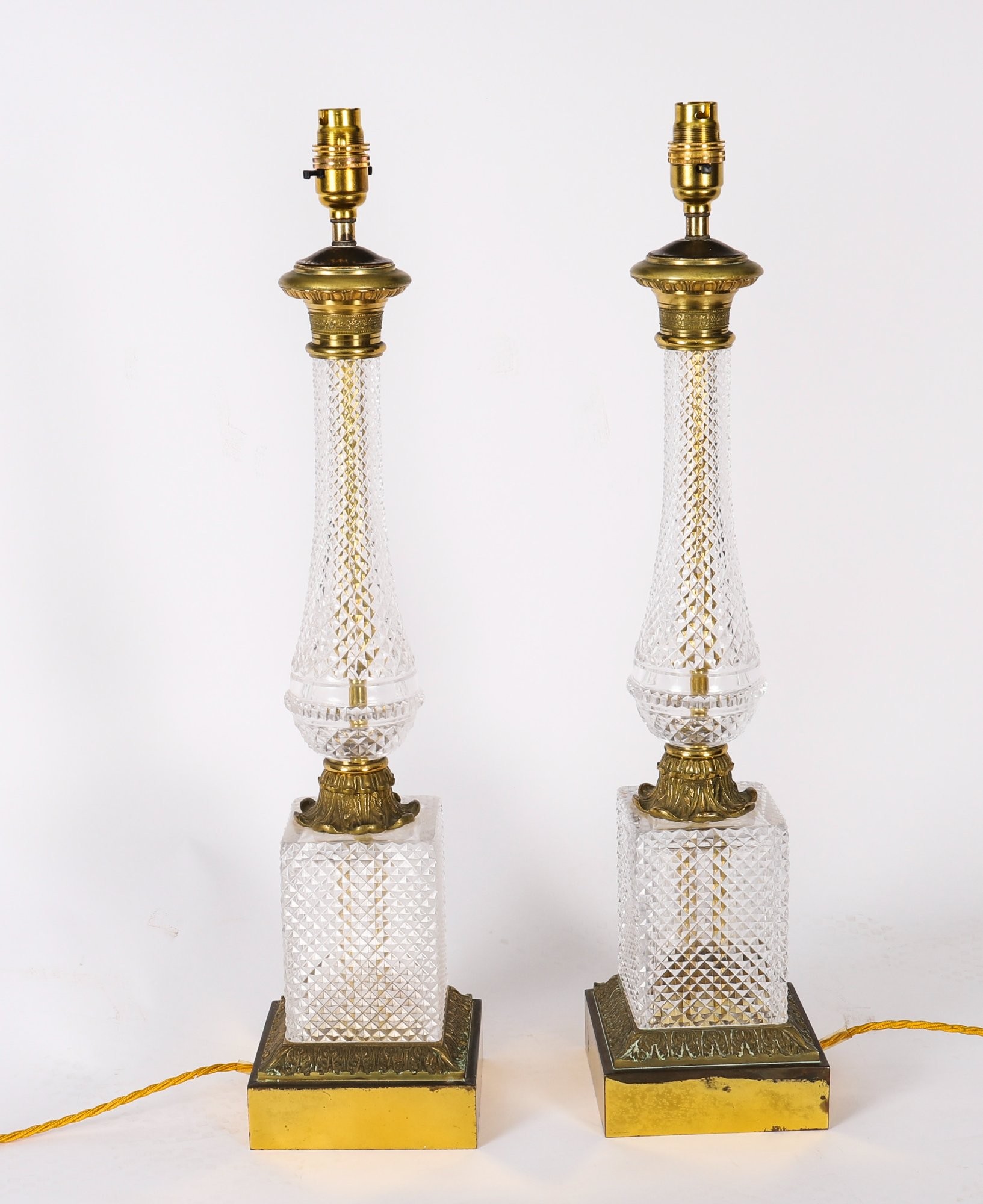
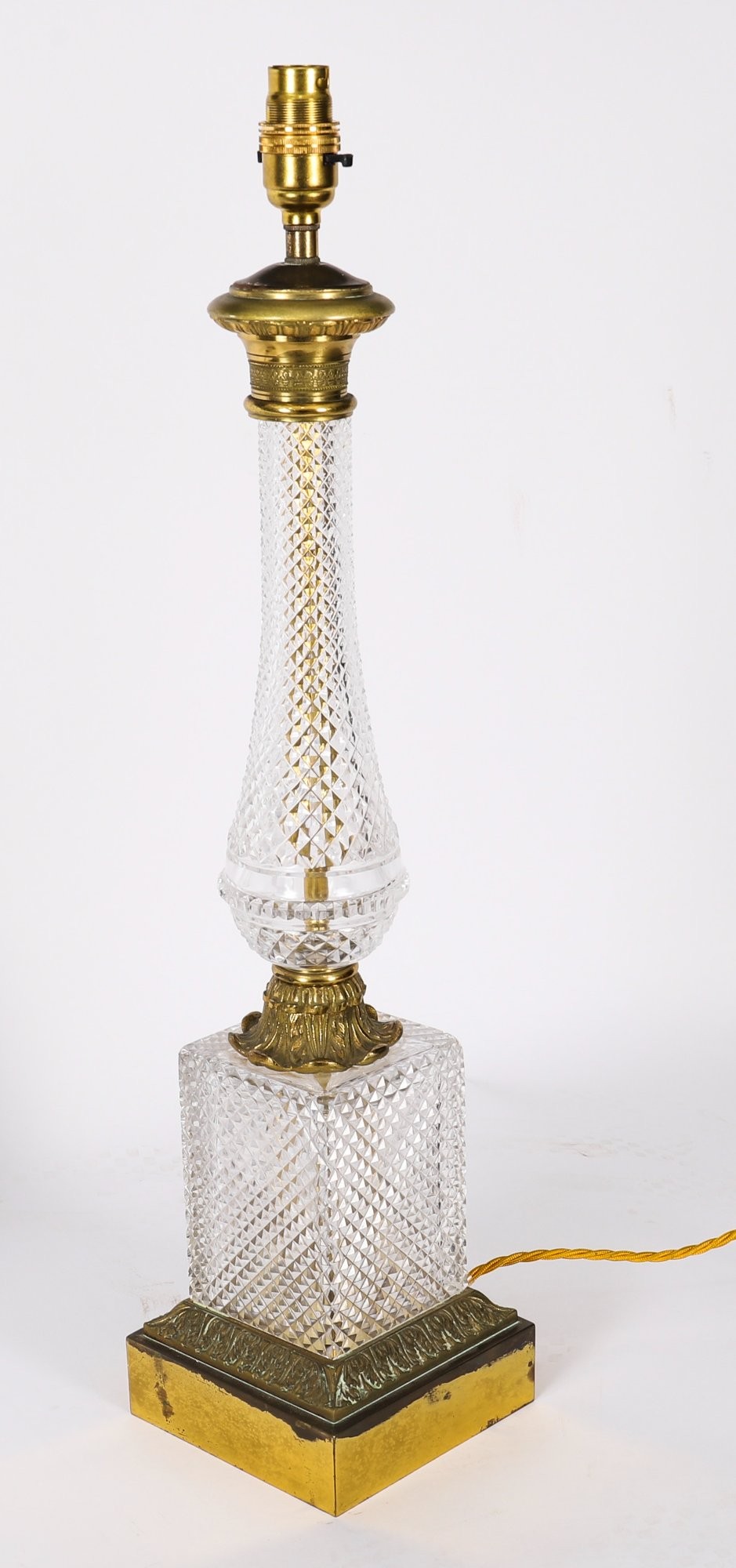
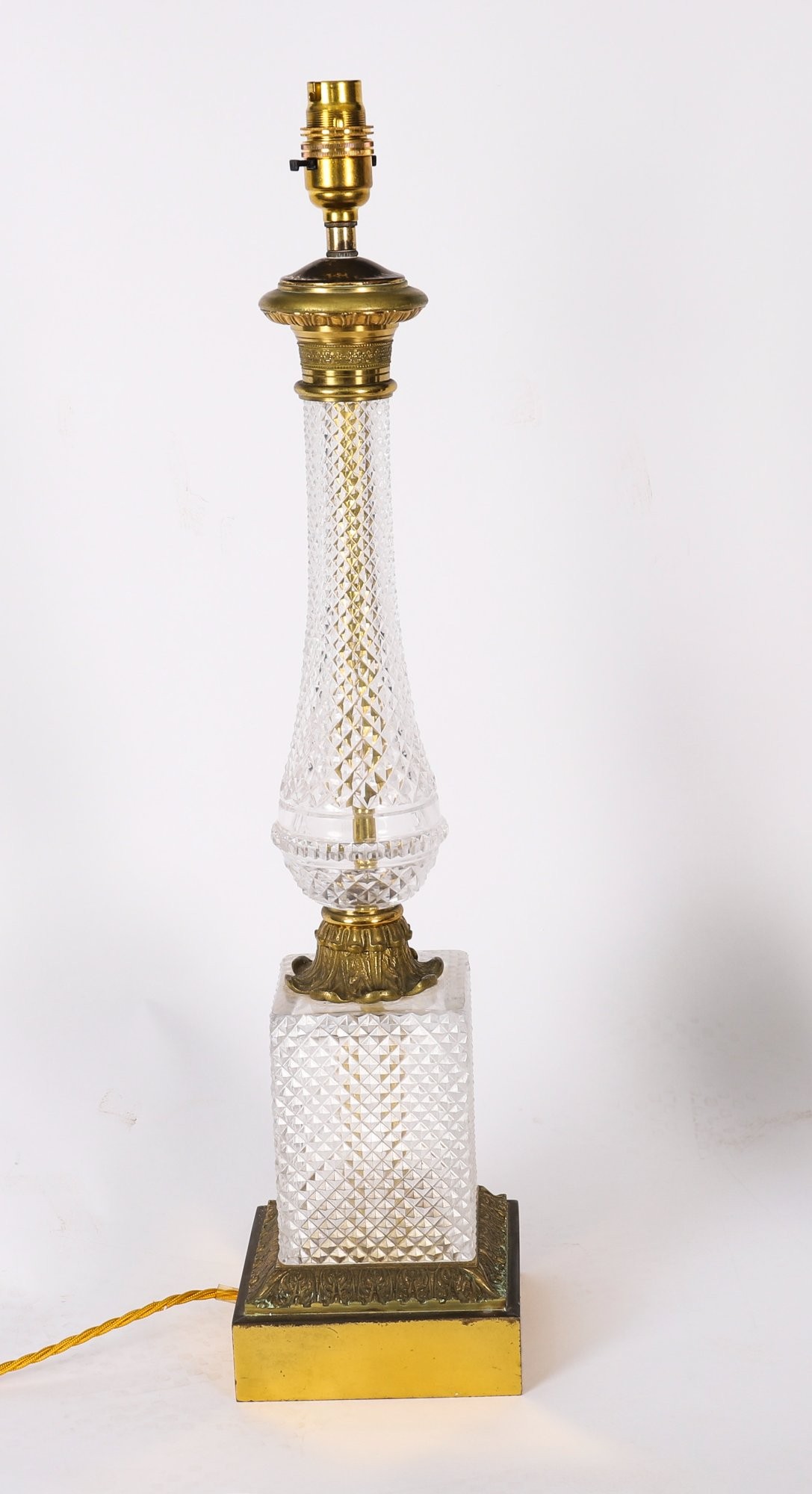
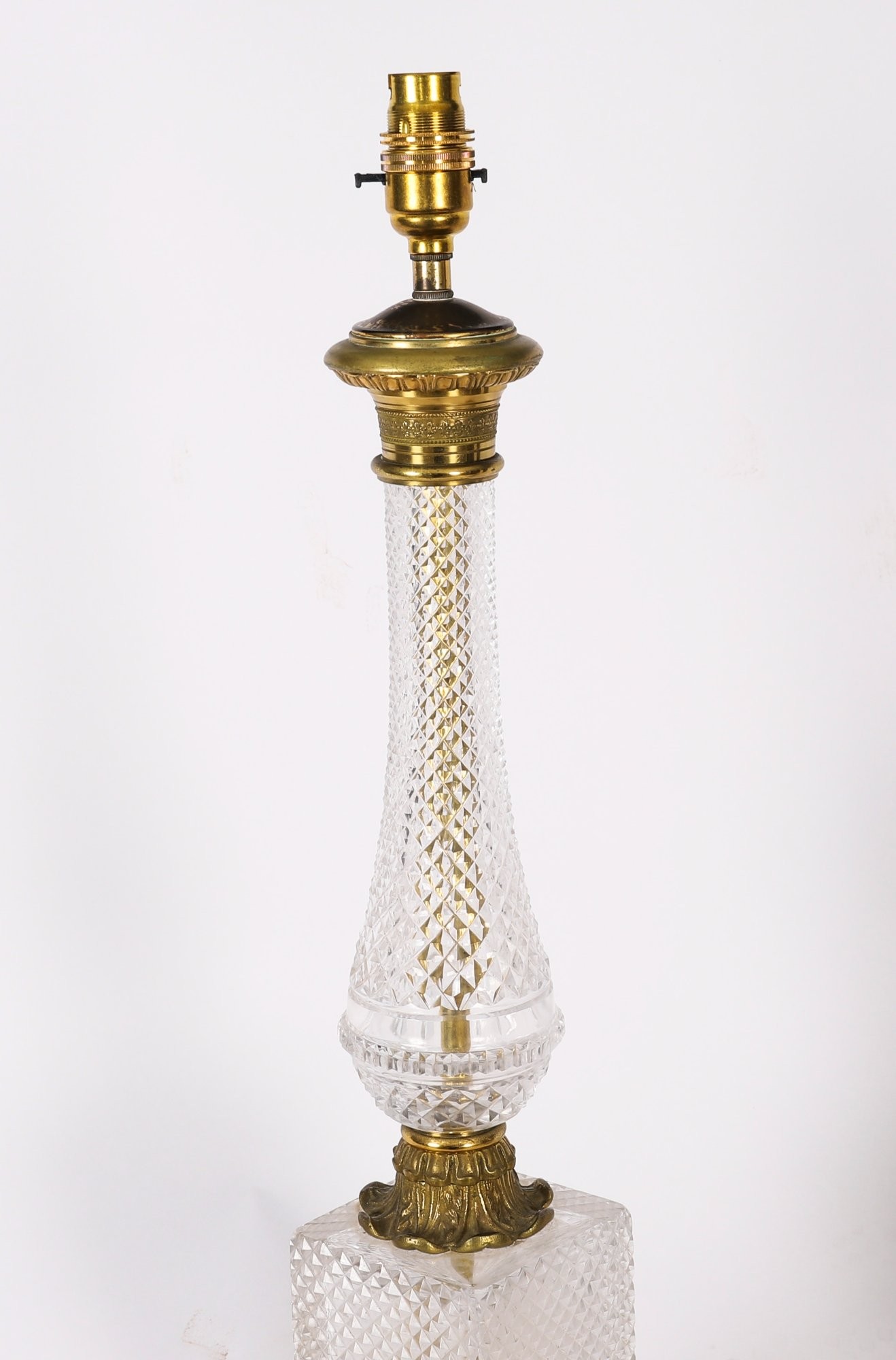
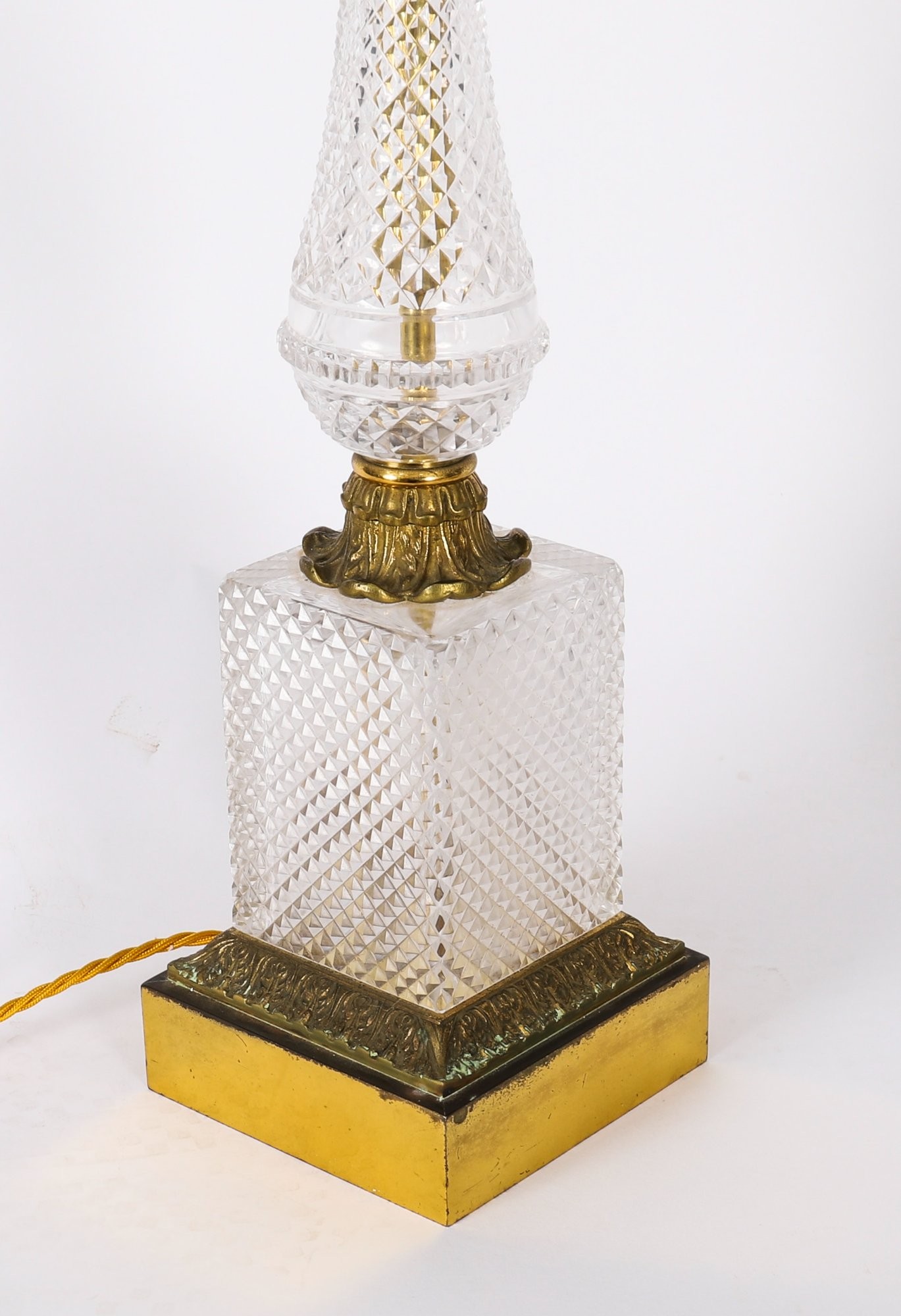
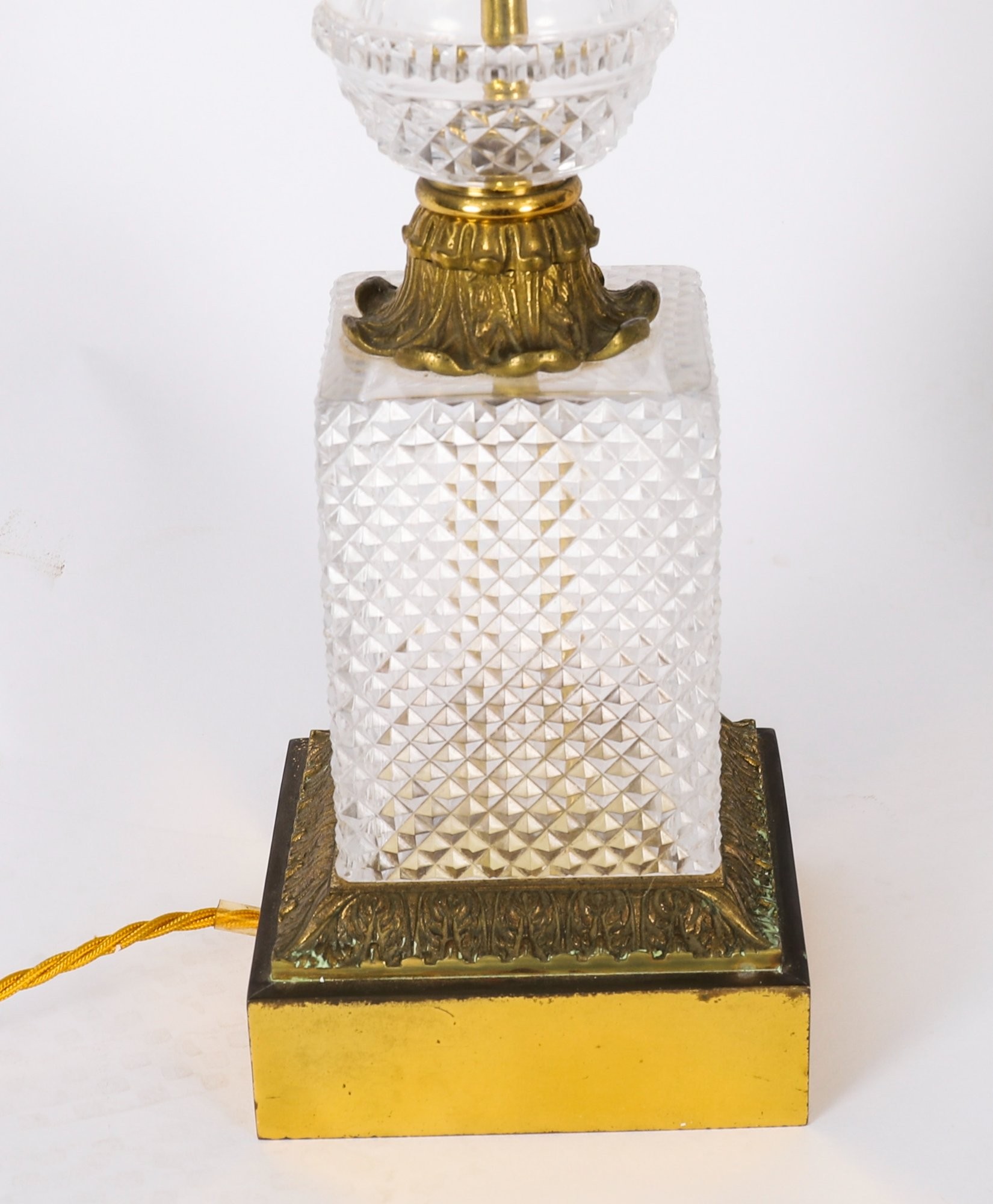
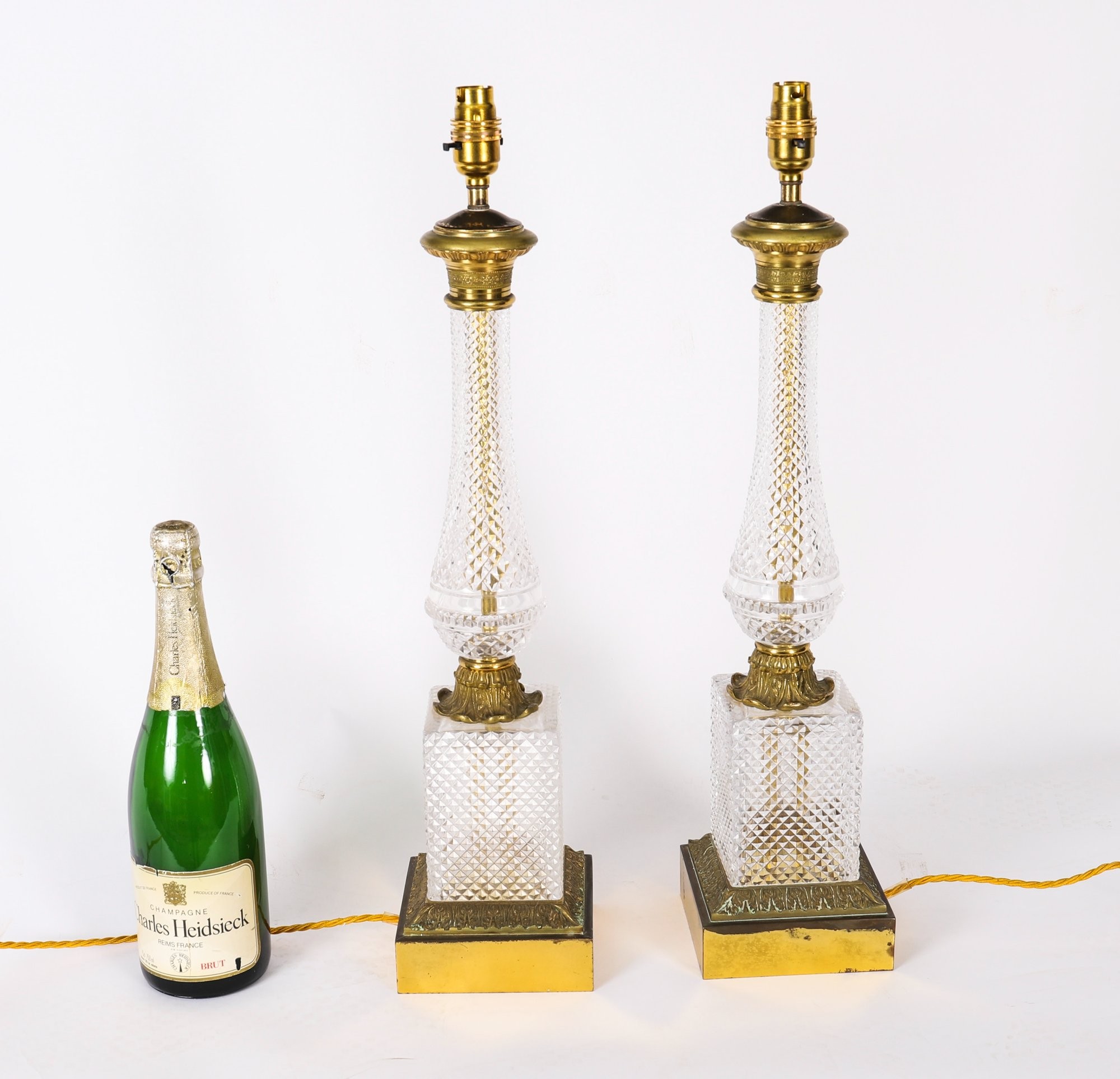
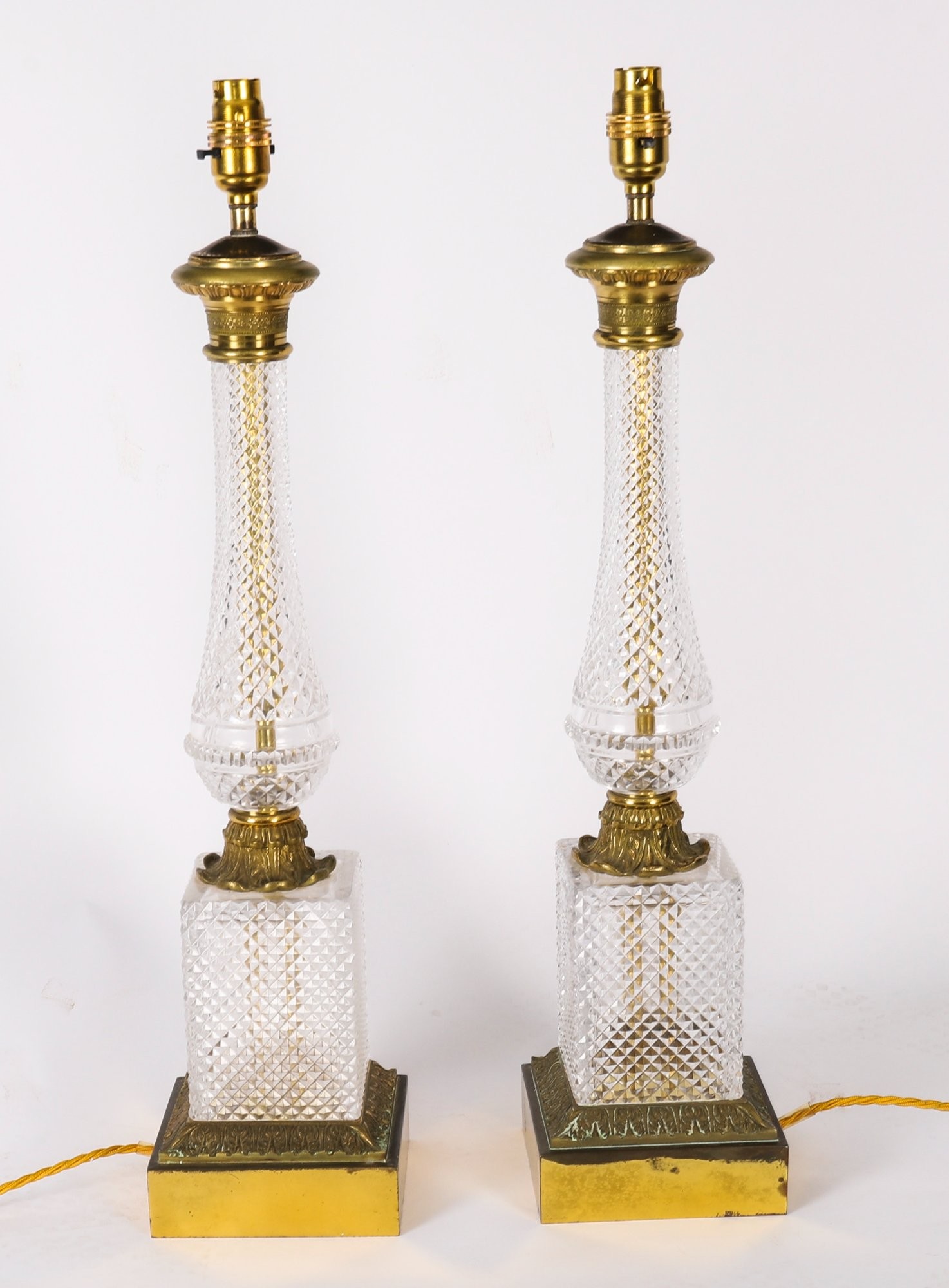
This is an elegant pair of vintage French ormolu and cut crystal table lamps by Baccarat, late 19th century in date.
Each lamp features a capital cast and engraved with egg-and-dart and fleur-de-lis bands, over a diamond-cut baluster column raised on a foliate cast foot, and a diamond-cut square section to block base. The lamps were later wired for electricity.
The unique quality and design of these table lights will instantly enhance the style of one special room in your home.
Condition:
In excellent condition, having been beautifully cleaned and rewired in our workshops; please see photos for confirmation.
Dimensions in cm:
Height 60 cm x Width 13 cm x Depth 13 cm
Dimensions in inches:
Height 24 inches x Width 5 inches x Depth 5 inches
Baccarat
In 1764, King Louis XV of France permitted the founding of a glassworks in the town of Baccarat in the Lorraine region in eastern France to Prince-Bishop Cardinal Louis-Joseph de Laval-Montmorency (1710-1802). Production consisted of window panes, mirrors, and stemware until 1816, when the first crystal oven went into operation. By that time, over 3000 workers were employed at the site.
Baccarat received its first royal commission in 1823. This began a lengthy line of commissions for royalty and heads of state throughout the world. In 1855, Baccarat won its first gold medal at the World's Fair in Paris. Baccarat first began marking its work with a registered mark in 1860. The mark was a label affixed to the bottom of the work. In the period 1846-1849, Baccarat signed some of its high-quality glass millefiori paperweights with the letter B and the year date in a composite cane. A special paperweight dated 1853 was found under the cornerstone of a bomb damaged church in Baccarat when construction recommenced after World War II. The crystal production expanded its scope throughout this period, and Baccarat built a worldwide reputation for making fine stemware, chandeliers, barware, and perfume bottles.
The Imperial Era ended in 1870 with the defeat of Napoléon III. Influences outside France began to have a stronger influence on Baccarat's work during this era, particularly imports from Japan. The world's largest chandelier and a staircase lined with a Baccarat crystal balustrade adorn the Dolmabahçe Palace in Istanbul. Strong growth continued in Asia for Baccarat. Baccarat has become quite famous at the royal houses. The queen of Portugal, for example, commissioned decorative pieces and tableware for her private collection (currently exhibited in the Ajuda National Palace ). One of the strongest production areas for Baccarat was perfume bottles, and by 1907 production was over 4000 bottles per day. In 1936, Baccarat began marking all of its works via acid or sandblasting.
Our reference: A5500