


Clear Crystal Table Lamp
The clear crystal table lamp is a luminous desk or side table fixture that catches and refracts light brilliantly across the room.
What They Are
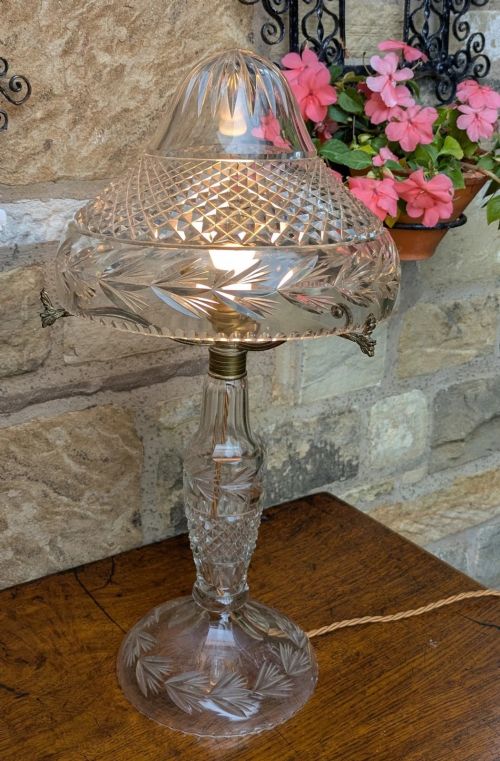
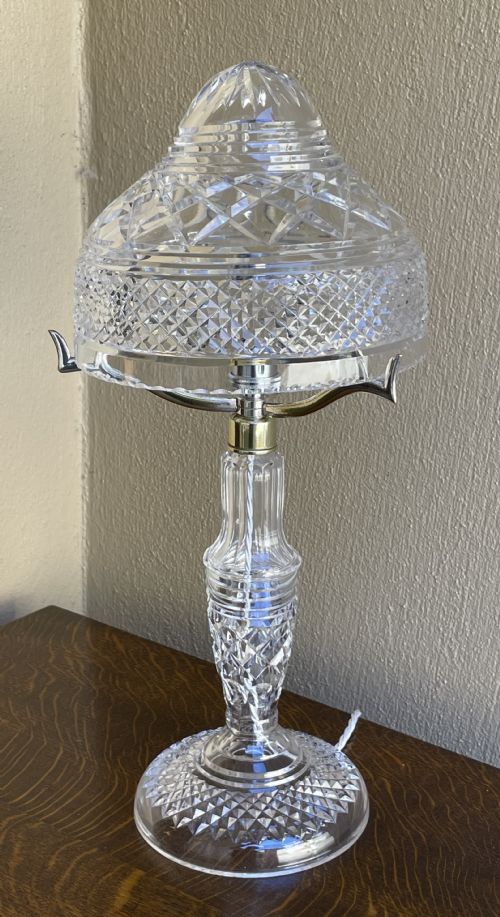
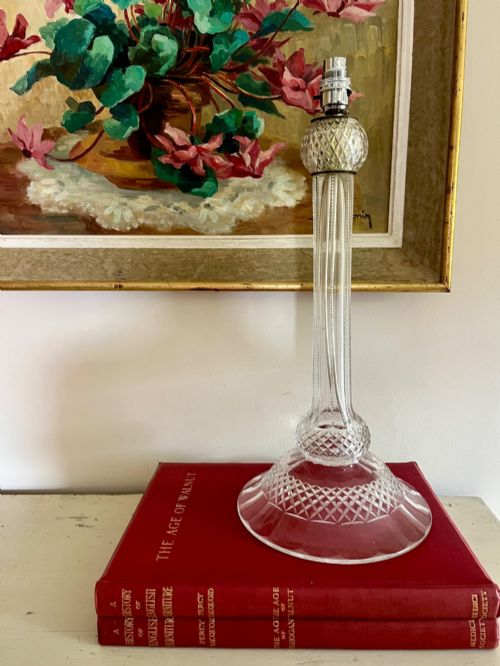
A clear crystal table lamp brings a brilliant gleam to any interior scheme by catching and reflecting light through faceted surfaces. When you search for a clear crystal table lamp, you encounter table lamps spanning several decades from the Edwardian era through to the mid-century period.
The selection ranges from early twentieth century designs dating around nineteen hundred to nineteen fifty. Mushroom lamp forms appear alongside traditional classical table lamp shapes, offering diverse silhouettes for domestic interiors.
Mushroom lamps with twin bulb configurations emerge during the nineteen thirties, alongside single bulb variants. Pieces utilise cut glass and lead crystal to achieve their characteristic refractive qualities.
How They Were Made
These lamps combine heavy crystal or glass bodies with metal components such as brass and chrome. Artisans shaped the glass and crystal through cutting techniques to produce intricate facets that maximise light dispersion.
The manufacturing process integrates metal mountings and electrical fittings securely into the dense glass structures. Stuart Crystal represents the specialised glassworks contributing to the production of these polished table fixtures.
Retail Price Guide 2026
Typical UK retail prices for clear crystal table lamp, calculated from the Sellingantiques database of over a million retail prices indexed since 2003. This retail price guide relies exclusively on Sellingantiques data; no external sources or auction records are used, so the figures do not describe the wider market.
Materials across the selection include brass, chrome, cut crystal, and lead crystal.
What Varies in Quality
Quality differences emerge in the depth of the glass cutting and the purity of the crystal material itself. Superior examples display crisp, sharp facets that refract light cleanly, whereas lesser pieces show softer edges and simpler moulding.
The choice of supporting metals also distinguishes the range, with solid brass and polished chrome providing different structural weights and visual tones beneath the crystal body.
Stuart Crystal
The Clear Crystal Table Lamp Glossary
- Cut Crystal
- Glass containing lead oxide that has been shaped by grinding and polishing. This material possesses a high refractive index which creates brilliant sparkle.
- Mushroom Lamp
- A table lamp featuring a rounded, cap-like shade that resembles a mushroom fungus. This form became popular during the nineteen thirties.
- Edwardian
- The architectural and decorative style spanning the reign of King Edward VII until nineteen ten. Pieces from this period often display classical influences.
- Art Deco
- The design movement characterised by streamlined geometric forms that emerged in the early twentieth century. It influenced lighting silhouettes across the decades.
- Lead Crystal
- Glass manufactured with the addition of lead oxide to increase weight and clarity. It allows for deeper cutting and sharper facets.
Frequently Asked Questions
What periods do these lamps come from?
The available selection spans the early twentieth century, including Edwardian examples alongside pieces from nineteen ten, nineteen twenty, and nineteen thirty.
Later items extend into the mid-century period around nineteen fifty, reflecting changing domestic lighting tastes over five decades.
What materials are used in their construction?
Makers utilised clear crystal, lead crystal, and cut glass for the main body and shade components. These transparent elements are paired with metal fittings made from brass and chrome.
The combination of dense crystal and polished metal provides both structural stability and complementary visual contrast.
How do I identify an Edwardian crystal lamp?
Edwardian lamps date from the first decade of the twentieth century, typically around nineteen hundred to nineteen ten. They often incorporate traditional classical design motifs alongside early cut crystal work.
Examining the metal mounts and the style of the glass cutting helps distinguish these earlier pieces from later mid-century designs.