
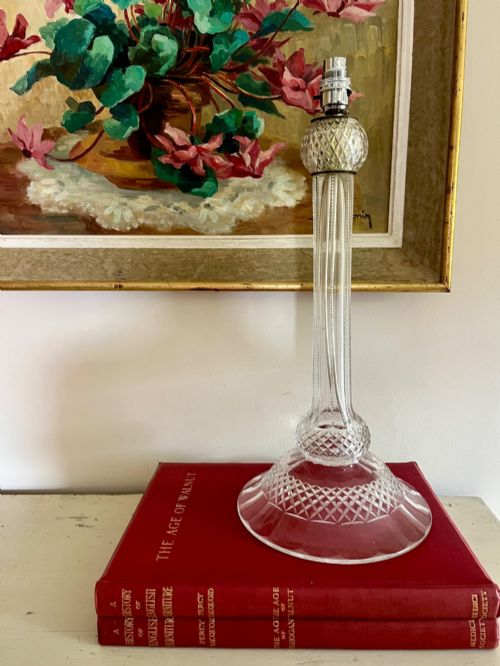


Cut Glass Column Lamp
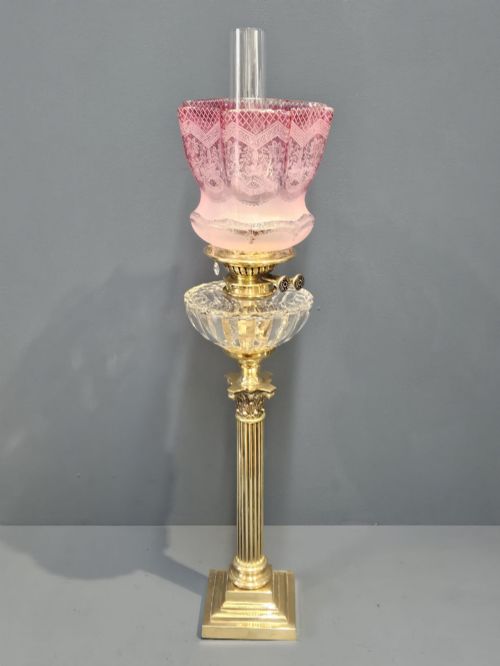
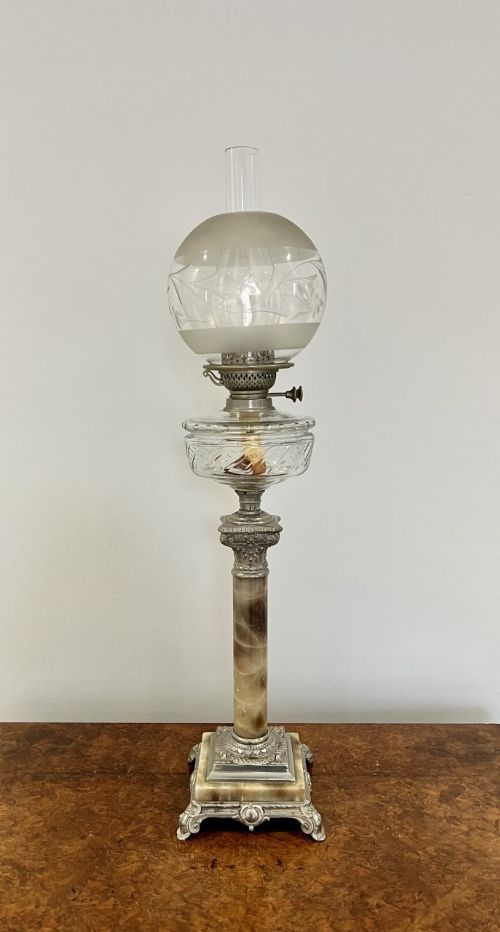
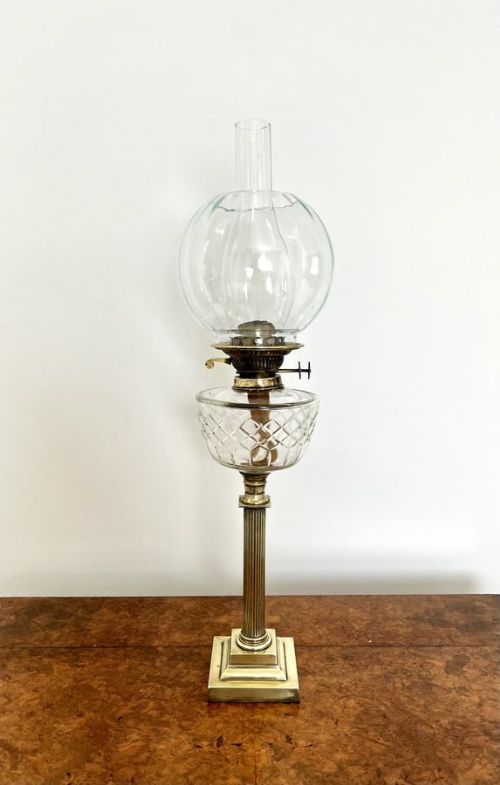
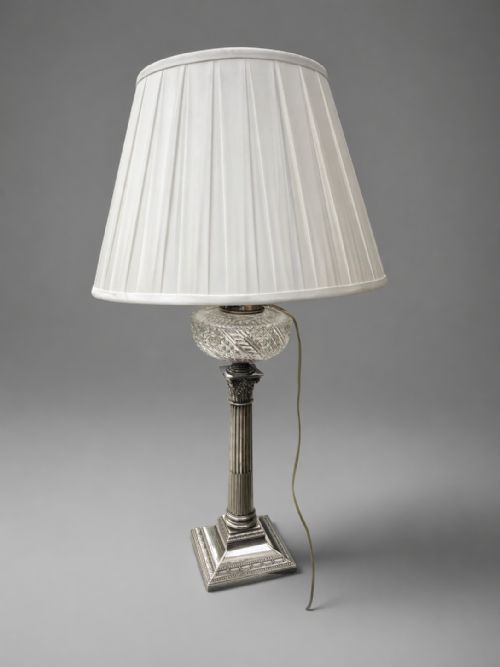
These cut glass column lamp examples bring architectural presence and brilliant refraction to a room, combining heavy crystal shafts with polished metal mounts.
Cut Glass Column Lamp
When you search for a cut glass column lamp, you encounter grand lighting fixtures designed to elevate domestic interiors during the Victorian and Edwardian eras. These pieces typically combine a clear or coloured crystal shaft with metallic bases and capitals, reflecting both functional heating history and decorative ambition.
You are most likely to meet examples featuring classical Corinthian capitals in cast brass, silver plate or ormolu atop fluted or panelled glass columns. Many of these originated as oil or paraffin lamps before later conversion to electricity, retaining their substantial reservoirs and stepped plinths.
The selection ranges from modest brass-mounted boudoir pieces to monumental pairs styled with French or English Neoclassical formality. Dating predominantly from the nineteenth and early twentieth centuries, they demonstrate the period preference for monumental symmetry and material contrast.
What varies in quality
The distinction between standard production and top-tier examples lies in the crispness of the glass cutting and the weight of the metal mounts. Superior pieces display deep, sharp facets with polished troughs, whereas lesser items show softer moulding lines and lighter gauge brass.
Proportion and material integrity also dictate the standing of a piece, especially in matched pairs where uniform colour and identical capital casting matter greatly. Fine examples integrate ormolu or heavy silver plating with flawless lead crystal, whereas ordinary specimens rely on simpler brass finishes and standard pressed glass.
Several of these stately columns spent decades quietly burning paraffin before trading soot for watts and moving to the drawing room.
Goldsmiths and Silversmiths Company·Osler·Hinks
The Cut Glass Column Lamp Glossary
- Corinthian capital
- The decorative top section of a column featuring carved acanthus leaves and scrolls, commonly cast in brass or ormolu on these lamps.
- Ormolu
- Finely ground high-carat gold mercury-gilded onto a bronze or brass base, providing a rich, warm metallic finish on finer nineteenth-century pieces.
- Reservoir
- The upper glass or crystal vessel that originally held lamp oil before many examples were adapted for electric wiring.
- Overlay glass
- Glass composed of two or more distinct layers of contrasting colours, where cutting through the outer layer reveals the different shade beneath.
- Reeded column
- A vertical shaft decorated with parallel convex mouldings that add texture and formality to the upright support.
Cut Glass Column Lamp: Frequently Asked Questions
Were these originally oil lamps?
Many examples on the market began life as oil or paraffin burners before being adapted for modern electric wiring during the twentieth century.
This conversion process typically involved running a cord through the central metal rod while preserving the original glass reservoir and column structure intact.
How do I date a cut glass column lamp?
Dating relies on stylistic clues such as the form of the cast metal capitals, the depth of the crystal cutting, and the assembly methods used in the base.
Victorian pieces often favour heavy brass Corinthian orders, while later Edwardian and Art Deco iterations introduce sleeker profiles and alternative metal plating.
Are pairs difficult to find?
Matched pairs appear less frequently than single pieces because domestic lighting arrangements in the nineteenth century often utilised solo table lamps.
When surviving pairs do surface, they generally command stronger interest due to the difficulty of matching height, glass clarity, and casting detail later.
What metals are used in the mounts?
The metallic components typically consist of cast brass, silver plate, or ormolu, depending on the manufacturing cost and intended market of the period.
Finer nineteenth-century examples often employ mercury-gilded bronze or heavy electroplate over a substantial brass armature to support the heavy crystal.