





Edwardian Cut Glass Lamp
An edwardian cut glass lamp brings brilliant refraction and solid period mounting to a room.
Edwardian Cut Glass Lamp
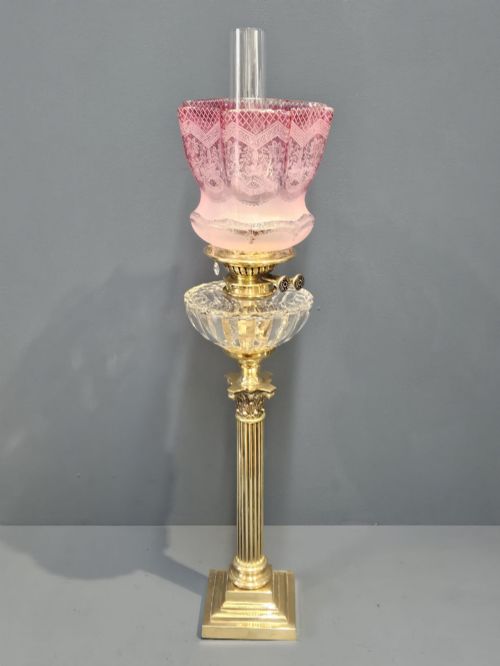
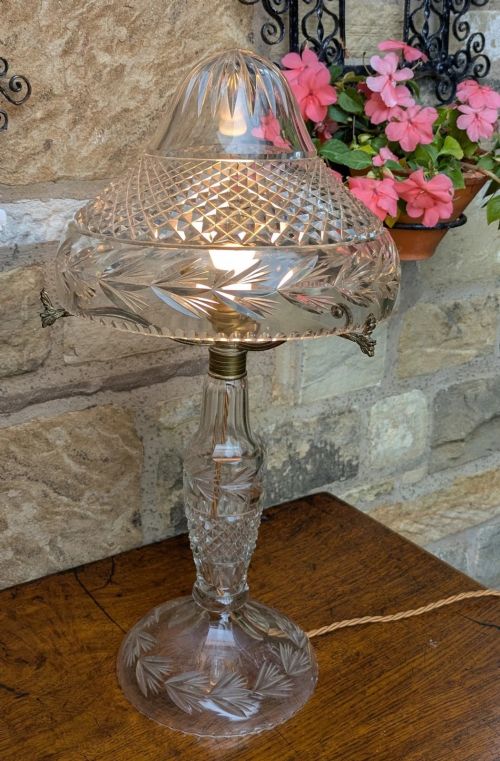
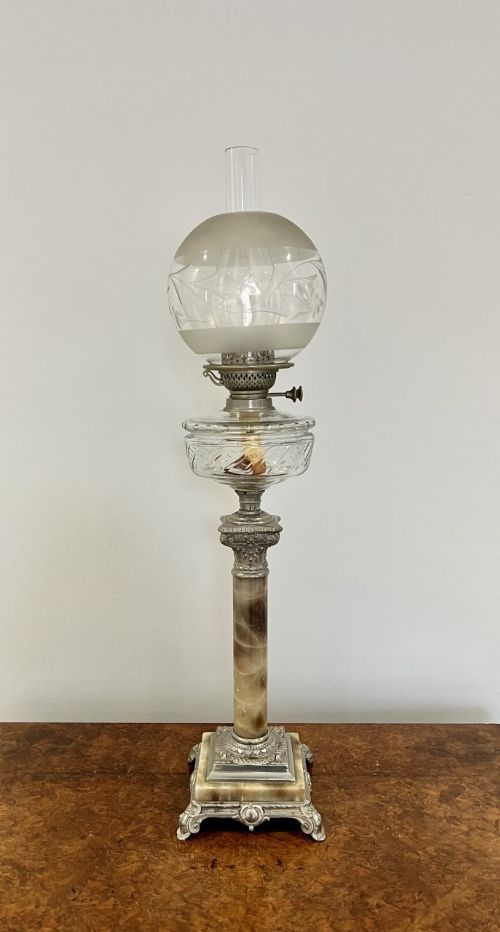
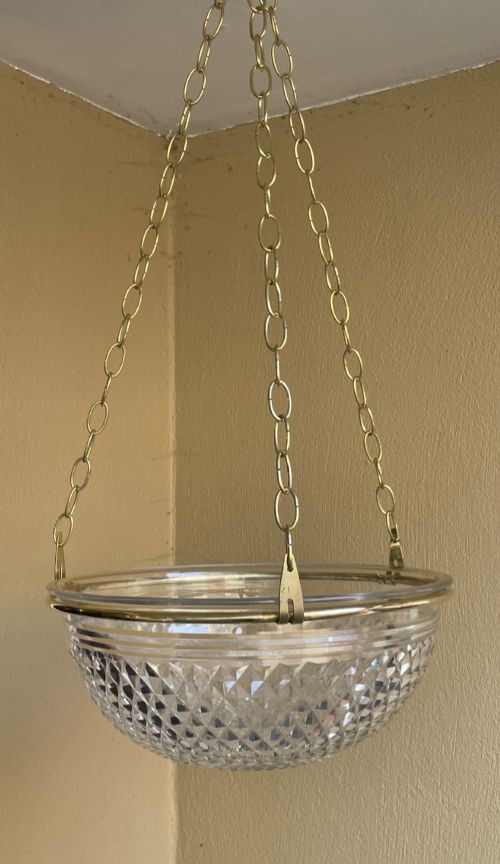
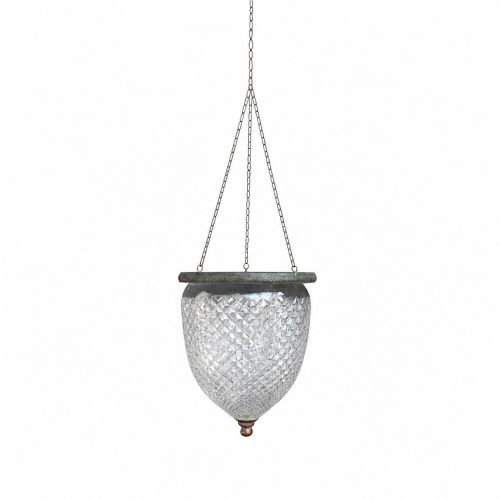
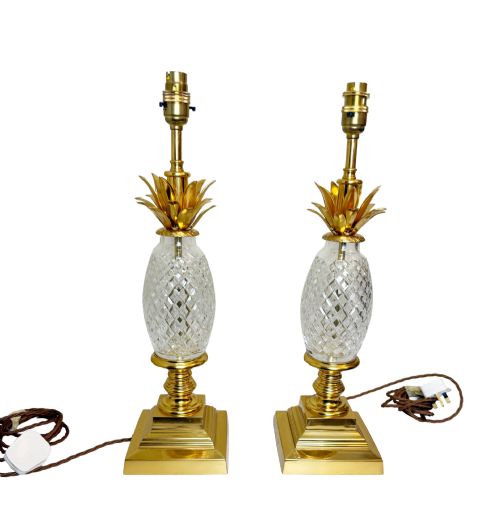
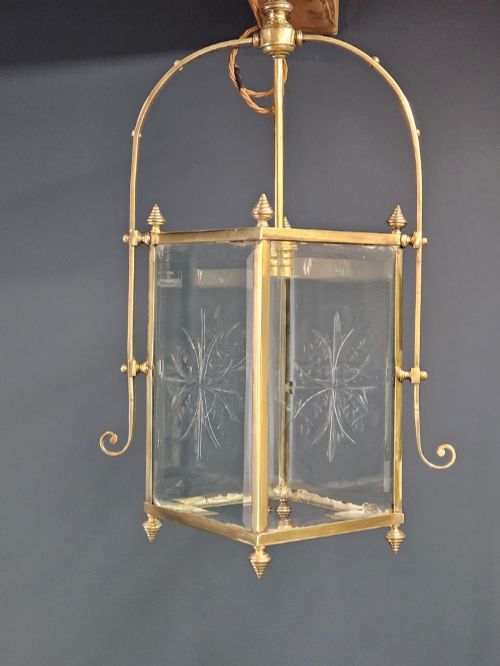
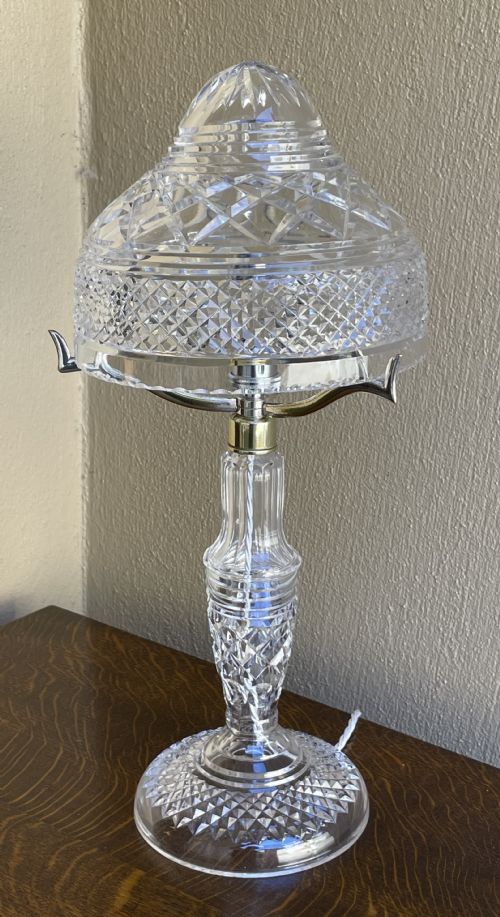
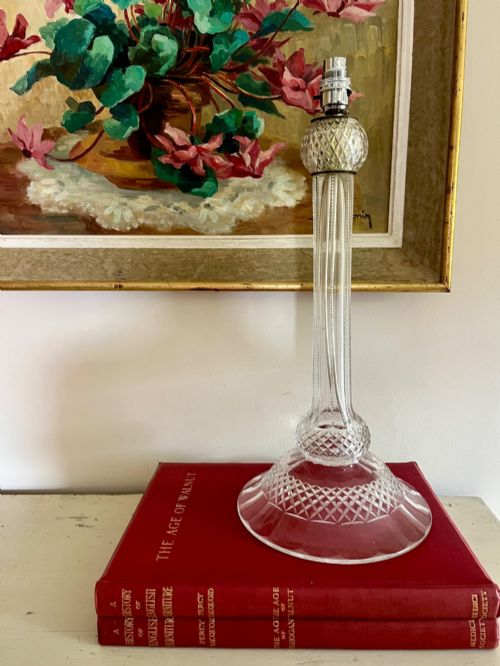
When searching for an edwardian cut glass lamp, you examine heavy domestic lighting that combines moulded or hand-cut glass bodies with metal mounts in brass, bronze, or silver plate. These pieces originate primarily from the Edwardian era and surrounding decades, manifesting as table lamps, converted oil lamps, and hanging pendants.
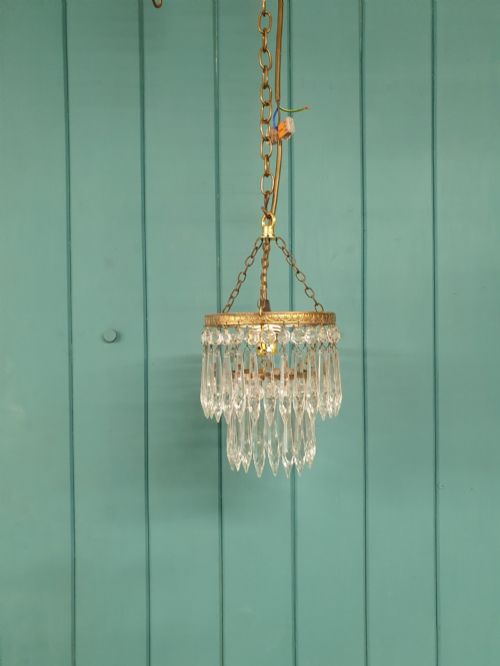
The version most commonly met on this page is the table lamp featuring a cut crystal reservoir or column paired with a brass base, alongside various ceiling mounted plafonniers and chandeliers with prismatic drops. They reflect the high demand for electric and oil lighting during the early twentieth century.
Makers and retailers of the period utilised heavy lead crystal components, often pairing them with classical Corinthian columns or ornate metal framing. The variety spans simple mushroom-shaped shades to elaborate tent and bag chandeliers hung with numerous glass prisms.
Judgments of quality
Quality in these pieces rests upon the depth and crispness of the glass cutting, where sharp, clean facets distinguish superior work from softer, moulded alternatives. Weight serves as an indicator, as denser lead crystal and heavier gauge brass bases demonstrate substantial material investment.
Proportion and integrity of the original mounts dictate the overall success of the piece, particularly where brass columns, galleries, and chains remain uncompromised by later alterations. Finer examples retain matched components and unblemished cut surfaces that hold their clarity under illumination.
Some miniature chandeliers measure a mere six inches across, proving that even grand illumination occasionally came in pocket-sized packages.
F & C Osler·Messengers·Harrods·Clarke
The Edwardian Cut Glass Lamp Glossary
- Plafonnier
- A ceiling-mounted dome or bowl light that sits close to the surface, frequently utilising cut or moulded glass.
- Corinthian column
- A classical architectural column form often adapted for table lamp bases, featuring ornate acanthus leaf capitals.
- Prisms
- Cut glass pendants or drops hung from chandeliers and sconces to scatter light across a room.
- Tent and bag chandelier
- A lighting fixture featuring an upper conical section of strings of beads above a gathered bag-shaped lower basket of crystals.
- Lead crystal
- A high-clarity glass containing metal oxide that increases weight, brilliance, and softness for deep cutting.
Edwardian Cut Glass Lamp: Frequently Asked Questions
How do I rewire an antique lamp safely?
Rewiring requires running modern heat-resistant flex through the original channels while retaining the historic brass collar and switch housings.
Professional electricians should earth metal components to ensure safety without altering the external appearance of the mountings.
Were these lamps originally electric or oil?
Many items began as oil lamps or gas fixtures before undergoing conversion to electricity during the early twentieth century.
Original burners and reservoirs frequently transitioned into electrical fittings as domestic power supplies spread.
How do I clean cut glass safely?
Cleaning involves washing glass components in warm soapy water using a soft cloth, avoiding harsh chemical immersion.
Mounts require separate care to preserve the original brass or bronze patination without stripping the surface finish.
How do I distinguish Edwardian from Victorian lighting?
Edwardian lighting tends to display lighter Neoclassical or simpler geometric forms compared to the heavier ornamentation of the Victorian period.
Archival records show an overlap in production techniques, though Edwardian pieces frequently accommodate early electrical wiring from manufacture.