

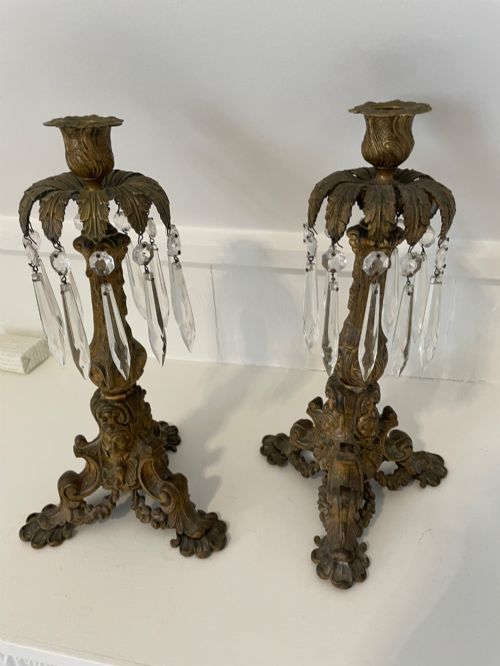
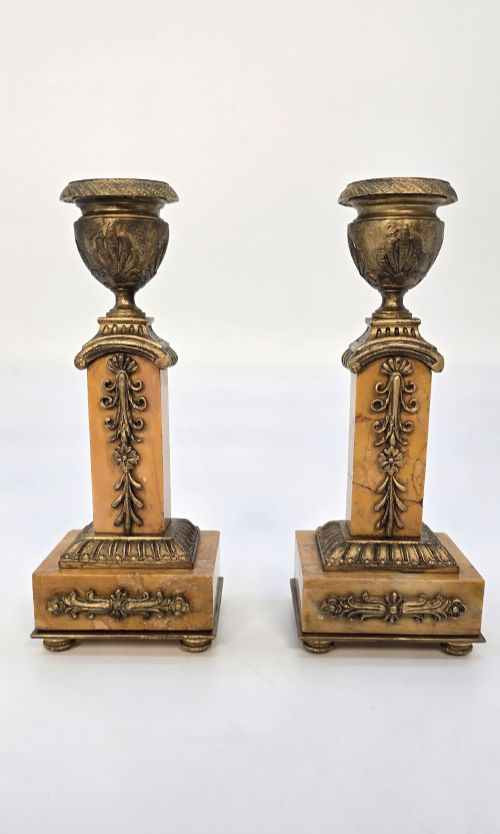
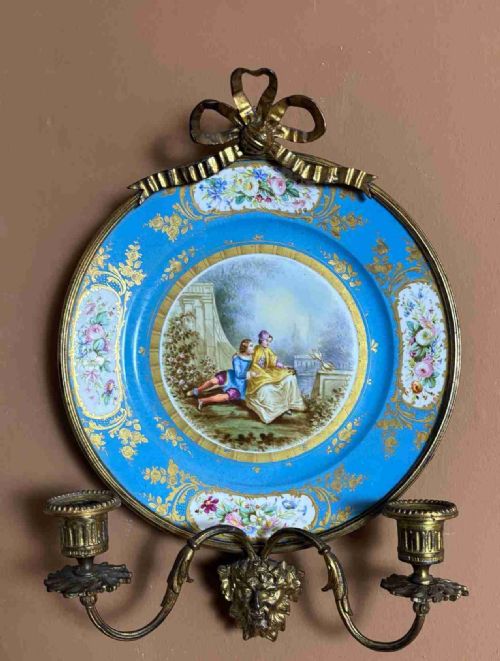

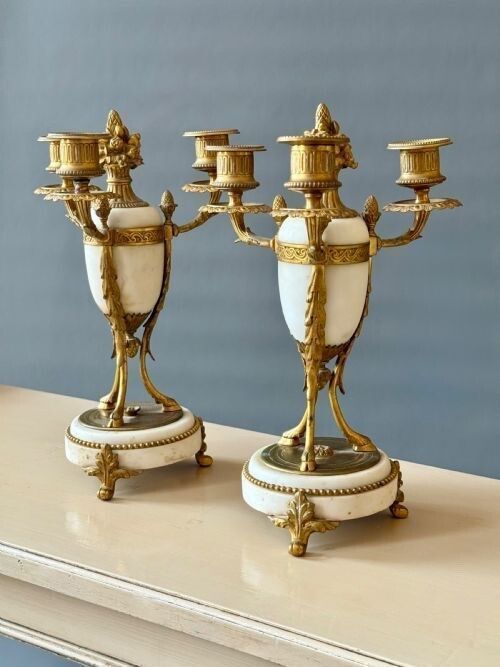
19th Century Ormolu Lighting
These pieces of 19th century ormolu lighting bring warmth and heavy gilding into a room.
19th Century Ormolu Lighting
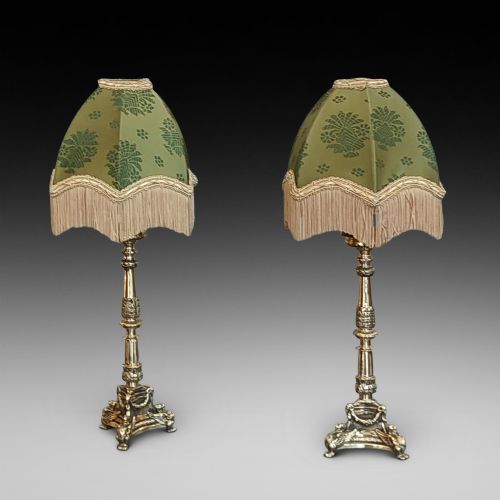
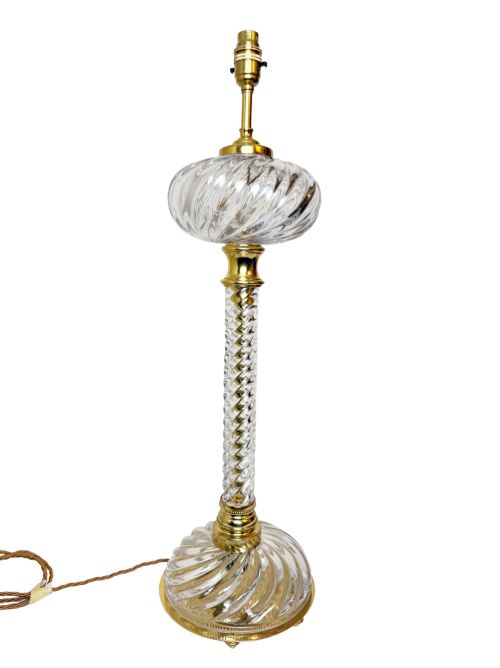
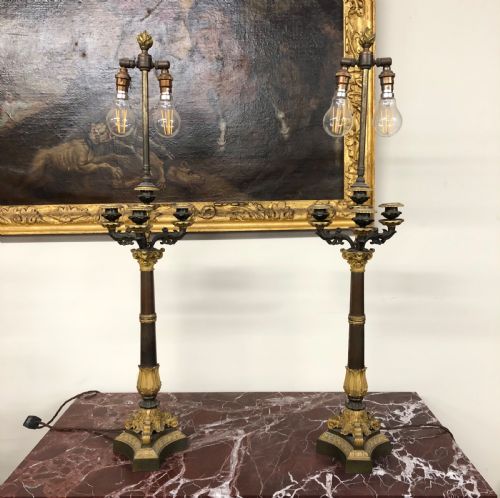
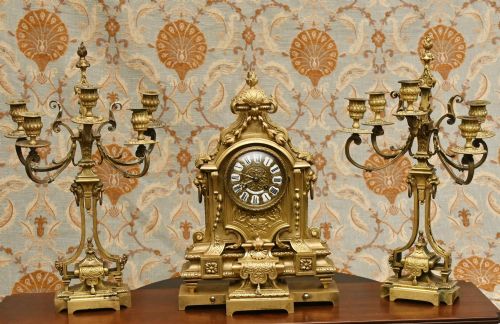
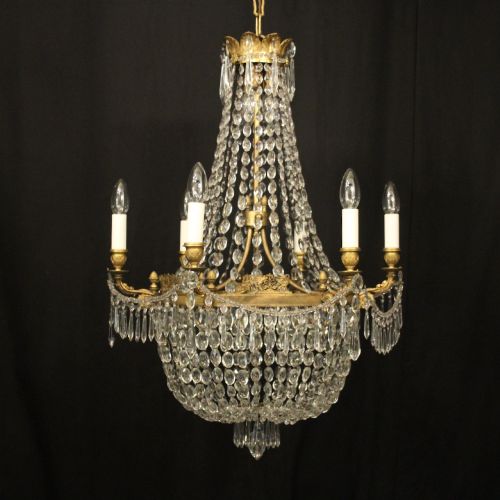
Buyers seeking 19th century ormolu lighting encounter heavy gilded metal fixtures designed to hold candles or house electric bulbs. The selection spans grand chandeliers, multi-branch candelabra, wall sconces, and table lamps originating mainly from French workshops.
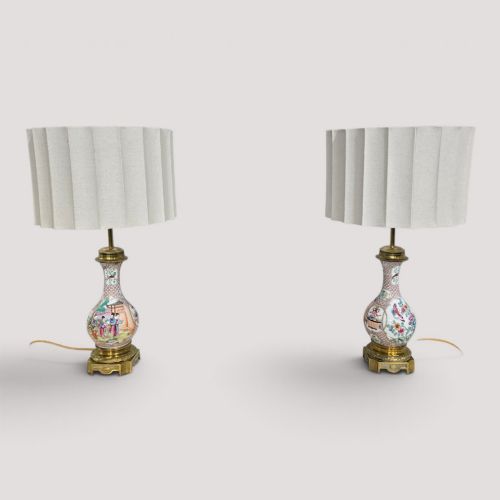
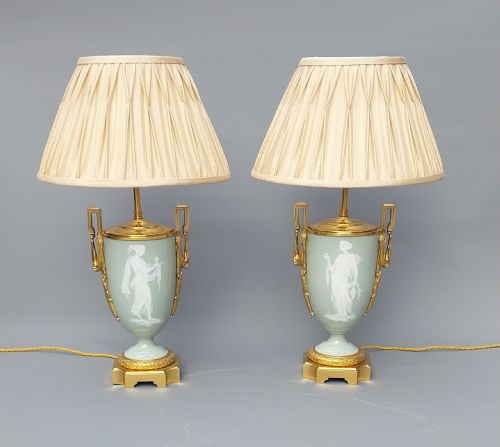
Many of these items combine bright mercury gilding with contrasting materials like white marble, onyx, or hand-painted porcelain bodies. Forms frequently follow historical revivals such as Louis XVI, French Empire, and Rococo styles.
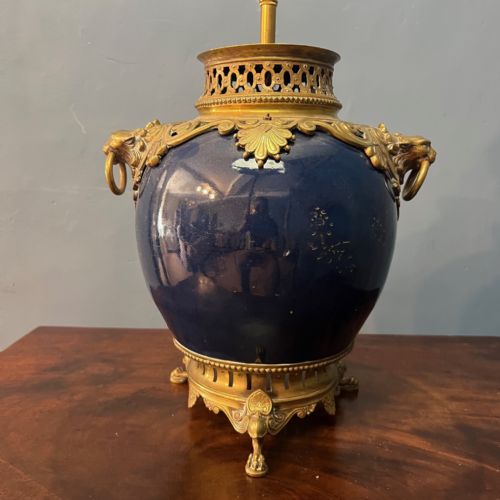
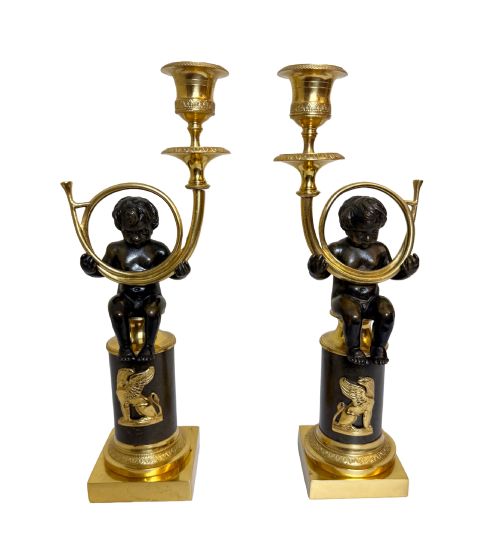
The objects serve as functional illumination while carrying sculptural weight, often incorporating figural motifs, cherubs, or classical animal heads. Table lamps and candlesticks dominate smaller formats, whereas twenty-five light chandeliers scale up for large spaces.
Materials and Construction
The underlying structure typically relies on cast bronze or brass, shaped through sand-casting to achieve crisp botanical or figural details. Artisans then applied a mercury amalgam technique to deposit a layer of gold onto the bronze, creating the characteristic ormolu surface.
Secondary components include carved white marble bases, hand-turned onyx, and sections of champlevé enamel or Sevres style porcelain. Components were mechanically joined using threaded brass rods and screws, allowing for complex multi-tier candelabra and wall lights to be assembled securely.
19th Century Ormolu Lighting Retail Price Guide 2026
Typical asking prices for 19th century ormolu lighting among the pieces listed under this phrase on Sellingantiques today, from the lower quarter to the upper quarter. They describe what is for sale here now, not the wider market.
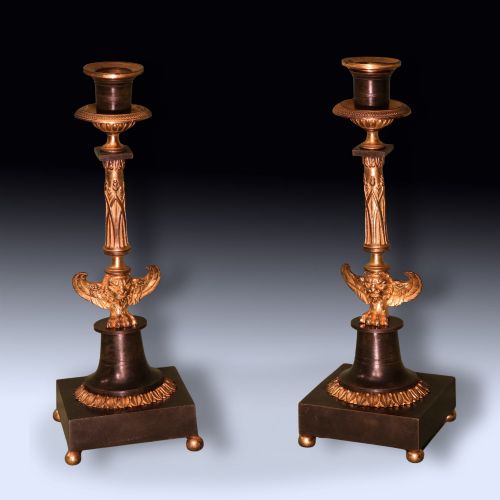
Several nineteenth-century candlesticks feature cheerful flamingo and stag motifs peering out from the heavy gilt bronze mounts.
Distinctions in Quality
The depth and durability of the gilding also define the tier of the piece. Thick mercury finishes retain a warm, buttery lustre over time, whereas thin electroplated layers can wear down to the base brass underneath.
Pierre Philippe Thomire·Henri Vian
The 19th Century Ormolu Lighting Glossary
- Ormolu
- A golden surface finish created by applying a mercury and gold amalgam to cast bronze, then heating the metal to vaporise the mercury. This technique produces a rich, lasting metallic lustre characteristic of luxury French decorative arts.
- Champlevé
- An enamel technique where troughs or cells are dug into the surface of a metal object and filled with coloured glass powder before firing. The resulting glass designs sit flush with the surrounding metal frame.
- Candelabra
- A branched lighting fixture designed to hold multiple candles simultaneously. These pieces often feature removable upper branches to convert the base into a simpler candlestick.
- Appliqué
- A wall-mounted lighting fixture, also known as a wall sconce, designed to project illumination outward from a vertical surface. They commonly match the decorative vocabulary of contemporary table lamps and candelabra.
- Patinated bronze
- Bronze that has been chemically treated to darken its surface to a deep brown, green, or black tone. This dark finish is frequently contrasted against bright ormolu mounts.
19th Century Ormolu Lighting: Frequently Asked Questions
How do I wire these lamps for modern use?
Electric wiring is typically threaded discreetly through the central hollow core of the bronze structure. Professional electricians can run modern flex through these channels without drilling new holes into the antique metal.
Most table lamps and wall lights accommodate standard bulb holders while retaining their original exterior candle tubes or porcelain bodies.
Were these originally for candles or electricity?
The majority of these pieces were manufactured during the nineteenth century to burn tallow candles or oil. Electrification generally occurred later in their lifespan.
Candle cups and drip pans remain intact on many candelabra and wall sconces, showing their original lighting function before conversion.
How do I clean ormolu safely?
Dusting with a soft, dry microfibre cloth removes surface particles without risking the thin gold layer. Abrasive polishes or harsh chemical dips will strip the historic mercury gilding permanently.
If grime builds up, wiping gently with a damp cloth and drying immediately preserves the original finish.
How do I identify French Empire style pieces?
French Empire designs favour strict symmetry, military motifs, and classical figures drawn from ancient Rome and Egypt. Common indicators include sphinxes, laurel wreaths, and heavy, blocky marble plinths.
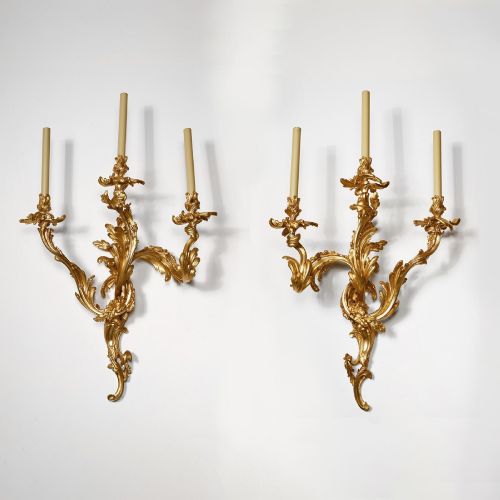
These pieces contrast sharply with the curving, asymmetric foliage found in Rococo revival lighting.