
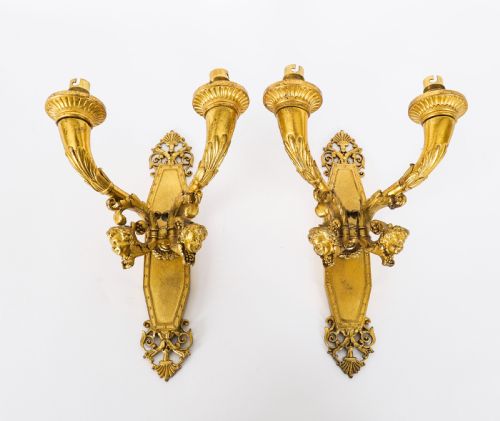
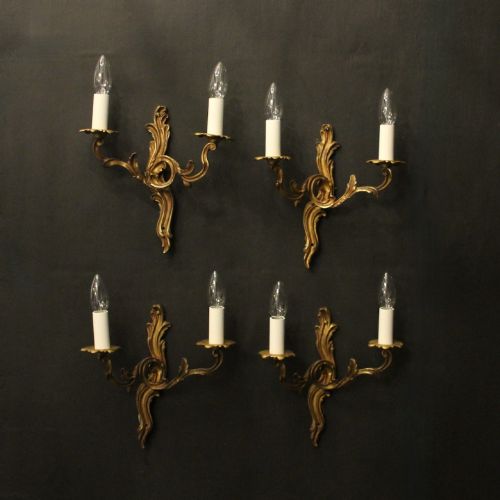
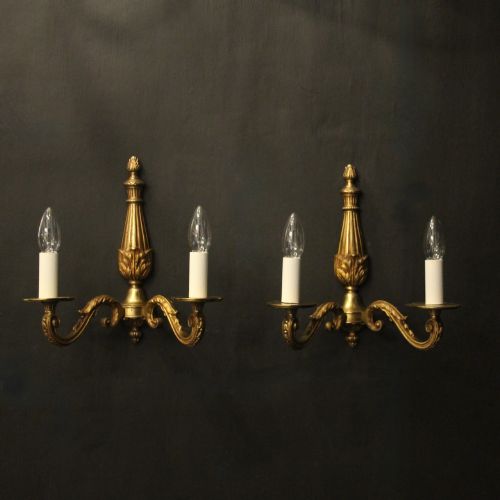
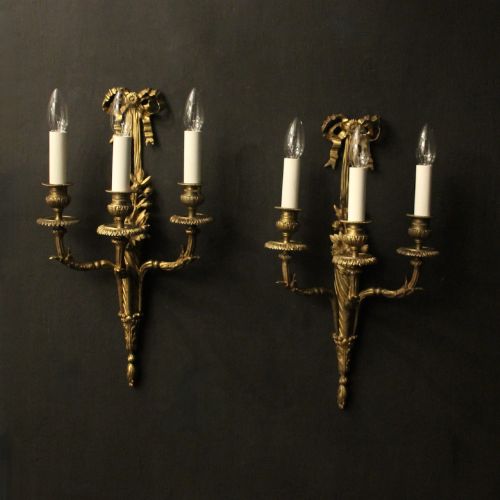
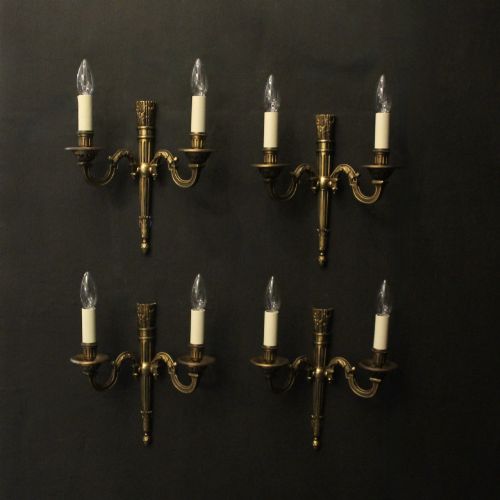
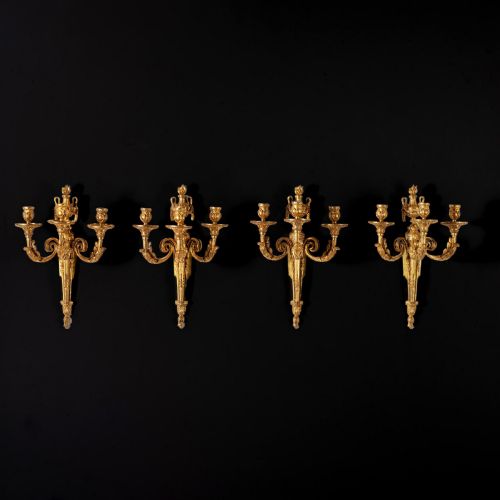
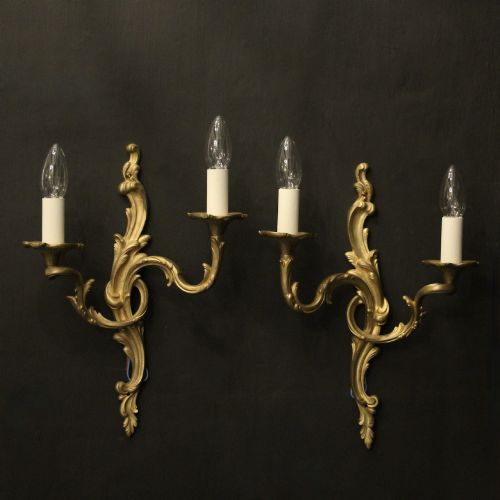
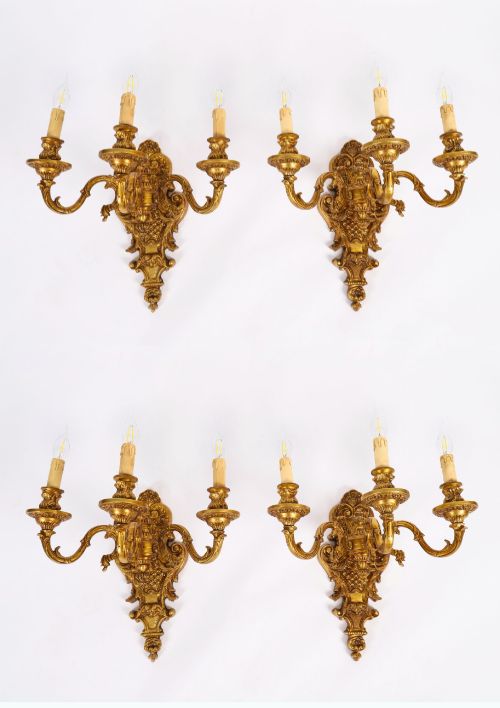
Gold Ormolu Wall Lights
Gold ormolu wall lights bring warm, reflective metallic brilliance to an interior, offering sophisticated illumination through French-inspired design.
Identifying gold ormolu wall lights
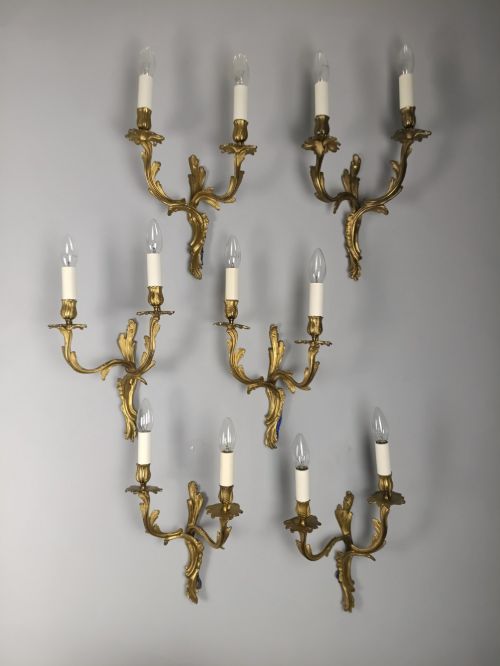
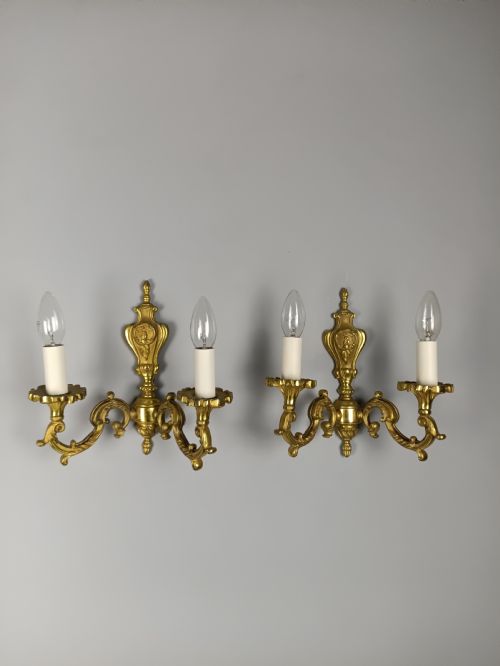
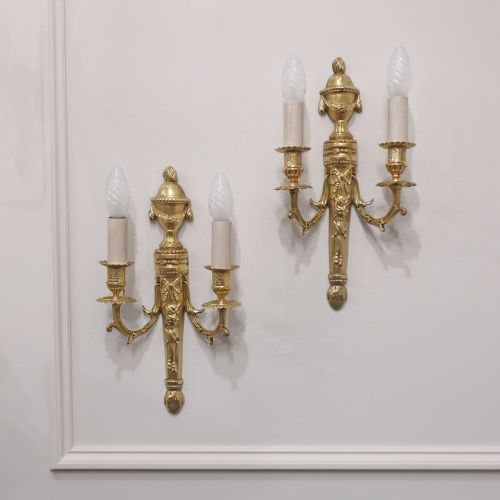
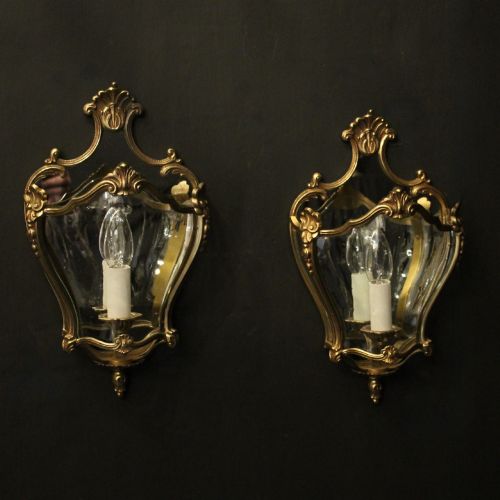
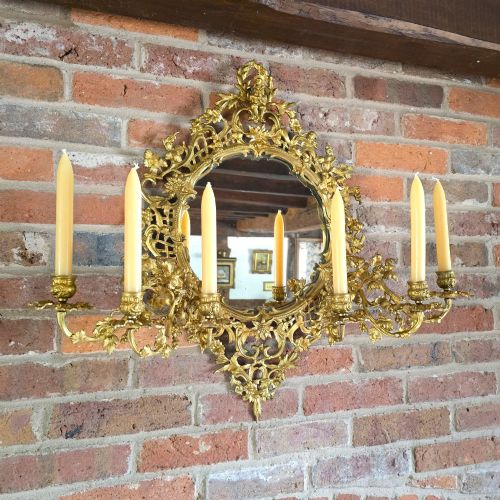
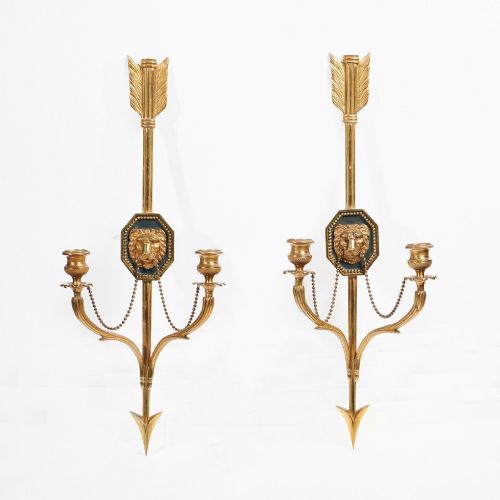
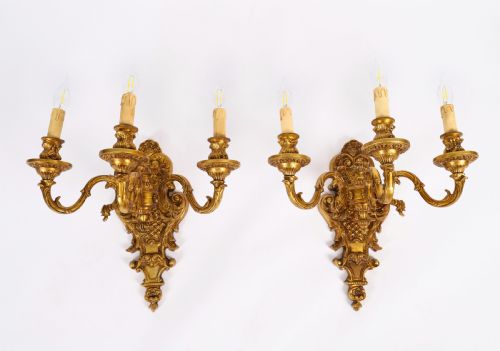
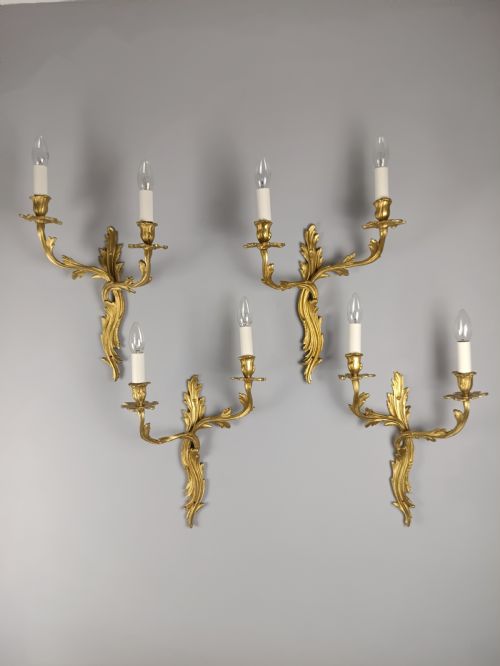
These gold ormolu wall lights appear primarily in matched pairs, sets of three, six, and eight, functioning as principal architectural illumination. They take the form of wall sconces and appliqués, projecting outward from panelled or papered surfaces.
The pieces emerge predominantly through French design vocabularies, showing strong stylistic links to the Rococo, Louis XVI, and French Neoclassical periods. They date across the nineteenth and early twentieth centuries, spanning from eighteen-eighty to nineteen-thirty.
Makers configured these wall lights with twin, triple, or larger arrangements of branches to hold candles or electrical fittings. They serve both functional and decorative purposes within domestic and formal reception spaces.
Materials and construction
Construction relies on base metals including brass, bronze, and general metalwork, finished with heavy surface gilding. Ormolu and gilt bronze predominate, providing a dense metal body underneath the gold layer.
Artisans formed these pieces through metal casting and chased detailing, creating intricate surface relief associated with French chateau aesthetics. Many surviving examples show evidence of later rewiring to accommodate modern electrical standards while retaining their original metal frames.
Retail Price Guide 2026
Typical UK retail prices for gold ormolu wall lights, calculated from the Sellingantiques database of over a million retail prices indexed since 2003. This retail price guide relies exclusively on Sellingantiques data; no external sources or auction records are used, so the figures do not describe the wider market.
These gilded wall lights have spent over a century silently watching rooms change from candlelight to electricity.
Assessing quality and execution
Quality rests in the crispness of the cast metal ornamentation and the depth of the gilding across the brass and bronze surfaces. Pieces from the nineteenth century often demonstrate superior hand-chasing compared to later twentieth-century iterations.
Scale and ambition dictate distinction, moving from simple paired branches to large sets featuring extensive rococo scrollwork or neoclassical symmetry. The integrity of the foundational ormolu and the complexity of the arm configurations separate standard examples from exceptional ones.
The Gold Ormolu Wall Lights Glossary
- Ormolu
- A gilded bronze or brass finish applied to decorative metalwork. This technique creates a rich, matte gold appearance on nineteenth-century light fittings.
- Appliqué
- A wall-mounted decorative fixture or sconce designed to hold candles or lamps. The term appears frequently in French lighting nomenclature.
- Rococo
- An ornate stylistic period characterised by asymmetrical scrolls, C-curves, and naturalistic plant motifs. It heavily influences the decorative program of many wall lights.
- Louis XVI style
- A classical revival design movement defined by geometric symmetry, straight lines, and ancient Greek or Roman motifs. It provides a formal contrast to earlier rococo curves.
- Sconce
- A wall-fixed lighting bracket designed to project illumination into a room. These pieces utilise twin or triple arms to support the light sources.
Frequently Asked Questions
How do I date gold ormolu wall lights?
Dating relies on stylistic markers such as Rococo asymmetry versus Louis XVI symmetry, alongside the characteristics of the cast metal.
Evidence on this page shows pieces spanning the nineteenth century through to nineteen-thirty, with construction methods evolving over those decades.
Were these wall lights originally wired for electricity?
Many older wall lights were originally designed for candles before being converted for modern electrical use.
Listings often note that pieces have been rewired to ensure they meet contemporary safety standards while preserving the antique metalwork.
How should I clean ormolu and gilt bronze?
Cleaning requires extreme care to avoid wearing away the delicate gold layer applied to the underlying brass or bronze.
Dusting with a soft, dry cloth is generally recommended, avoiding abrasive chemical cleaners that damage the antique surface.
What is the difference between ormolu and brass?
Ormolu specifically refers to a gold-gilded finish applied to a metal base like bronze or brass to create a rich appearance.
Plain brass lacks this deliberate surface gilding, resulting in a different colour and a less luxurious finish under direct light.