

Gilded Brass Appliques
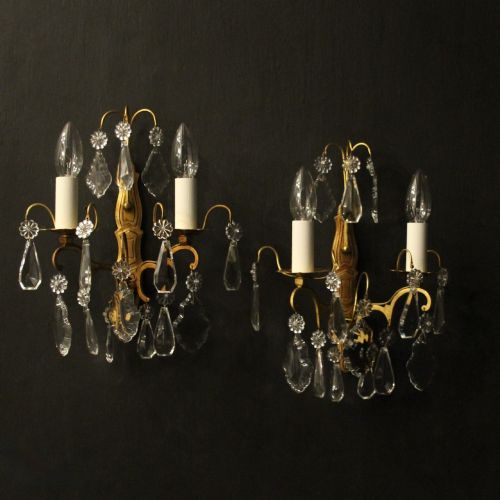
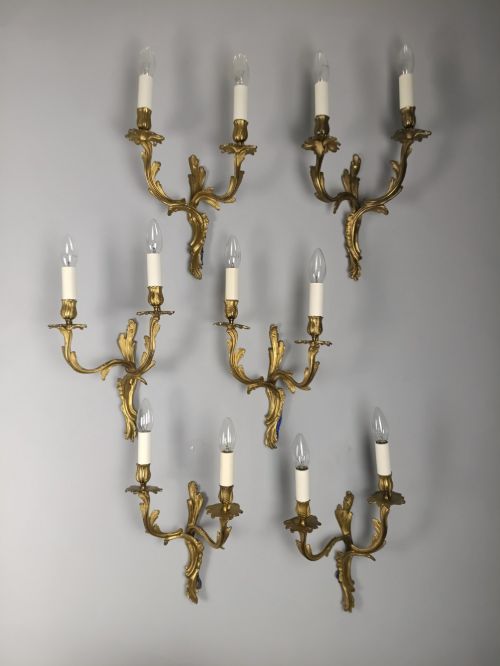
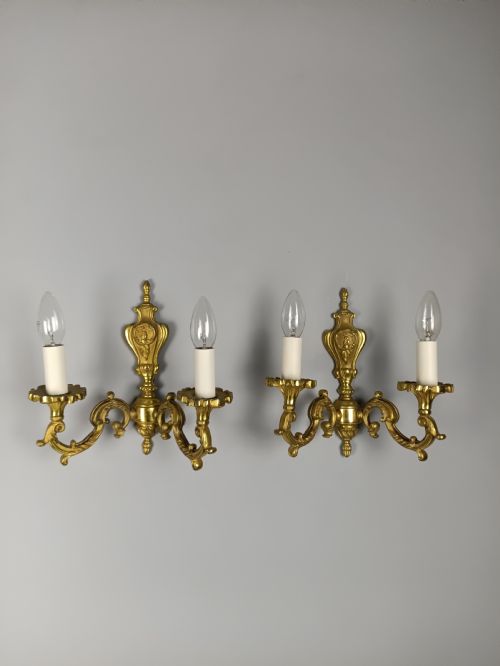
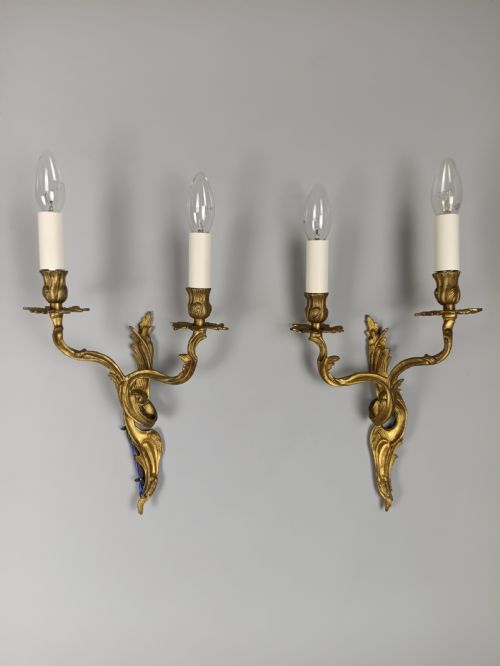
These gilded brass appliques bring decorative wall lighting into a room with French design and metalwork from the nineteenth and early twentieth centuries.
Gilded Brass Appliques
When someone searches for gilded brass appliques, they find wall lights and sconces designed to mount directly onto interior walls. The pieces on this page originate predominantly from French workshops and date from the Georgian period through the nineteenth century, 1880, 1900, 1920, and 1930.
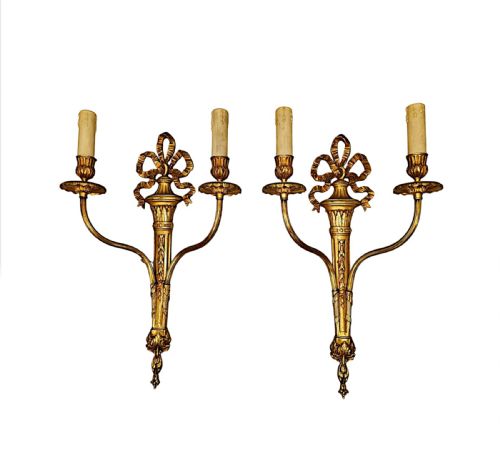
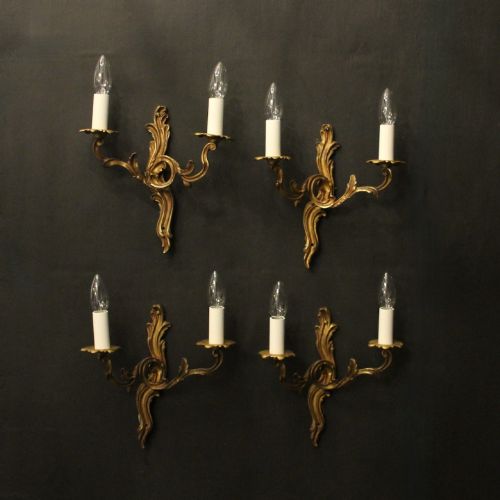
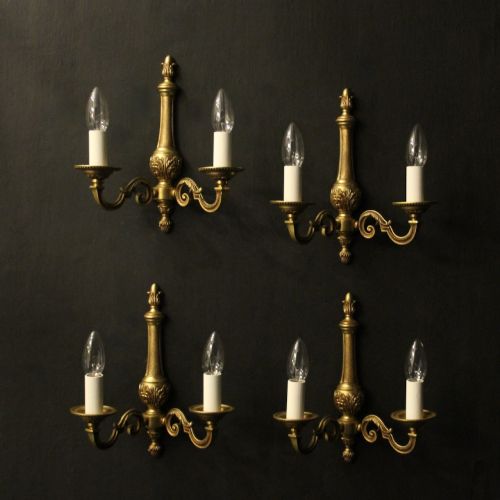
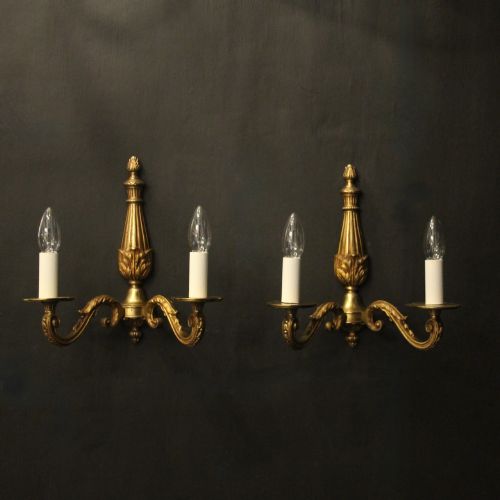
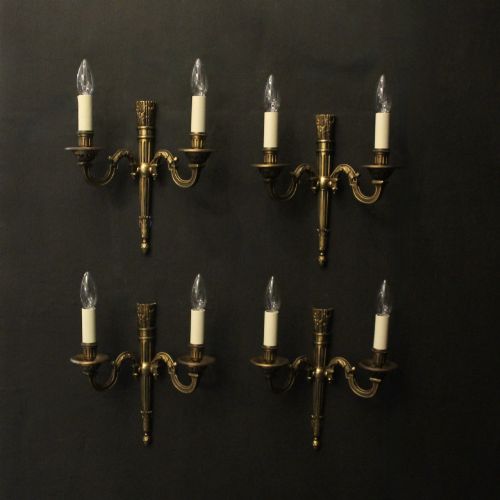
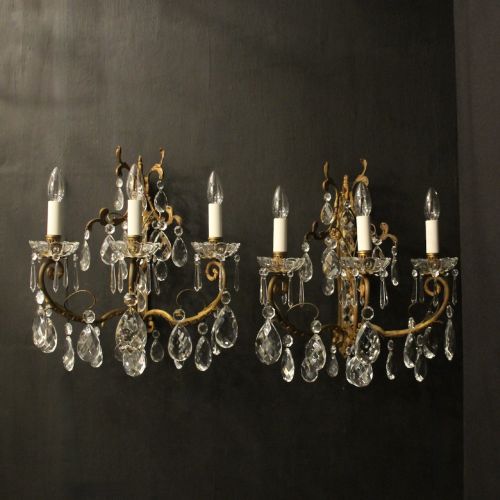
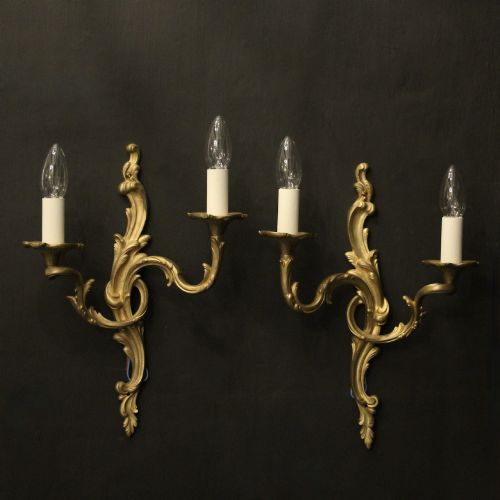
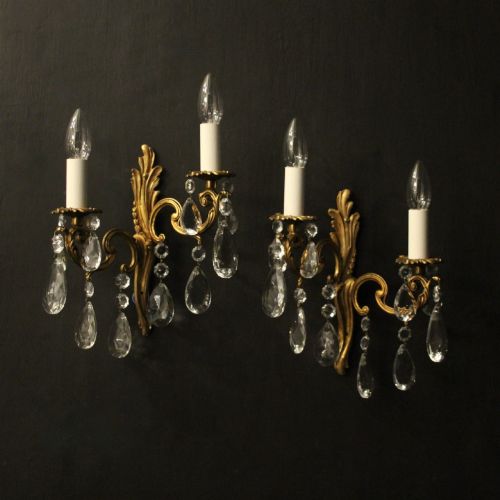
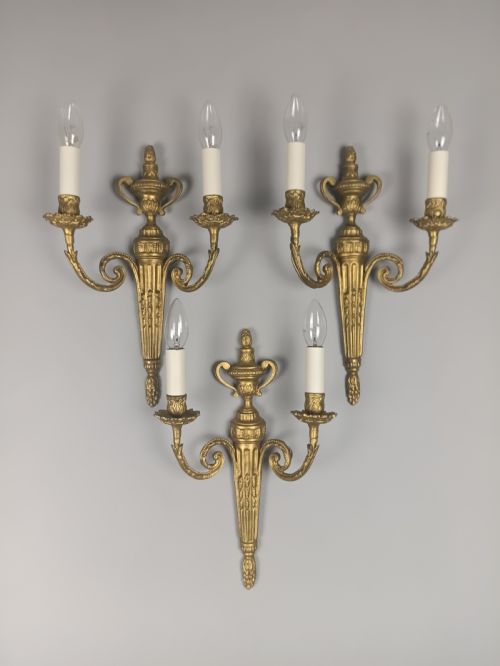
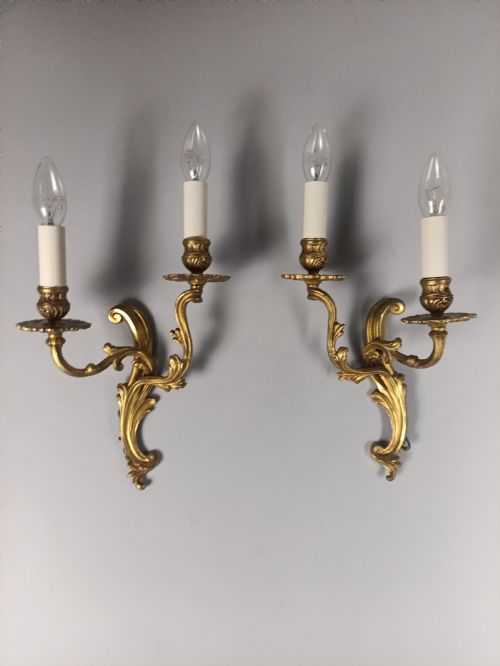
The most common forms encountered here are pairs and sets of twin-arm or triple-arm wall lights. These fixtures often reflect historical French design aesthetics, including Louis XVI, Neoclassical, Empire, and Rococo styles.
How they were made
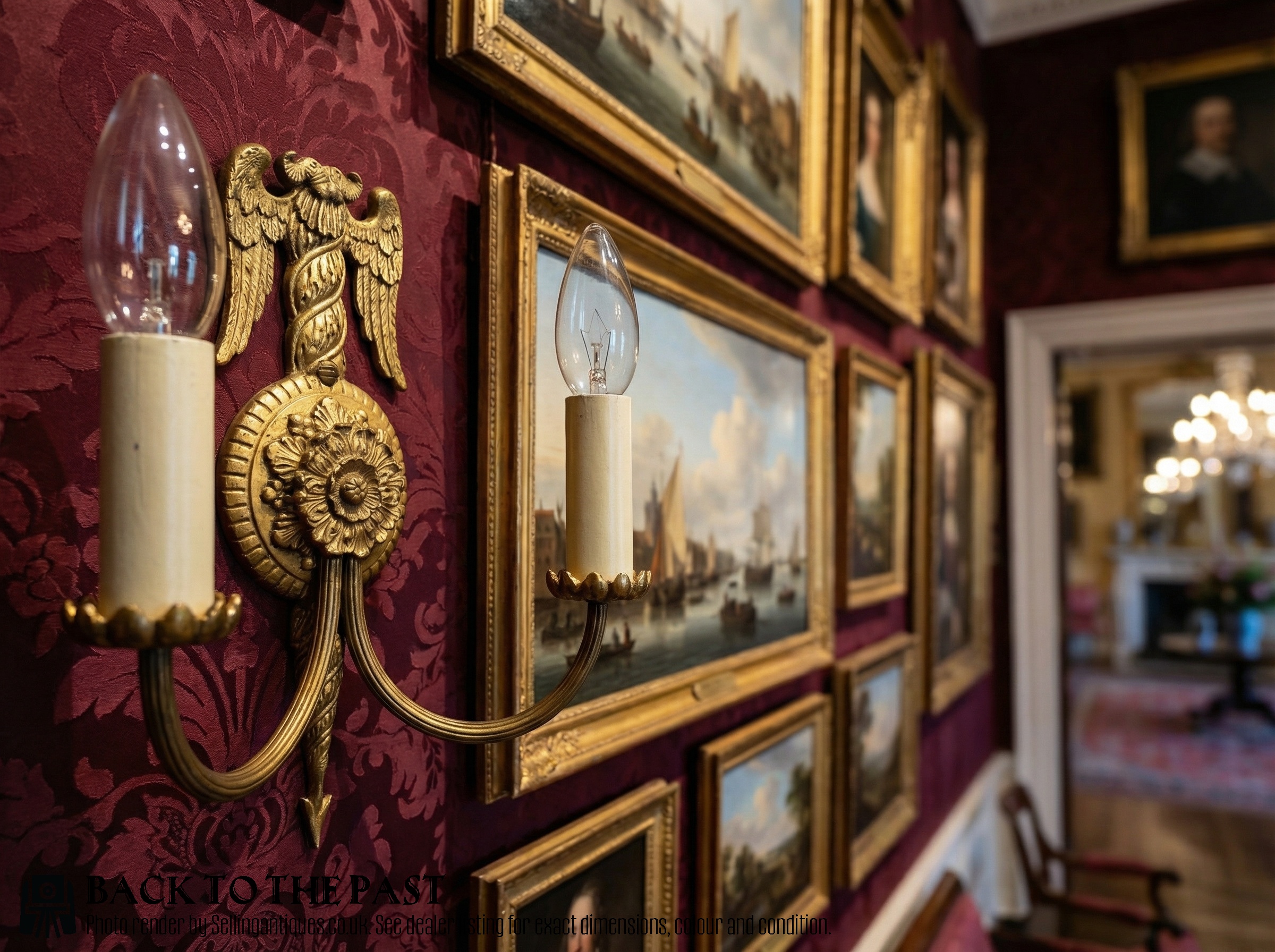
The construction of these wall lights relies primarily on brass and bronze, finished with surface gilding or cast as ormolu. Artisans shaped the metal into arms, backplates, and decorative motifs such as ribbons and flames.
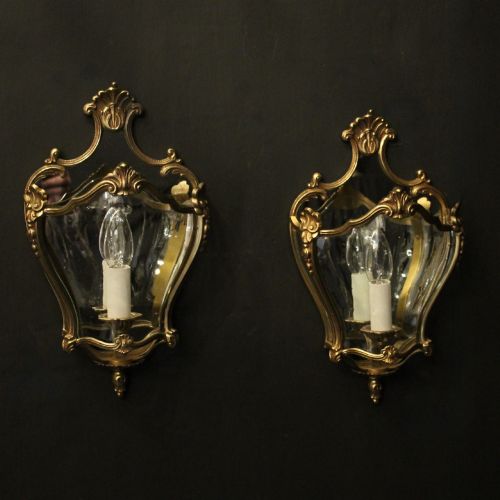
Selected pieces incorporate crystal elements or glass components to refract the illumination from candles or early electrical fittings. Metal casting techniques produced both symmetrical twin-arm frames and more ornate, scrolling single or multi-branch configurations.
Gilded Brass Appliques Retail Price Guide 2026
Typical asking prices for gilded brass appliques among the pieces listed under this phrase on Sellingantiques today, from the lower quarter to the upper quarter. They describe what is for sale here now, not the wider market.
A few wall lights even double as half lanterns, ensuring nobody gets lost on the way to the parlour.
What varies in quality
The distinction between tiers of quality rests in the crispness of the metal casting and the depth of the gilding. Heavier bronze and ormolu castings retain sharper detail in their decorative ornamentation than lighter brass alternatives.
Another factor is scale and configuration, as larger sets and fixtures with three or more arms require more complex assembly and more intricate hand-finishing by the maker.
The Gilded Brass Appliques Glossary
- Ormolu
- Gilded bronze produced by applying a mercury and gold amalgam to a bronze base and heating it. This technique gives the metal a distinctive warm finish seen on many French wall lights.
- Applique
- A decorative wall-mounted lighting fixture designed to hold candles or electric lamps. It sits flat against the wall surface.
- Rococo
- An ornate design style characterised by asymmetrical scrolls, plant motifs, and flowing curves. It appears frequently in nineteenth-century French sconces.
- Louis XVI
- A neoclassical style defined by symmetry, straight lines, and classical architectural motifs such as urns and ribbing. Pieces in this style date across the eighteenth, nineteenth, and early twentieth centuries.
Gilded Brass Appliques: Frequently Asked Questions
How do I install antique wall lights?
These fixtures mount directly to walls using standard electrical junction boxes, though professional installation is recommended due to their vintage wiring and heavy metal construction.
Many examples arrive rewired and ready to install, while others may require adaptation by an electrician to meet current safety standards.
Were these lights originally for candles?
Many of these appliques were originally designed to hold candles before being adapted for electricity during the twentieth century. Their multi-arm configurations replicate historical wall lighting layouts from French chateaux and salons.
Today, they function primarily as wired wall sconces that provide ambient room illumination.
What is the difference between brass and ormolu?
Brass is an alloy of copper and zinc, whereas ormolu specifically denotes finely chased bronze that has been heavily gilded with gold. Ormolu generally exhibits a richer, deeper metallic lustre than standard brass.
Both materials were widely utilised across French decorative lighting during the nineteenth and early twentieth centuries.
How do I identify a Louis XVI style applique?
Louis XVI style wall lights feature restrained classical geometry, symmetrical proportions, and motifs derived from ancient architecture. You will often notice straight lines, ribbons, and urns rather than the swirling asymmetry of Rococo designs.
This aesthetic spans nineteenth-century revivals as well as pieces made around nineteen hundred and the nineteen twenties.