



French Cherub Lamp
A french cherub lamp brings sculptural presence and decorative charm to an interior, combining figurative metalwork with functional illumination.
French Cherub Lamp
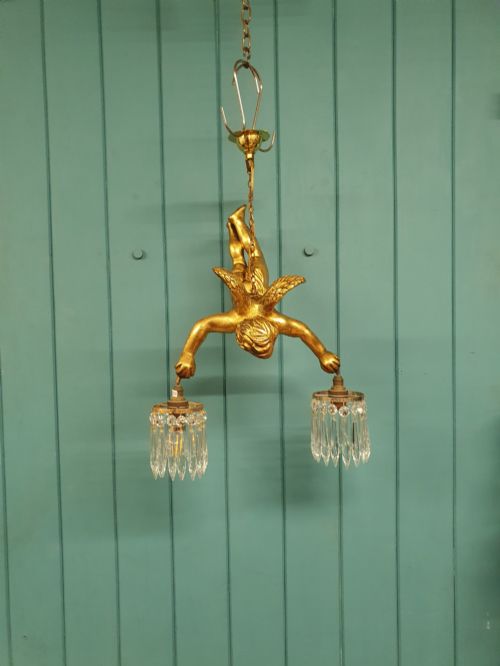
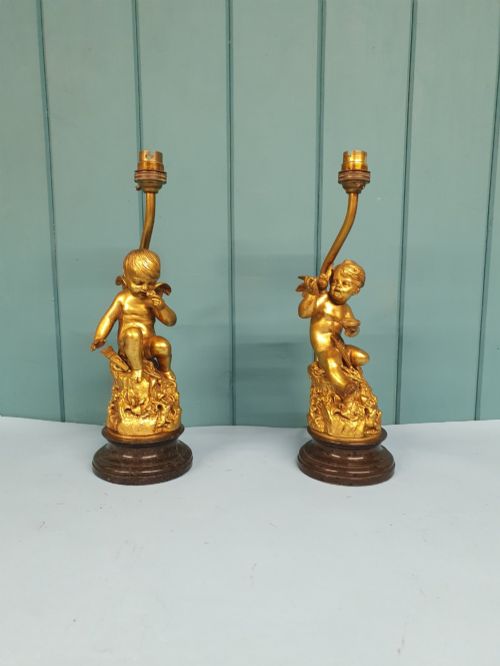
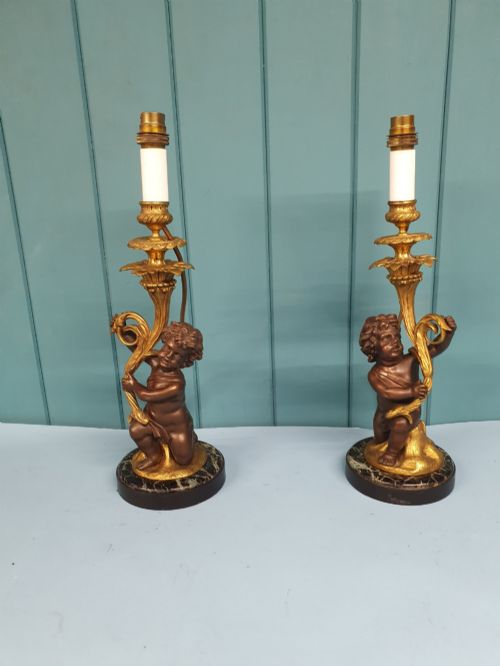
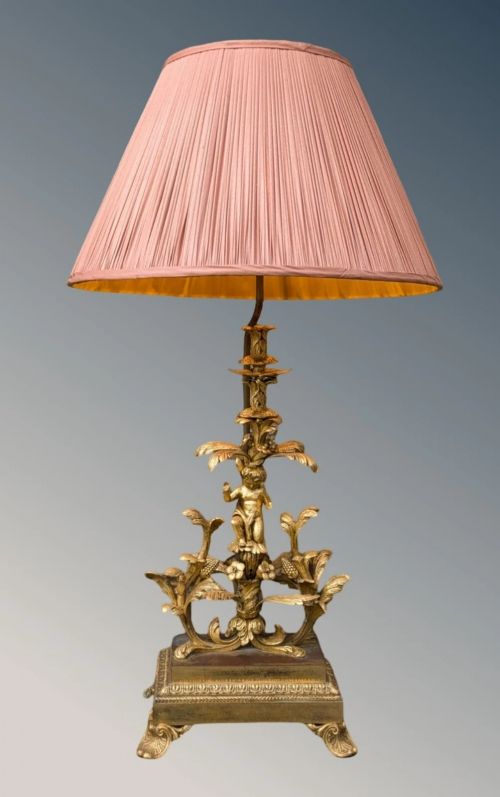
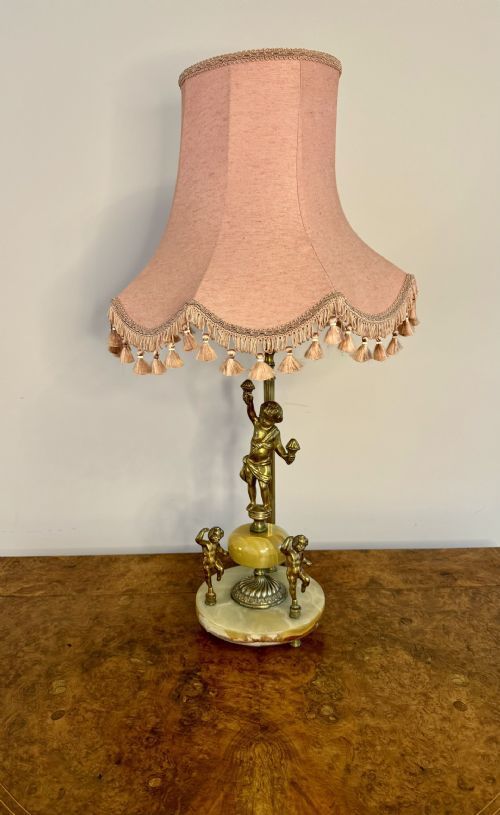
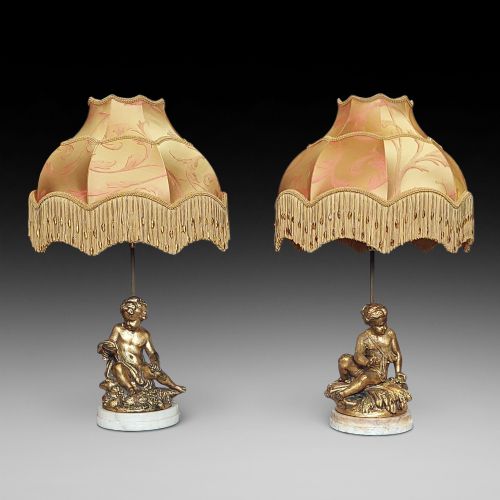
The most common versions encountered on this page are table lamps and wall lights cast in gilt bronze, brass, or spelter, frequently paired with marble bases or fabric shades. Many originate from conversions of earlier oil lamps, candelabra, or decorative statuary adapted for modern electrical use.
Materials and Techniques
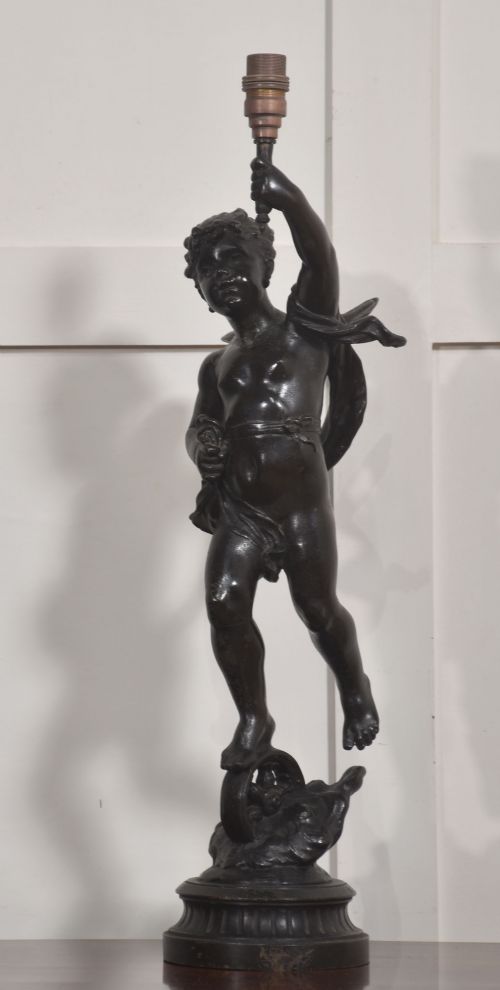
Foundry methods rely heavily on bronze casting, ormolu gilding, and the use of patinated metals to create detailed figures of putti and cherubs. Spelter and gilt metal appear as alternative casting mediums in later twentieth-century interpretations.
Mounts incorporate natural materials such as marble, onyx, and alabaster, while shades utilise cut glass, crystal spikes, or gathered fabrics to diffuse light from the central fixture.
Several cherubs double as musicians, caught mid-concert playing brass instruments in permanent silent orchestras.
Quality Variations
The distinction between tiers rests upon the crispness of the metal chasing and the depth of the original gilding or patina. Finer castings preserve the anatomical details of the figures and the sharpness of rococo or neoclassical scrollwork.
The choice of subsidiary materials dictates the overall substance of the piece, with solid bronze and heavy marble bases providing greater physical weight than hollow spelter or thin brass equivalents.
Aug. Moreau
The French Cherub Lamp Glossary
- Ormolu
- A technique of applying finely ground high-carat gold to an object of bronze through a mercury amalgamation process, yielding a rich golden finish.
- Putti
- Plural of putto, representing plump, wingless or winged male infants frequently depicted in classical and renaissance art.
- Spelter
- An alloy of zinc and lead used as a less expensive substitute for bronze in decorative figures.
- Toleware
- Enamelled and lacquered metalware, often hand-painted and utilised for decorative shades or lamp bodies.
French Cherub Lamp: Frequently Asked Questions
Are these lamps originally electric?
Many examples began as oil lamps, candelabra, or bronze statuettes before undergoing later conversion to electricity.
Rewiring and modern safety testing often accompany these antique pieces to ensure suitability for contemporary homes.
How do I identify the period?
Stylistic indicators such as heavy rococo scrollwork or neoclassical symmetry point toward nineteenth-century origins, while lighter metals suggest early twentieth-century manufacture.
Examining the base construction and metal patination helps distinguish older bronze castings from later spelter reproductions.
Where should I place one?
These figurative lamps suit placement on side tables, mantelpieces, or grand desks where their sculptural qualities remain visible.
Pairing them with neutral walls allows the metallic finishes and detailed casting to stand out as focal points.
What maintenance do they need?
Dusting with a soft, dry cloth preserves the delicate surfaces of gilt bronze, ormolu, and patinated metalwork.
Harsh chemical cleaners should be avoided entirely, as they risk stripping the historic finishes from the metal.