




Gold Ormolu Candelabra Lamp
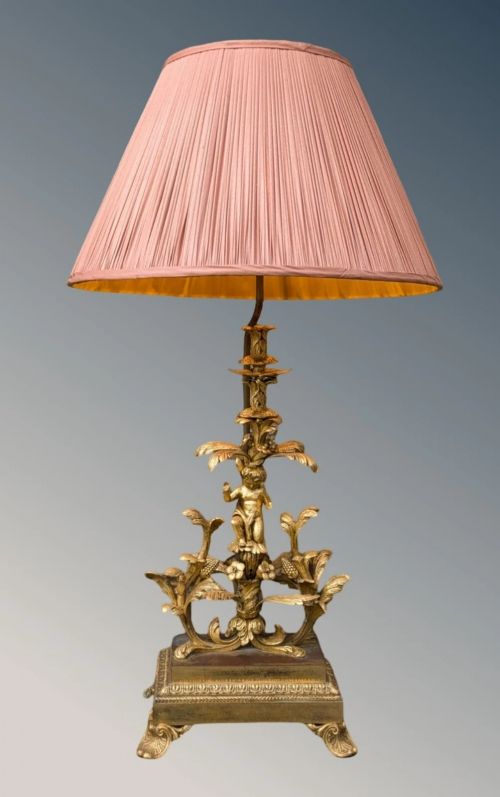
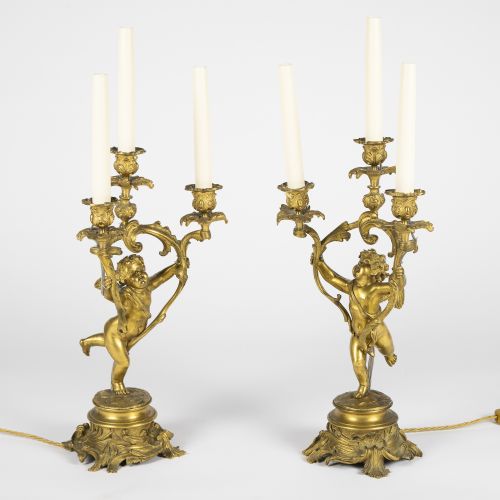
These gold ormolu candelabra lamp designs bring architectural presence and heavy metalwork into a room.
Gold Ormolu Candelabra Lamp
A gold ormolu candelabra lamp combines classical metalwork with domestic lighting, often taking the form of table lamps, standard lamps, or converted candlesticks. You will most frequently meet nineteenth-century examples and Regency pieces on this page.
The aesthetic draws heavily from French Rococo Revival, Neoclassical, and French Empire styles. These objects utilise sculptural figures such as putti and cherubs alongside twin arms and candelabra structures.
Originating largely from French design traditions, these pieces range from monumental table lamps to paired candleholders adapted for electricity. The forms rely on heavy cast metal bases and upright candle branches.
Materials and construction
The construction relies heavily on ormolu, gilt bronze, and patinated bronze, frequently paired with marble bases. Makers cast the metal components before applying gilding and patination to create contrast between bright gold surfaces and darker metal.
Many pieces incorporate fabric and silk shades to complement the metallic body, while others retain the simple structure of converted candlesticks. Structural weight comes from dense metals and stone plinths rather than lightweight alloys.
Cherubs and putti routinely hold up the lighting apparatus, making winged infants responsible for domestic illumination.
Assessing quality in metalwork
The finest examples display crisp chasing in the bronze and ormolu, where details on figures like cherubs and putti remain sharp and deep. Lower tiers show softer casting and flatter surface ornamentation that lacks dimensionality.
Proportion and material combination separate standard pieces from monumental works. Heavy marble plinths and sophisticated patinated bronze contrast indicate superior craftsmanship over simpler brass assemblies.
The Gold Ormolu Candelabra Lamp Glossary
- Ormolu
- A technique of applying finely ground high-carat gold to bronze objects. It provides a rich golden surface that resists tarnish.
- Gilt Bronze
- Bronze metal that has been coated with a thin layer of gold. It forms the primary structural material for these heavy lamps.
- Patinated Bronze
- Bronze treated with chemicals to darken the surface. This creates contrast against bright ormolu sections.
- Rococo Revival
- A nineteenth-century design style marked by asymmetric scrolls, natural motifs, and ornate flourishes. It influences many of these lamps.
- Putti
- Representations of small winged infants used frequently as sculptural supports in metalwork. They appear often on nineteenth-century table lamps.
Gold Ormolu Candelabra Lamp: Frequently Asked Questions
What is a gold ormolu candelabra lamp?
These pieces are ornamental lighting fixtures made from gilt bronze and brass, often adapted from nineteenth-century candleholders. They incorporate arms, sculptural figures, and heavy metal bases.
Many started as candle branches before receiving electrical wiring. Their design draws on classical French styles to create a decorative focal point.
How do I date these lamps?
Dating relies on stylistic clues such as French Empire motifs, Regency proportions, or Rococo Revival ornamentation. Materials like patinated bronze and marble also help narrow down the period.
Most items date from the nineteenth century. Examining the casting quality and mounting techniques provides further context for the age of the piece.
Where were these lamps placed?
Grand reception rooms, formal dining spaces, and libraries typically housed these substantial metal lamps. Their reflective surfaces caught candlelight or gaslight effectively.
Today, they function as statement pieces on side tables or large desks. Standard lamp versions stand alone as vertical decorative elements.
How do I care for gilt bronze?
Maintenance requires gentle dusting with a soft dry cloth to protect the gold surface. Moisture and abrasive cleaners can damage the historic gilding.
Keeping the metal away from direct heat sources preserves the underlying structure. The patinated sections benefit from minimal intervention to maintain their finish.