



Second Empire Table Lamp
A second empire table lamp brings imposing French grandeur into a room, combining heavy metals and classical silhouettes.
Second Empire Table Lamp
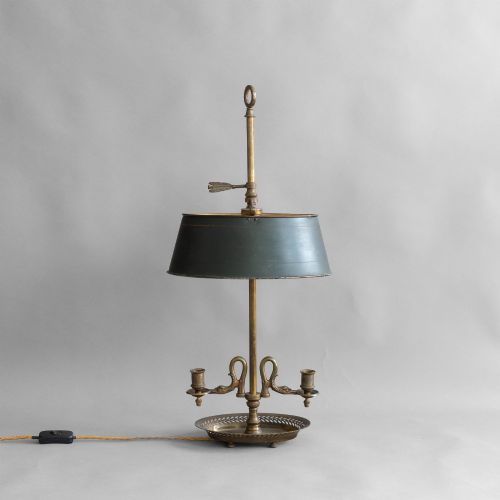
When you search for a second empire table lamp, you are looking at nineteenth-century lighting and lighting conversions originating primarily from France. These pieces draw heavily upon Napoleon III aesthetics and classical revival motifs, bringing a distinct architectural presence to surface illumination.
The versions you are most likely to meet on this page span the broader nineteenth century alongside later twentieth-century interpretations. They manifest in forms such as figural bases, converted oil lamps, or monumental ormolu designs.
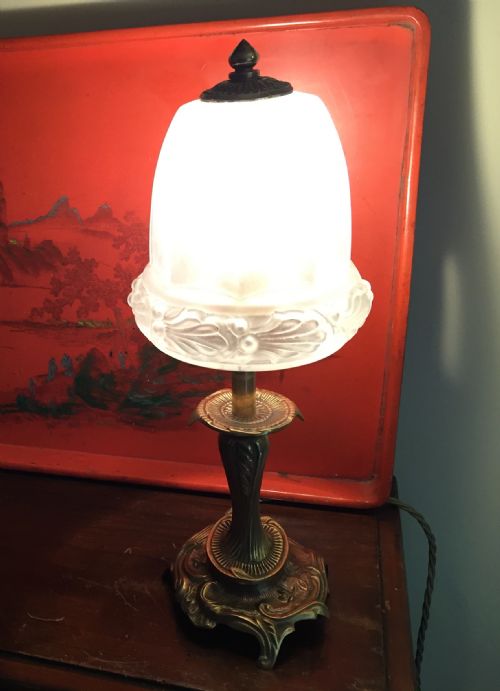
Materials range from gilt bronze and brass to copper, marble, and frosted glass. Their origins trace back through French and continental workshops that favoured rich metallic patination and sculptural detailing.
How they were made
Makers constructed these lamp bases using cast metals such as bronze, brass, and copper, frequently employing fire gilding or ormolu techniques to achieve a brilliant metallic finish. These metal components were often paired with carved wooden elements or inset marble and frosted glass.
Many examples began life as oil lamps before undergoing later conversions to electricity during the twentieth century. This process involved adapting the original metal reservoirs and burners to house electrical fittings while retaining the primary sculptural body.
Keep an eye out for cherubs caught mid-orchestra, making sure your reading corner is forever serenaded by tiny metal musicians.
What varies in quality
The standard of chasing and sculptural detail separates the finest examples from simpler production pieces. Crisp definition in cast bronze or ormolu figures indicates superior craftsmanship, whereas softer contours point to more utilitarian manufacture.
Material integration also dictates quality, distinguishing solid marble and heavy-gauge bronze from lighter brass or mixed metal alloys. The integrity of the original patination and the subtlety of the surface finish remain central to a piece's visual weight.
The Second Empire Table Lamp Glossary
- Ormolu
- Gilded bronze, where a finely ground high-carat goldmercury amalgam is applied to a bronze object and heated. This technique creates a durable, luminous golden finish characteristic of French luxury goods.
- Napoleon III style
- A nineteenth-century French aesthetic characterised by eclectic revivals of past royal periods, particularly the Renaissance, Louis XIV, and neoclassical design. It favours opulent materials and heavy ornamentation.
- Figural base
- A lamp support incorporating human, mythological, or cherubic sculpted forms. These figures often act as the primary structural column or decorative surround of the piece.
- Frosted glass
- Glass treated by acid-etching or sandblasting to create a diffusing, opaque surface. It softens the light emitted from the burner or bulb.
Second Empire Table Lamp: Frequently Asked Questions
What is a second empire table lamp?
These pieces are nineteenth-century French lighting fixtures or converted oil lamps that reflect the ornate tastes of the Napoleon III era. They incorporate sculptural cast metals and classical motifs.
They serve as prominent decorative objects on desks, consoles, and side tables, providing both ambient illumination and a strong historical focal point.
How were these lamps used originally?
Originally, they functioned as interior oil lamps, burning fuel to provide light in domestic parlours, libraries, and studies before the widespread adoption of electricity.
Over time, many were adapted with electrical wiring, transforming them from functional lighting apparatuses into decorative table lamps.
How do you live with them?
Living with these lamps involves placing them on sturdy surfaces like mahogany side tables or console units where their weight and height can be properly supported.
Because of their grand scale and metallic finishes, they pair well with traditional interiors, acting as sculptural accents even when unlit.
How can you tell periods apart?
Distinguishing periods relies on examining the casting techniques, the specific alloy composition, and the stylistic vocabulary of the metalwork. Pieces from the mid-nineteenth century often display heavier mercury gilding and more meticulous hand-chasing than later twentieth-century interpretations.
Furthermore, the integration of materials like marble and frosted glass shifts in proportion and finish across different decades of production.