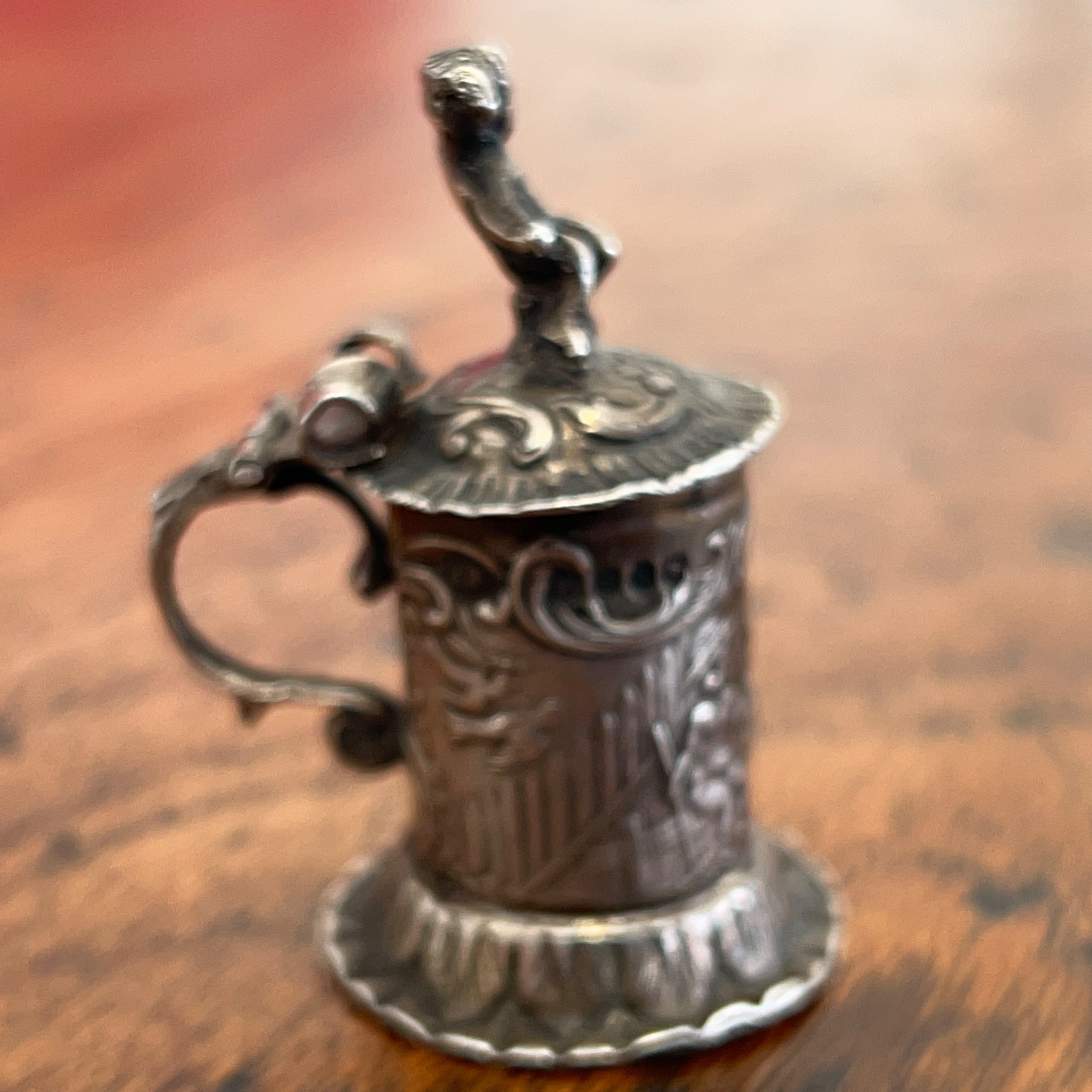
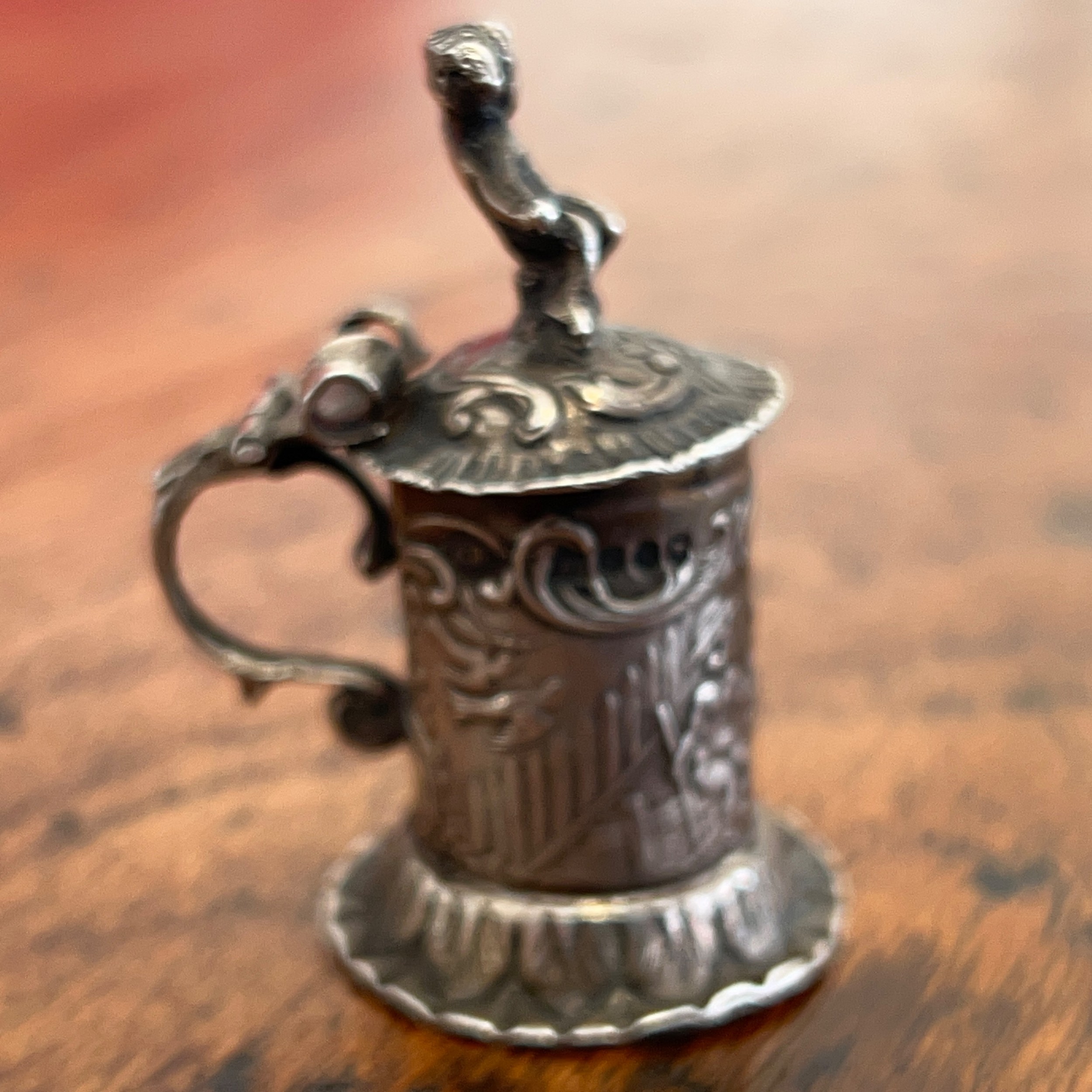
It was listed by William Morris Antiques. Sold pieces stay on Sellingantiques as a record of what has passed through, and the next one is rarely far away.
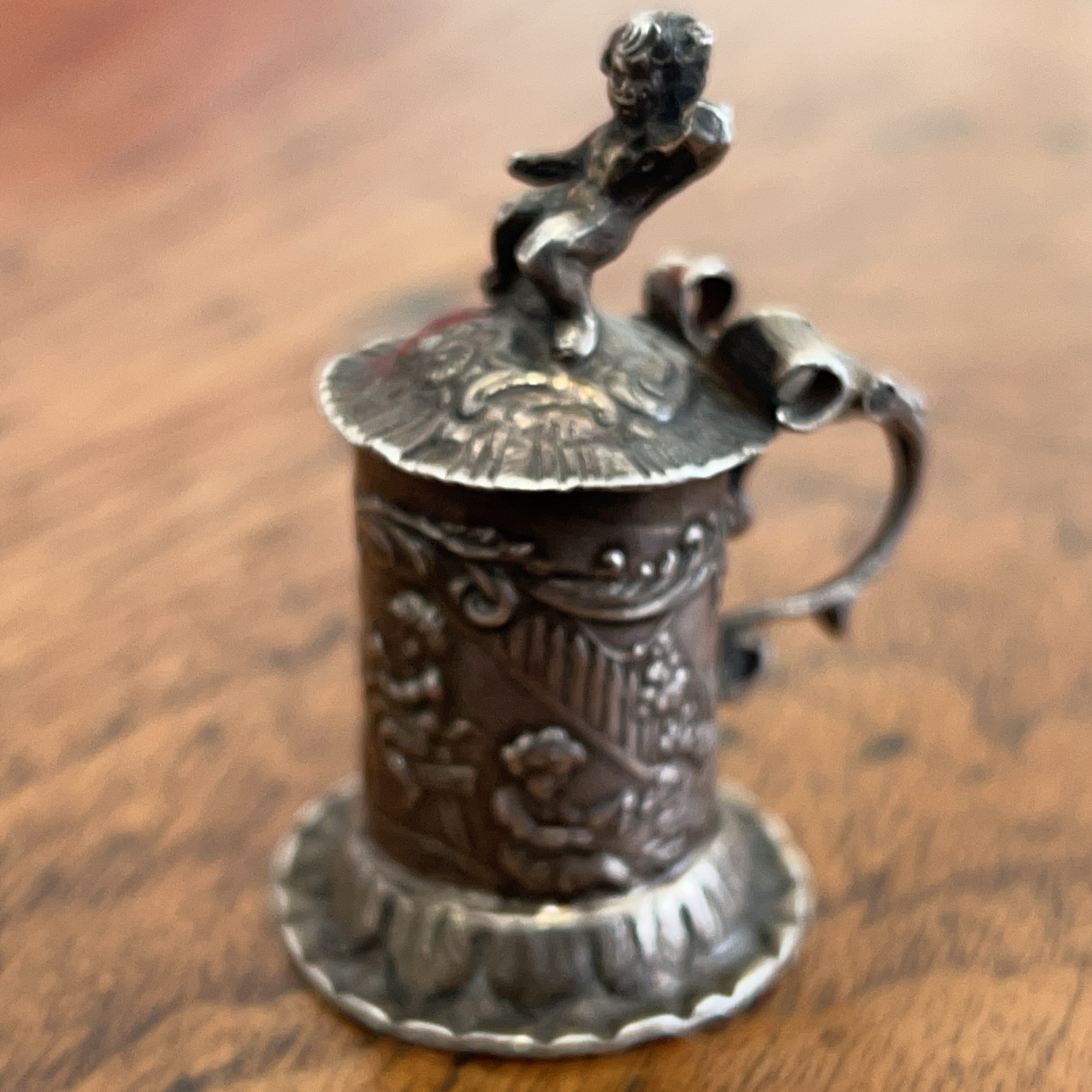
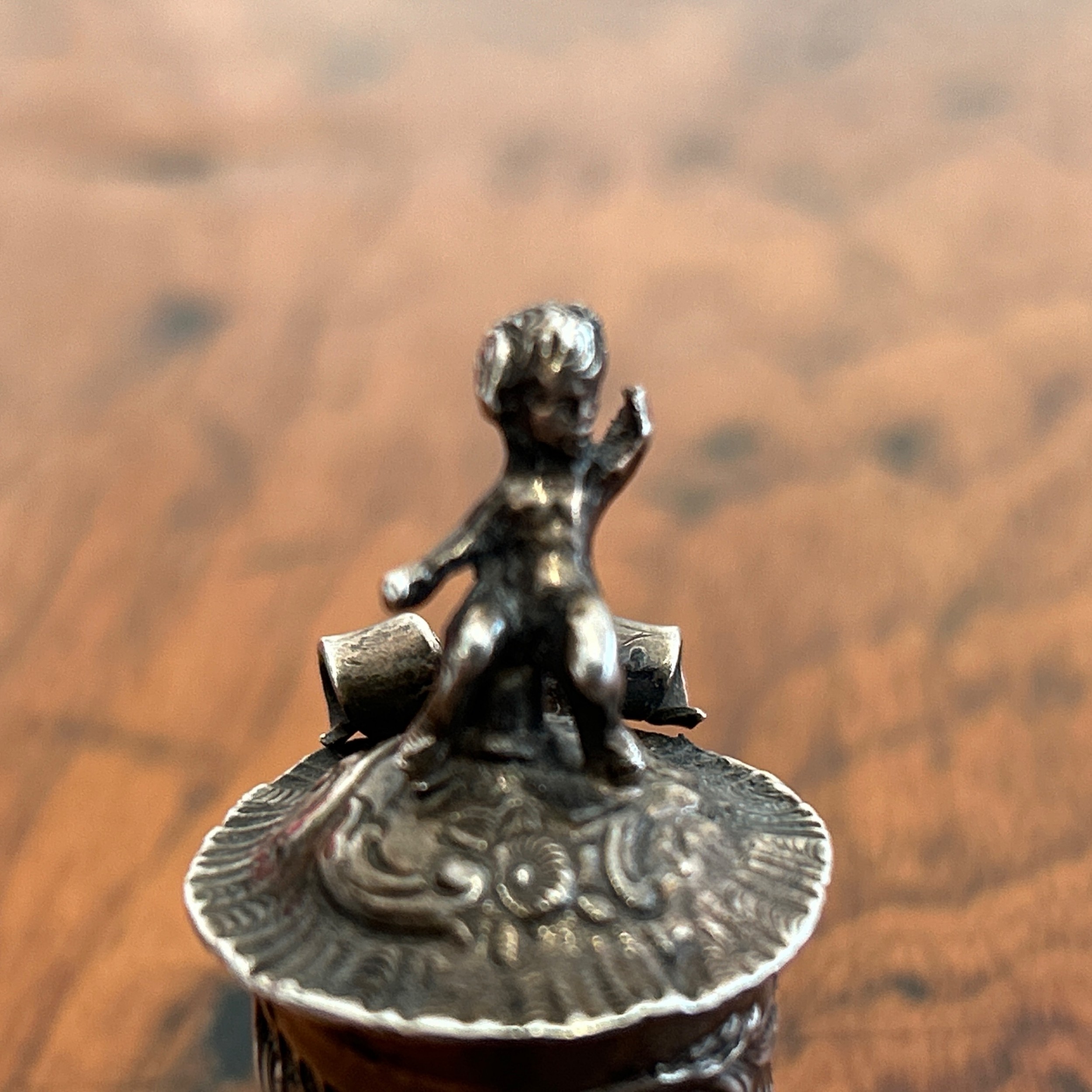
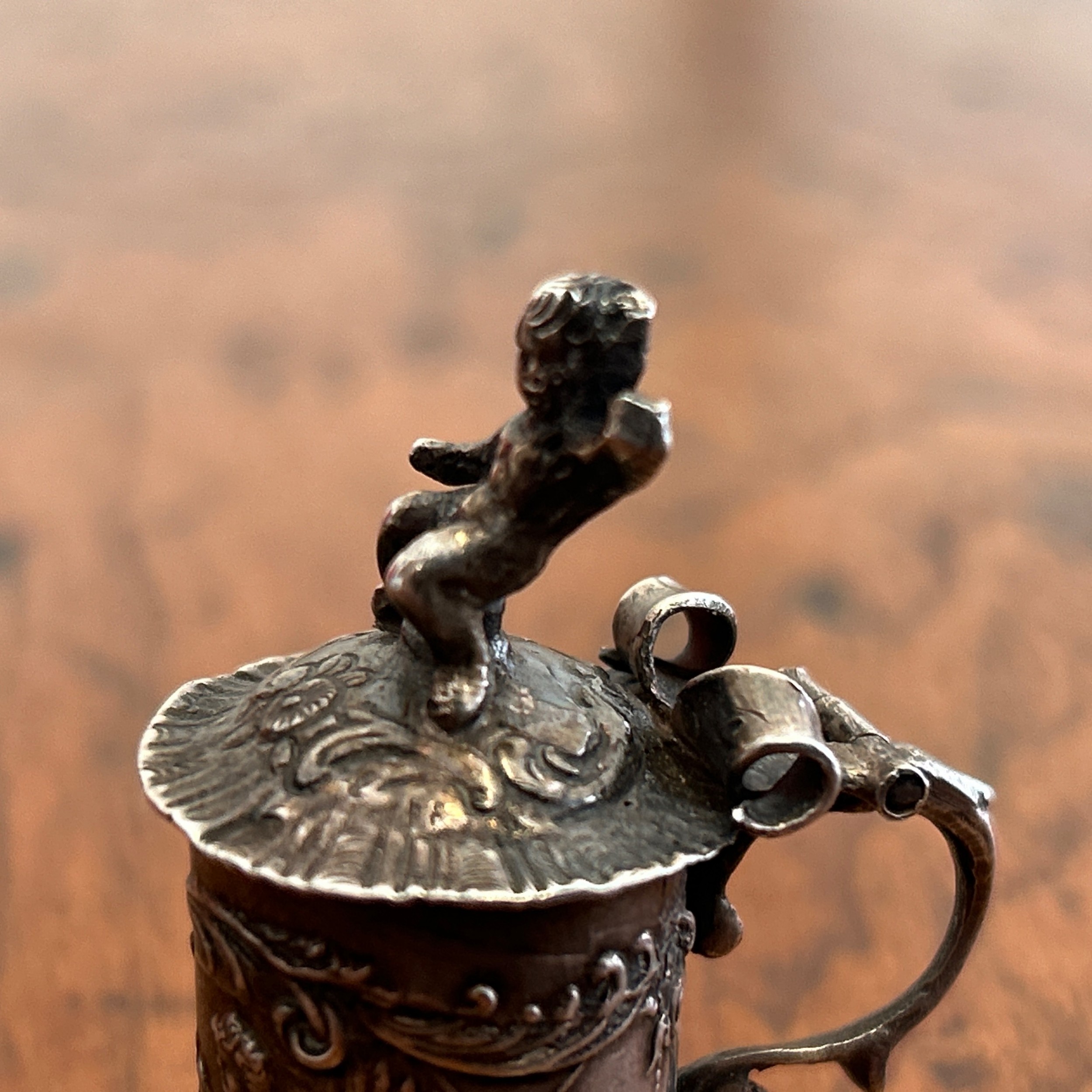
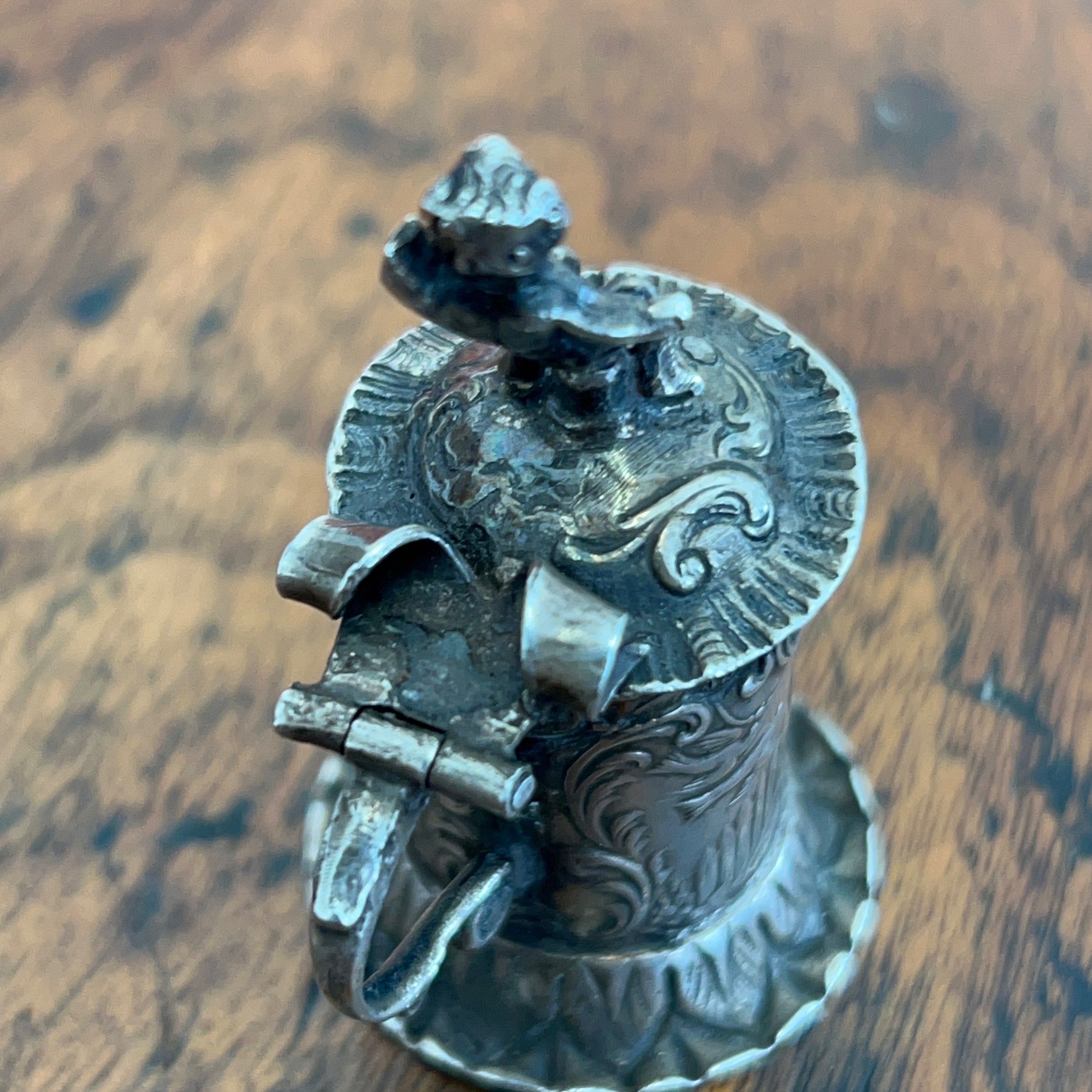
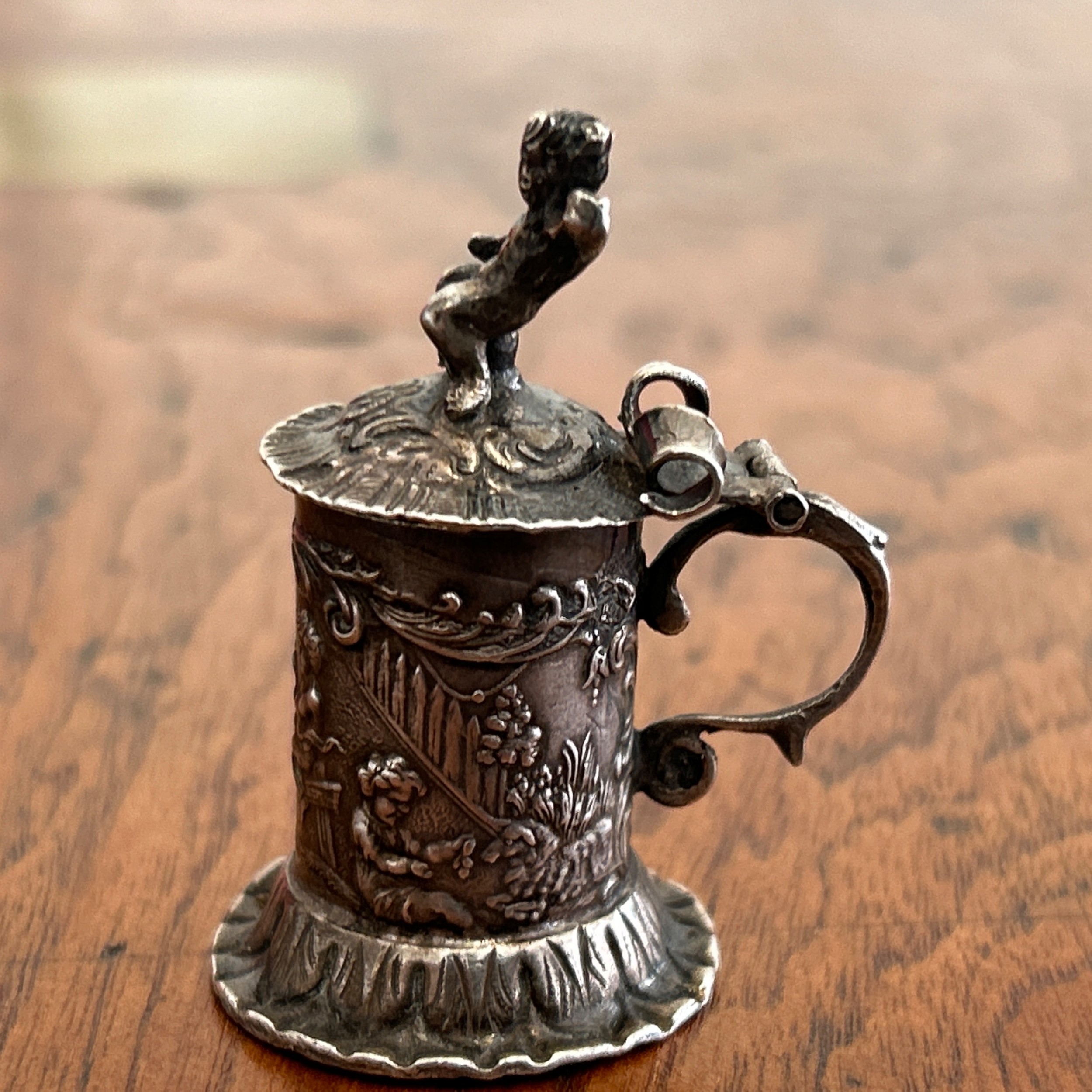
William Morris Antiques has dated this Antique Silver Tankard to the 1890s.
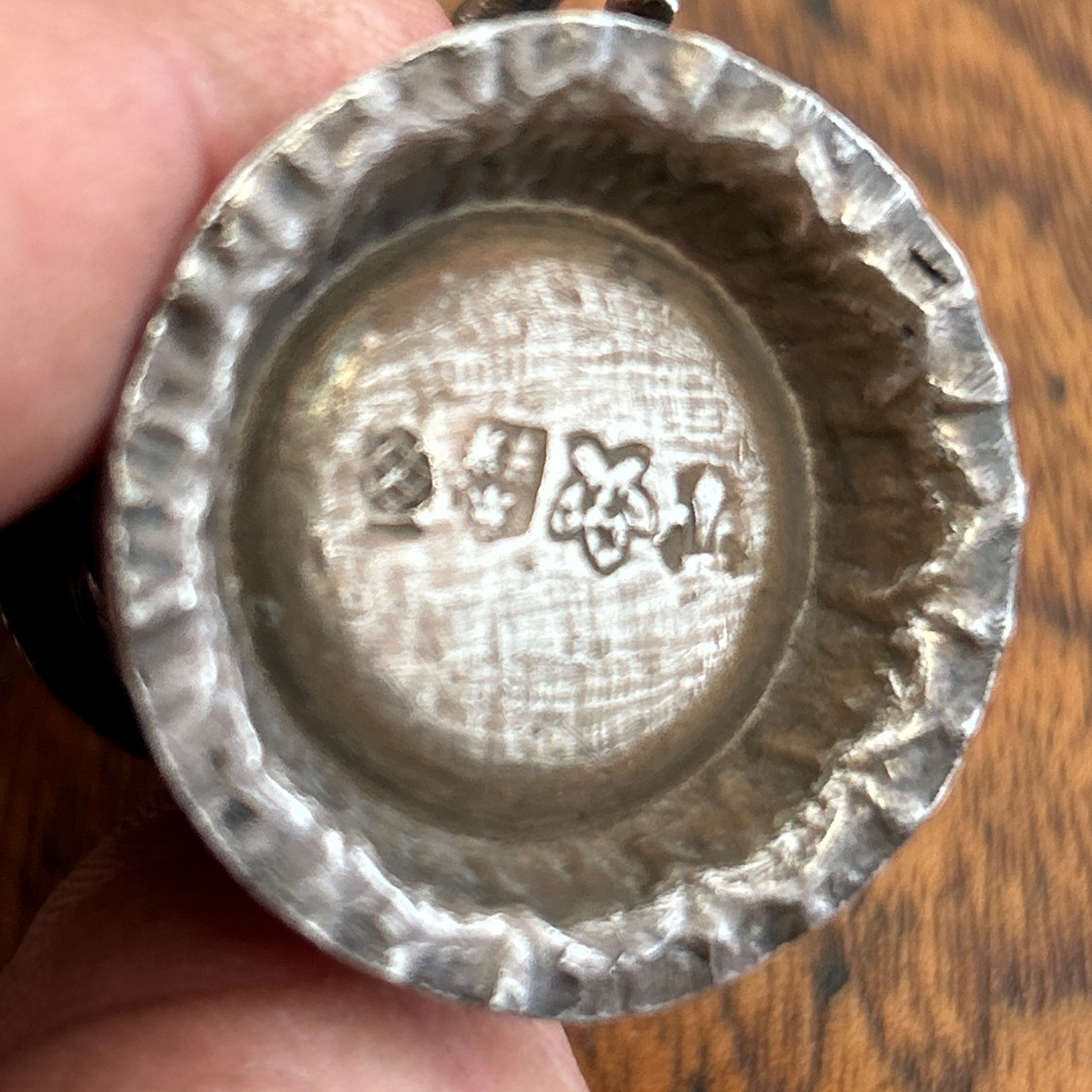
The base bears marks for Karl Kurz Silberwarenfabrik: Kesselstadt
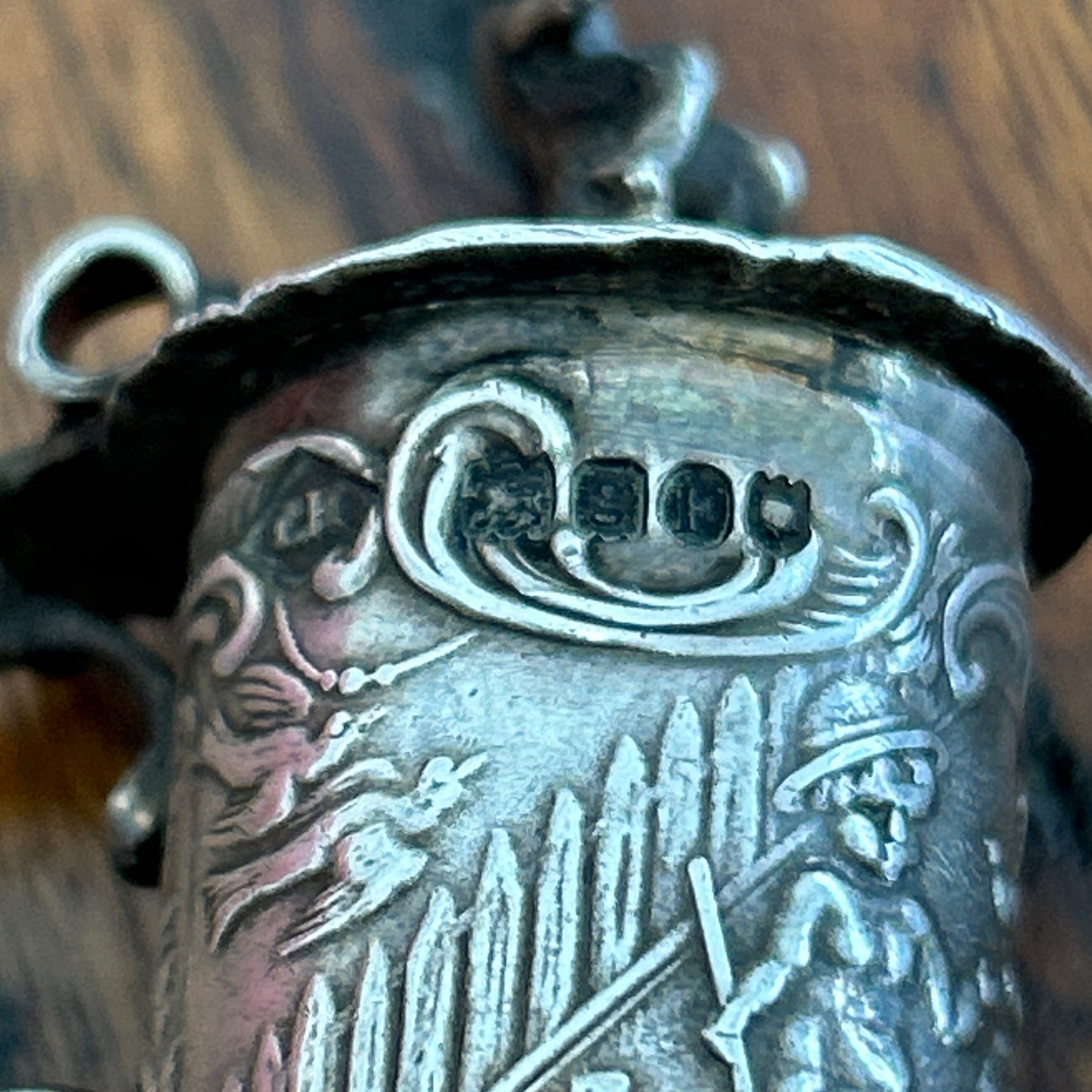
End of 19th century. there are also marks just under the rim for
the English Agent/Importer, Theodor Hartmann registered in London and Sheffield.
The antique silver industry of Hanau chose to mark its output with fantasy marks. It is difficult to say if this was practiced with a clear intent to deceive.
For example, French rococo style reproductions are marked with French looking marks, German seventeenth century-inspired pieces got German-looking marks, and so on. Furthermore, most Hanau firms chose as company marks styles reminiscent of seventeenth and eighteenth century maker's marks.
Mark stamping as practiced in Hanau would have been completely illegal in France or England, or for that matter in any other German city where a guild supervised the marking. But Hanau had a long tradition as a free-trade city.
With the production of "antique silver", Hanau found a market niche, which brought its silver manufacturers enormous prosperity and worldwide reputation. The 'father' of this industry was August Schleissner. The other leading firm of Hanau was Neresheimer, founded in 1890 as a partnership of August and Ludwig Neresheimer with Jean Schlingloff. Right from the start Neresheimer offered a wide range of highly decorative objects like nefs, tankards, coconut and nautilus cups, and other sumptuous sideboard pieces.
William Morris Antiques has dated this Antique Silver Tankard to the 1890s.
Jess william morris established himself in the antiques business in 1999 after being awarded an rics accredited fine art valuation degree
You can view the stock and full dealer information on the William Morris Antiques Profile Page
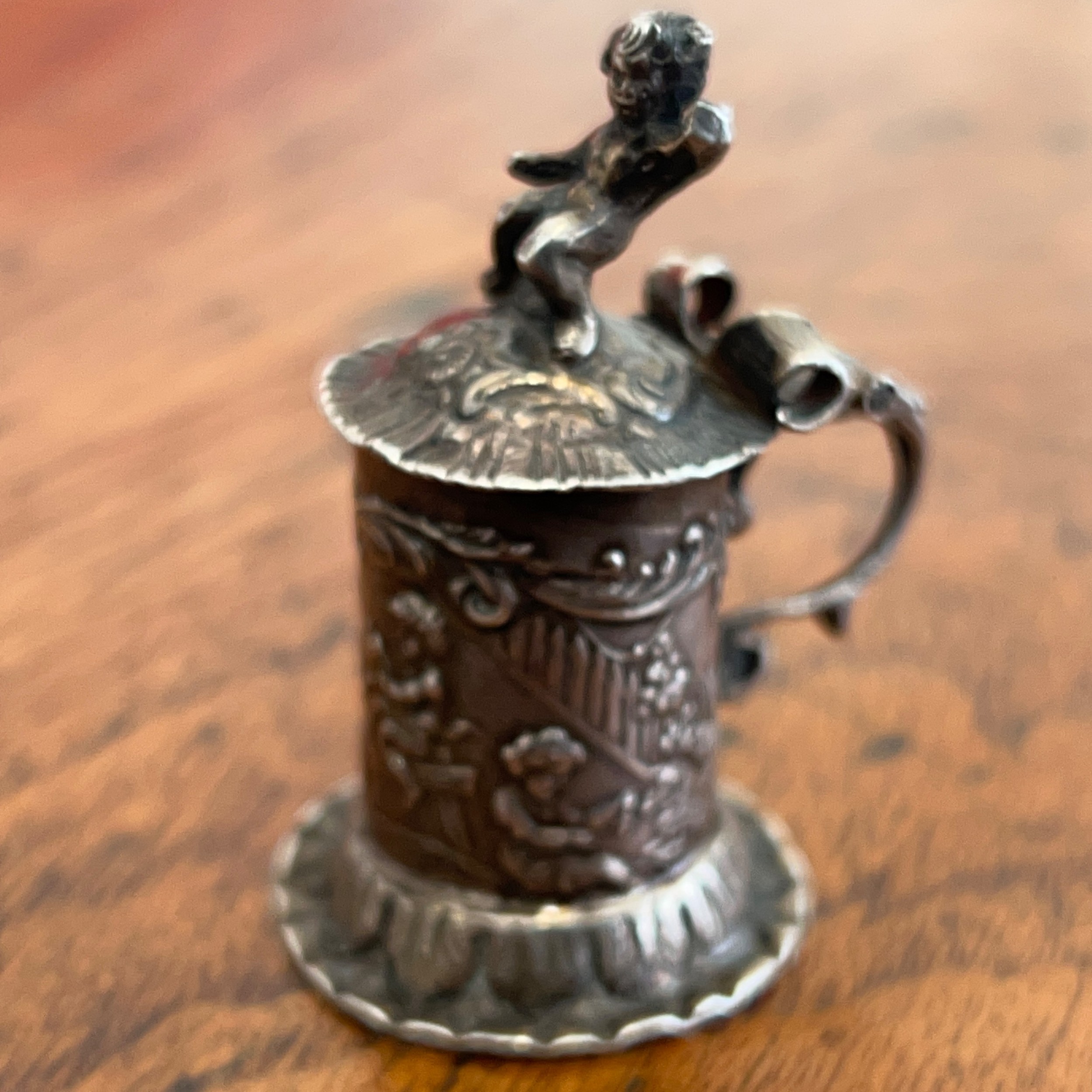
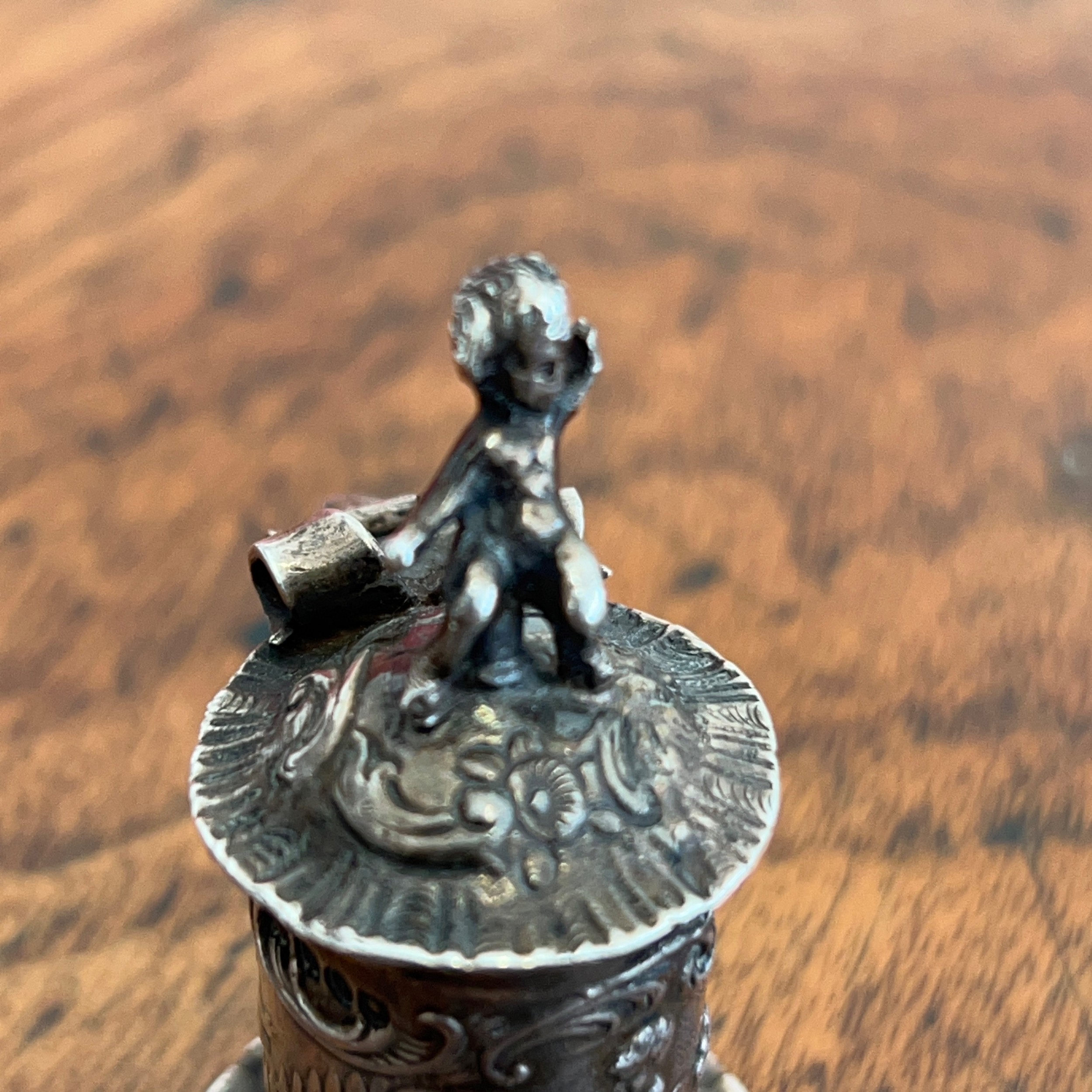
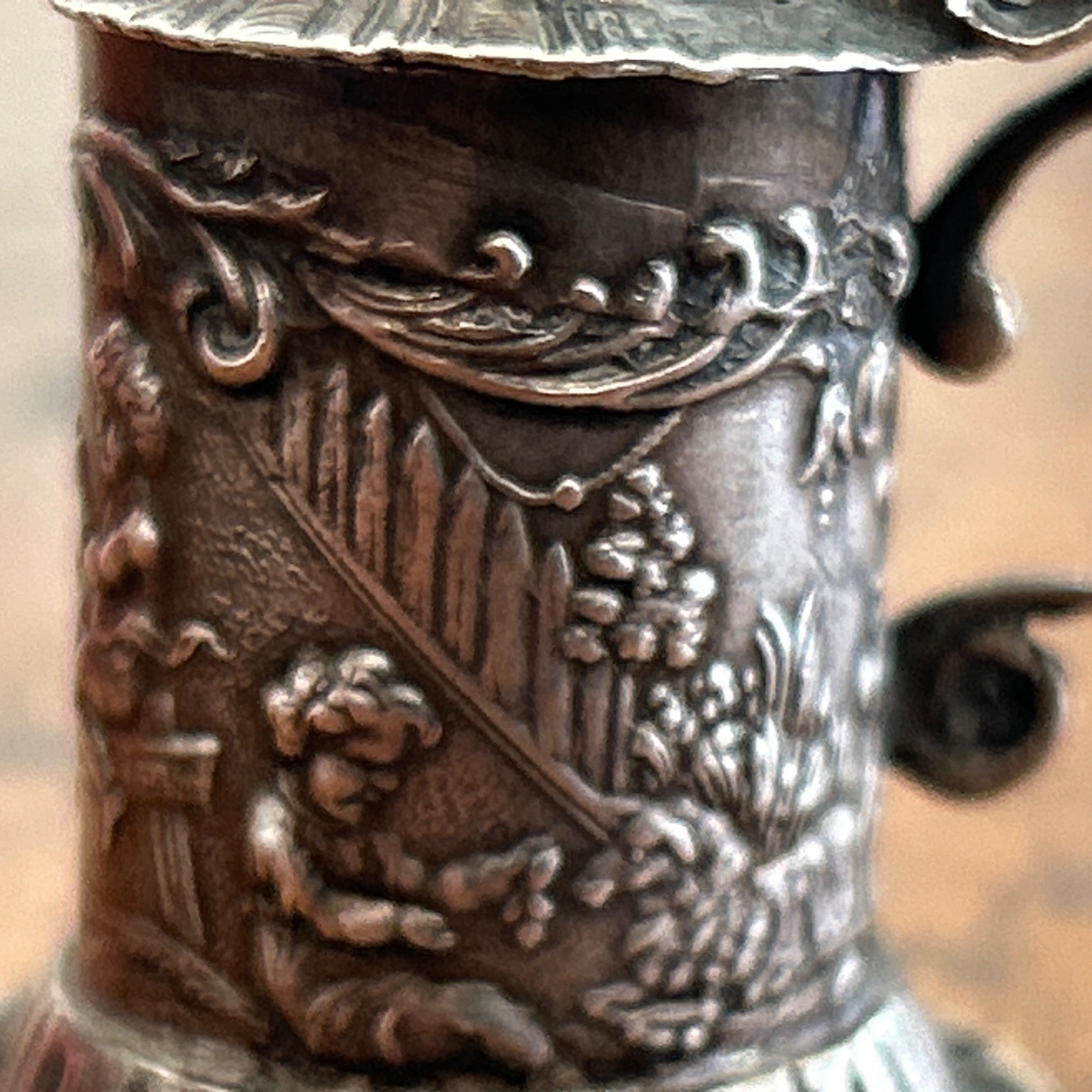
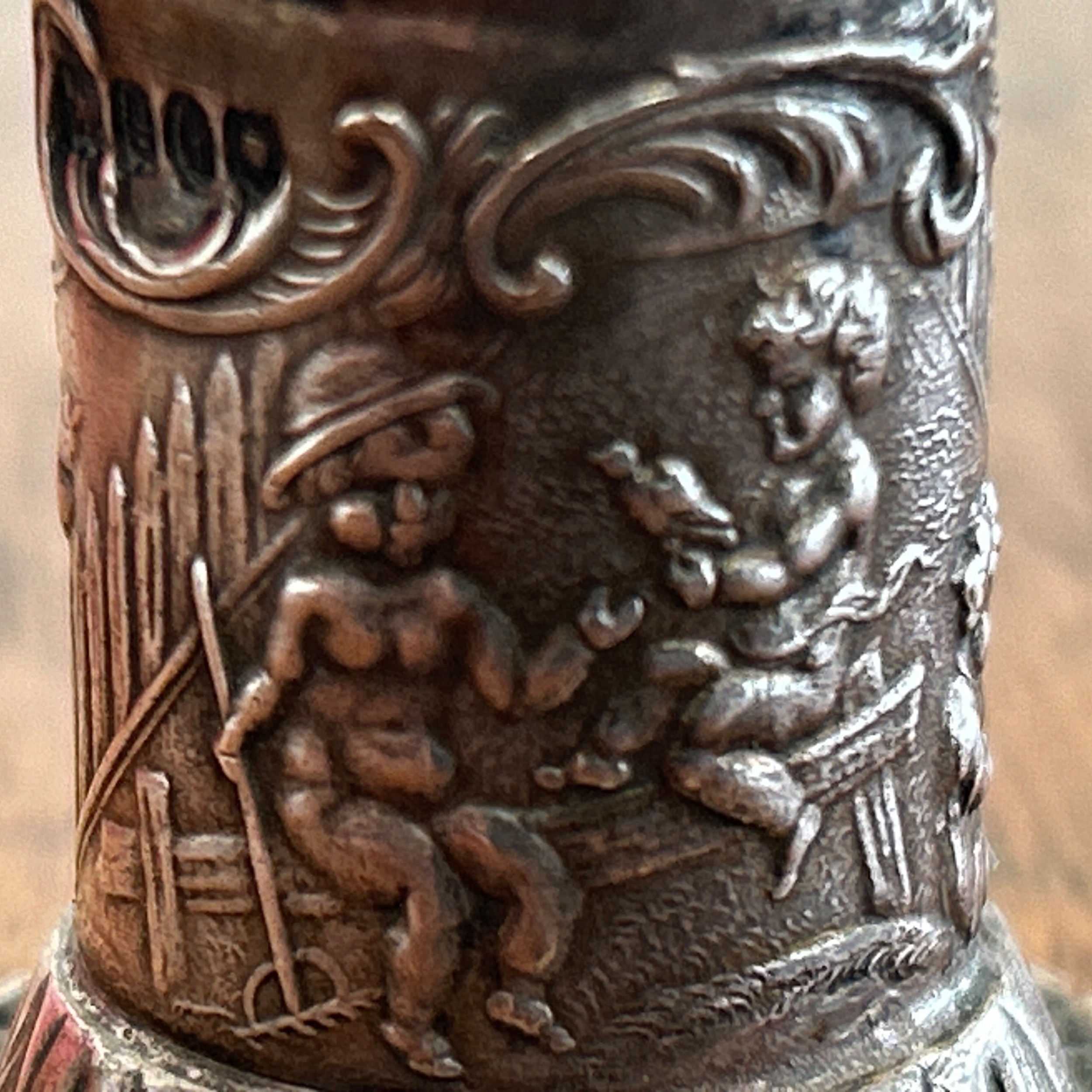
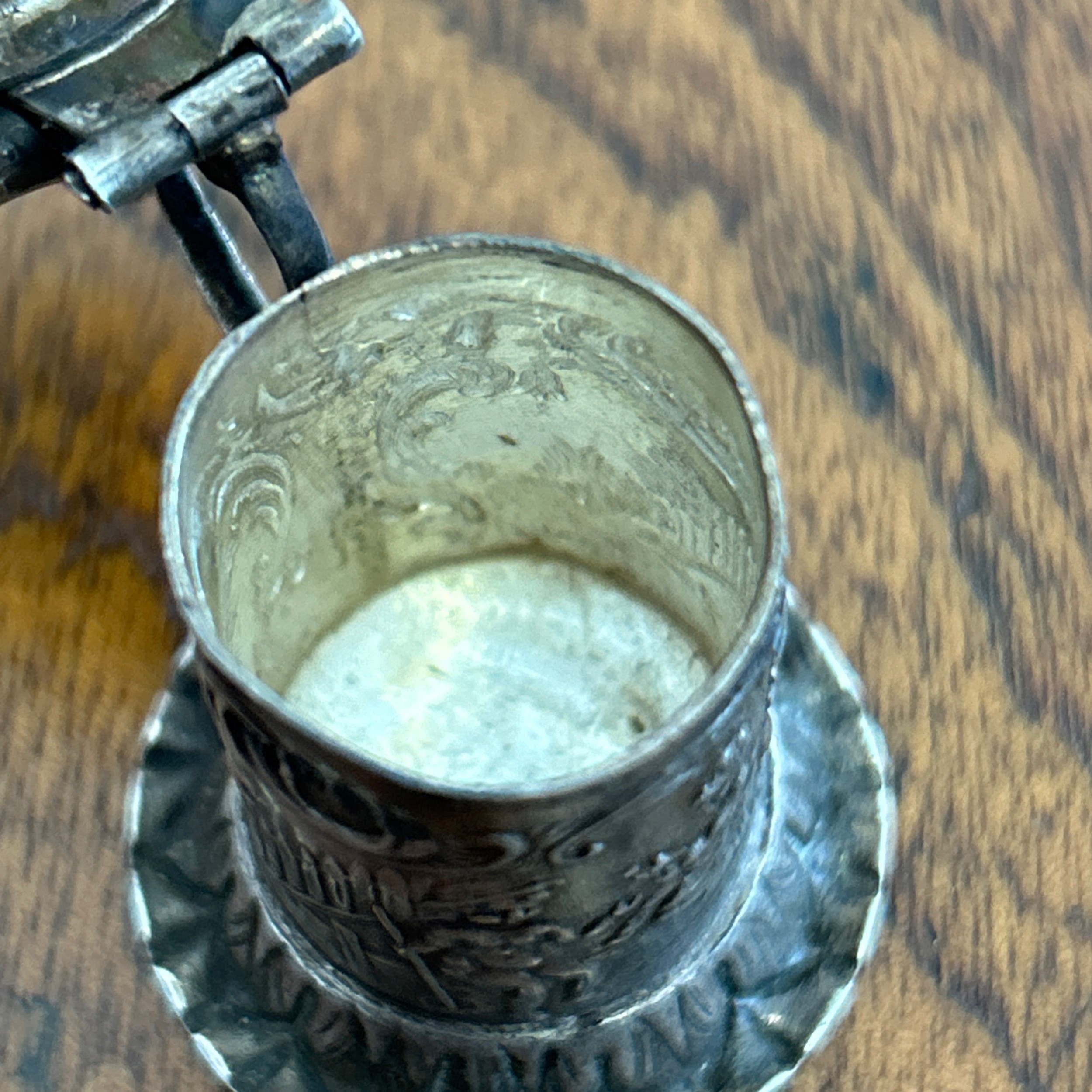
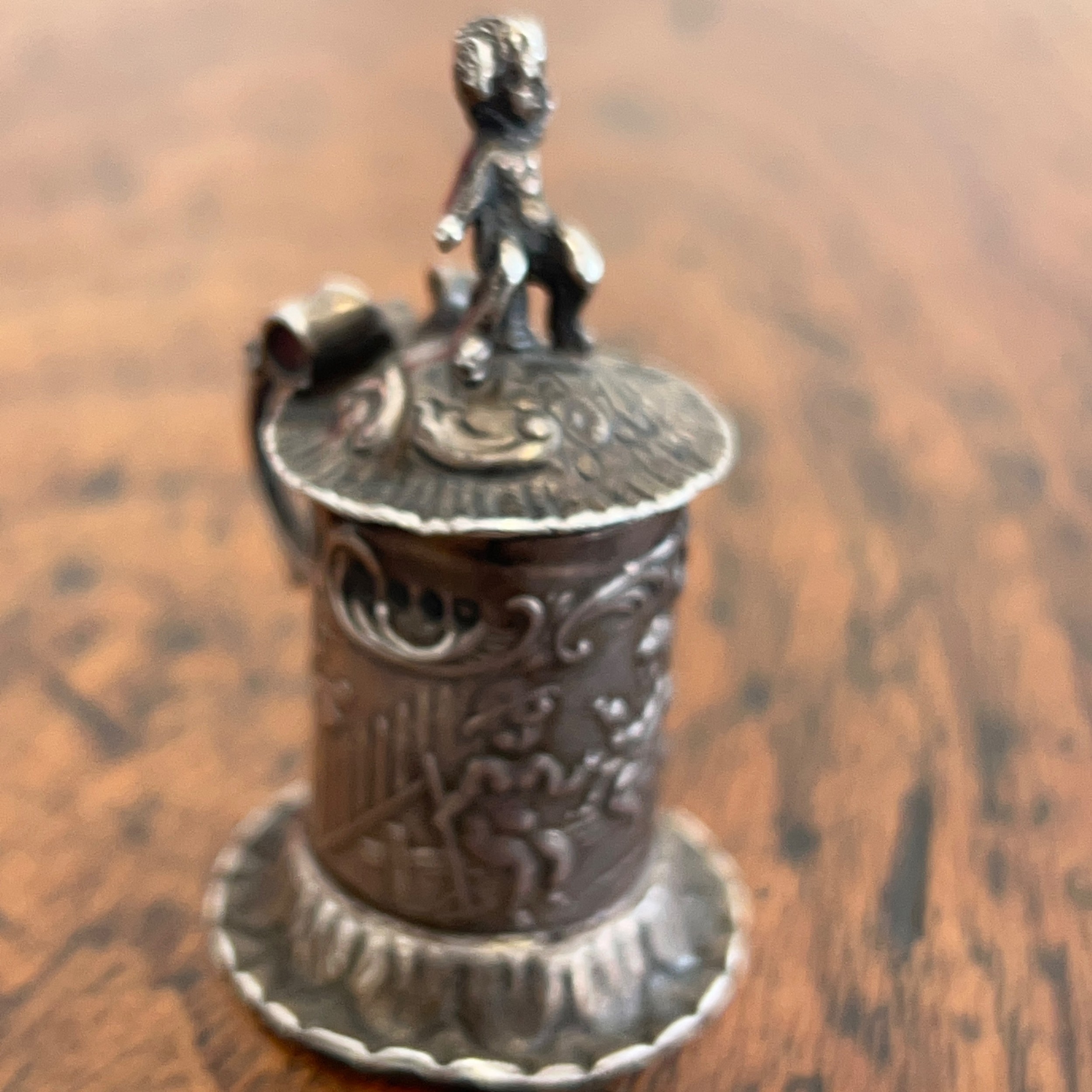
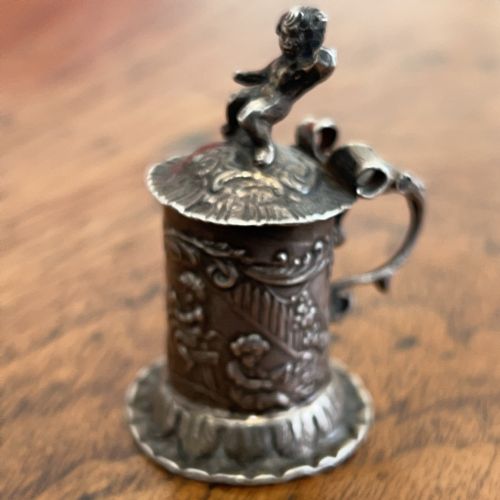
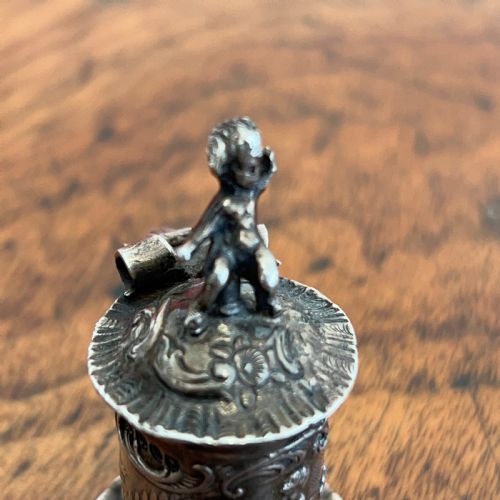
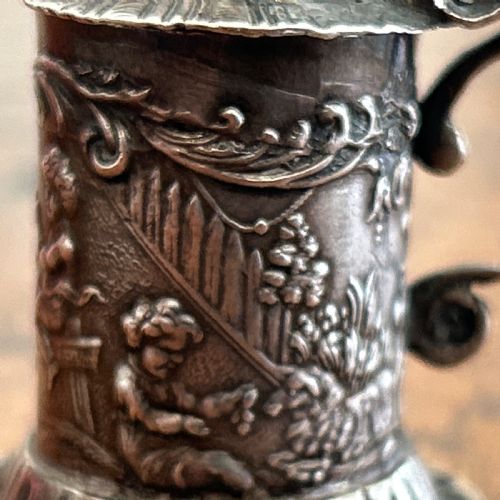
Small Continental Silver Tankard Decorated with Cherubs, Hanau Late 19th C