

Antique Embossed Silver
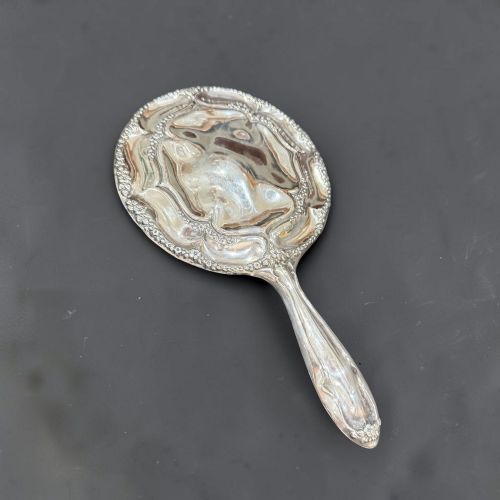
Antique embossed silver brings tactile depth to your collection through raised motifs hammered directly into the metal.
Antique Embossed Silver
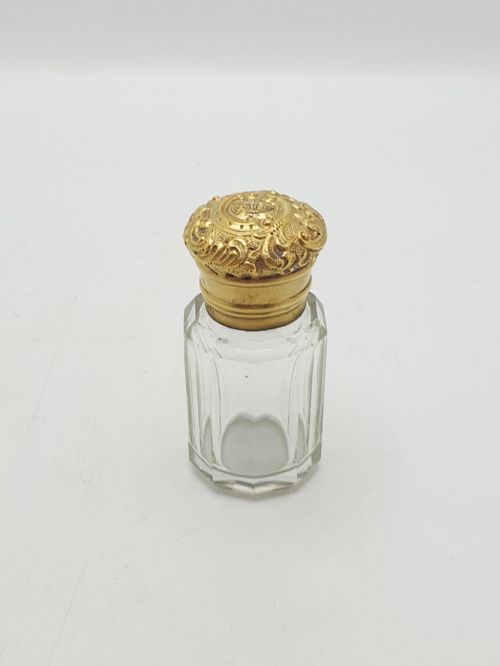
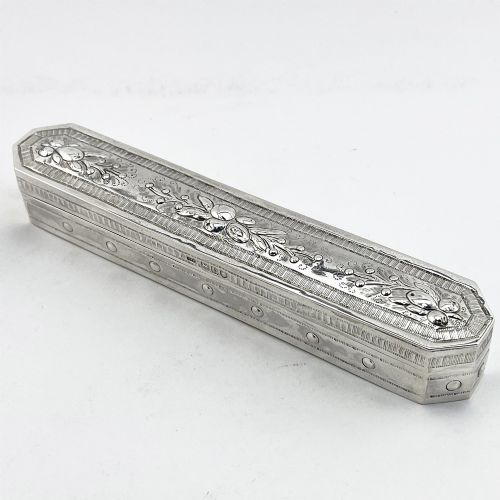
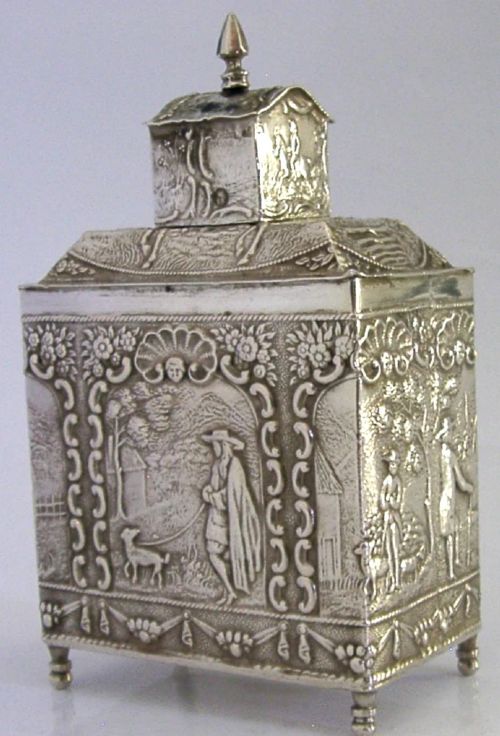
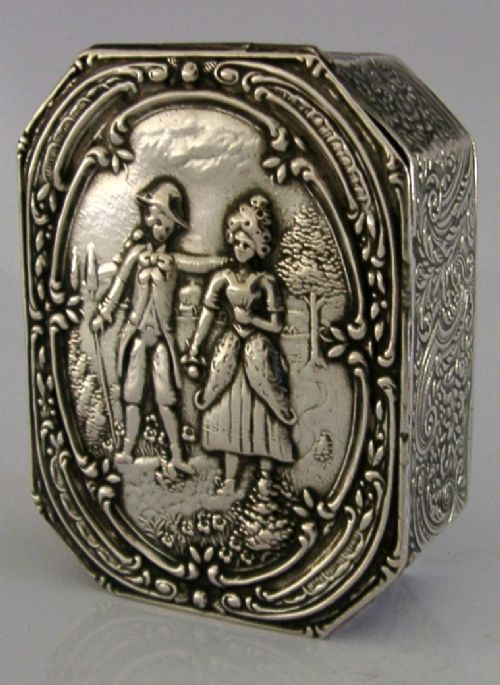
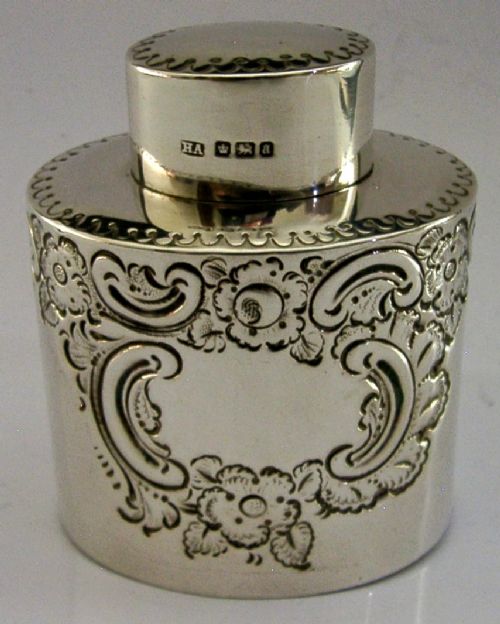
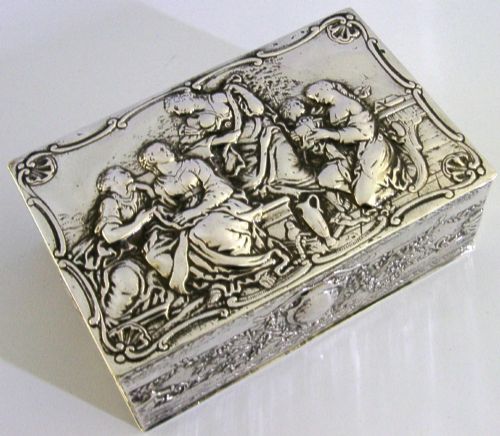
Antique embossed silver comprises functional and decorative objects shaped by metalworkers during the Victorian, Edwardian and late nineteenth-century periods. You will frequently encounter small personal items such as trinket boxes, snuff boxes, card cases and tea caddies bearing prominent raised designs. These pieces range from British sterling silver wares stamped with regional assay office marks to continental European boxes and chargers.
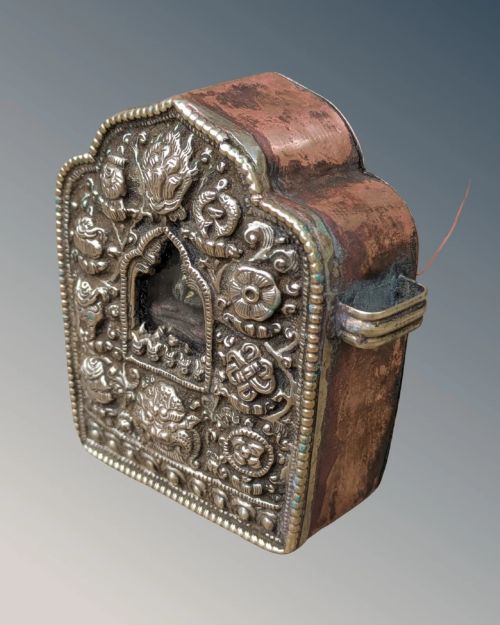
Makers often drew upon styles like Rococo Revival, Art Nouveau, Dutch Revival and Anglo-Indian ornamentation to decorate surfaces with floral sprays, figural scenes and scrollwork. Objects span various scales, from pocket-sized pill boxes and vesta cases to larger table boxes, bowls, ewers and photo frames. Some items combine the metal with cut glass, wood, velvet or satin glass to create contrasting textures.
How they were made
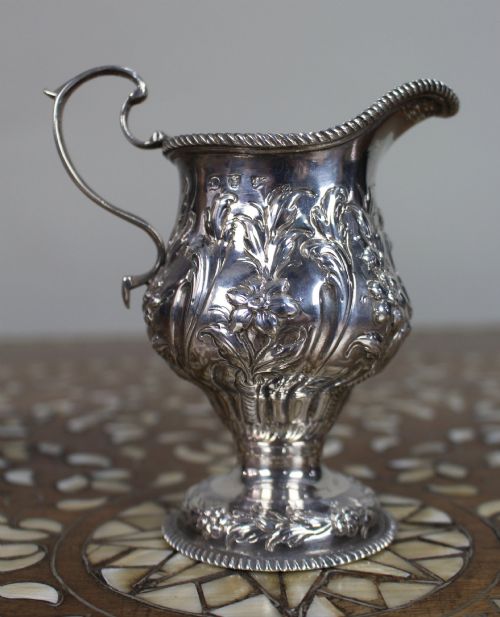
Silversmiths formed these items primarily from sterling silver, solid silver or silver plate, sometimes mounting the metal over glass or wooden cores. The characteristic raised patterns were achieved through repoussé and chasing techniques, where artisans hammered the metal from the reverse side to push the design outward before refining details on the front.
Interior gilt finishes were frequently applied to silver snuff boxes and trinket boxes to protect the metal from corrosive contents. Additional elements such as cast hinges, bezels and applied feet were soldered into position before final polishing.
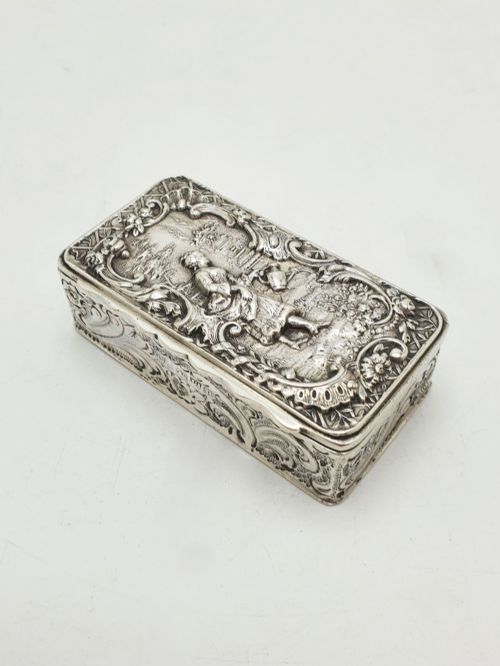
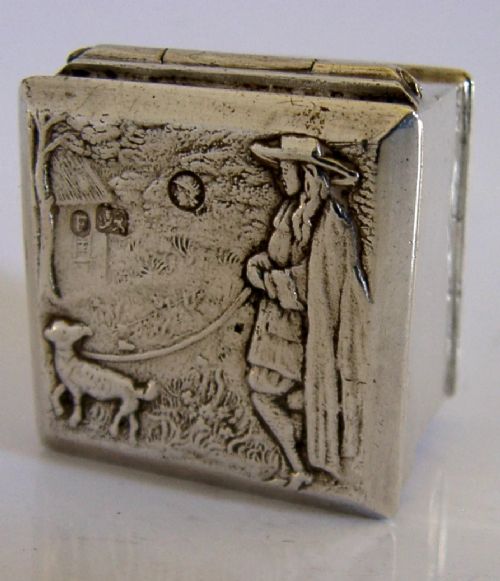
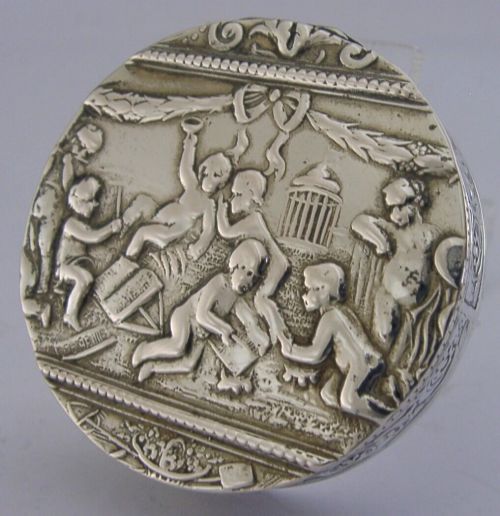
A German silver box depicts lively cherub scenes, while another houses a solitary dog walking proudly across the lid.
What varies in quality
The distinction between standard items and exceptional pieces rests upon the crispness of the repoussé work and the depth of relief achieved by the silversmith. Skill in handling the hammer determines whether figural scenes and floral scrolls appear sharp and expressive or soft and muddy.
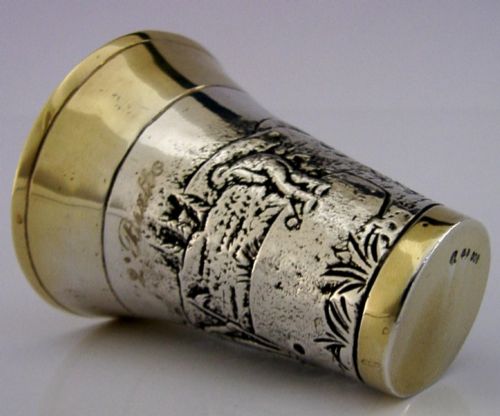
The gauge of the silver dictates the physical substance and durability of the object, with heavier walls providing a more substantial feel in the hand. Furthermore, the clarity of hallmarks, the precision of fitted lids and the preservation of original gilding separate ordinary production from finer examples.
Henry Matthews·Thomas Hayes·A. Bromet & Co
The Antique Embossed Silver Glossary
- Repoussé
- A metalworking technique where the artisan hammers a design from the reverse side of a sheet of silver to create a raised pattern in relief. This method requires considerable skill to control the thickness of the metal.
- Sterling silver
- An alloy consisting of ninety-two point five percent silver and seven point five percent other metals, usually copper, chosen to improve durability. British items typically display a lion passant hallmark to confirm this standard.
- Tea caddy
- A small container originally designed to store loose tea leaves securely under lock and key. Many antique examples feature embossed panels and fitted lids.
- Vesta case
- A small pocket container manufactured to hold matches, typically fitted with a striking stripe on the base. These cases often carry detailed embossed decoration across their hinged bodies.
- Gilt
- A thin layer of gold applied to the interior surface of silver items such as snuff boxes and pill boxes. This treatment prevents the silver from tarnishing when exposed to acidic contents.
Antique Embossed Silver: Frequently Asked Questions
What is embossed silver?
Embossed silver refers to items decorated with raised designs pushed outward from the reverse of the metal sheet using hammer and punch techniques. This process gives flat metal surfaces a three-dimensional texture.
Craftsmen often combined this method with chasing to refine details on the front, producing intricate floral, scenic or scroll motifs common in nineteenth-century decorative items.
How are antique silver boxes cleaned?
Silver pieces generally require minimal intervention to preserve their historic patina and the crisp edges of the embossed work. Gentle dusting with a soft cloth is usually sufficient for routine maintenance.
Harsh chemical dips and abrasive polishes should be avoided because they strip away accumulated age and can flatten delicate high-relief details over time.
What are hallmarks used for?
Hallmarks act as official stamps indicating the purity of the metal, the maker or sponsor, and the town and year of assay. British pieces typically carry a sequence of small stamped symbols.
Reading these marks allows collectors to trace the exact origin and manufacturing date of an item down to a specific assay office and operational year.
Why do some silver boxes have gold inside?
The golden interior found in many antique snuff boxes and trinket boxes is actually a thin layer of gold applied to the silver, known as gilding. This protected the silver from corrosion.
Acidic substances like snuff or scented powders would otherwise tarnish and pit untreated silver, so the gold wash provided a durable, inert barrier.