Regent Antiques has dated this piece to the 1880s.
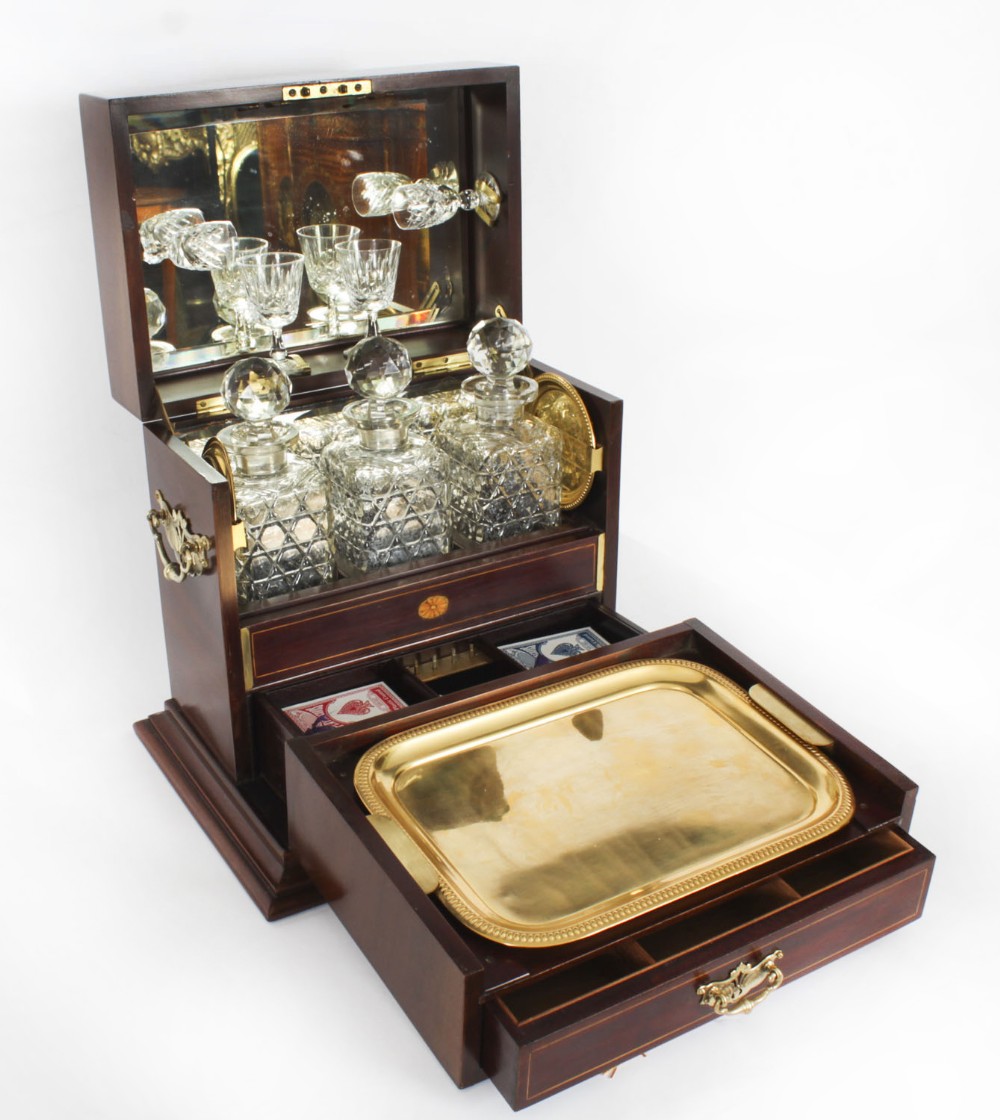
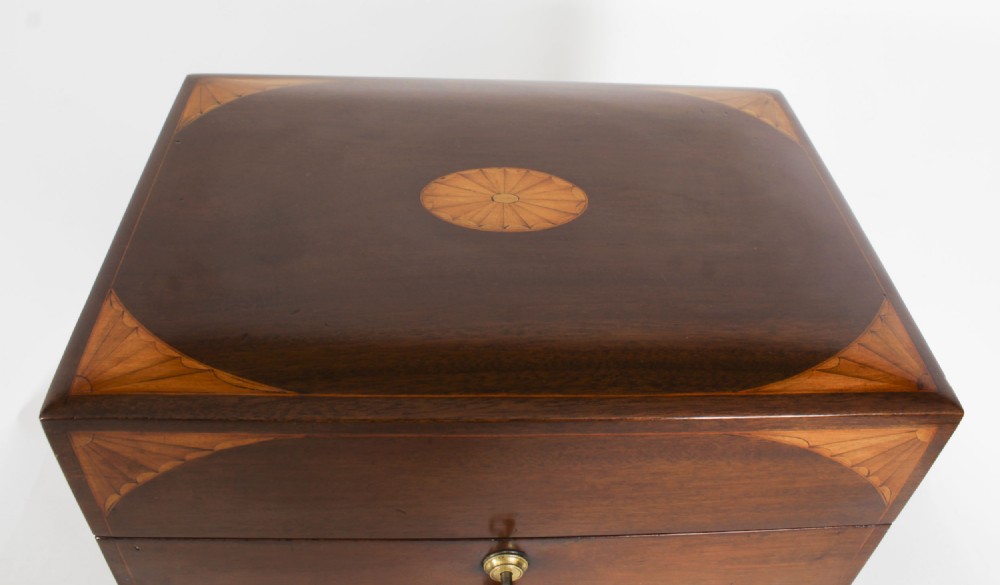
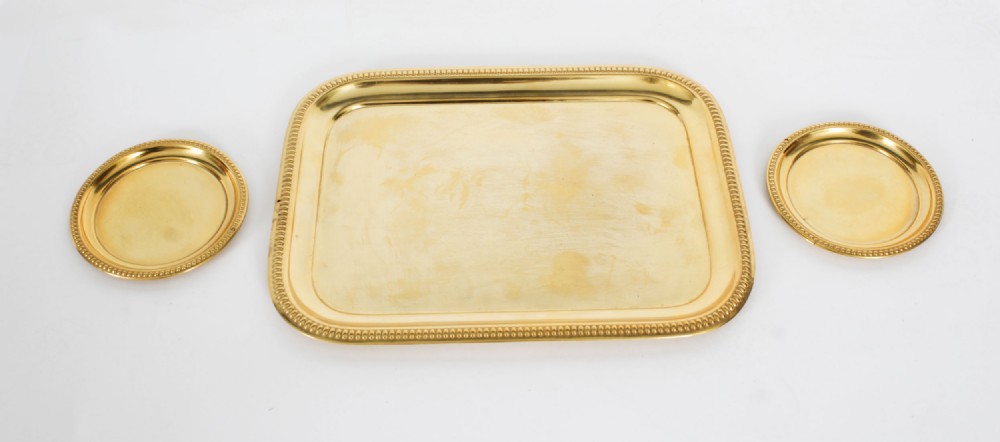
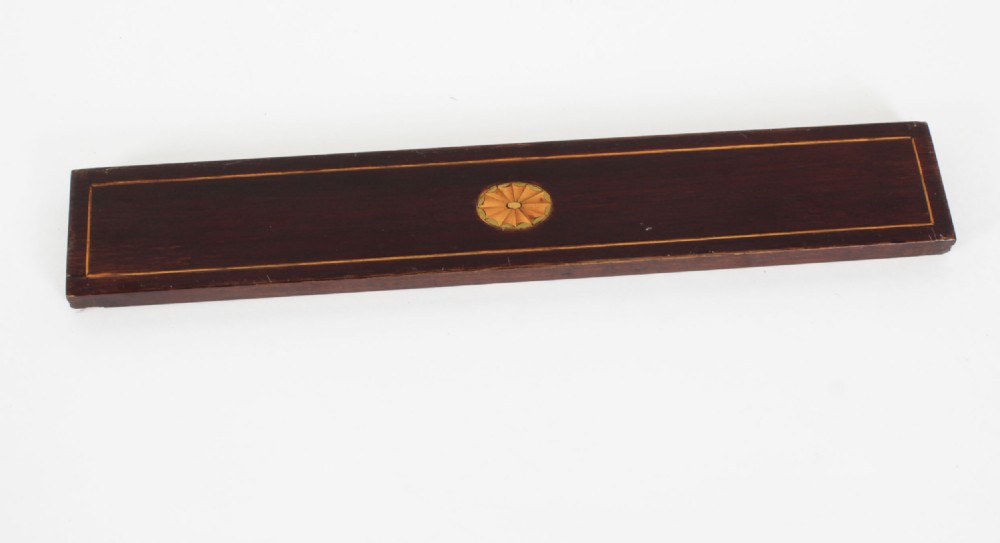
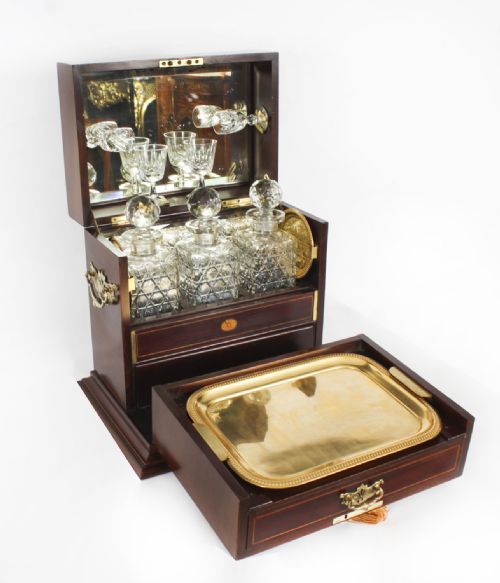
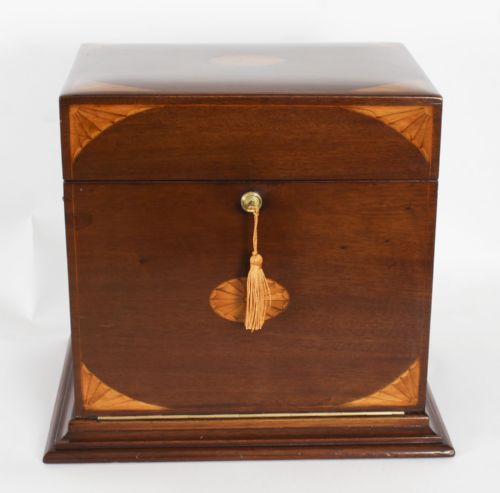
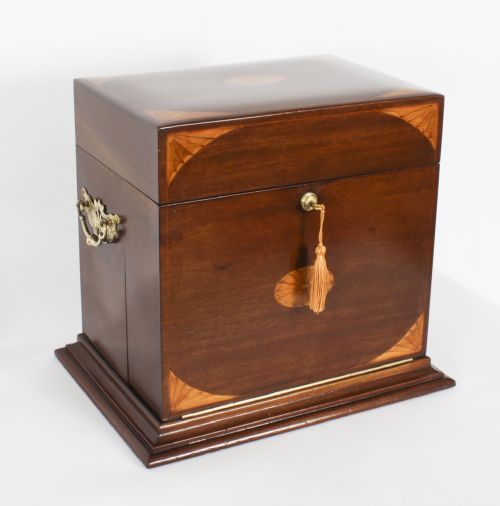
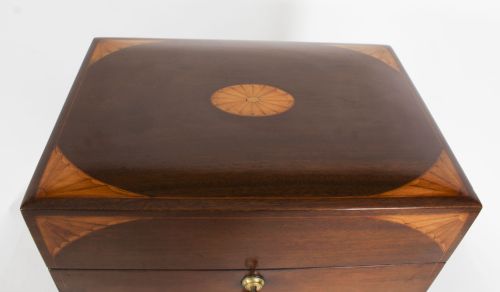
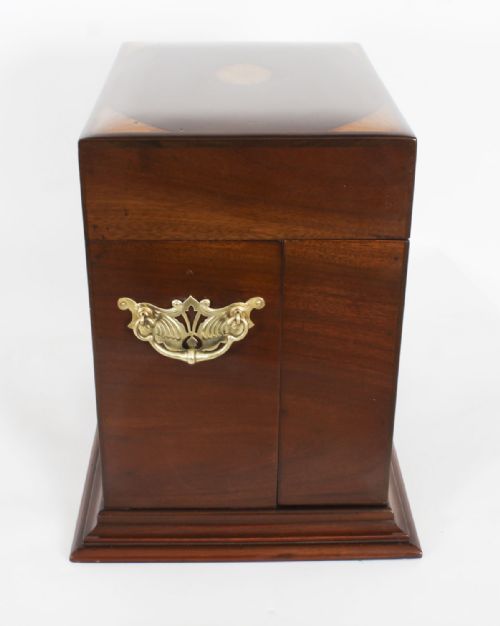
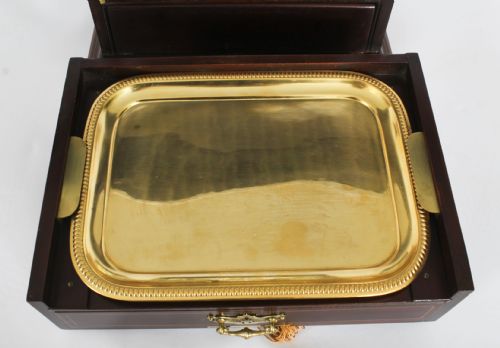
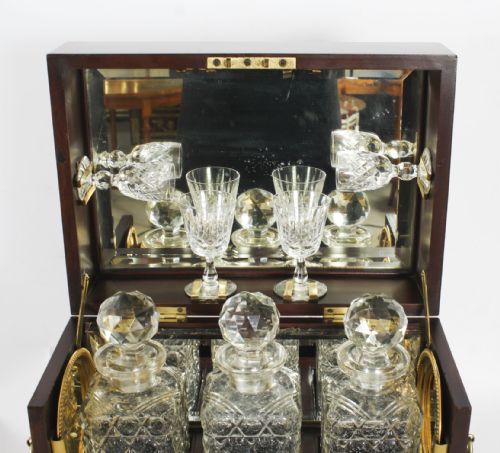
It consists of three cut crystal liquor bottles with stoppers with a pair of port glasses, and a pair of sherry glasses in the underside of the lid, a gold plated pair of coasters, a gold plated tray all housed in a magnificent mahogany casket with shell inlaid decoration.
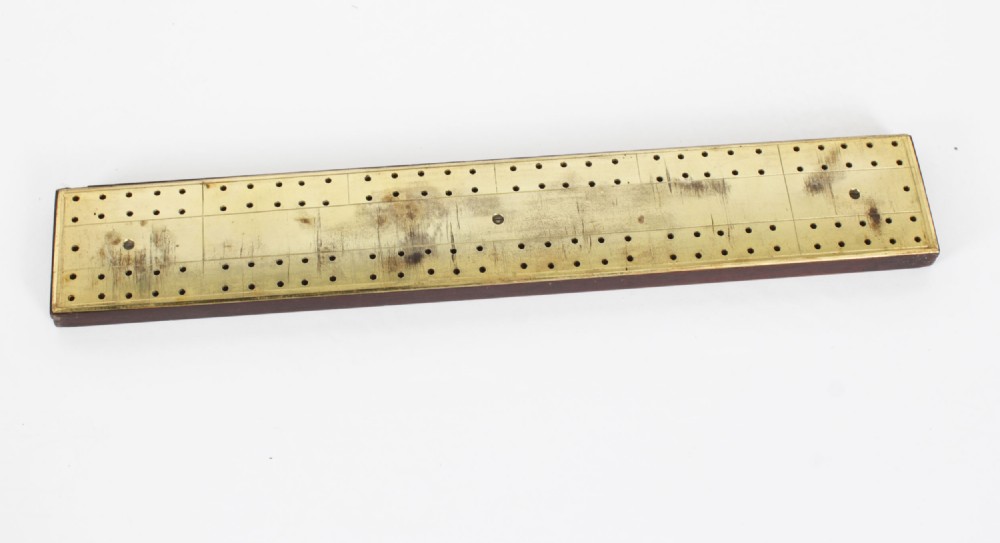
There is a secret sprung drawer that pops out when you press the small brass button hidden behind the central decanter, it contains two packs of playing cards and a pair of dice and the markers for the cribbage board.
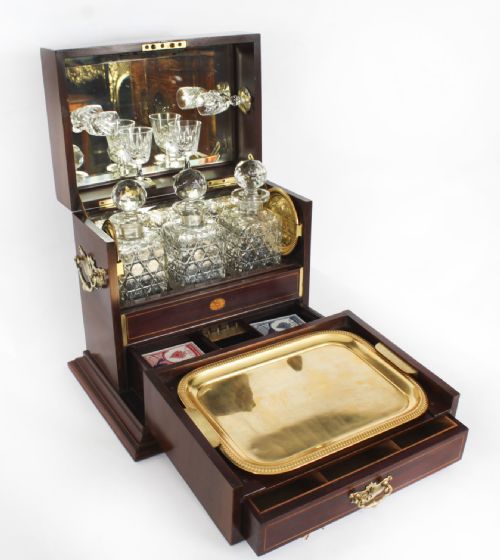
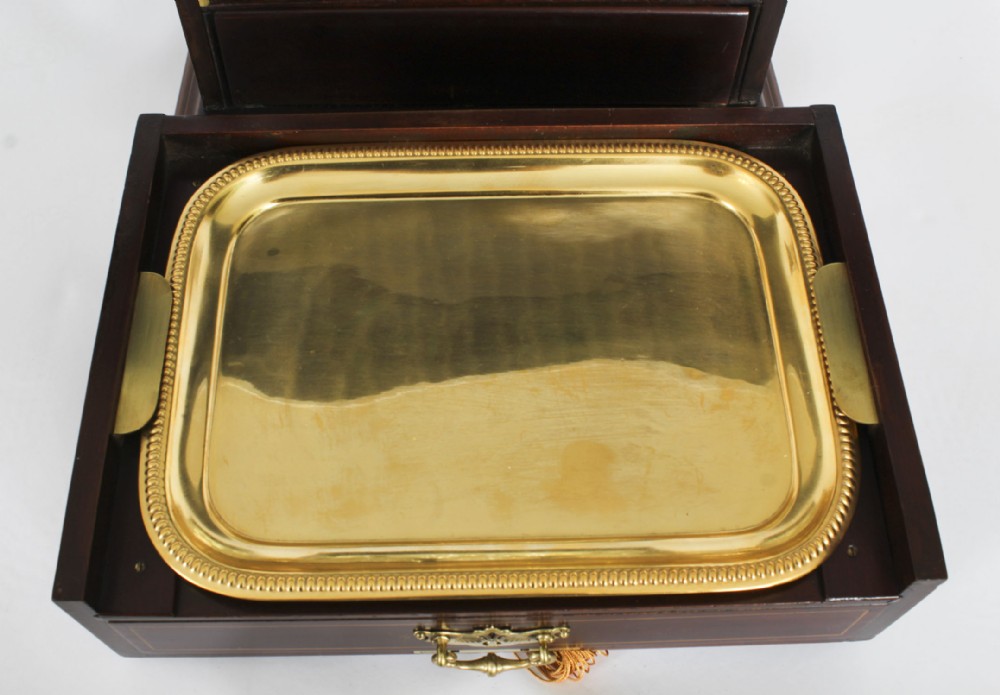
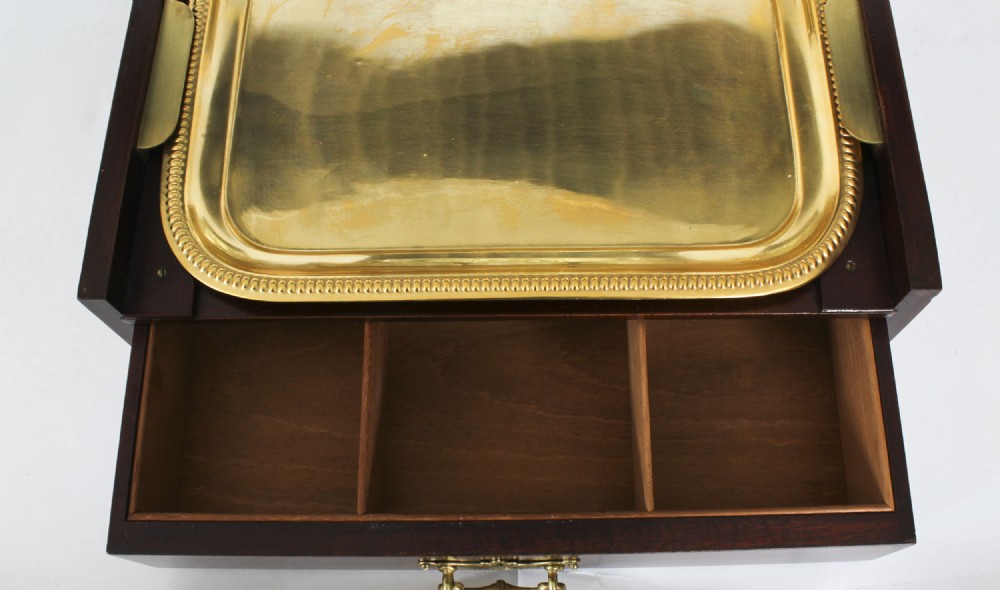
The fold down section is fitted with a useful gold plated serving tray above a drawer containing more playing cards.
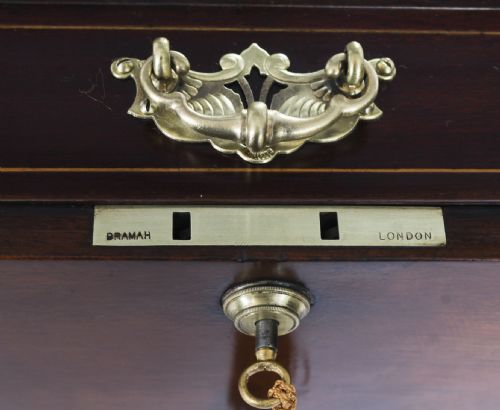
It is fitted with the original working high quality Bramah lock complete with key.
Condition:
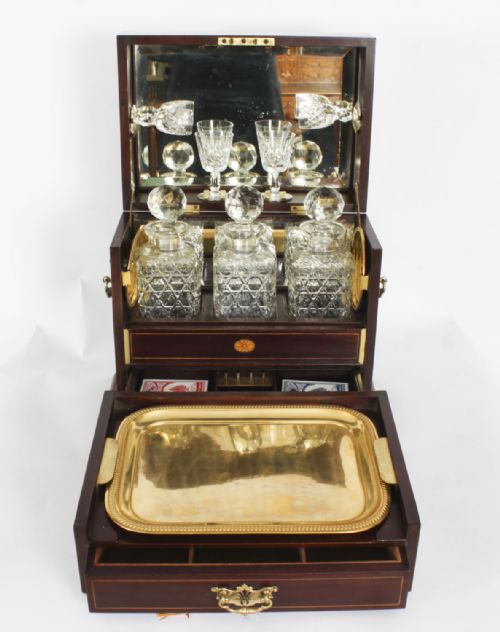
In really excellent condition having been beautifully cleaned, polished and waxed in our workshops, please see photos for confirmation.
Dimensions in cm:
Height 37 cm x Width 41 cm x Depth 30 cm
Dimensions in inches:
Height 1 foot, 3 inches x Width 1 foot, 4 inches x Depth 1 foot
Tantalus
is a type of liquor decanter in which the bottle stoppers are locked down tightly by a metal bar. This was to prevent the theft of the contents by servants. Like the name suggests, the decanters themselves are visible, drawing temptation while unattainable. A key is required for entry.
The most common types of tantalus holds three bottles or decanters while there are also smaller types housing only two. There are many different forms of tantalus. Often the encasement has metal handles on both sides and ornately carved decor. Crystal and metal versions are also a beautiful option when choosing a tantalus.
Tantalus derived its name from the story of the mythological Greek king, Tantalus, mortal son of Zeus and Pluto. To be tantalized is to be tempted with the unattainable, and the king was sorely tested. He was condemned to an eternity in Hades for angering the Gods and was forced to stand forever in water that, when he bent to drink, would recede and to gaze upon foods he could only reach for and never grasp.
The 1800s saw our Victorian predecessors apply the King’s name to the lockable decanter.
Bramah
is London's oldest security company. Established at 124 Piccadilly, London in 1784, and today based in Marylebone, London and Romford, Essex.
Bramah made their first lock in 1784 and the patent was awarded in 1787. The designer was Joseph Bramah. Joseph Bramah was a leading inventor of the industrial revolution, patenting over 18 new ideas, including a new valve for the water closet (toilet), the hydraulic pump, a fountain pen, and a fire engine.
Bramah also introduced a beer hand pump for use at the bar, to prevent fluid loss when barmen went downstairs to pour a new jug! Due to the quality of his manufacturing, his name became a by-word amongst British Engineers for engineering excellence and many of his inventions are on display in the Science Museum in London. You can find one of his original toilets still working in Osborne House, Queen Victoria's home on the Isle of Wight.
The Bramah lock was unique and advanced property and valuables protection enormously. Indeed it was 50 years ahead of any Chubb lock and 70 years ahead of Yale. Original Bramah locks are most often found on the highest quality homes and furniture.
Mahogany
is probably one of the largest ‘families’ of hardwood, having many different varieties within its own species.
Mahogany has been used for centuries in ship building, house building, furniture making etc and is the core structure of just about every 19th century vanity box, dressing case or jewellery box. It became more of a Victorian trend to dress Mahogany with these decorative veneers, such as Rosewood, Kingwood, Burr Walnut and Coromandel, so that the actual Mahogany
Regent Antiques has dated this piece to the 1880s.
We specialise in english and continental furniture, silver, porcelain and decorative items.
You can view the stock and full dealer information on the Regent Antiques Profile Page
Regent Antiques is a registered member of LAPADA CINOA
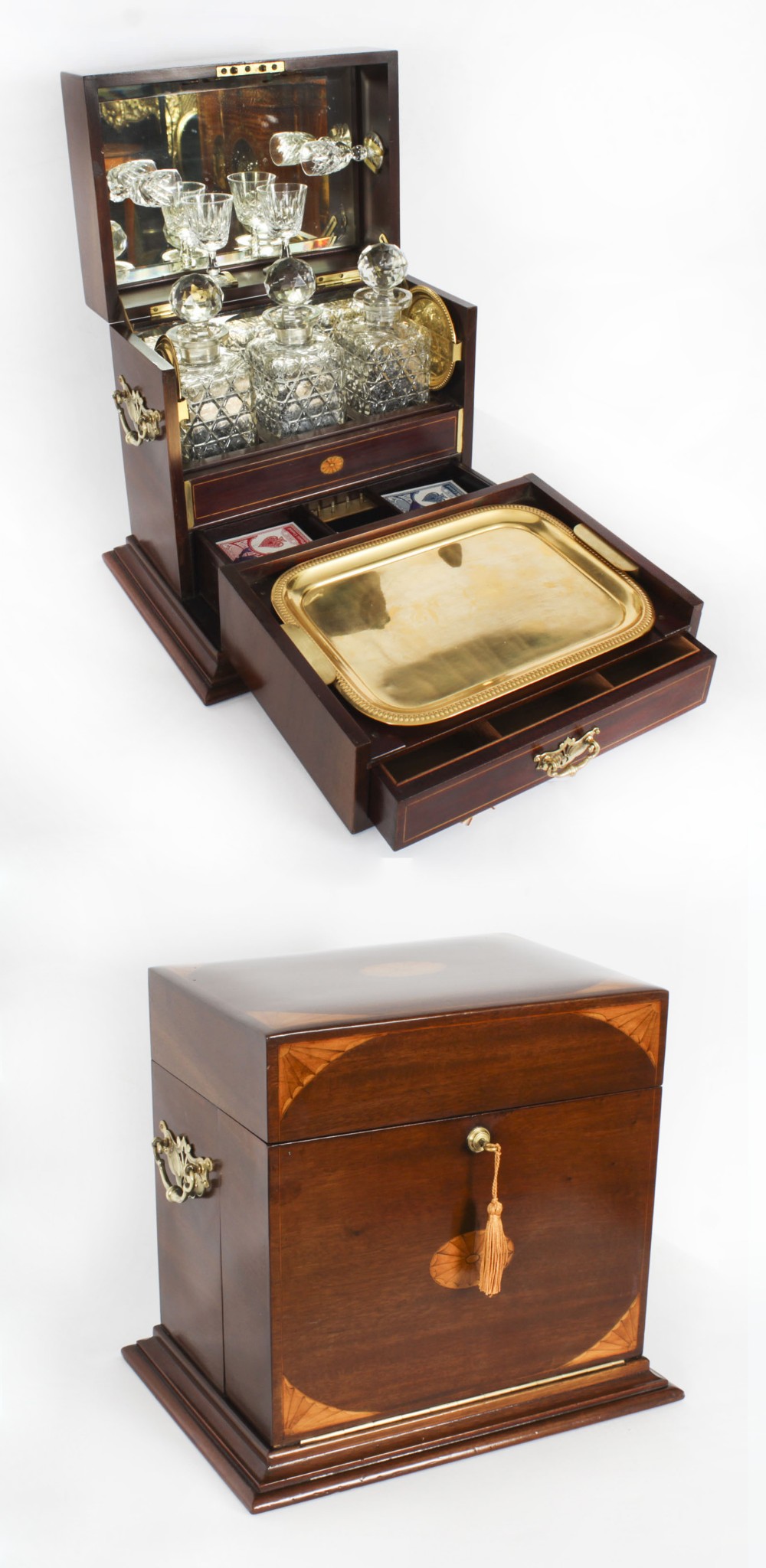
Antique Victorian Three Bottle Tantalus & Games Compendium 19th Century