




Wooden Stacking Tables
Wooden stacking tables deliver clever surface space in a compact footprint, sliding together neatly when floor space matters.
Wooden Stacking Tables
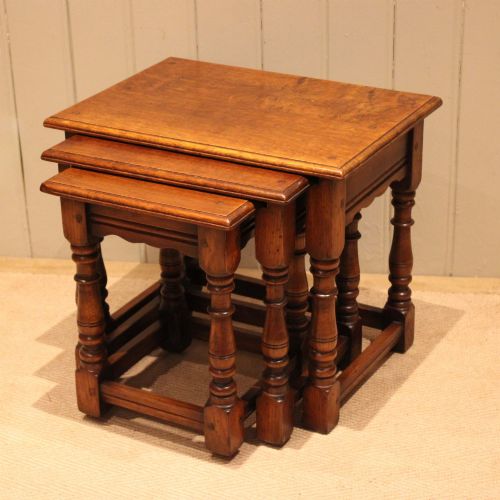
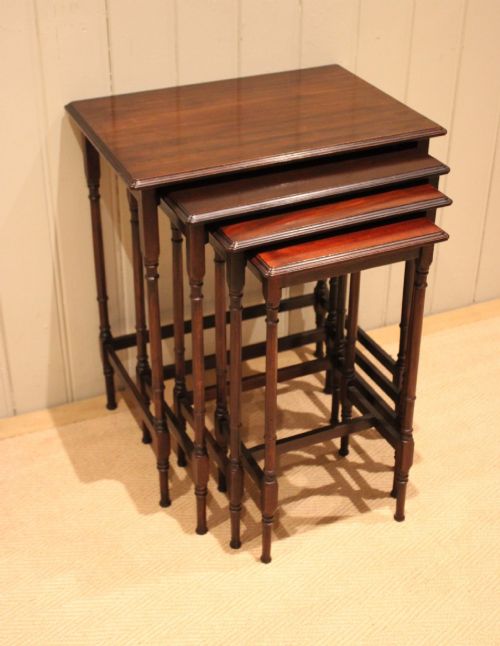
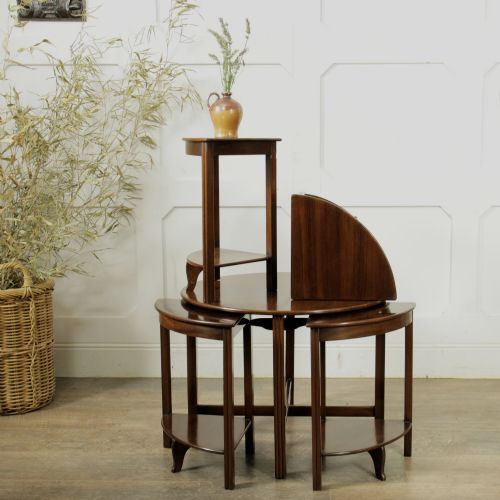
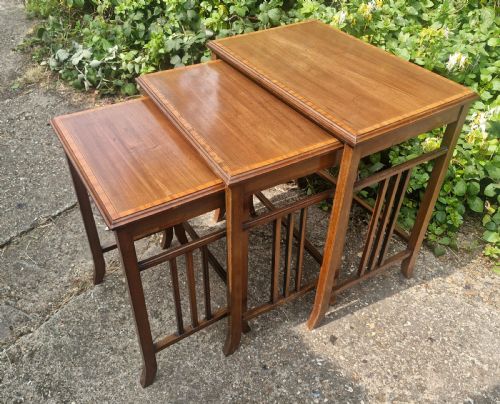
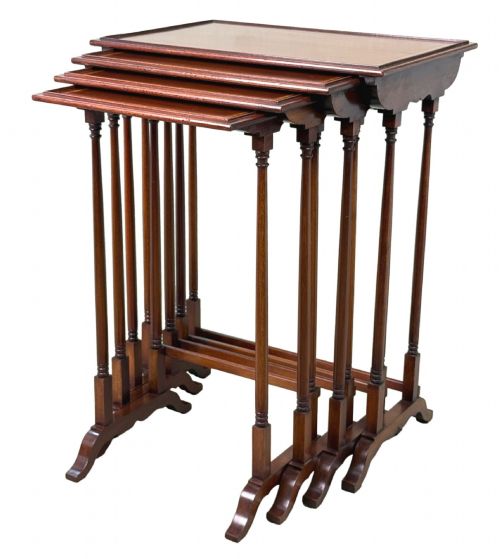
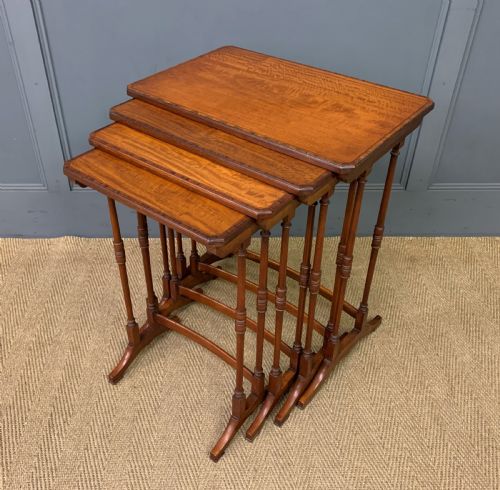
Wooden stacking tables provide a practical arrangement of multiple smaller surfaces that nest together under a primary top when not in use. Buyers searching for wooden stacking tables typically encounter Edwardian and nineteenth-century examples configured in sets of three or four.
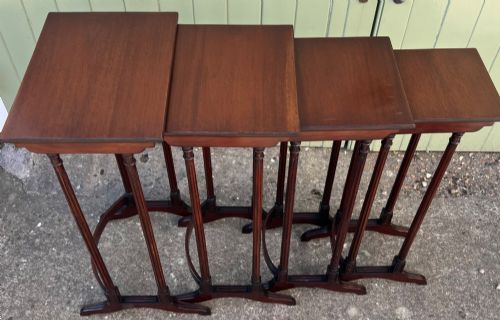
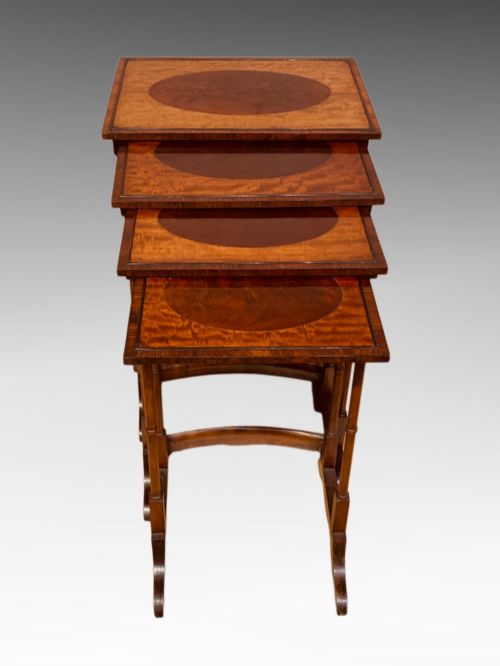
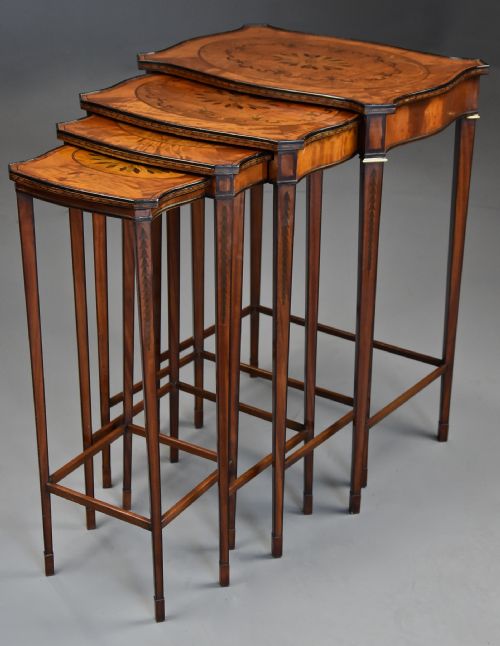
The selections span simple utilitarian designs in oak and various hardwoods alongside refined drawing-room pieces featuring satinwood inlay and serpentine forms. These tables appear under historical terms such as quartetto tables, reflecting their traditional grouping of four individual surfaces designed to pull out for tea or needlework.
Materials and construction methods
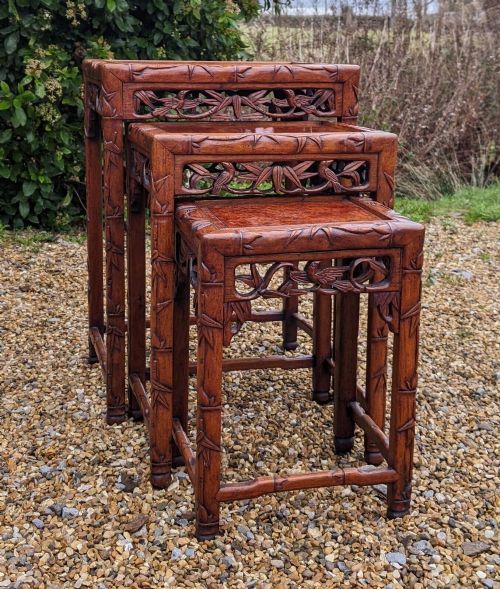
Cabinetmakers constructed these nests primarily using mahogany, walnut, oak, and satinwood, frequently employing timber veneers to create figured table tops. Selected examples incorporate exotic woods such as Indian rosewood and huanghuali, whilst others feature decorative elements like brass inlay, embossed leather tops, or intricate carved Chinoiserie detailing.
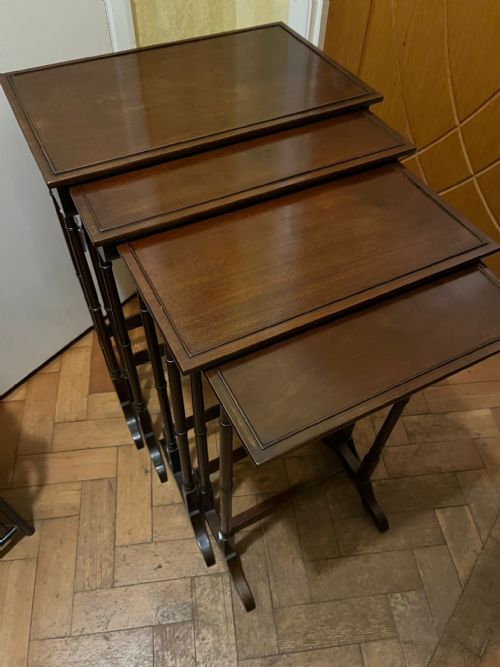
The smaller tables are engineered with slender turned or square-section legs linked by stretchers to ensure rigidity while maintaining a light profile capable of sliding smoothly beneath the largest surface. Inlaid pieces utilise contrasting timber stringing and satinwood banding, demonstrating precise cabinetmaking techniques adapted for multi-tiered furniture.
Current listings feature diverse timbers including mahogany, walnut, satinwood, oak, rosewood, and huanghuali across multiple historical periods.
Distinctions in craftsmanship
Quality reveals itself in the timber selection and the precision of the nesting mechanism, where superior pieces slide together flush without binding or undue clearance. The grain continuity across matched tabletops and the crispness of inlaid satinwood stringing separate standard utility pieces from exceptional drawing-room examples.
Finer iterations display thoughtful proportions where even the smallest bottom table maintains structural integrity and careful finishing rather than appearing hastily assembled. The presence of dense hardwoods, figured mahogany veneers, and well-executed period stylistic details elevate the overall standard of the set.
Heal's
The Wooden Stacking Tables Glossary
- Quartetto
- A set of four graduating tables designed to nest together. This traditional term appears frequently in nineteenth-century and Edwardian furniture cataloguing.
- Nesting tables
- A group of tables of decreasing size that fit one beneath another to save space. They function as individual occasional surfaces when separated.
- Satinwood inlay
- Decorative woodwork where contrasting light-coloured satinwood is inserted into the primary timber surface. This technique creates geometric borders and delicate decorative motifs.
- Serpentine form
- A curved outline featuring a convex centre flanked by concave sides. This shape adds fluidity and elegance to table edges.
- Chinoiserie
- European decorative style reflecting Chinese artistic influences. Pieces often feature elaborate carving or painted motifs depicting traditional Oriental scenes.
Wooden Stacking Tables: Frequently Asked Questions
What is a quartetto nest of tables?
A quartetto nest consists of four graduating tables designed to slide neatly beneath one another into the footprint of a single table.
Cabinetmakers popularized this specific format during the Victorian and Edwardian eras to provide flexible hospitality surfaces in parlours and drawing rooms.
How were stacking tables used historically?
Historical users deployed these tables individually for serving tea, holding books, or supporting lamps during evening gatherings.
When the guests departed, the tables stacked back together instantly to clear floor space in domestic rooms.
How do I date an Edwardian nest?
Edwardian nests typically display lighter woods such as satinwood inlay, mahogany, and slender tapered legs influenced by Sheraton revival styles.
Construction methods from this period often combine machine-prepared components with hand-finished decorative stringing and polishing.
Are these tables sturdy enough for daily use?
Most antique nests utilise strong hardwoods like mahogany and oak, joined with traditional framing that handles regular daily placement.
Because the smallest tables have delicate frames, they suit light occasional use rather than heavy weight-bearing demands.