




White Twist Stemware Glasses
White twist stemware glasses are eighteenth-century drinking vessels with intricate opaque enamel threads trapped inside clear lead glass stems.
White Twist Stemware Glasses
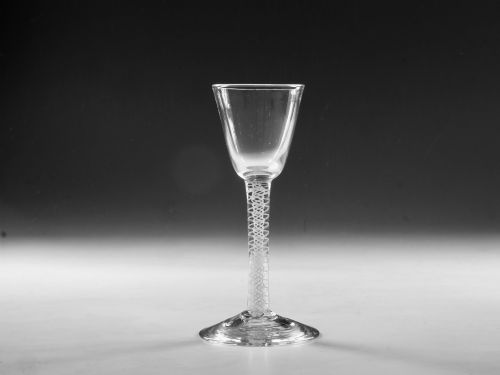
White twist stemware glasses comprise eighteenth-century drinking vessels designed for wine, ale, cordial, and sweetmeat service during the Georgian period. These pieces rely on clear lead glass bodies paired with opaque white enamel strands drawn into complex internal spirals.
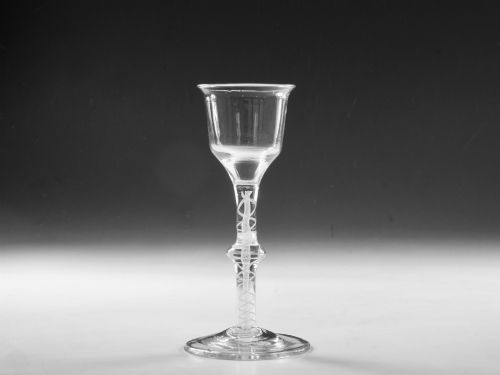
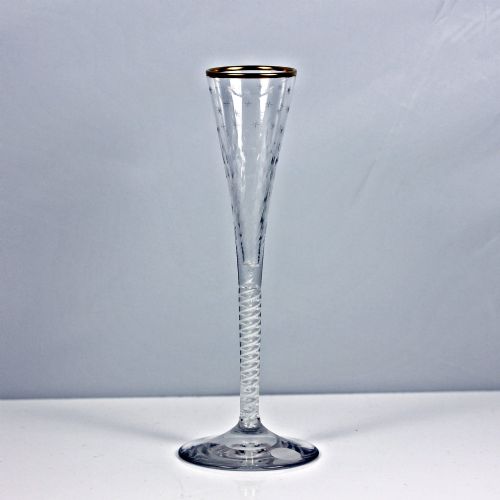
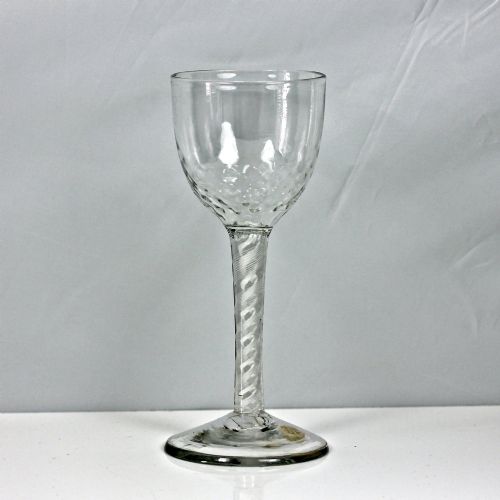
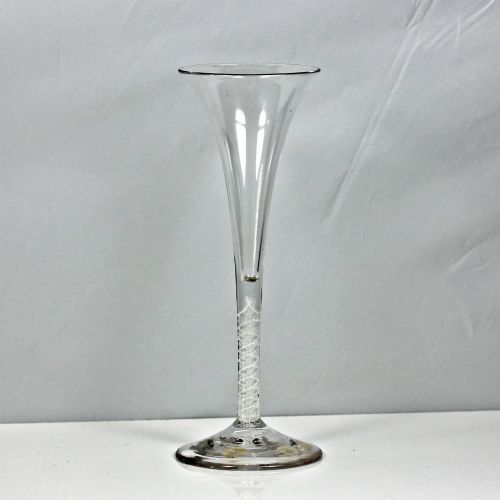
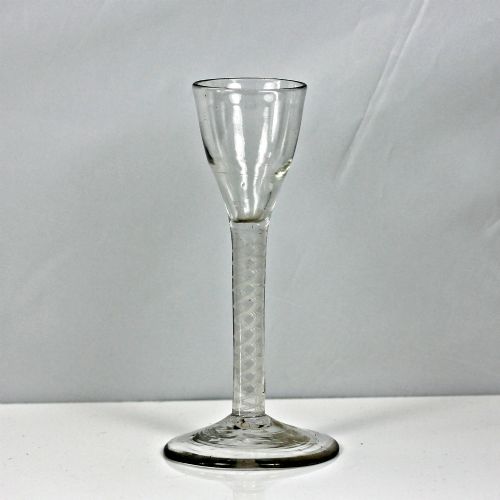
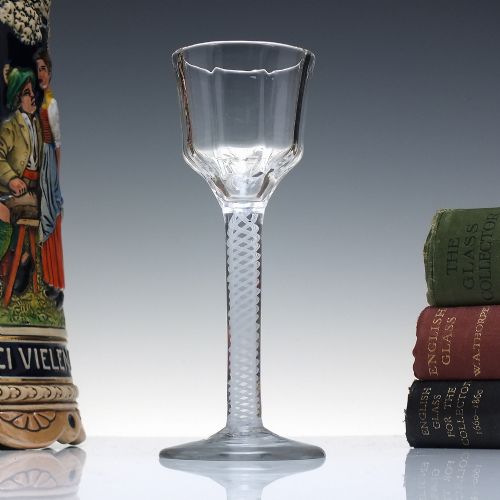
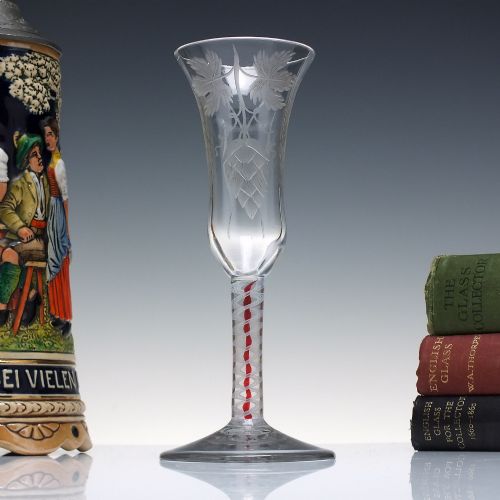
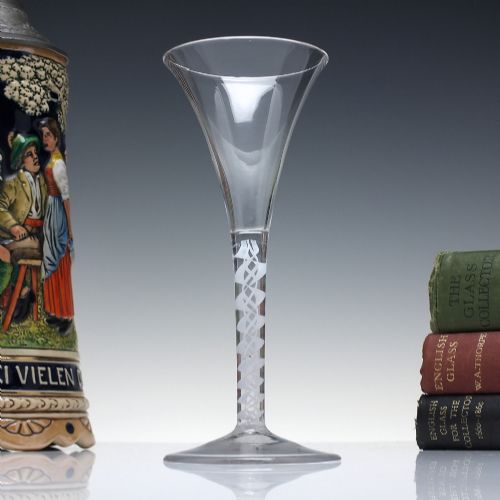
The version most commonly encountered on this page is the Georgian wine glass featuring a double series opaque twist stem. Bowls vary from simple trumpet and ogee shapes to flute-moulded and ribbed variations supported by conical feet.
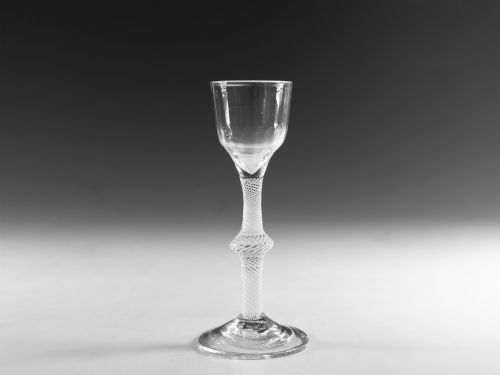
Examples extend across specific forms including ale glasses and ships glasses, occasionally presenting knops along the stem or engraved decoration upon the bowl. While most date to the mid-eighteenth century, later nineteenth-century interpretations also appear.
How they were made
Makers fashioned these white twist stemware glasses using clear lead glass and opaque white enamel. Workers manipulated molten glass to encase enamel threads within the stem before drawing and twisting the material into spiral configurations.
Techniques involved forming single and double series twists, alongside multi-spiral and triple twist variations, sometimes incorporating knops for structural definition. Bowls and feet were shaped separately before being joined to the finished stem.
Listings feature lead glass and enamel materials predominantly spanning the eighteenth-century Georgian period alongside Victorian pieces.
What varies in quality
Quality in white twist stemware glasses rests upon the complexity and precision of the internal enamel twist. Denser spirals and multiple series formations demand greater skill from the glassblower than simpler single-line patterns.
Proportion between the bowl, stem, and foot dictates the visual balance of each piece. Finer examples display symmetrical bubble distribution in the metal and careful finishing around the pontil mark on the underside of the foot.
The White Twist Stemware Glasses Glossary
- Opaque twist
- A stem containing white enamel threads enclosed within clear glass. These threads are manipulated into single or double series spirals during manufacture.
- Ogee bowl
- An S-profile drinking vessel shape curving outward at the rim and inward at the base. This form often appears on mid-eighteenth-century examples.
- Knop
- A knob or swelling formed on the stem of a glass. Multiple knops can appear along the length of eighteenth-century stems.
- Pontil mark
- A rough scar left on the base of blown glassware where the pontil rod was attached. Its presence indicates traditional hand-blown manufacture.
- Sweetmeat glass
- A wide, shallow vessel designed for serving confections or small desserts. These pieces frequently share the stem characteristics of wine glasses.
White Twist Stemware Glasses: Frequently Asked Questions
What is an opaque twist glass?
An opaque twist glass is a drinking vessel featuring white enamel threads sealed inside a clear lead glass stem. The glassmaker twisted these internal threads into various spiral patterns.
These pieces date predominantly to the eighteenth century and served wine or ale at the table.
How do I identify a Georgian wine glass?
Georgian wine glasses exhibit hand-blown lead glass characteristics, including distinct bowl forms like trumpets or ogees paired with twist stems. They often feature a conical foot with a snapped pontil mark underneath.
Examining the weight and the way the glass captures light helps confirm the period material.
What is a double series twist?
A double series twist contains two distinct sets of internal glass elements within the stem, such as a pair of opaque white spiral tapes surrounding a central core of clear threads.
This technique creates a denser, more intricate optical effect than a single series twist.
How were these glasses used originally?
These glasses functioned as tableware for serving wine, ale, cordials, and sweetmeats during formal meals and social gatherings. Their varied bowl shapes corresponded to specific drinks.
Smaller bowls suited strong cordials, while larger bowls held wine or ale.
Can I use antique stemware today?
Antique stemware requires careful handling and hand washing to preserve the fragile lead glass and historic surfaces. Many collectors choose to display them rather than use them daily.
Keeping them away from sudden temperature changes protects the material integrity.