

Antique Crystal Stemware
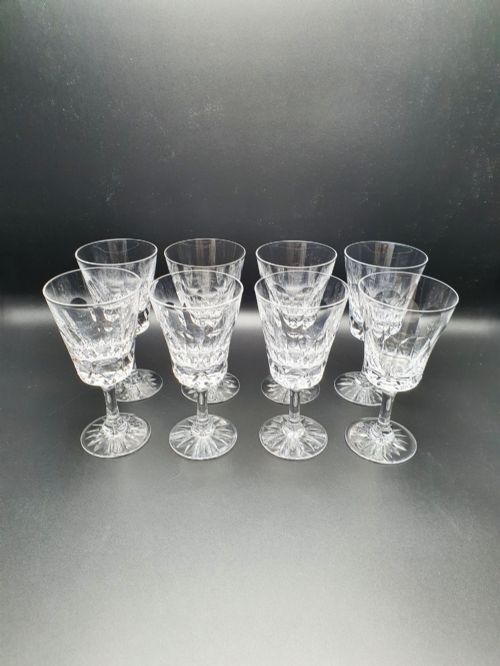
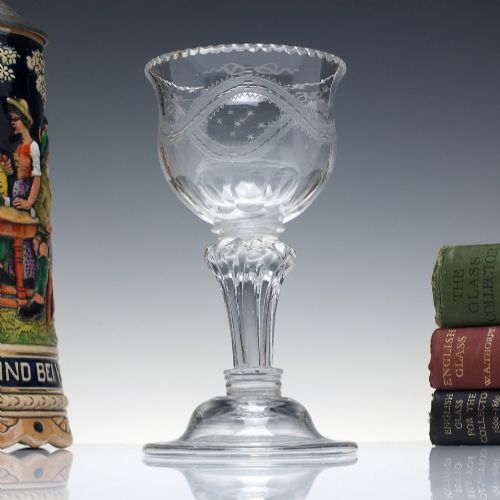
These antique crystal stemware pieces range from eighteenth-century air twist wine glasses to twentieth-century champagne coupes, offering genuine period drinking vessels for a table.
Antique Crystal Stemware
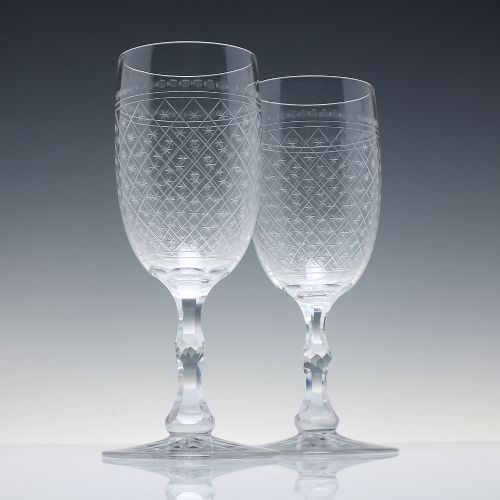
The material traces an evolution from early eighteenth-century baluster stems and complex air twists to nineteenth-century cut glass and twentieth-century Art Deco suites. Georgian examples dominate the early periods, accompanied by Victorian star-etched designs and later French and Bohemian glassware.
Forms vary from small dram glasses and port glasses to large suites of drinking glasses intended for specific beverages. Buyers find both individual collectors' pieces, such as dated eighteenth-century goblets, and matched sets suitable for dining.
How they were made
Maker operations relied on lead crystal, flint glass, and clear glass formulas, shaped by hand-blowing into moulds or free-blowing. Craftsmen manipulated the molten metal to form hollow stems, folded feet, and ribbed ogee bowls.
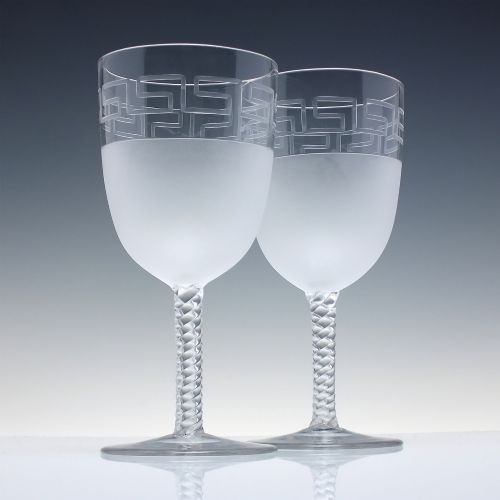
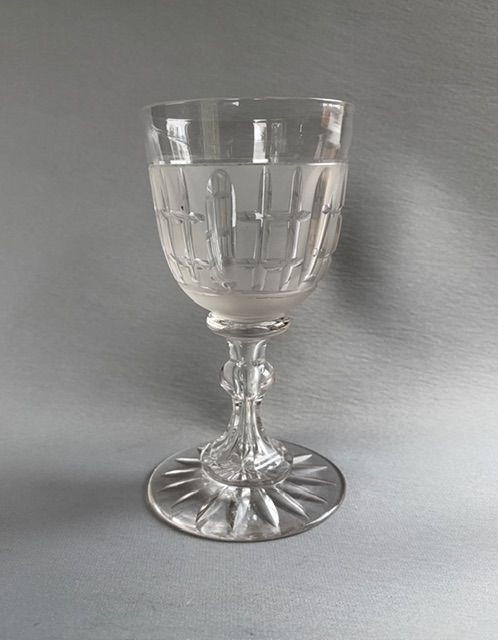
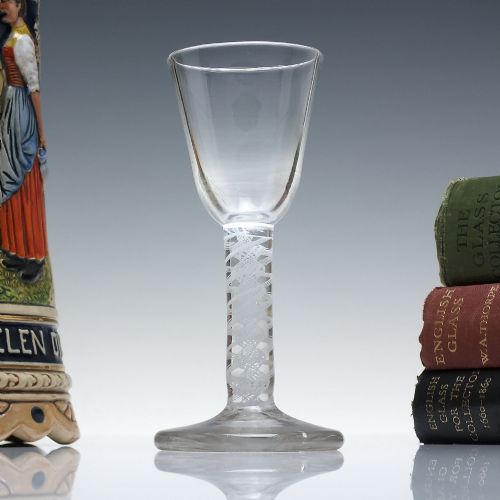
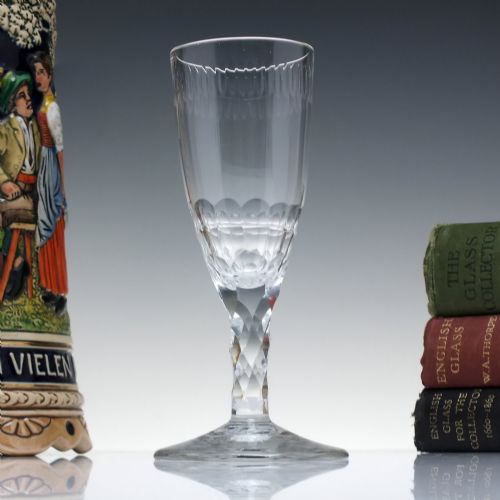
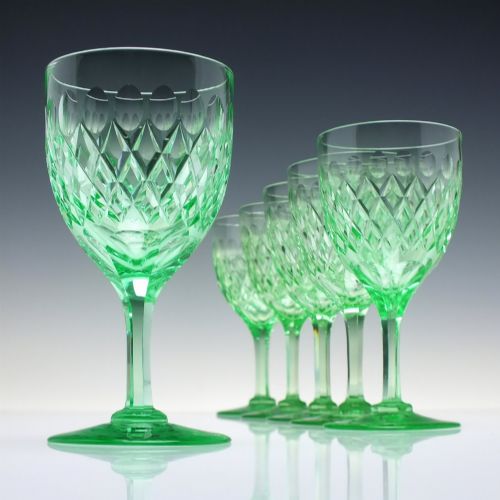
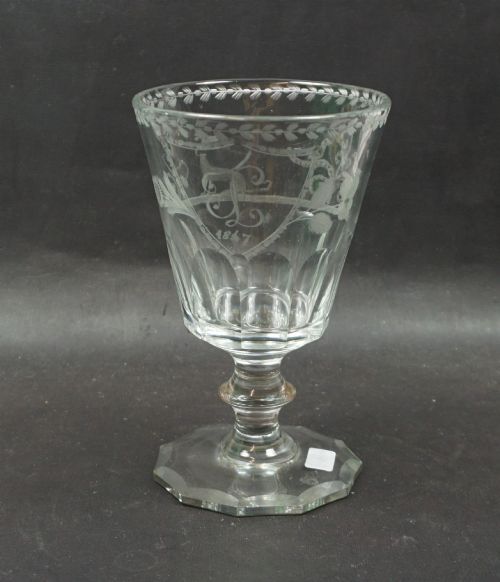
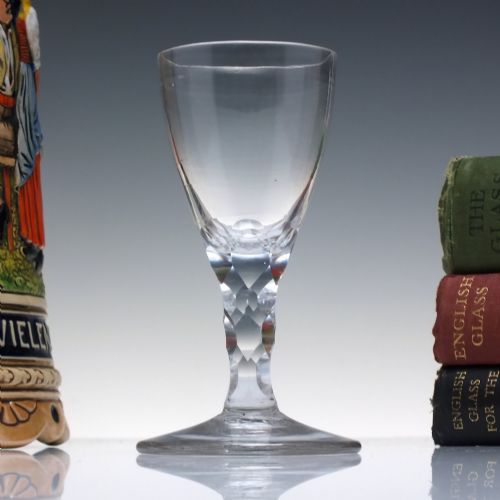
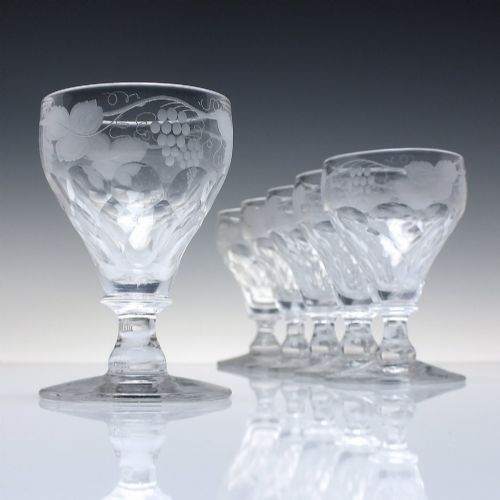
Decoration involved wheel engraving, star-etching, facet cutting, and enamel painting. Twist stems required precise manipulation of air bubbles or opaque white enamel rods within the molten glass during the pulling and twisting process.
Antique Crystal Stemware Retail Price Guide 2026
Typical asking prices for crystal stemware among the pieces listed under this phrase on Sellingantiques today, from the lower quarter to the upper quarter. They describe what is for sale here now, not the wider market.
Listings span Georgian, Victorian, Edwardian, and Art Deco periods, utilising lead crystal, enamel, and cut glass across various drinking forms.
What varies in quality
Quality rests in the clarity of the metal, the precision of the stem formation, and the crispness of the wheel engraving or facet cutting. Early lead crystal displays a distinct weight and refractive brilliance that separates superior glass from simpler wares.
Design complexity also defines the tier of a piece, separating standard mold-blown drinking glasses from intricate multi-spiral air twists, composite stems, and heavily enamelled Bohemian or Bavarian services.
Moser Bohemian·Baccarat·Theresienthal
The Antique Crystal Stemware Glossary
- Air twist
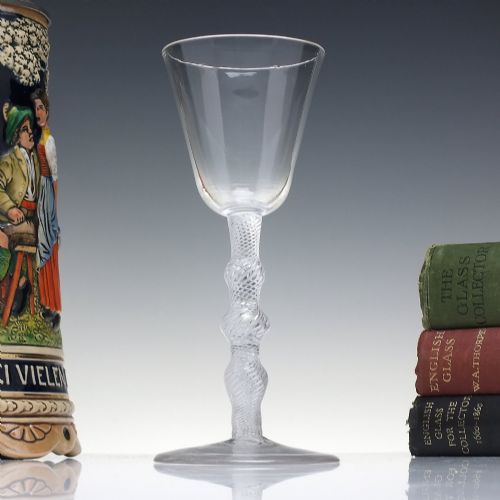
- A stem containing spiral threads of trapped air created by drawing and twisting heated glass rods. This technique defines many mid-eighteenth-century English wine and ale glasses.
- Opaque twist
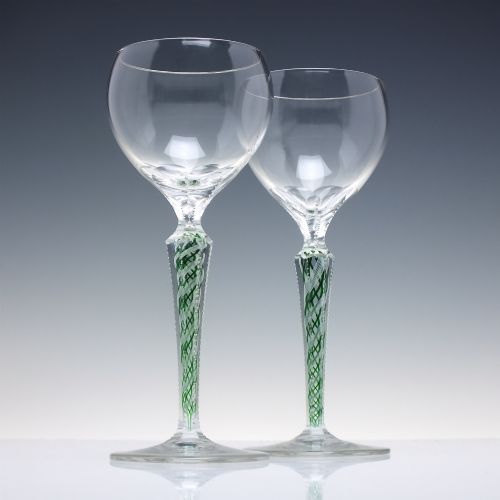
- A stem featuring white or coloured enamel glass threads drawn into a spiral pattern inside clear glass. Single and double series twists appear frequently on eighteenth-century examples.
- Rummer
- A large, sturdy drinking glass originating in the late eighteenth and early nineteenth centuries, often featuring cut glass decoration or engraved motifs for ale, rum, or wine.
- Hock glass
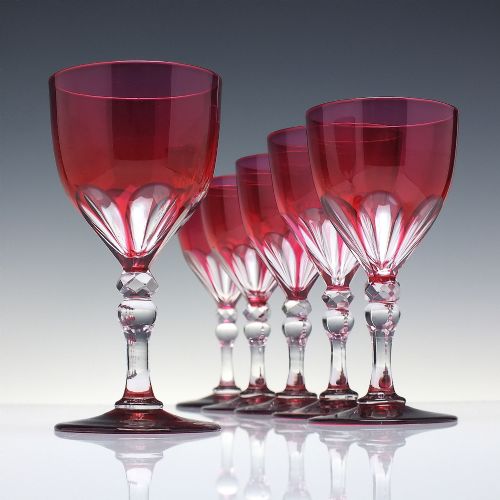
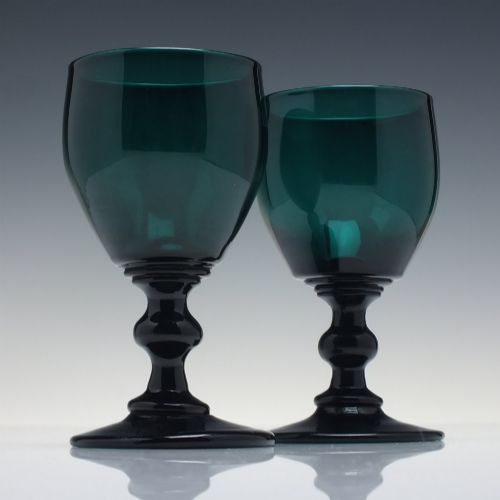
- A tall drinking glass, often with a coloured bowl over a clear crystal stem, traditionally used for German white wine.
- Baluster
- A heavy, thick stem style popular in early eighteenth-century drinking vessels, reminiscent of architectural balusters with knops and collaring.
Antique Crystal Stemware: Frequently Asked Questions
How do I identify an 18th-century wine glass?
Eighteenth-century wine glasses typically exhibit pontil marks on the underside of the foot, heavier lead crystal weight, and characteristic stem formations such as air twists, opaque twists, or balusters.
The bowls are often smaller and thicker than modern glassware, reflecting the drinking habits and manufacturing limitations of the period.
Can I use antique champagne coupes for modern dining?
Antique champagne coupes and rummers are structurally robust enough for regular use, provided they receive careful hand washing rather than dishwasher cleaning.
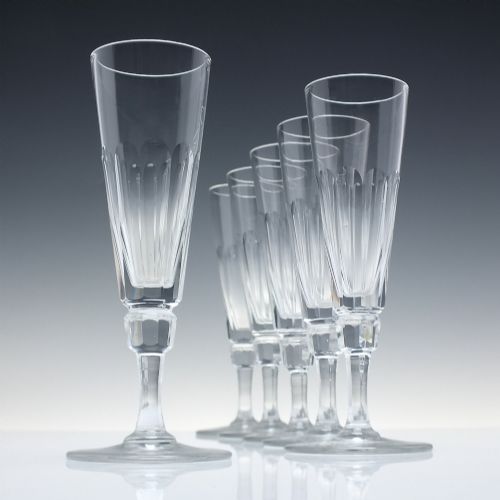
Many buyers assemble matched or harlequin sets of Edwardian and Victorian coupes to serve sparkling wine or desserts during dinner parties.
What is the difference between an air twist and an opaque twist?
An air twist contains elongated bubbles of air pulled into spiral threads inside the clear stem during manufacture. An opaque twist incorporates solid rods of white or coloured enamel glass within the crystal.
Both styles were prominent in English drinking glasses during the mid-eighteenth century.
How should I clean and care for old crystal?
Old crystal requires gentle hand washing in lukewarm water with a mild detergent, avoiding sudden temperature changes that can crack the glass. Placing them on a soft cloth to dry prevents rim chipping.
Enamelled and gilded pieces, such as Bohemian hock glasses, demand extra care to preserve surface decoration.